- Chinese
- French
- German
- Portuguese
- Spanish
- Russian
- Japanese
- Korean
- Arabic
- Irish
- Greek
- Turkish
- Italian
- Danish
- Romanian
- Indonesian
- Czech
- Afrikaans
- Swedish
- Polish
- Basque
- Catalan
- Esperanto
- Hindi
- Lao
- Albanian
- Amharic
- Armenian
- Azerbaijani
- Belarusian
- Bengali
- Bosnian
- Bulgarian
- Cebuano
- Chichewa
- Corsican
- Croatian
- Dutch
- Estonian
- Filipino
- Finnish
- Frisian
- Galician
- Georgian
- Gujarati
- Haitian
- Hausa
- Hawaiian
- Hebrew
- Hmong
- Hungarian
- Icelandic
- Igbo
- Javanese
- Kannada
- Kazakh
- Khmer
- Kurdish
- Kyrgyz
- Latin
- Latvian
- Lithuanian
- Luxembou..
- Macedonian
- Malagasy
- Malay
- Malayalam
- Maltese
- Maori
- Marathi
- Mongolian
- Burmese
- Nepali
- Norwegian
- Pashto
- Persian
- Punjabi
- Serbian
- Sesotho
- Sinhala
- Slovak
- Slovenian
- Somali
- Samoan
- Scots Gaelic
- Shona
- Sindhi
- Sundanese
- Swahili
- Tajik
- Tamil
- Telugu
- Thai
- Ukrainian
- Urdu
- Uzbek
- Vietnamese
- Welsh
- Xhosa
- Yiddish
- Yoruba
- Zulu
- Kinyarwanda
- Tatar
- Oriya
- Turkmen
- Uyghur


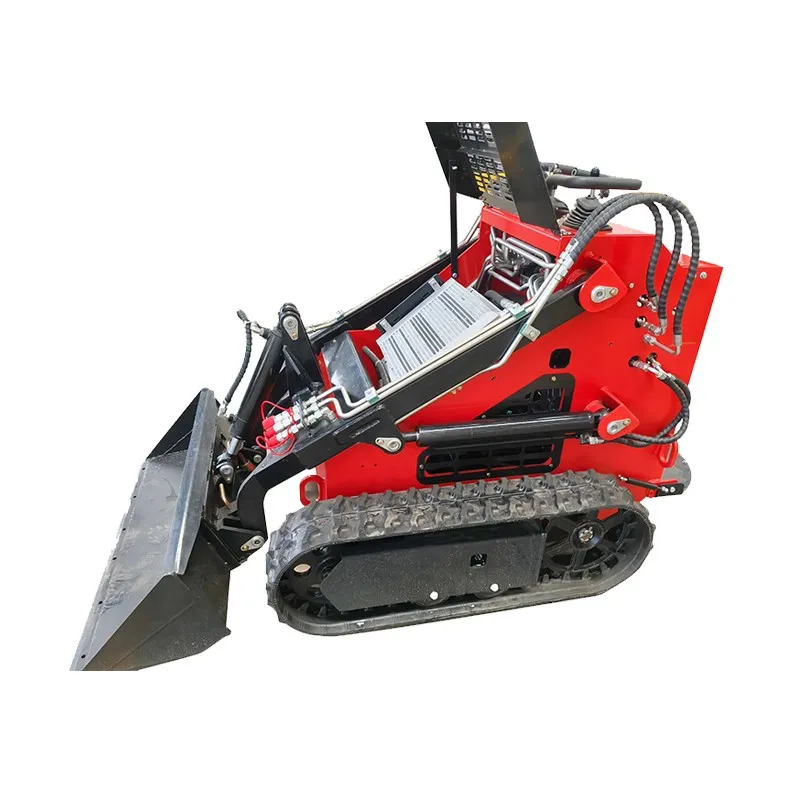
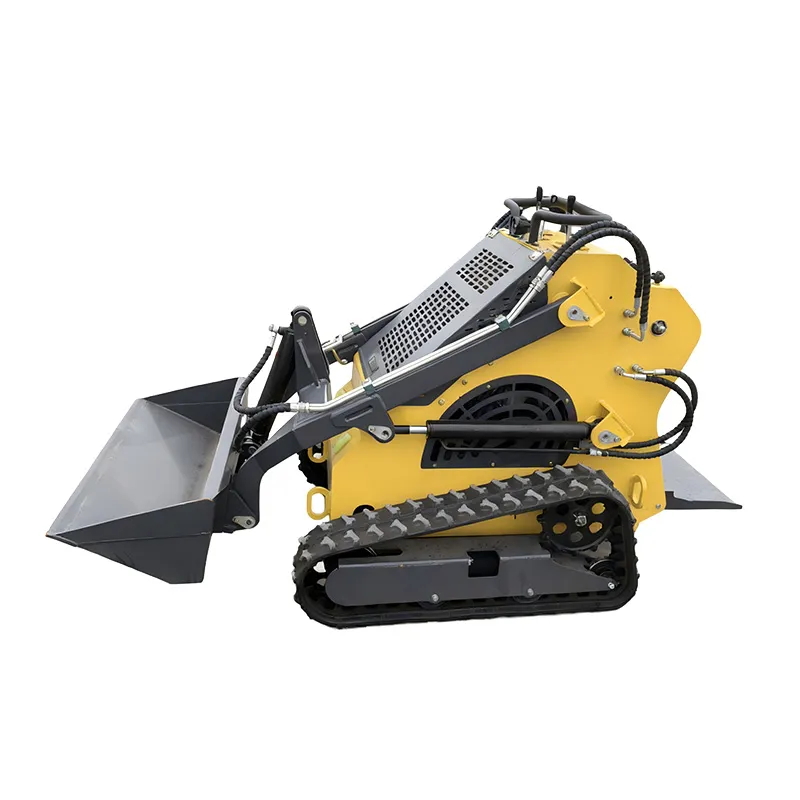
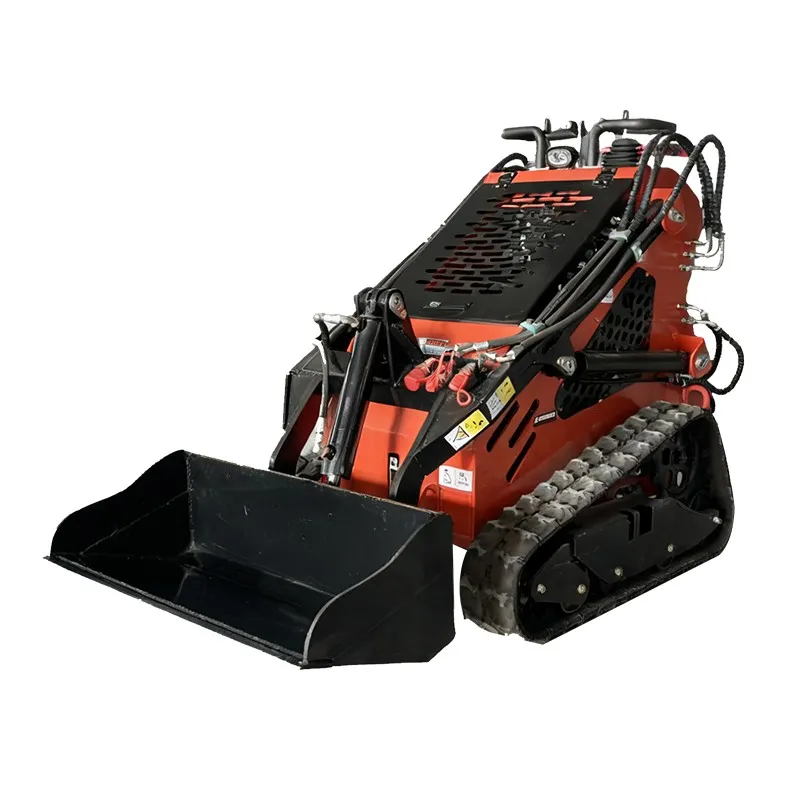
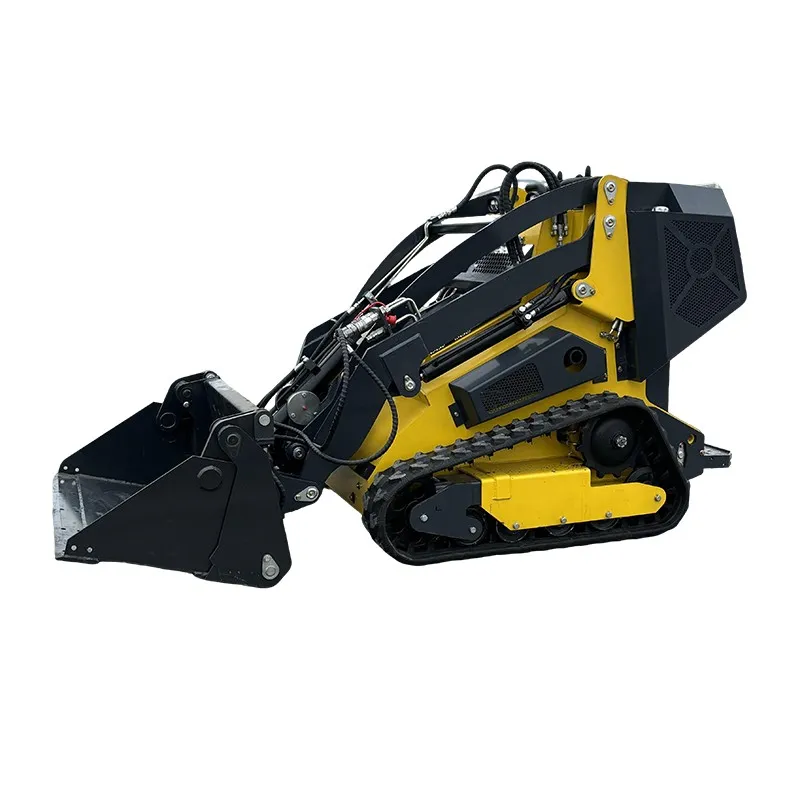
compact track loader for concrete
When you hear 'compact track loader for concrete', most guys immediately think of just moving materials around the pour site. That's the basic box, sure, but if that's all you're doing, you're leaving a ton of value—and maybe some money—on the table. The real conversation starts when you talk about using these machines in the process, not just around it. I've seen too many contractors treat them like fancy wheelbarrows, then wonder why they're fighting slump or dealing with cold joints in tight spaces.
The Misunderstood Workhorse
Let's be clear: not every CTL is built for the concrete environment. The abrasive nature of slurry, the constant exposure to moisture, and the sheer weight of wet concrete demand specific features. A standard machine with a general-purpose bucket will get chewed up. You need a unit designed with this in mind—sealed and pressurized compartments, enhanced undercarriage protection, and ideally, a quick-attach system that lets you switch from a bucket to a concrete-specific tool in under a minute. I learned this the hard way on an early residential foundation job, where the fine concrete dust wrecked the fan bearings on a machine not rated for it. Downtime cost more than the rental.
Where the compact track loader truly shines is in access. We had a retrofit project downtown, pouring a basement floor where the only access was a 4-foot alley between buildings. A skid steer would have torn up the existing asphalt approach; the tracked machine distributed the weight perfectly. We used it to ferry the ready-mix from the truck to the chute point, but its real role was as a mobile mixing and placement platform. With a concrete hopper attachment, we could batch small sections right there, controlling the pace entirely.
This leads to the attachment ecosystem. The bucket is just the start. The power take-off (PTO) or high-flow hydraulics on a capable CTL can run a concrete mixer, a vibratory screed, or even a small concrete pump. I remember evaluating a demo unit from Shandong Pioneer Engineering Machinery. They've been in the game since 2004, and their focus on export markets like the U.S. and Australia means their machines often come spec'd for tougher, varied job site conditions. The model we looked at had an optional high-flow circuit that was a game-changer for running a hydraulic planar attachment to scabble an old slab before the overlay.
Practical Applications and Pitfalls
One of the best uses is for slab prep and grading. Before the pour, using a CTL with a grading bucket or a box blade to fine-grade the sub-base is incredibly efficient, especially for monolithic slabs. You get in, make your final cuts, and compact without switching machines. But here's a detail often missed: track tension. In concrete work, you're constantly driving over wet ground, rebar, and embedded items. A track that's too loose can derail more easily when side-loading on a slope; too tight, and you accelerate wear. It's a daily check, not a weekly one.
Post-pour, the machine's versatility continues. With a power broom or a pressure washer attachment, cleanup is integrated. We once used a CTL with a thermal attachment to heat a slab edge in freezing conditions for a proper cure—something a wheeled machine couldn't safely do on the frozen, uneven ground. The low ground pressure is critical here; you're not leaving ruts in the sensitive area around the fresh pour.
The failure? Thinking it could do everything. We tried using a standard CTL with a breaker attachment to demo a thick curb. The machine had the weight, but the hydraulic system wasn't high-flow enough. It just hammered inefficiently, overheating the fluid. We should have either used a dedicated excavator or, in hindsight, spec'd a CTL from a manufacturer that builds them for such auxiliary tool use from the ground up. Companies that have evolved over 20 years, like the one behind sdpioneer.com, often engineer that robustness in because their clients in Germany or Canada demand it for multi-tool applications.
Specifying the Right Machine
It boils down to three things: hydraulic capacity, weight distribution, and serviceability. For concrete, you almost always need the high-flow option. It's not just for fancy tools; it ensures your auxiliary hydraulics for a tilt-up bucket or a mixer don't lag, which directly affects pour quality. Weight is about stability when handling heavy loads like a full hopper. A machine that's too light will feel tippy.
Serviceability is the hidden cost. Concrete is brutal. Look for machines where the grease points for the undercarriage are easily accessible from the side, not just from underneath. Daily wash-down is non-negotiable, so components like the radiator and hydraulic cooler need to be positioned to avoid clogging. From my review of various exporters, including Shandong Pioneer Engineering Machinery Co., Ltd, whose manufacturing base in Shandong gives them scale, their newer models seem to cluster service points on one side—a simple but effective design choice for maintenance in field conditions.
Don't overlook the cab. In concrete work, visibility to the corners of your bucket or attachment is paramount when you're working near forms or laborers. A spacious, pressurized cab with good sightlines isn't a luxury; it's a safety and precision requirement.
The On-Site Reality Check
In practice, the compact track loader for concrete becomes the site's pivot point. On a recent warehouse floor project, we used it to distribute fiber reinforcement across the slab area after the pour, using a broadcast attachment. Then, it carried the walk-behind trowel machines and operators. It was the one piece of equipment that stayed inside the pour area from start to finish.
But it demands a smart operator. It's not a bulldozer. Fine control is needed when back-dragging to level concrete or when using a grapple to position and hold formwork. The learning curve is about finesse, not force.
Finally, it's about total cost of operation, not just purchase price. A machine built for the abrasion of concrete, from a company with a long supply chain and parts network, will outlast a cheaper, general-purpose unit by years. The fact that firms like Shandong Pioneer, operating since 2004 and now from a larger facility in Tai’an, export globally suggests their products are tested in diverse environments—a proxy for durability. For concrete, that durability translates directly to lower long-term costs and less headache on the critical path of a pour day. You stop thinking of it as just a loader and start seeing it as the central tool for concrete site management.
Related Products
Related Products