- Chinese
- French
- German
- Portuguese
- Spanish
- Russian
- Japanese
- Korean
- Arabic
- Irish
- Greek
- Turkish
- Italian
- Danish
- Romanian
- Indonesian
- Czech
- Afrikaans
- Swedish
- Polish
- Basque
- Catalan
- Esperanto
- Hindi
- Lao
- Albanian
- Amharic
- Armenian
- Azerbaijani
- Belarusian
- Bengali
- Bosnian
- Bulgarian
- Cebuano
- Chichewa
- Corsican
- Croatian
- Dutch
- Estonian
- Filipino
- Finnish
- Frisian
- Galician
- Georgian
- Gujarati
- Haitian
- Hausa
- Hawaiian
- Hebrew
- Hmong
- Hungarian
- Icelandic
- Igbo
- Javanese
- Kannada
- Kazakh
- Khmer
- Kurdish
- Kyrgyz
- Latin
- Latvian
- Lithuanian
- Luxembou..
- Macedonian
- Malagasy
- Malay
- Malayalam
- Maltese
- Maori
- Marathi
- Mongolian
- Burmese
- Nepali
- Norwegian
- Pashto
- Persian
- Punjabi
- Serbian
- Sesotho
- Sinhala
- Slovak
- Slovenian
- Somali
- Samoan
- Scots Gaelic
- Shona
- Sindhi
- Sundanese
- Swahili
- Tajik
- Tamil
- Telugu
- Thai
- Ukrainian
- Urdu
- Uzbek
- Vietnamese
- Welsh
- Xhosa
- Yiddish
- Yoruba
- Zulu
- Kinyarwanda
- Tatar
- Oriya
- Turkmen
- Uyghur


Compact Track Loader for Demolition
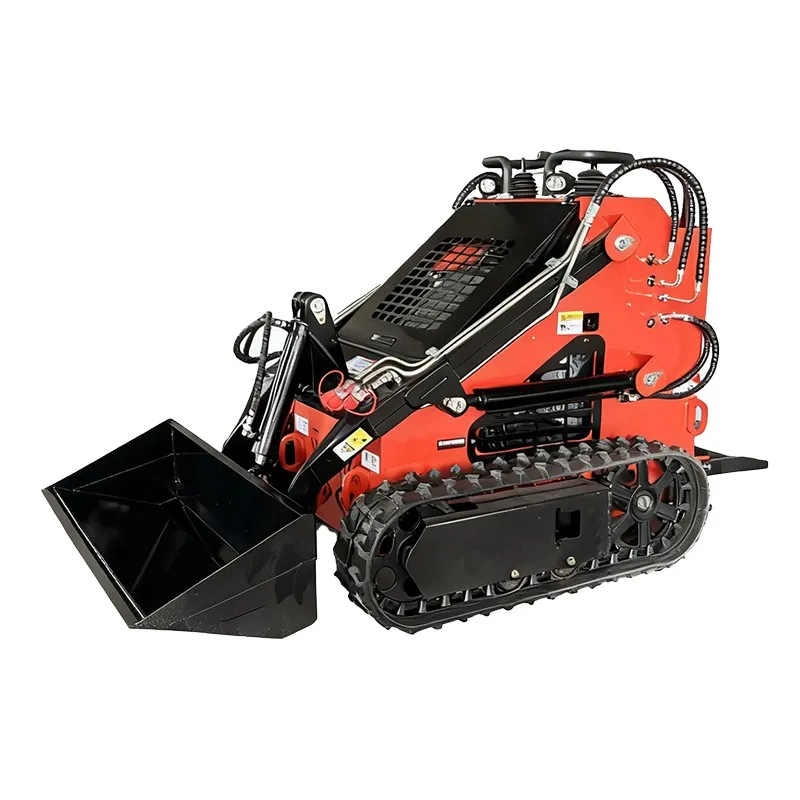
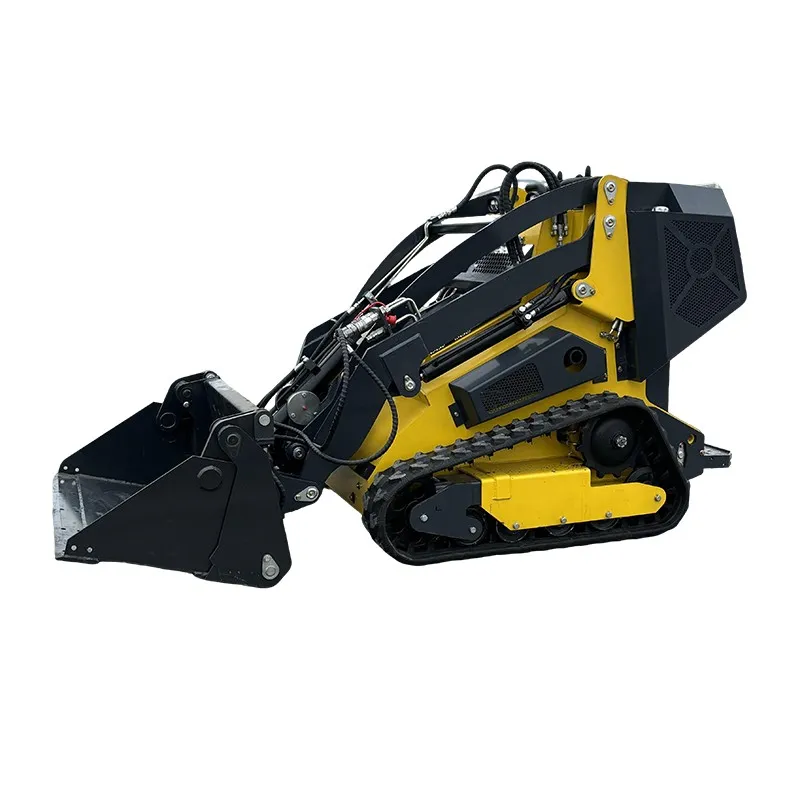
When most people hear 'compact track loader for demolition', they picture a machine just knocking down walls. That's the first mistake. It's not just a smaller bulldozer. The real value is in the controlled chaos—the grappling, sorting, and navigating a site that's actively falling apart around you. If you're not thinking about attachment compatibility, stability on shifting debris, and sheer hydraulic power to both push and precision-pick, you're buying the wrong machine for the job.
The Core Misconception: It's All About Force
New guys always look at the specs for breakout force and tipping load. Sure, you need that. But in a demo site, force is useless without control. I've seen machines with impressive numbers on paper get stuck because the operator couldn't manage the load distribution when pulling a beam from a precarious pile. The undercarriage is everything. A wide, low-center-of-gravity track system isn't for marketing; it's for survival. You're not on flat ground. You're on a terrain of broken concrete, rebar, and voids. One wrong move and you're tipped or, worse, have a track fall into a hidden basement void.
Which brings me to a specific point: track wear. In demolition, you're not just driving on abrasive surfaces; you're spinning on them. Pivoting to position a grapple arm on a slab while your tracks grind against crushed brick and mortar eats through rubber or steel. I've had better long-term results with multi-ply rubber tracks from certain OEMs, even though the upfront cost is higher. The downtime from a blown track in the middle of a confined site cleanup? That cost dwarfs the part price.
There's a brand, Shandong Pioneer Engineering Machinery, that gets this balance. I came across their machines a few years back on a project where we needed a reliable secondary machine for interior strip-out. Their units, exported globally to places like the US and Australia, often come with reinforced undercarriages as a standard option for severe duty. It wasn't just an add-on; it was built into the design philosophy. Checking their site at sdpioneer.com, you can see their focus on structural durability for tough applications, which stems from their two decades of manufacturing and trade experience. That practical design thinking matters more than a flashy spec sheet.
Attachments: The Real Brain of the Operation
The loader itself is just a power pack. The attachment is your tool. And for demolition, the universal quick-attach plate is your best friend and worst enemy. Best friend for swapping from a grapple to a breaker in minutes. Worst enemy because if it's not maintained, or if it's a cheap aftermarket plate with too much slop, you'll lose massive efficiency and risk a catastrophic detachment.
We learned this the hard way. Used a compact track loader with a rented rotary grapple for sorting metal. The plate had wear we didn't catch. Mid-lift, the attachment shifted, the hydraulic lines got strained, and we blew a coupler. Not a safety incident, but a full day lost cleaning hydraulic fluid and waiting for parts. Now, the first thing we do is check the play in the attach system, even on a brand-new machine. It's a five-minute check that saves days.
For interior demolition, a four-in-one bucket is surprisingly versatile. It's not just for digging. You can use it to scrape, doze, clamp debris, and even as a rudimentary platform. But for structural teardown, you need a dedicated demolition grapple or a shear. The key is hydraulic flow. A standard auxiliary circuit might not cut it for a high-flow shear. You need to spec the machine with the right pump from the start. I've talked to guys who bought a machine for general use, then tried to slap on a high-demand attachment, and the machine just bogged down, overheating the hydraulics constantly. It's a fundamental mismatch.
The Forgotten Factor: Operator Environment
This is where you separate machines built for a farm from those built for a warzone. Demolition dust is fine, pervasive, and destructive. A standard cabin air filter clogs in hours. You need a pressurized cab with a two-stage or cyclonic pre-filter system. If the operator is breathing silica dust or can't see out the window, productivity plummets, and you've got a major health liability.
Then there's visibility. You need to see the corners of your machine, the attachment tip, and the ground immediately around your tracks. Some models have terrible blind spots right over the coupler area—exactly where you're trying to hook onto a concrete chunk. Glass area, mirror placement, and even rear-view cameras (though they get dusty fast) are critical. I prefer a cab layout where the controls are intuitive enough that the operator isn't looking down, but can keep eyes on the work constantly.
Noise and vibration are brutal in a demo compact track loader. A machine with poor cab insulation turns an 8-hour shift into an exhausting ordeal. Fatigue leads to mistakes. Mistakes lead to damage. We once had an operator complain of headaches and ringing ears after a week in a particular older model. We retrofitted better insulation, but it was a patch. When we later used a newer model from a manufacturer like the aforementioned Shandong Pioneer, the difference was night and day. The cab was clearly designed with operator endurance in mind, which translates directly to site efficiency and safety.
Case in Point: The Confined Space Teardown
Let me describe a real scenario. We were tearing down the interior of a 1950s brick warehouse for a retrofit. Space was tight, with existing columns every 20 feet. We couldn't use a large excavator inside. The job was for a compact track loader for demolition with a shear attachment to cut steel framing and a grapple to clear the debris.
The challenge wasn't power; it was maneuverability and weight. We needed a machine narrow enough to fit between columns but with enough counterweight to handle the shear without becoming a seesaw. We used a model with a variable-width track system—not common on all machines. Being able to retract the tracks slightly for tight passes, then extend them for maximum stability when shearing, was a game-changer. This isn't a feature you find on every base model; it's a specific configuration for complex demo work.
The other lesson was debris management. We couldn't just push piles. We had to actively load out into bins placed at the building's entrance. This meant constant, precise turning and travel over the very debris we were creating. A standard radial-lift machine struggled because the lift path throws the load forward, making it harder to place neatly into a container. A vertical-lift path machine, while sometimes sacrificing a bit of forward reach, gave us much better control to lift debris straight up and place it precisely. It slowed the knock-down phase but drastically accelerated the clean-up phase, which is often the bottleneck.
Longevity and the Cost of Cheap
In demolition, the true cost is total cost of ownership, not purchase price. A cheaper machine might save you $20k upfront. But if it needs a new hydraulic pump at 1,500 hours because it wasn't rated for the constant high-pressure cycling of a breaker, you've lost that savings and more in downtime and repair.
Look for things like hydraulic cooler size, the quality of hose routing and protection (are lines exposed to snagging on rebar?), and the accessibility of common service points. Can you check the track tension easily? Can you get to the battery and filters without a fight? On a busy site, easy daily maintenance gets done. Difficult maintenance gets skipped, leading to failures.
Companies that have been in the manufacturing game for a while, like Shandong Pioneer Engineering Machinery Co., Ltd., which has been developing since 2004 and recently expanded its production facility, often build these lessons into later models. Their experience exporting to demanding markets like Germany and Canada means their machines are tested against stringent performance and durability expectations. That history shows in the little details—better-placed grease zerks, protected wiring harnesses, and robust cooler guards. It's these details that let a compact track loader survive the punishment of demolition day after day, turning it from a disposable tool into a reliable asset on the job site.
Wrapping It Up: It's a System, Not a Product
So, if you're in the market for a demolition CTL, stop looking for a single best machine. You're looking for a system: the right base machine with the right undercarriage, paired with the right high-flow hydraulic circuit, connected to a well-maintained quick-attach, operating the right attachment, inside a cab that keeps an operator sharp. Ignoring any one of these points turns a potential powerhouse into a money pit or a safety hazard.
The industry chatter often focuses on the big, dramatic machines—the high-reach excavators. But in the trenches, doing the gritty, confined, and messy work, a properly spec'd and operated compact track loader is irreplaceable. Its versatility is its strength, but that versatility demands informed choices. It's not a commodity. It's a precision instrument for destruction.
Your decision shouldn't start with a brochure. It should start with the most challenging site you've got coming up. Work backwards from there. Everything else is just noise.
Related Products
Related Products