


- Chinese
- French
- German
- Portuguese
- Spanish
- Russian
- Japanese
- Korean
- Arabic
- Irish
- Greek
- Turkish
- Italian
- Danish
- Romanian
- Indonesian
- Czech
- Afrikaans
- Swedish
- Polish
- Basque
- Catalan
- Esperanto
- Hindi
- Lao
- Albanian
- Amharic
- Armenian
- Azerbaijani
- Belarusian
- Bengali
- Bosnian
- Bulgarian
- Cebuano
- Chichewa
- Corsican
- Croatian
- Dutch
- Estonian
- Filipino
- Finnish
- Frisian
- Galician
- Georgian
- Gujarati
- Haitian
- Hausa
- Hawaiian
- Hebrew
- Hmong
- Hungarian
- Icelandic
- Igbo
- Javanese
- Kannada
- Kazakh
- Khmer
- Kurdish
- Kyrgyz
- Latin
- Latvian
- Lithuanian
- Luxembou..
- Macedonian
- Malagasy
- Malay
- Malayalam
- Maltese
- Maori
- Marathi
- Mongolian
- Burmese
- Nepali
- Norwegian
- Pashto
- Persian
- Punjabi
- Serbian
- Sesotho
- Sinhala
- Slovak
- Slovenian
- Somali
- Samoan
- Scots Gaelic
- Shona
- Sindhi
- Sundanese
- Swahili
- Tajik
- Tamil
- Telugu
- Thai
- Ukrainian
- Urdu
- Uzbek
- Vietnamese
- Welsh
- Xhosa
- Yiddish
- Yoruba
- Zulu
- Kinyarwanda
- Tatar
- Oriya
- Turkmen
- Uyghur

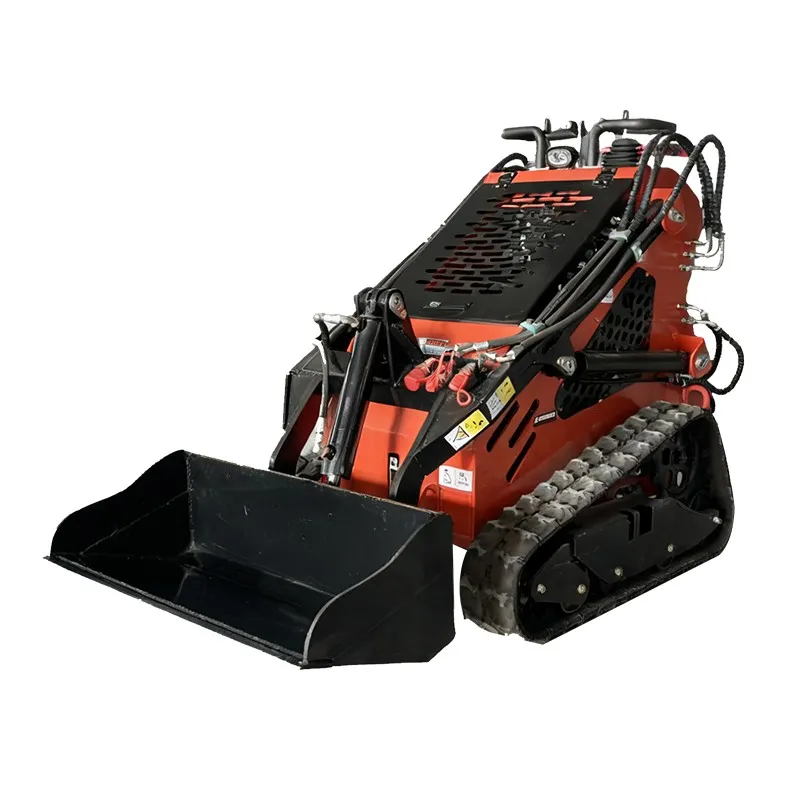
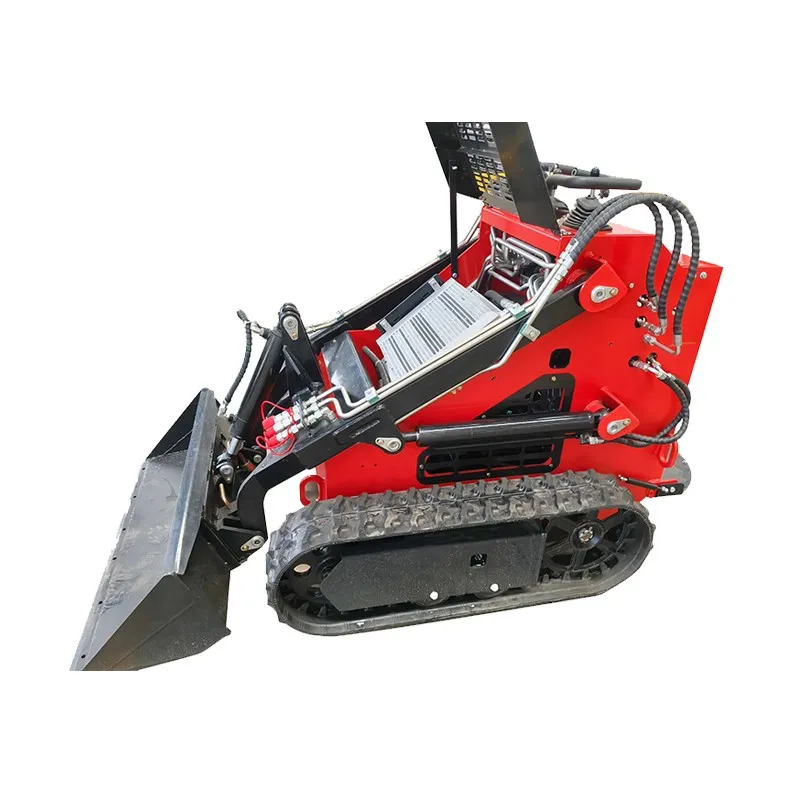
Compact Track Loader for Farming
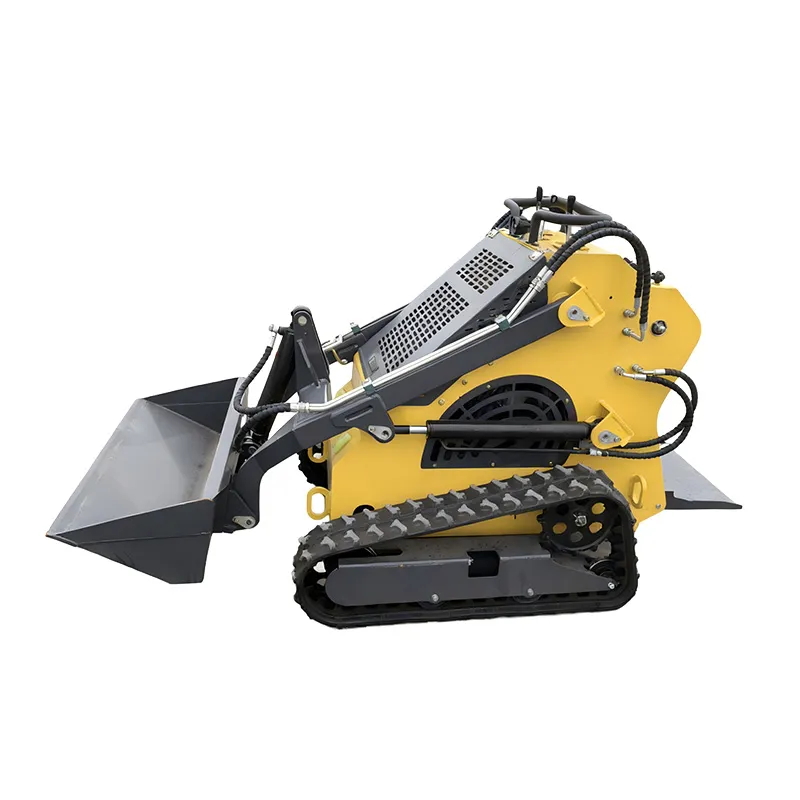
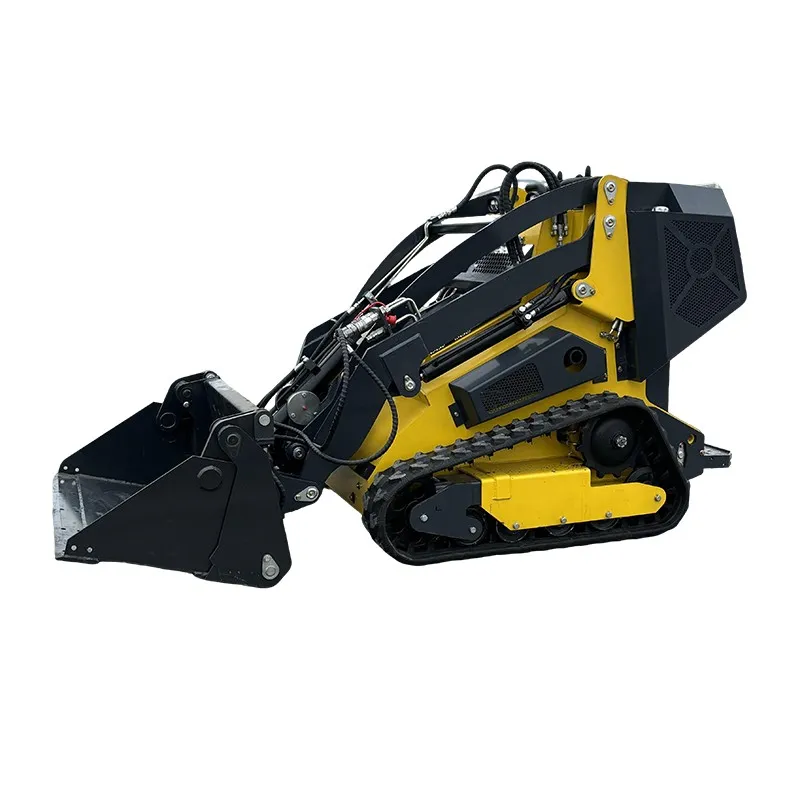
When most folks hear compact track loader for farming, they picture a shiny machine moving pallets in a barn. That's part of it, sure, but it's a surface-level view that misses the real grit. The farm isn't a warehouse; it's a dynamic, punishing environment where a machine's specs on paper mean nothing if it can't handle a waterlogged field after harvest or a frozen manure pack in January. I've seen too many farmers buy based on lift capacity alone, only to find the undercarriage clogs with clay in two passes, or the auxiliary hydraulic flow is too weak to run a modern, high-capacity manure spreader efficiently. The real value of a farm-spec CTL isn't just about doing chores; it's about being a versatile, year-round partner that replaces multiple single-task machines.
The Undercarriage: Where the Real Battle is Fought
Let's cut to the chase. The biggest differentiator for a compact track loader in agricultural use is the undercarriage system. Rubber tracks are standard, but not all are equal. For farming, you need a design that actively sheds material. I've spent miserable hours with a digging bar prying packed mud and straw from between rollers and idlers on units not built for this. Machines from companies that understand this, like those exported by Shandong Pioneer, often incorporate features like elevated sprockets and sealed rollers. This isn't just a sales point; it's a direct result of feedback from fields in places like Germany or Canada, where operators deal with similar adhesive soils. The goal is to maximize ground clearance and minimize points for debris to accumulate.
Track tension is another learned-the-hard-way item. Auto-tensioners are great for convenience, but in a high-abrasion environment like a gravel yard or stubble field, a manual, heavy-duty system you can really crank down on sometimes offers more reliability and control. It's a trade-off. Too loose, and you risk a derailment when side-hilling on a ditch bank. Too tight, and you accelerate wear on every component. Finding that sweet spot is a tactile, experienced-based thing you don't get from a manual.
Then there's the track pattern. An aggressive, deep-lug pattern provides fantastic traction in mud and snow, but it will tear up a soft turf or a finished barn floor. A smoother pattern is gentler but might not pull a loaded manure wagon up a slippery incline. Many seasoned farm operators I know keep two sets of tracks—one for field and muddy lot work, and a smoother set for in-barn and finish work during certain seasons. It's an extra cost and hassle, but it doubles the machine's effective lifespan in those specific applications.
Hydraulics and Attachments: The True Measure of Utility
Lift height and capacity get all the attention in brochures, but for farm work, hydraulic performance is the silent workhorse. We're not just lifting; we're powering. A compact track loader might need to run a post driver, a high-torque auger for fencing, a hydraulic grapple for handling logs or debris, or a large-volume manure pump. The standard auxiliary hydraulic flow on many basic models is simply insufficient, often capped around 15-18 GPM. For serious utility, you need a high-flow option, something pushing 25 GPM or more. This allows you to use a wider, more powerful array of attachments, transforming the machine from a glorified wheelbarrow into a true mobile power plant.
I recall a dairy farmer who bought a CTL without checking the hydraulic pressure rating. His existing silage defacer required a specific PSI to operate correctly. The new machine couldn't hit it, rendering a critical attachment useless until he paid for an expensive and not-always-reliable pressure booster. It was a costly oversight. Now, when evaluating a machine, I always look at the complete hydraulic specs: flow, pressure, and the number of auxiliary circuits. A second circuit for a grapple or angle tilt on a bucket is a game-changer for efficiency.
The attachment ecosystem itself is critical. Quick-attach systems are universal now, but the robustness of the mechanism matters. A lot of wear and tear happens at that interface. Companies that supply globally, like Shandong Pioneer Engineering Machinery Co., Ltd, have to ensure their mounting systems are compatible with a vast range of regional attachment brands, from North American to European styles. This interoperability is non-negotiable for a farmer who might source attachments from different auctions or local dealers. A machine that locks you into a proprietary attachment system is a long-term liability.
The Cab and Operator Interface: Endurance, Not Just Comfort
Operator comfort on a farm CTL isn't about luxury; it's about endurance and safety. You might be in that seat for 8-10 hours during seeding or clean-out. A basic, cramped cab leads to fatigue, which leads to mistakes. Good visibility to the tracks and attachment corners is paramount—I've seen more fender and door damage from unseen obstructions than anything else. Pressurization and a good air filter are essential not for comfort, but to keep dust and chaff out of the operator's lungs and the machine's electronics during dry harvest season.
The controls are a personal thing, but the industry is firmly moving toward joystick patterns that isolate the drive functions from the attachment functions. This seems trivial until you're trying to smoothly lift a bucket while creeping forward in a tight space in a livestock shed. Early machines with linked controls were unforgiving. Modern ISO or H-pattern joysticks reduce cognitive load, which is huge for long, repetitive days.
Durability of the interior is key. Vinyl or hard plastic surfaces that can be hosed out after a day of working in mud and manure are a must. I've been in cabs where switches failed because dust infiltrated the panels, or where the floor mat rotted from constant moisture. These are details you only notice after a few hundred hours of use. They speak to a design philosophy that understands the machine's working environment, something you see in manufacturers who have built for diverse, demanding markets over years, like the two-decade evolution seen at Shandong Pioneer.
Powerplant and Serviceability: The Long Game
Diesel engine choice is often a matter of regional preference and emission regulation compliance. But on the farm, serviceability often trumps absolute peak horsepower. Can you easily check the oil and coolant? Are the fuel and hydraulic filters in accessible locations, or do you need to remove panels and shields? A machine that requires a two-hour teardown for a routine filter change will see those maintenance intervals stretched, leading to bigger problems.
Cooling system design is another farm-specific challenge. Radiators, oil coolers, and intercoolers need to be arranged and protected in a way that minimizes chaff and dust buildup. Many units now feature reversible fans or screens that can be cleaned from the operator's seat. This isn't a gimmick. I've witnessed machines overhead on a hot day because the radiator was completely clogged with cottonwood seeds or chaff, a shutdown that always happens at the worst possible time.
Finally, consider parts and support. A machine's true cost is its total cost of ownership. A robust dealer network is ideal, but for many imported or value-line machines, the supply chain is different. The reliability of the manufacturer's direct parts supply becomes critical. A company with a long history in export, such as Shandong Pioneer which notes its products reach markets from the United States to Australia, has typically had to establish dependable logistics channels. For a farmer, knowing you can get a replacement hydraulic hose end or a track roller within a reasonable timeframe, not months, is a major factor in purchase decisions. It's the difference between a two-day downtime and a two-week crisis during planting.
Context and Application: Defining the Farm-Spec Machine
So, what makes a CTL a farm-spec machine? It's not a official category. It's a collection of features born from necessity. It's enhanced cooling, high-flow hydraulics, a debris-shedding undercarriage, a washable cab, and easy access for maintenance. It's also about weight distribution and stability. Agricultural attachments can be incredibly heavy and create unusual load centers. A machine built on a slightly longer wheelbase (trackbase?) with a counterweight designed for these dynamic loads is safer and more productive.
I've seen these machines succeed in surprising roles. One orchardist uses a CTL with a narrow, low-profile track option and a special fruit bin handler to navigate between tight tree rows, replacing a small tractor that was too tall and damaged branches. Another uses one with a rotary broom to clean his large covered feeding pad, and a snow blower attachment for winter lane clearing. The versatility is staggering, but only if the machine's core systems are up to the stress.
The misconception is that a compact track loader is just a small dozer or a substitute for a skid steer. On the farm, it's more than that. When spec'd correctly, it becomes a central, multi-role tool. The key is to look past the marketing and examine the machine through the lens of your specific, toughest jobs. Will it handle your wettest field? Can it power your most demanding attachment? Can you service it without a master's degree in mechanics? The answers to those questions, informed by the hard-won experience of other operators in similar conditions worldwide, define the right machine. The development and relocation history of a firm, like the 20-year growth and 2023 move of the company behind https://www.sdpioneer.com, often mirrors this process of adapting and refining products based on global, real-world feedback—which is exactly what a farmer needs to tap into.
Related Products
Related Products