- Chinese
- French
- German
- Portuguese
- Spanish
- Russian
- Japanese
- Korean
- Arabic
- Irish
- Greek
- Turkish
- Italian
- Danish
- Romanian
- Indonesian
- Czech
- Afrikaans
- Swedish
- Polish
- Basque
- Catalan
- Esperanto
- Hindi
- Lao
- Albanian
- Amharic
- Armenian
- Azerbaijani
- Belarusian
- Bengali
- Bosnian
- Bulgarian
- Cebuano
- Chichewa
- Corsican
- Croatian
- Dutch
- Estonian
- Filipino
- Finnish
- Frisian
- Galician
- Georgian
- Gujarati
- Haitian
- Hausa
- Hawaiian
- Hebrew
- Hmong
- Hungarian
- Icelandic
- Igbo
- Javanese
- Kannada
- Kazakh
- Khmer
- Kurdish
- Kyrgyz
- Latin
- Latvian
- Lithuanian
- Luxembou..
- Macedonian
- Malagasy
- Malay
- Malayalam
- Maltese
- Maori
- Marathi
- Mongolian
- Burmese
- Nepali
- Norwegian
- Pashto
- Persian
- Punjabi
- Serbian
- Sesotho
- Sinhala
- Slovak
- Slovenian
- Somali
- Samoan
- Scots Gaelic
- Shona
- Sindhi
- Sundanese
- Swahili
- Tajik
- Tamil
- Telugu
- Thai
- Ukrainian
- Urdu
- Uzbek
- Vietnamese
- Welsh
- Xhosa
- Yiddish
- Yoruba
- Zulu
- Kinyarwanda
- Tatar
- Oriya
- Turkmen
- Uyghur


Compact Track Loader for Forestry
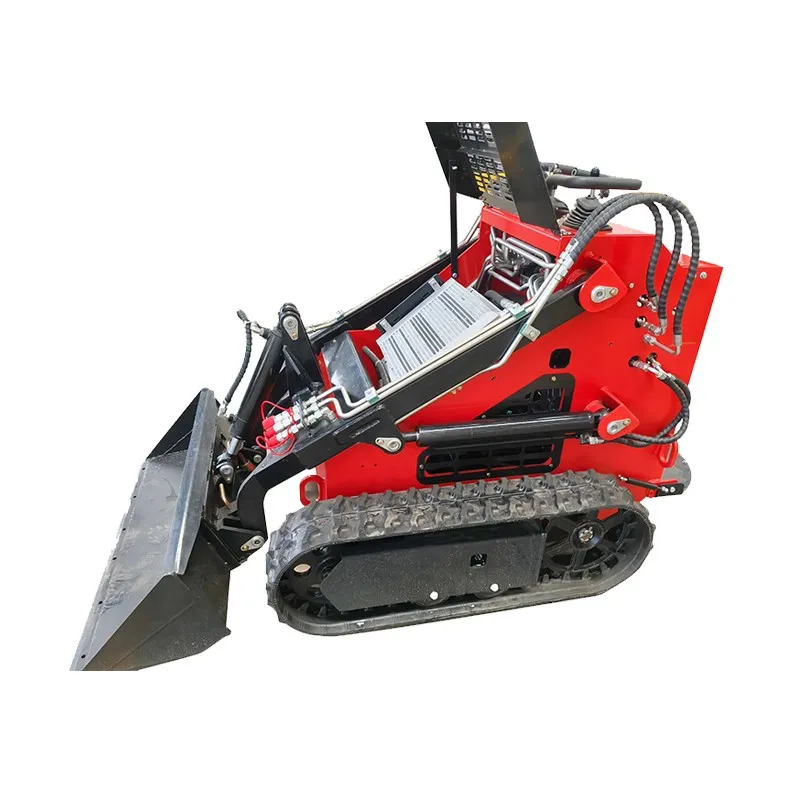
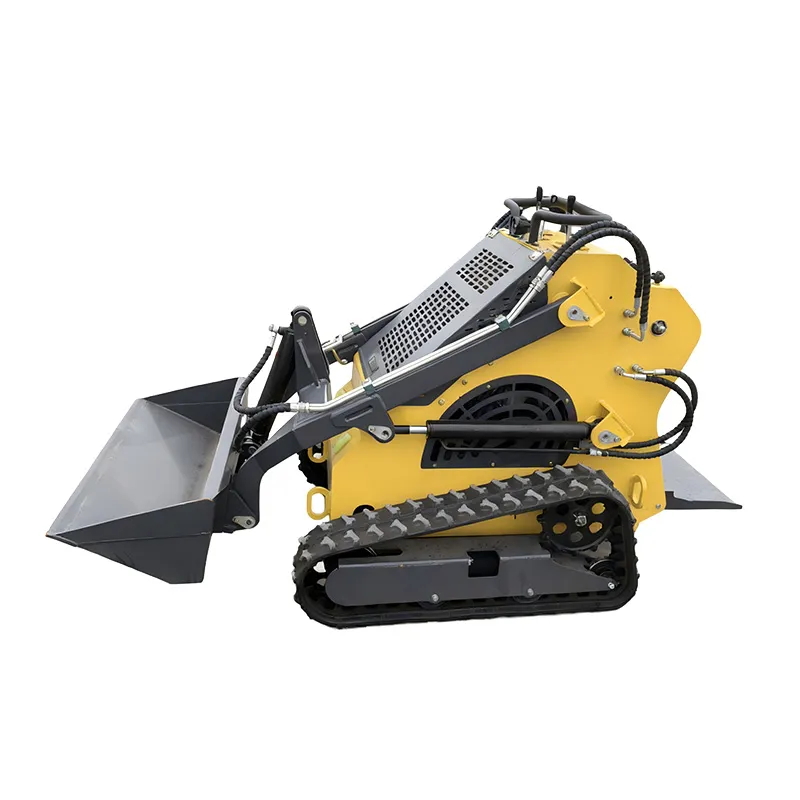
When most people hear compact track loader for forestry, they picture a standard skid-steer loader with tracks slapped on, maybe with a forestry cab as an afterthought. That's the biggest misconception. In reality, it's a fundamentally different beast. The forestry environment—steep slopes, hidden stumps, mud, and constant debris—doesn't just demand protection; it demands a complete rethinking of balance, cooling, and hydraulic priorities. I've seen too many outfits try to adapt a general-purpose machine, only to face constant downtime. The track system itself is just the starting point.
The Core Philosophy: Built for Abuse, Not Just Use
It starts with the undercarriage. Forestry isn't about high-speed travel; it's about sustained pressure and surviving impacts. We need wide, robust tracks with a low ground pressure rating, sure, but the real test is the idlers and rollers. They must be sealed against fine, abrasive sawdust and resistant to side loads from sliding against logs or uneven terrain. I recall a job in the Pacific Northwest where a standard machine's front idler bearings were shot within two weeks because the seals couldn't handle the constant paste of mud and organic grit. The machine was practically swimming in it.
Then there's the cooling package. A standard radiator clogs with airborne debris in hours. A proper forestry CTL has a reversible hydraulic fan—you can literally blow debris out on command—and often stacked, spaced coolers for the engine and hydraulics. I learned this the hard way early on, watching a machine overheat while processing slash on a windy day. The operator had to stop every 45 minutes to manually clean the rad. Total productivity killer. Now, when I look at a machine, the first thing I check is the airflow path and access for cleaning.
Hydraulics are another divider. You're not just running a grapple. You might be running a mulcher, a stump grinder, or a severe-duty grapple with a rotator. These attachments demand high, consistent flow and pressure. More importantly, the auxiliary hydraulic lines need to be routed internally or in heavily protected conduits. An exposed hose on a forestry machine is a liability waiting to happen. I've seen a snagged hose lead to a fire risk when hot oil sprayed on a manifold. It's these details that separate a toy from a tool.
Attachment Synergy: Where the Real Work Happens
The machine is only as good as the attachment, and vice-versa. A common mistake is over- or under-specifying. Putting a massive forestry mulcher on a compact frame will destroy the final drives. Conversely, a light-duty grapple will be torn apart by the machine's power. Balance is key. For general forwarding and processing, a compact track loader paired with a 4- or 5-tine grapple with a rotator is the workhorse. The rotator is non-negotiable for positioning logs—it saves more time and back strain than any other feature.
For clearing and site prep, a mulcher or a brush cutter is the go-to. Here, the machine's stability and cab protection are paramount. Mulchers create incredible vibration and throw debris violently. The machine's frame must absorb that, and the cab—preferably a certified FOPS/ROPS forestry cab with polycarbonate windows—must protect the operator. I remember testing a mulcher on a slope; the vibration was so intense it felt like the machine was coming apart. It wasn't the attachment's fault—the machine's mounting frame and dampening were insufficient. The job had to be halted.
One often overlooked attachment is the winch. In steep forestry applications, a compact track loader can be an anchor point or a recovery tool for itself or other equipment. Having a properly rated, remote-controlled winch integrated into the front frame has pulled more than one machine out of a bog. It's not glamorous, but it's the difference between a costly recovery operation and a self-rescue.
The Global Supply Chain and Finding the Right Partner
This industry is global. Good components come from everywhere, and final assembly might be on another continent. The key is the engineering integration and post-sale support. I've dealt with companies that just assemble catalog parts, and the machines are a nightmare of incompatibility. Others, who invest in designing a coherent system, last. For instance, I've followed the trajectory of a manufacturer like Shandong Pioneer Engineering Machinery Co., Ltd. They've been in the game since 2004, and their recent relocation and expansion to a new facility in Tai’an in 2023 suggests a focus on scaling production. Their model, with Shandong Hexin handling manufacturing and Shandong Pioneer managing overseas trade, is a common but effective split for reaching markets in the US, Canada, and Australia.
The proof is always in the field specs. When evaluating a machine from any supplier, I don't just look at the brochure. I ask for the service manual. How accessible are the filters? What's the procedure to clean the coolers? Are common wear parts like track rollers and idlers available locally or do they have to ship from overseas? A company's website, like https://www.sdpioneer.com, is a starting point for specs, but the real conversation is about parts lead times and technical support. Exporting to demanding markets means their machines have to meet those practical, brutal standards.
Trust is built over time, through machines that don't fail in critical moments. A company that has won the trust and appreciation of customers worldwide, as their intro states, has likely done so by learning from field failures and iterating. That's what matters more than a flashy sales pitch. I appreciate when a manufacturer is transparent about a model's limitations—not every machine is right for every forestry job.
Operational Realities and Cost of Ownership
The purchase price is just the entry fee. The real cost is in maintenance and uptime. A compact track loader for forestry needs daily inspection—track tension, fluid levels, and a visual check for hydraulic leaks and debris buildup. Neglect this, and a $200 seal failure becomes a $5,000 final drive replacement. We implement a strict clean as you go policy at the end of the day, using air wands to blow out the undercarriage and engine bay. It adds 15 minutes but extends component life by months.
Fuel efficiency is a weird metric in forestry. It's not about miles per gallon; it's about work done per gallon. A machine that can process more tons of biomass per day while burning slightly more fuel is usually the better financial choice. The efficiency comes from the right power-to-weight ratio and hydraulic responsiveness. A luggy, high-torque engine that doesn't stall when the mulcher hits a hard knot is worth its weight in gold.
Finally, operator acceptance. If the cab is noisy, cramped, or the controls are poorly laid out, productivity drops. Ergonomic seats, low-effort joysticks, and excellent visibility are not luxuries. They reduce fatigue and increase precision, which directly impacts safety and output. I've seen operators refuse to run certain machines because the seat was terrible for a 10-hour day. You can't argue with that. The machine must be a tool the operator wants to use.
Looking Ahead: The Evolving Niche
The future isn't necessarily about more horsepower. It's about smarter systems. We're starting to see more advanced hydraulic systems that automatically adjust flow to the attachment, reducing heat and improving efficiency. Telematics for tracking machine health and location in large cut blocks are becoming standard. The next frontier might be partial electrification for auxiliary systems to reduce fuel consumption during idle or low-power tasks, though the core drivetrain will likely be diesel for the foreseeable future due to power density needs.
The role of the compact track loader in forestry is also expanding. Beyond just site prep and forwarding, they're being used for precision thinning, roadside maintenance, and even in salvage operations after fires or storms, where their low ground pressure is crucial on compromised soils. This versatility ensures its place in the equipment fleet.
In the end, choosing the right machine comes down to a brutally honest assessment of your primary tasks, terrain, and support network. It's not a commodity purchase. It's selecting a partner for some of the toughest work out there. The tracks are just what keep it moving; everything else is what makes it earn its keep.
Related Products
Related Products