- Chinese
- French
- German
- Portuguese
- Spanish
- Russian
- Japanese
- Korean
- Arabic
- Irish
- Greek
- Turkish
- Italian
- Danish
- Romanian
- Indonesian
- Czech
- Afrikaans
- Swedish
- Polish
- Basque
- Catalan
- Esperanto
- Hindi
- Lao
- Albanian
- Amharic
- Armenian
- Azerbaijani
- Belarusian
- Bengali
- Bosnian
- Bulgarian
- Cebuano
- Chichewa
- Corsican
- Croatian
- Dutch
- Estonian
- Filipino
- Finnish
- Frisian
- Galician
- Georgian
- Gujarati
- Haitian
- Hausa
- Hawaiian
- Hebrew
- Hmong
- Hungarian
- Icelandic
- Igbo
- Javanese
- Kannada
- Kazakh
- Khmer
- Kurdish
- Kyrgyz
- Latin
- Latvian
- Lithuanian
- Luxembou..
- Macedonian
- Malagasy
- Malay
- Malayalam
- Maltese
- Maori
- Marathi
- Mongolian
- Burmese
- Nepali
- Norwegian
- Pashto
- Persian
- Punjabi
- Serbian
- Sesotho
- Sinhala
- Slovak
- Slovenian
- Somali
- Samoan
- Scots Gaelic
- Shona
- Sindhi
- Sundanese
- Swahili
- Tajik
- Tamil
- Telugu
- Thai
- Ukrainian
- Urdu
- Uzbek
- Vietnamese
- Welsh
- Xhosa
- Yiddish
- Yoruba
- Zulu
- Kinyarwanda
- Tatar
- Oriya
- Turkmen
- Uyghur


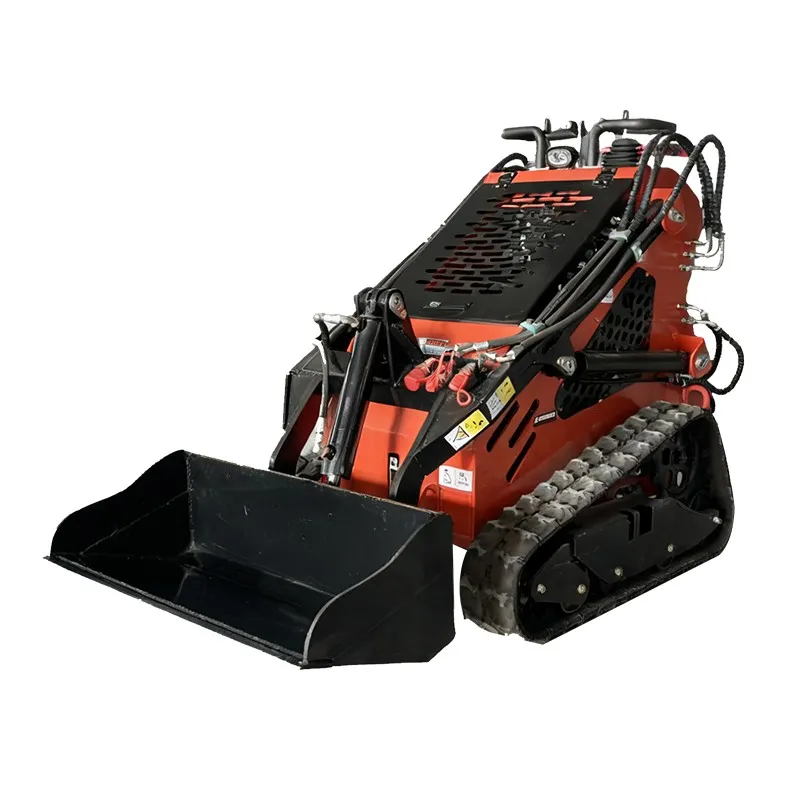
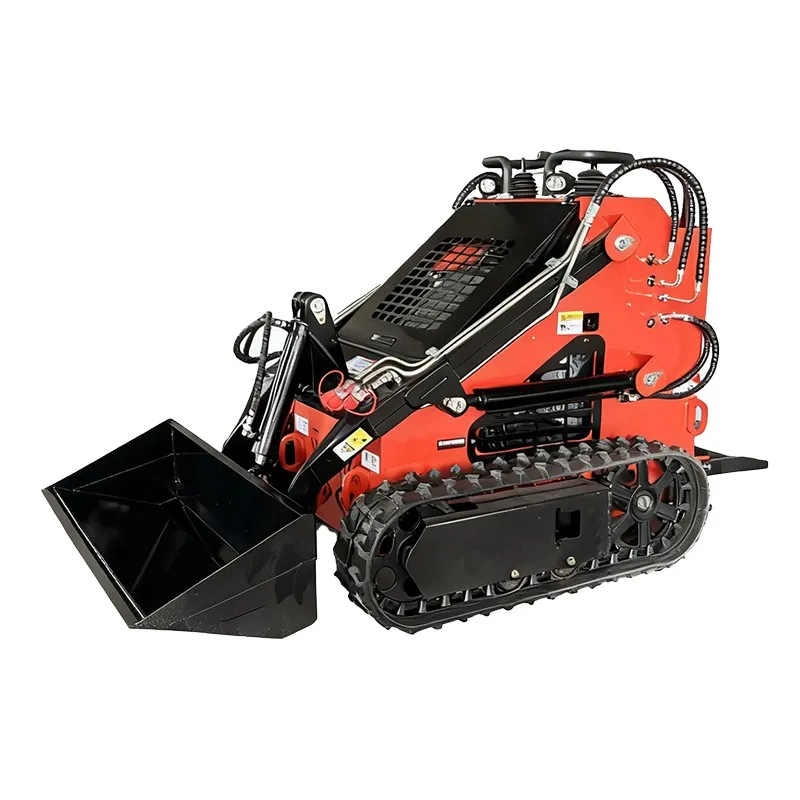
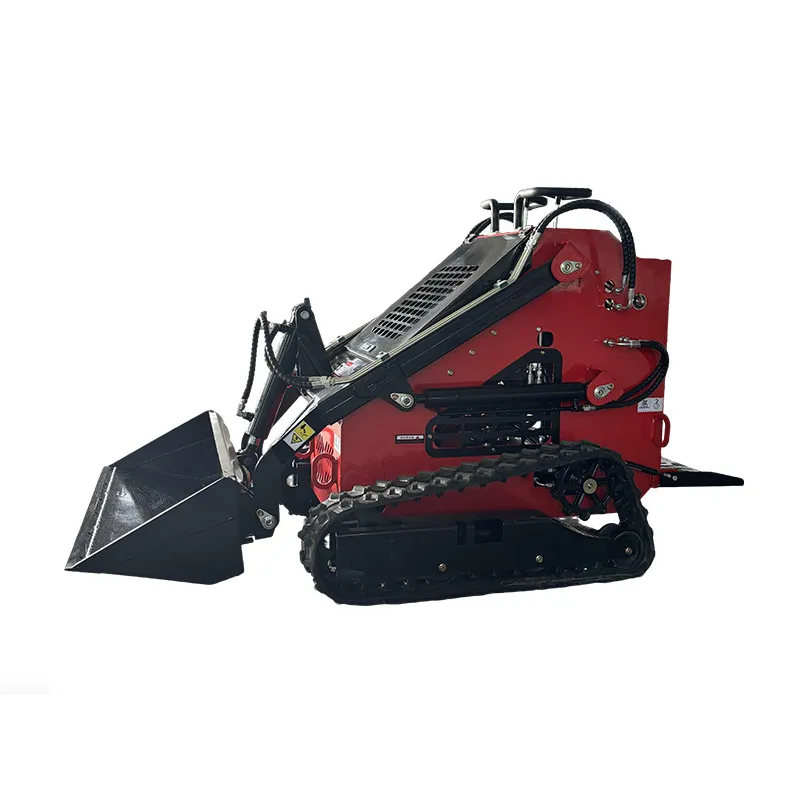
Compact Track Loader for Landscaping
When most folks hear compact track loader for landscaping, they picture a neat little machine gliding over a lawn. That's the first mistake. It's not just about not leaving marks; it's about what happens when you hit a hidden tree root, a soggy patch from yesterday's rain, or a slope that's steeper than it looked. The real test isn't on the brochure, it's in the unpredictable mess of a real job site.
The Track vs. Tire Debate Isn't Simple
Everyone gets hung up on tracks for less ground pressure. Sure, that's the textbook answer. But on a landscaping project, the advantage isn't just about not sinking. It's about continuous, predictable traction when you're moving a full bucket of wet topsoil or crushed stone. With tires, you can spin, dig in, and tear up the very surface you're supposed to be refining. The compact track loader just... claws its way through. The trade-off? Speed. On a long, flat, hard run, a skid-steer with tires will get there faster. So if your day is just hauling mulch across a flat property, maybe tires win. But how many days are truly just that?
Then there's the undercarriage. This is where new operators get burned. You can't run these things like a tank. Pivoting on a hard surface, like asphalt or compacted base, is murder on the tracks. You hear that squealing, grinding sound? That's money wearing off. I learned to always plan my turns, use wide arcs on hard ground, and save the spot-turns for soft dirt. It feels inefficient until you get your first four-figure repair bill for prematurely worn rails and rollers.
We tried a model from Shandong Pioneer Engineering Machinery Co., Ltd on a residential estate job last year. I was skeptical—often you get what you pay for. But their unit, sourced through their overseas trade arm, had a surprisingly robust undercarriage design. The track tensioning system was straightforward, a big plus for daily maintenance checks. It held up through a season of mixed hardscape and softscape work. It made me check out their site at https://www.sdpioneer.com more closely. They've been at this for two decades, and it shows in the practical build choices, not just flashy specs.
Attachments Are Where the Real Work Gets Done
The machine itself is just a power source. The attachment is the tool. And for landscaping, the bucket is just the start. The real game-changer is a mulching head or a rotary broom. I remember using a standard bucket to try and grade a final seedbed. It was never quite right—too choppy, too compacted in spots. Switched to a power rake attachment on the compact track loader, and it was like using a fine brush instead of a shovel. It creates that perfect, loose tilth in a single pass.
But compatibility is a hidden nightmare. Not all universal quick-attach systems are truly universal. Pin sizes, hydraulic flow rates (GPM), and pressure (PSI) need to match. We once rented a fancy grapple for clearing brush. Hooked it up to an older machine, and it moved like it was asleep. The machine's hydraulic system couldn't feed it enough oil flow. Lesson learned: know your machine's aux hydraulic specs as well as you know its engine.
Landscaping also means a lot of material handling. A pallet fork is indispensable for moving sod, pavers, and block. But you need to be mindful of the machine's rated operating capacity. Load it up with wet, heavy sod near max capacity, then try to lift it onto a slight incline? You'll feel the rear end get light, fast. Counterweights are not optional; they're part of the essential setup for this kind of work.
The Daily Grind: Operator Comfort and Site Logistics
If you're in the seat for 8 hours, the operator station stops being a marketing term. It's your office. Climate control isn't a luxury in summer; it's what prevents heat exhaustion and keeps productivity up. Low-effort controls are critical. The first time I ran a machine with ISO pattern controls (left stick for drive, right for lift/tilt), it felt alien. Now, I insist on it. It reduces fatigue and mental load when you're constantly switching between precise grading and traveling across site.
Transport is a constant puzzle. A compact track loader with a cab and all attachments needs a serious trailer and a strong truck. We sized up our rig after a white-knuckle drive with a machine that was too close to our trailer's weight limit. It's not just about getting to the job; it's about doing it safely, every time. Also, width matters. Will it fit through the standard backyard gate? Often, you need to measure first, or plan to knock down a section of fence (with permission, of course) for access.
Dust management. This is a huge one in landscaping, especially when grading or milling. A good sealed cab with positive pressure and an air filter is a must. I've been in open ROPS machines on a dry day, and you end the day coughing dirt. It's unhealthy and unprofessional. Now, a quality cab is a non-negotiable spec for any machine we buy or rent long-term.
Cost of Ownership: The Numbers They Don't Show You
The purchase price is the entry fee. The real cost is in the upkeep. Tracks are the big one. Running on abrasive surfaces like decomposed granite or concrete washout? Expect to replace tracks and possibly rollers much sooner. We keep a log: engine hours vs. surface type. It helps us forecast maintenance and price jobs more accurately. A $20,000 machine can eat $4,000 in undercarriage parts in a few hundred hours if you're not careful.
Fluids and filters. It sounds basic, but sticking to the service intervals religiously is what separates machines that last 5,000 hours from those that die at 2,000. We use a centralized service log for all our equipment. The machine from Shandong Pioneer had easily accessible service points—a small but critical design feature that means the maintenance actually gets done instead of being put off.
Downtime is the ultimate cost. When your primary machine is down, the whole project stalls. That's why dealer or supplier support matters. For a company like Shandong Pioneer, which exports to markets like the US, Canada, and Australia, having accessible parts diagrams and a responsive parts network is as important as the iron itself. Their long development history, moving to a new production facility in Tai'an, suggests a focus on scaling up reliable production, which indirectly benefits end-users through better parts availability.
Case in Point: A Residential Pond Project
This job summed it all up. We had to excavate a pond, shape the banks, move and place large boulders, and finally grade and seed the surrounding area. A wheeled skid-steer would have been useless in the excavated, muddy base. The compact track loader was the star. We used a tooth bucket for excavation, switched to a grapple for the boulders, and finished with a power rake for the final grade.
The challenge came with the slopes. The pond banks were at a 3:1 grade. We had to carefully calculate the machine's stability limits. We loaded the bucket heavy for counterbalance when traveling up the slope and kept it low. It was slow, methodical work. This is where you feel the machine's true stability and hydraulics. A jerky or weak hydraulic system would have made placing those boulders precisely nearly impossible.
In the end, the job was a success, but it highlighted that the machine is only as good as the plan and the operator. You need to understand not just how to run it, but its physics—its center of gravity, its lift chart at various heights and reaches. That knowledge, more than any spec sheet, is what makes a compact track loader an indispensable tool for serious landscaping. It's not a magic box; it's a powerful, nuanced instrument that rewards experience and punishes carelessness.
Related Products
Related Products