- Chinese
- French
- German
- Portuguese
- Spanish
- Russian
- Japanese
- Korean
- Arabic
- Irish
- Greek
- Turkish
- Italian
- Danish
- Romanian
- Indonesian
- Czech
- Afrikaans
- Swedish
- Polish
- Basque
- Catalan
- Esperanto
- Hindi
- Lao
- Albanian
- Amharic
- Armenian
- Azerbaijani
- Belarusian
- Bengali
- Bosnian
- Bulgarian
- Cebuano
- Chichewa
- Corsican
- Croatian
- Dutch
- Estonian
- Filipino
- Finnish
- Frisian
- Galician
- Georgian
- Gujarati
- Haitian
- Hausa
- Hawaiian
- Hebrew
- Hmong
- Hungarian
- Icelandic
- Igbo
- Javanese
- Kannada
- Kazakh
- Khmer
- Kurdish
- Kyrgyz
- Latin
- Latvian
- Lithuanian
- Luxembou..
- Macedonian
- Malagasy
- Malay
- Malayalam
- Maltese
- Maori
- Marathi
- Mongolian
- Burmese
- Nepali
- Norwegian
- Pashto
- Persian
- Punjabi
- Serbian
- Sesotho
- Sinhala
- Slovak
- Slovenian
- Somali
- Samoan
- Scots Gaelic
- Shona
- Sindhi
- Sundanese
- Swahili
- Tajik
- Tamil
- Telugu
- Thai
- Ukrainian
- Urdu
- Uzbek
- Vietnamese
- Welsh
- Xhosa
- Yiddish
- Yoruba
- Zulu
- Kinyarwanda
- Tatar
- Oriya
- Turkmen
- Uyghur


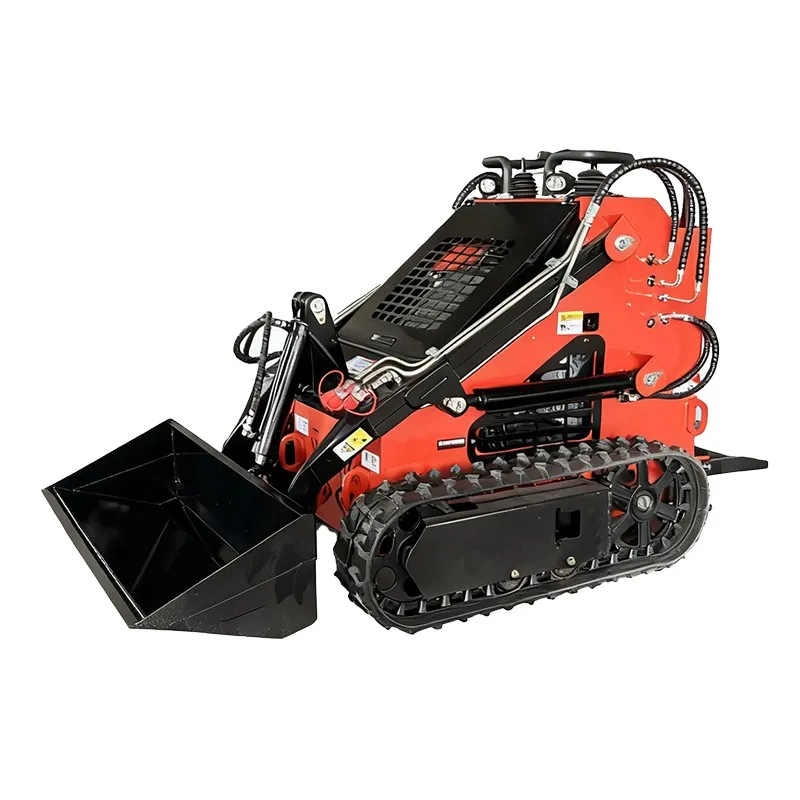
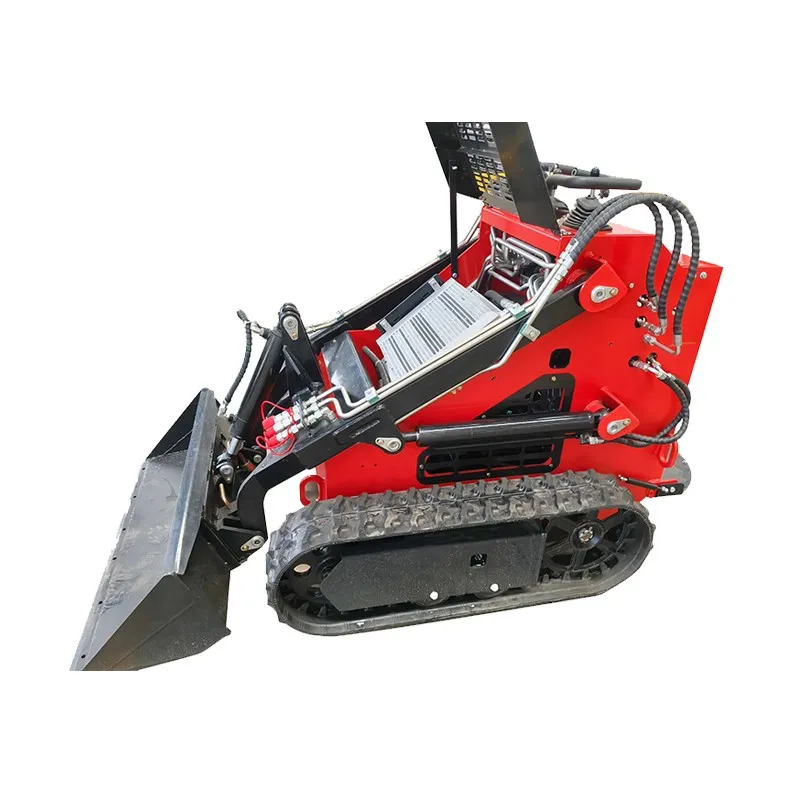
compact track loader for muddy terrain
When someone says 'compact track loader for muddy terrain', a lot of folks immediately think it's all about the tracks. Just slap some rubber tracks on a skid steer and you're golden, right? That's the first place people get tripped up. The truth is, it's a system – the undercarriage design, the track's geometry and tension, the machine's weight distribution, and crucially, the operator's understanding of how to work with the muck, not just plow through it. I've seen too many projects where a machine gets bogged down because someone assumed the equipment would do all the thinking.
The Core of Flotation: It's More Than Just Wide Tracks
Ground pressure is the starting point, but it's not the whole story. A machine with a lower ground pressure figure will theoretically sink less. But in real, sticky mud, you're dealing with suction, viscosity, and hidden hardpan. A wide-track machine from a manufacturer like Shandong Pioneer Engineering Machinery Co., Ltd might spec out well on paper, but the real test is in a saturated clay pit. The track's cleat pattern is huge here. Too aggressive, and it digs in like a paddle wheel; too shallow, and you get zero cleaning action, packing the tracks solid with mud until they become slicks.
I recall a drainage project in the Pacific Northwest. We were using a standard model, and in the persistent drizzle and clay, the tracks would load up completely within 20 minutes of work. We'd have to stop, find a firm spot, and spin the tracks to clear them—massive downtime. The solution wasn't necessarily a bigger machine, but one with a different track design that promoted better self-cleaning. That's a detail you only learn by getting stuck, literally.
Maintenance access on these undercarriages is another unsung hero. Mud packs bearings, tensions idlers, and wears on rollers. If you can't easily pressure wash or grease critical points, you're looking at premature wear. Some of the newer designs from various global players, including offerings you'd find through a dedicated exporter like Shandong Pioneer (their trade portal is at https://www.sdpioneer.com), are paying more attention to this, with easier access panels and sealed components, which is a direct response to field headaches.
Power and Hydraulics: Avoiding the Stall-Out
Mud demands torque, not just horsepower. You need that low-end grunt to keep the tracks turning when they're under extreme load. A common failure is an operator trying to 'power out' of a rut by just hammering the controls. This can stall the hydraulics or, worse, cause a track to derail because one side bit in and the other spun. Modern machines with intelligent hydraulic systems that can sense load and redistribute flow are a game-changer, preventing a lot of self-inflicted damage.
The auxiliary hydraulics for attachments matter too. Say you're using a mulching head or a brush cutter in wet, boggy areas. You need consistent hydraulic flow even when the machine is working hard to move. A dip in power to the attachment when the tracks are under strain kills productivity. It's a balancing act in the machine's design that separates a fair-weather performer from a true mud machine.
From my experience, this is where the manufacturer's depth shows. A company with two decades in the game, like the entity behind Shandong Hexin (manufacturing) and Shandong Pioneer (overseas trade), has likely iterated their hydraulic designs based on feedback from diverse, tough environments—from German forestry to Australian construction sites. That long-term feedback loop is irreplaceable for refining a powertrain.
The Operator's Role: Technique Over Muscle
This might be the most overlooked part. You can have the best compact track loader for muddy terrain on site, and a green operator can immobilize it in ten minutes. The key is to keep the machine as level as possible and use a 'float' or gentle back-and-forth motion to find purchase. Turning in deep mud is a high-risk maneuver; it's often better to drive straight out and turn on firmer ground.
I learned this the hard way early on, trying to make a sharp turn near a trench in soft ground. The inside track dug down, the machine listed, and we had to get an excavator to pull us out. Embarrassing and expensive. Now, the first thing I do on a muddy site is a walk-through, identifying firm pathways, no-go zones, and planning my work path to minimize tight turns.
Another pro tip: use the attachment as a counterbalance or a tool. A loaded bucket can be kept low to improve stability. An empty machine is often more prone to getting stuck because its weight is less evenly distributed over the track footprint. It's these little nuances that you don't get from a manual.
Attachment Compatibility: The Right Tool for the Slimy Job
Not all attachments are created equal for mud work. A standard bucket can be a liability. A bucket with a spade-nose or a more open design sheds mud better. For grading muddy surfaces, a land leveling blade often works better than a box blade because it doesn't collect and drag as much material. The machine's ability to handle these attachments smoothly, without jerky hydraulics, is critical.
We were once spreading gravel on a soggy access road. The standard bucket was just gouging and creating ruts. Switching to a high-capacity, lighter-material bucket with wider geometry allowed us to spread a layer without digging in, essentially 'floating' the material on top. The right attachment changed the entire dynamic of the job.
This is a strong point for suppliers with broad experience. A company that exports to varied markets like the US, Canada, and Australia, as Shandong Pioneer does, has seen what attachments their loaders are paired with globally. That knowledge informs not just the machine build, but the recommendations they can make to a buyer about building a system for muddy conditions.
Durability in the Aftermath: The Clean-Up and Corrosion Fight
What happens after the mud dries is just as important. Mud is abrasive and corrosive. A machine that's easy to clean is a machine that will last. Look for designs with minimal mud traps—open channels in the frame, easily removable guards. The electrical and hydraulic line routing should be protected from direct blasts of packed mud thrown from the tracks.
I've spent hours with pressure washers and rods trying to clear packed mud from radiator fins and cooler assemblies. A machine that overheats because its cooling system is clogged with dried clay is out of commission. Some manufacturers now use reversible hydraulic fan systems that can briefly spin backwards to blow debris out—a simple, brilliant feature born from field misery.
This focus on post-operation durability speaks to a manufacturer's commitment. A firm that's been developing and accumulating expertise for 20 years, recently relocating to a new, modern facility like the one in Ningyang County, is likely building these hard-learned lessons into their production. It's not just about building a machine that works in the mud, but one that survives the mud, day after day, for years. That's the real test of a compact track loader built for the worst conditions.
Related Products
Related Products