- Chinese
- French
- German
- Portuguese
- Spanish
- Russian
- Japanese
- Korean
- Arabic
- Irish
- Greek
- Turkish
- Italian
- Danish
- Romanian
- Indonesian
- Czech
- Afrikaans
- Swedish
- Polish
- Basque
- Catalan
- Esperanto
- Hindi
- Lao
- Albanian
- Amharic
- Armenian
- Azerbaijani
- Belarusian
- Bengali
- Bosnian
- Bulgarian
- Cebuano
- Chichewa
- Corsican
- Croatian
- Dutch
- Estonian
- Filipino
- Finnish
- Frisian
- Galician
- Georgian
- Gujarati
- Haitian
- Hausa
- Hawaiian
- Hebrew
- Hmong
- Hungarian
- Icelandic
- Igbo
- Javanese
- Kannada
- Kazakh
- Khmer
- Kurdish
- Kyrgyz
- Latin
- Latvian
- Lithuanian
- Luxembou..
- Macedonian
- Malagasy
- Malay
- Malayalam
- Maltese
- Maori
- Marathi
- Mongolian
- Burmese
- Nepali
- Norwegian
- Pashto
- Persian
- Punjabi
- Serbian
- Sesotho
- Sinhala
- Slovak
- Slovenian
- Somali
- Samoan
- Scots Gaelic
- Shona
- Sindhi
- Sundanese
- Swahili
- Tajik
- Tamil
- Telugu
- Thai
- Ukrainian
- Urdu
- Uzbek
- Vietnamese
- Welsh
- Xhosa
- Yiddish
- Yoruba
- Zulu
- Kinyarwanda
- Tatar
- Oriya
- Turkmen
- Uyghur


Compact Track Loader for Municipality
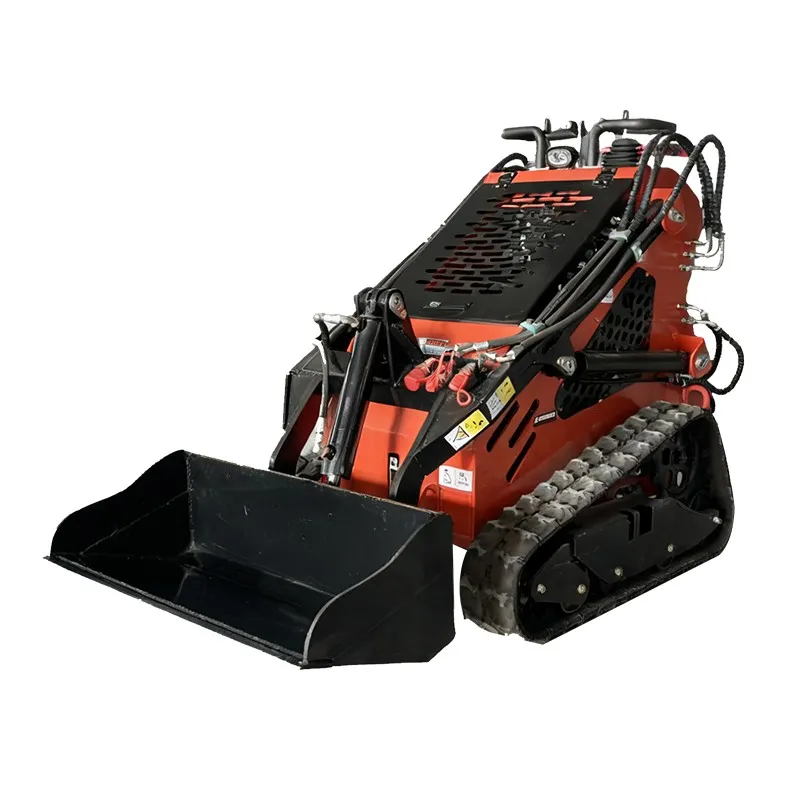
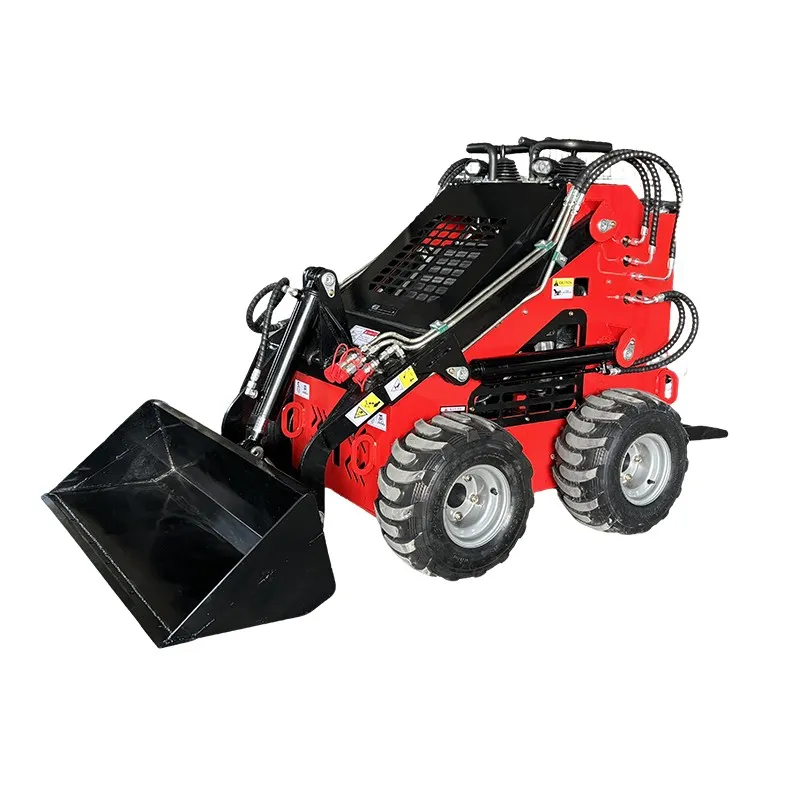
When most municipal managers hear compact track loader, they think it's just a smaller bulldozer for tight spots. That's the first mistake. It's not about size; it's about system integration. The real challenge isn't buying the machine—it's fitting it into the existing workflow, maintenance schedule, and budget cycle of a public works department. I've seen too many towns buy a CTL based on brochure specs, only to find it sits idle because the attachments don't match their snowplow brackets, or the undercarriage gets shredded on recycled concrete aggregate within a season. The key is viewing it as a modular tool carrier, a Swiss Army knife for the crew, but one that demands specific, often overlooked, operational foresight.
The Core Misconception: Durability vs. Application
Everyone asks about engine horsepower and lift capacity. That's table stakes. The real question for a Compact Track Loader for Municipality is: what are you asking it to do, day in, day out, for 2,000 hours? Is it moving mulch in parks, loading salt in winter, or cleaning storm debris from ditches? Each task murders the machine in a different way. Mulch is abrasive and gets into every seal. Salt is corrosive. Ditches mean constant side-loading on the tracks and potential rollover risks if the ground is soft.
I recall a mid-sized township that spec'd a high-flow machine for a tree-trimming program, which made sense. But they paired it with a standard-flow grapple. The mismatch meant the hydraulic system was constantly stressed, overheating became chronic, and they burned through hoses. The failure wasn't the loader's fault; it was a planning oversight. They needed someone to ask, What attachment, exactly? not just, Do you want high-flow?
This is where long-term manufacturers who understand municipal cycles add value. They've seen the failures. A company like Shandong Pioneer Engineering Machinery Co., Ltd, which has been exporting globally for two decades, has likely gathered that kind of application-specific feedback from markets as diverse as German winter services and Australian land clearing. That institutional knowledge gets baked into later models—better sealing here, reinforced plating there. It's not glamorous, but it's what keeps a unit running past its warranty.
The Attachment Ecosystem is the Real Investment
The loader itself is almost a platform. The real capital outlay and operational headache are in the attachments. A municipality needs a bucket, a pallet fork, a snow blade, maybe a sweeper or a grapple. The quick-attach system is the linchpin. If it's not robust and simple—think a single lever your operator can throw with frozen gloves—you lose all the efficiency gains.
We tried a universal adapter once to save money, hoping to use older attachments from a retired skid-steer. Bad idea. The slight play in the connection caused incredible wear on the loader's attachment faceplate. Within six months, we had to replace the entire mounting assembly, costing more than buying two new, purpose-built attachments would have. The lesson was brutal: compatibility isn't a suggestion; it's a mechanical mandate.
Looking at suppliers, you want one whose catalog is built around this ecosystem. A brief look at sdpioneer.com shows they offer not just loaders but a range of matched implements. That's a sign they're thinking beyond the initial sale. For a public works director, sourcing the machine and key attachments from a single point simplifies procurement, warranty claims, and technical support. It reduces the finger-pointing when something goes wrong.
Operational Realities: The Crew and The Cost
Training is another hidden cost. A CTL isn't a pickup truck. An untrained operator can flip it, tear up asphalt with aggressive turns, or blow a hydraulic line by forcing a function. The initial training is one thing, but turnover kills you. You need a machine whose controls are intuitive and whose safety systems—like a falling-object protective structure (FOPS) and a reliable seat bar interlock—are foolproof.
Then there's maintenance. Municipal garages are busy. The ideal municipal compact track loader has easy service access: grouped grease zerks, a tilt-up cab or removable panels for fluid checks, and a diagnostic port that speaks a clear language. I've cursed machines where checking the radiator required removing six bolts and a guard. That extra 15 minutes per daily check adds up over a fleet.
Total cost of ownership is the only metric that matters. The purchase price is maybe 40% of the story. Fuel efficiency, track replacement cost (a huge one!), filter costs, and expected repair intervals for high-wear items like pins and bushings determine the real budget impact. A cheaper machine with proprietary track systems that cost $4,000 per set to replace will be more expensive in three years than a slightly pricier unit with a common, durable track design.
Case in Point: Winter Operations and a Supplier's Evolution
Let's get concrete with winter. A CTL with a V-plow is a beast for clearing parking lots and sidewalks. But we learned the hard way about road melt. Municipalities use salt and brine. That slurry gets thrown up into the machine's undercarriage—into sprockets, idlers, rollers. Without proper corrosion protection and sealed components, you're looking at catastrophic failure. We once had a idler wheel seize solid in February because salt brine penetrated the bearing. The machine was down for a week during the worst blizzard of the year.
This is where a manufacturer's experience in harsh-climate exports becomes critical. If a company like Shandong Pioneer is successfully supplying units to Canada and the northern US, their engineering has had to solve for corrosion resistance. It might mean specifying different seal materials, using epoxy primers on frames, or offering factory-applied undercarriage washdown systems. These aren't selling points in a glossy ad; they're survival traits learned from field failures.
The company's recent relocation in 2023 to a new facility in Tai’an likely reflects this growth and a drive to modernize production. A larger, newer plant often means more consistent quality control and capacity for customization—two things a municipality with specific needs (like a unique lighting package for night work) would value. Their 20-year journey from a 1,600 square meter workshop to an international exporter implies a learning curve that benefits the end-user.
The Final Judgment: Fit for Purpose
So, what makes a good municipal CTL? It's not the shiniest or the one with the most features. It's the one that disappears into your operations. It starts reliably on a cold morning. Your crew doesn't complain about running it. The maintenance foreman isn't constantly ordering oddball parts. And when you need it to push, lift, or load, it just does the job without drama.
It comes down to partnership with the supplier. You need them to understand the grind of municipal work. When I evaluate a source, I look at their history. A firm that has built trust over 20 years, like the Shandong Hexin manufacturing arm behind Pioneer, and exported to demanding markets like Germany and Australia, has presumably been tested. They've had to adapt their products to meet different standards and expectations. That resilience translates to a more robust product for a tough municipal environment.
In the end, selecting a Compact Track Loader for Municipality is a practical, almost gritty, decision. It's about matching a durable, serviceable, and sensible tool to a never-ending list of messy, unpredictable jobs. The right choice feels unremarkable—it just works. And that's the highest praise you can give a piece of equipment in this business.
Related Products
Related Products