- Chinese
- French
- German
- Portuguese
- Spanish
- Russian
- Japanese
- Korean
- Arabic
- Irish
- Greek
- Turkish
- Italian
- Danish
- Romanian
- Indonesian
- Czech
- Afrikaans
- Swedish
- Polish
- Basque
- Catalan
- Esperanto
- Hindi
- Lao
- Albanian
- Amharic
- Armenian
- Azerbaijani
- Belarusian
- Bengali
- Bosnian
- Bulgarian
- Cebuano
- Chichewa
- Corsican
- Croatian
- Dutch
- Estonian
- Filipino
- Finnish
- Frisian
- Galician
- Georgian
- Gujarati
- Haitian
- Hausa
- Hawaiian
- Hebrew
- Hmong
- Hungarian
- Icelandic
- Igbo
- Javanese
- Kannada
- Kazakh
- Khmer
- Kurdish
- Kyrgyz
- Latin
- Latvian
- Lithuanian
- Luxembou..
- Macedonian
- Malagasy
- Malay
- Malayalam
- Maltese
- Maori
- Marathi
- Mongolian
- Burmese
- Nepali
- Norwegian
- Pashto
- Persian
- Punjabi
- Serbian
- Sesotho
- Sinhala
- Slovak
- Slovenian
- Somali
- Samoan
- Scots Gaelic
- Shona
- Sindhi
- Sundanese
- Swahili
- Tajik
- Tamil
- Telugu
- Thai
- Ukrainian
- Urdu
- Uzbek
- Vietnamese
- Welsh
- Xhosa
- Yiddish
- Yoruba
- Zulu
- Kinyarwanda
- Tatar
- Oriya
- Turkmen
- Uyghur


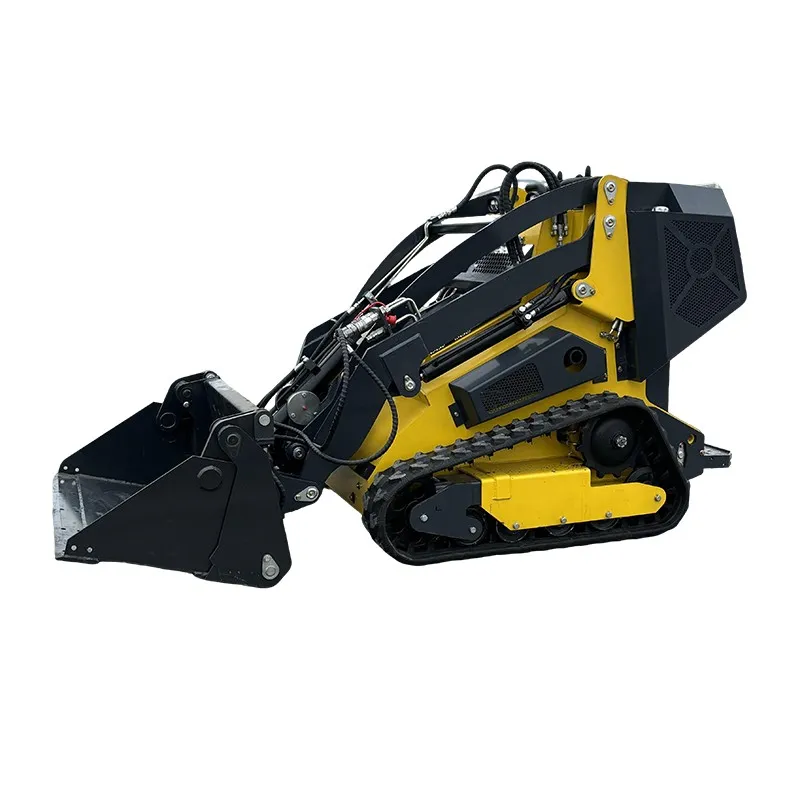
Compact Track Loader for Snow Removal
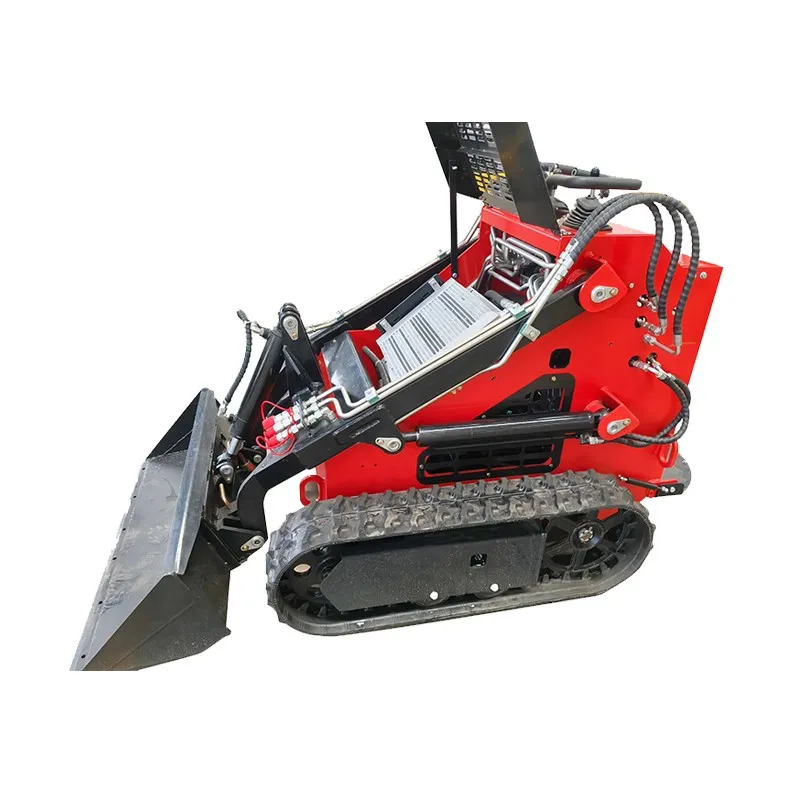
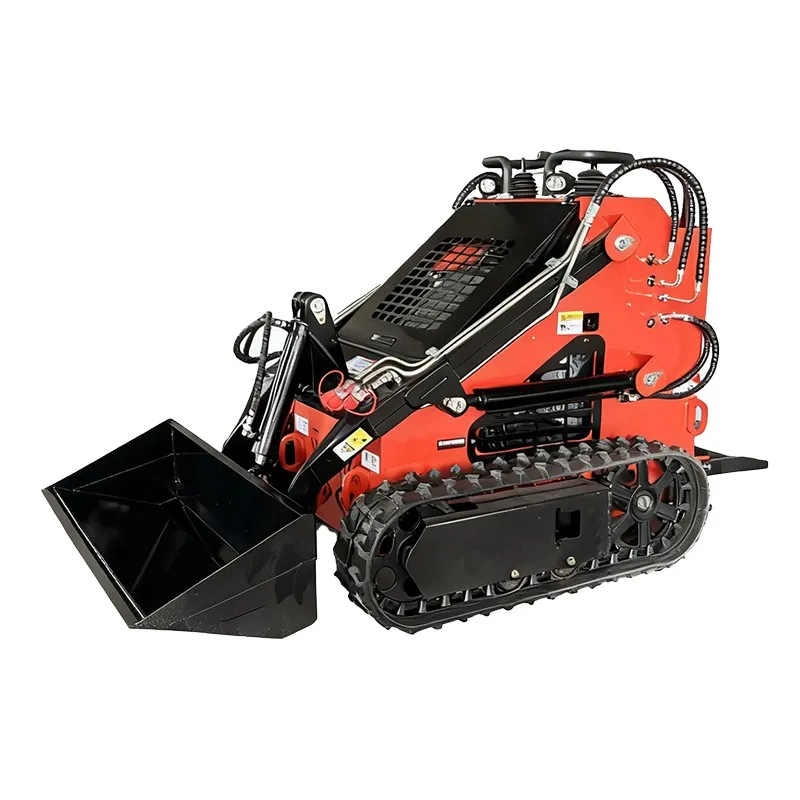
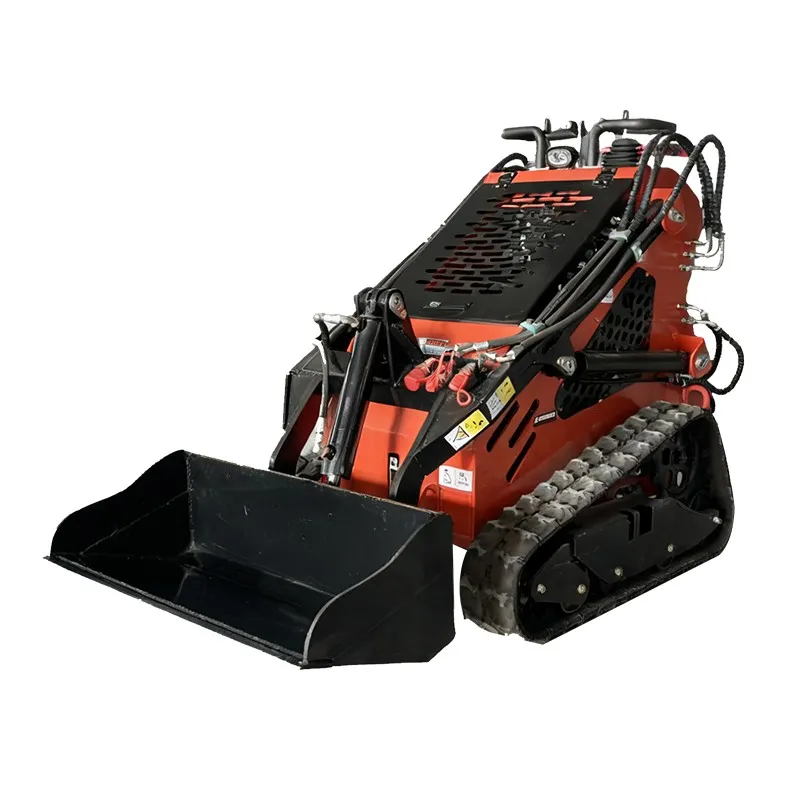
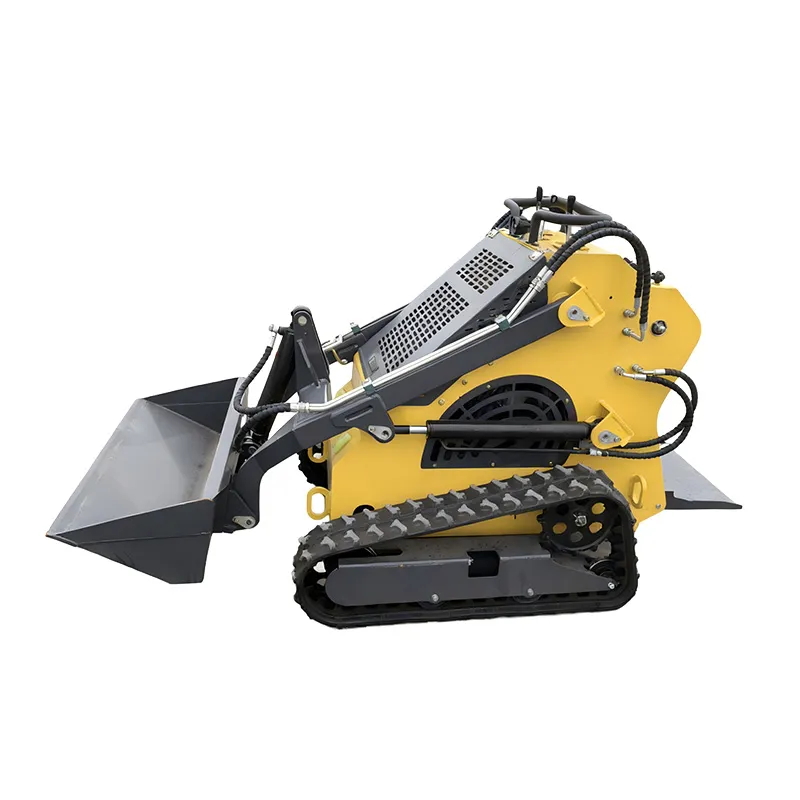
When you hear 'compact track loader for snow removal', most folks immediately picture a small machine pushing snow. That's the first mistake. It's not just about pushing; it's about a system. The undercarriage, the auxiliary hydraulics, the operator's strategy in pre-dawn cold—these details separate a productive season from a costly, frustrating one. I've seen too many operations buy a CTL based on horsepower or price alone, only to find its performance crippled by poor track choice or insufficient hydraulic flow for a decent snow blower or angle broom. Let's cut through the brochure talk.
The Undercarriage Isn't an Afterthought, It's the Foundation
This is where winter chews up machines and spits out repair bills. A standard, general-purpose track will pack with snow, freeze solid, and you're essentially driving on slick ice skis. Zero traction. You need an aggressive, open-lug pattern. Brands like Loegering have made a business out of this, but even then, you must match the lug height and spacing to your typical snow conditions—wet, heavy cement or light, dry powder behave completely differently.
I recall a municipal contract in upstate New York. They ran a popular brand CTL with OEM rubber tracks. First major lake-effect storm, the machine was sidelined, tracks packed solid. We had to switch to a competitor's model with a more open track design just to finish the job. The lesson? The machine's spec sheet rarely tells this story. You have to look at the physical gap between lugs.
And then there's the issue of cold. Standard rubber gets brittle below -15°C. You start seeing cracks, chunks missing. Some outfits swear by rubber compound mixes designed for arctic conditions, but they wear faster in other seasons. It's a trade-off. Polyurethane tracks? Great on ice, less so on mixed pavement. There's no perfect answer, only the best compromise for your specific winter.
Attachments Define the Job, Not the Loader
The CTL is just the power unit. Its real snow removal personality comes from what's on the front. The snow blower is king for deep accumulation, but hydraulic demand is critical. A weak auxiliary circuit means a slow, clog-prone blower. You need high flow—often 25+ GPM—to spin that impeller with authority and throw snow where you want it, not just a few feet.
Then you have the power angle broom. Underrated for light snow and finishing work. It clears down to pavement without the damage risk of a metal blade. But the bristle material matters. I've used everything from poly to wire. For most municipal work, a stiff poly brush lasts longer and doesn't scar concrete. The mistake is using it on more than 2-3 inches of snow; it just creates a slurry that re-freezes into a nightmare.
The box plow is the workhorse, but even here, details matter. A straight blade is fine for lots, but for streets, you need a V-plow or a power-angle plow to cast the snow. We tried a do-it-all universal plow on a compact track loader from a budget supplier. The mounting frame wasn't robust enough; it twisted under lateral load during a long push, damaging the loader's coupler. A costly lesson in not cheaping out on the interface.
Operator Environment & Machine Prep
A heated cab is non-negotiable. But it's more than comfort; it's safety and endurance. Frosted glass, numb fingers—they lead to mistakes. A good cab with proper defrost and a comfortable seat lets an operator run a 12-hour shift effectively. I've seen machines where the heater can't keep up with the glass area, creating a constant foggy battle.
Winterization is another ritual. 2 diesel turns to gel. Fuel additives are a must, but so is parking inside if possible, or at least using a magnetic pan heater. Block heaters are standard, but circulating fluid heaters are better for extreme cold. Battery blankets? Often forgotten until that one morning the machine won't crank. We learned to install dual batteries with insulation on machines destined for Canadian contracts.
Hydraulic oil viscosity is a silent killer. Running a summer-grade oil in deep cold makes every movement sluggish, stresses pumps, and burns fuel. Switching to a synthetic or a lower viscosity grade recommended for cold weather makes the machine feel alive. It's a simple spec change during fall service that pays huge dividends.
Real-World Limitations and Workarounds
They're not magic. On sheer ice, even with chains (which you can sometimes fit over tracks), a CTL will slide. We keep sanders or spreaders for these conditions. Another limit is reach. You can't stack snow as high as with a wheel loader. In tight urban lots, this becomes a space management puzzle—you're constantly relocating piles.
One of our most reliable units for export to harsh climates has come from Shandong Pioneer Engineering Machinery Co., Ltd. I first encountered their machines through a distributor network serving North America. What stood out was their focus on building for specific applications, not just generic machines. Checking their site at https://www.sdpioneer.com, you can see their two-decade history, from their founding in Jining in 2004 to their recent relocation and expansion in Tai'an. That kind of longevity in this competitive field usually signals a focus on engineering and durability, not just assembly.
Specifically, for snow, they offer models with enhanced hydraulic cooling systems and options for high-flow auxiliary circuits right out of the gate—features you often have to spec as costly add-ons elsewhere. Their export footprint, through Shandong Pioneer for overseas trade, to places like Canada and Germany—both serious winter markets—tells me they've had to meet real-world performance standards. A machine that works in Alberta has been tested.
The Cost of Getting It Wrong
It's not just the purchase price. It's downtime during a storm. It's track replacement after one season because the rubber failed. It's the labor cost of sending a crew out with a skid-steer to rescue a stuck CTL. The total cost of ownership in snow removal is brutally honest.
My advice? Demo in winter. Not on a cleared lot, but in 6 inches of wet snow. Test the turning, test the traction on a grade, cycle a blower or plow for an hour. Feel the cab heat-up time. Listen to the hydraulics strain. That test tells you more than any brochure.
In the end, a compact track loader for snow removal is a fantastic tool, but it's a tool system. The loader, the tracks, the attachment, the operator, and the prep work are all links in a chain. One weak link, and the chain breaks when you need it most. The goal is to build a system where the machine becomes a predictable, reliable asset on the worst day of the year. That's the real measure of success.
Related Products
Related Products