- Chinese
- French
- German
- Portuguese
- Spanish
- Russian
- Japanese
- Korean
- Arabic
- Irish
- Greek
- Turkish
- Italian
- Danish
- Romanian
- Indonesian
- Czech
- Afrikaans
- Swedish
- Polish
- Basque
- Catalan
- Esperanto
- Hindi
- Lao
- Albanian
- Amharic
- Armenian
- Azerbaijani
- Belarusian
- Bengali
- Bosnian
- Bulgarian
- Cebuano
- Chichewa
- Corsican
- Croatian
- Dutch
- Estonian
- Filipino
- Finnish
- Frisian
- Galician
- Georgian
- Gujarati
- Haitian
- Hausa
- Hawaiian
- Hebrew
- Hmong
- Hungarian
- Icelandic
- Igbo
- Javanese
- Kannada
- Kazakh
- Khmer
- Kurdish
- Kyrgyz
- Latin
- Latvian
- Lithuanian
- Luxembou..
- Macedonian
- Malagasy
- Malay
- Malayalam
- Maltese
- Maori
- Marathi
- Mongolian
- Burmese
- Nepali
- Norwegian
- Pashto
- Persian
- Punjabi
- Serbian
- Sesotho
- Sinhala
- Slovak
- Slovenian
- Somali
- Samoan
- Scots Gaelic
- Shona
- Sindhi
- Sundanese
- Swahili
- Tajik
- Tamil
- Telugu
- Thai
- Ukrainian
- Urdu
- Uzbek
- Vietnamese
- Welsh
- Xhosa
- Yiddish
- Yoruba
- Zulu
- Kinyarwanda
- Tatar
- Oriya
- Turkmen
- Uyghur


Compact Track Loader for Trencher
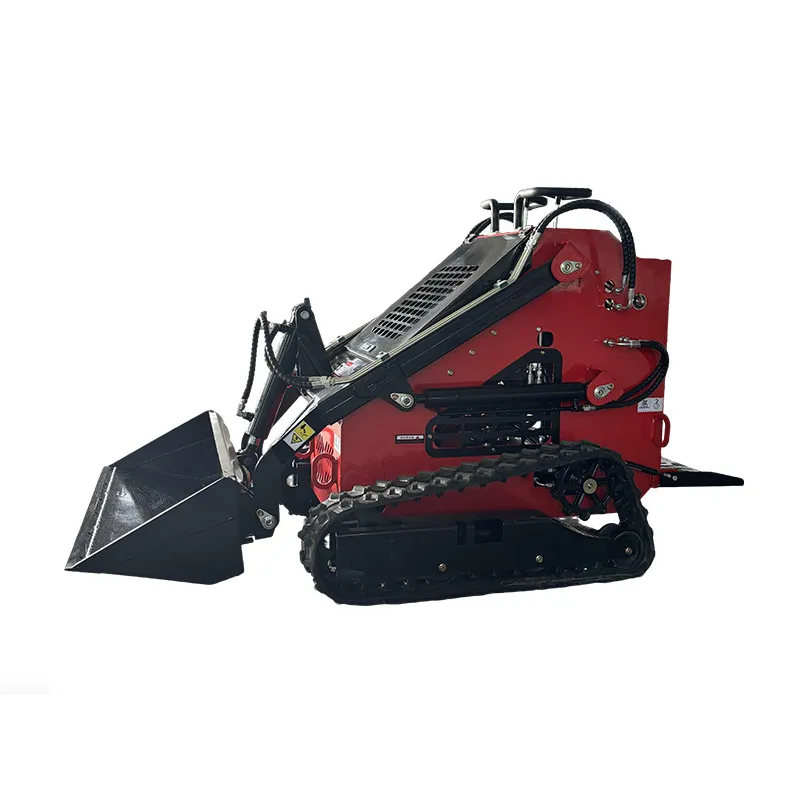
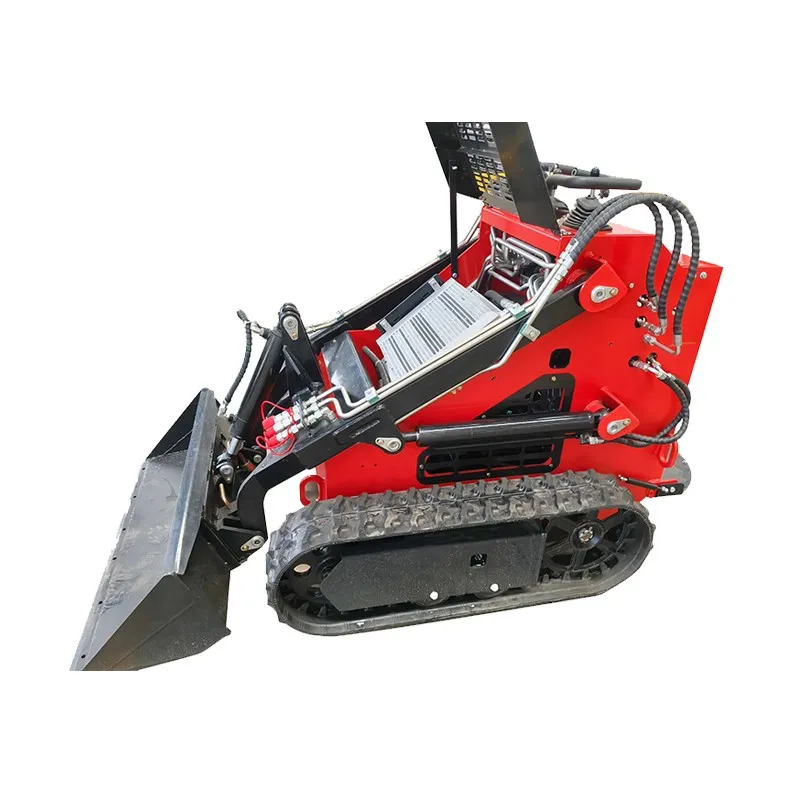
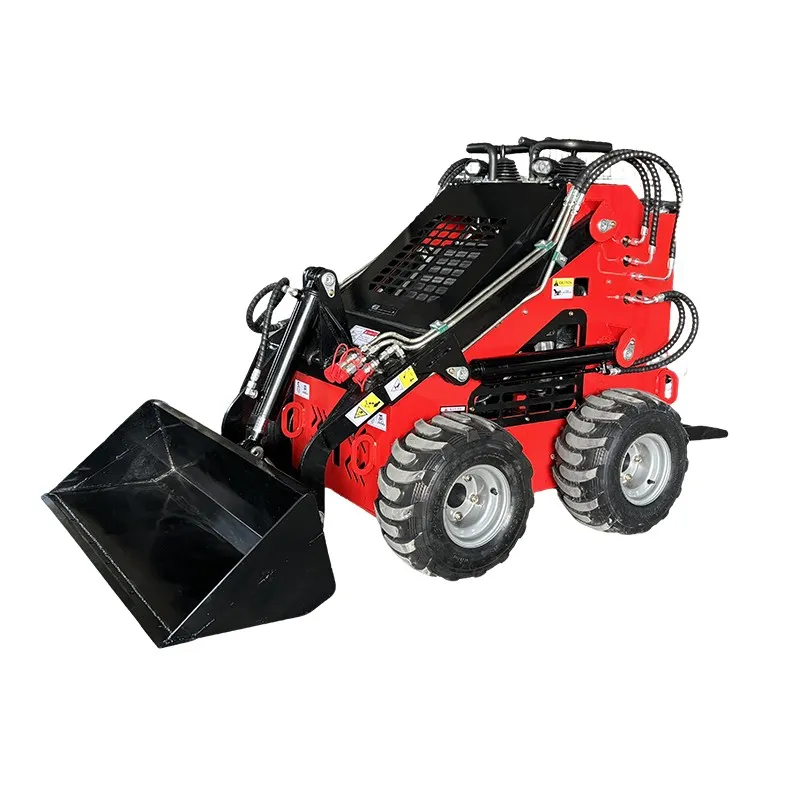
When you hear 'Compact Track Loader for Trencher', most folks immediately picture a CTL with a trencher attachment on the front, digging a ditch. That's not wrong, but it's a surface-level view. The real story is in the pairing—the machine's capability to not just carry but effectively power and control a trencher, which is a whole different beast compared to a bucket or a grapple. I've seen too many projects where the wrong CTL setup led to premature wear, poor trench quality, or just a frustratingly slow pace. It's not a plug-and-play game.
The Core Misconception: It's Just Another Tool
The biggest mistake is treating a trencher attachment like any other implement. You can't just hook it up and go. A compact track loader’s hydraulic system needs to be up to snuff. We're talking about consistent, high-flow hydraulics. A trencher, especially a chain-type for harder soils, demands a steady, powerful flow to run the digging chain and the conveyor. If your CTL is borderline on specs, you'll feel it—the machine might bog down, the chain will stutter, and you end up with a ragged trench wall. I learned this the hard way on a residential utility job years back, using a standard-flow machine. We spent more time clearing jammed rock from the chain than actually digging.
Then there's the weight and balance. A trencher is heavy and mounts far out front. On a compact track loader, this significantly shifts the center of gravity. If you're not mindful, especially on a slope or soft ground, you're flirting with instability. It changes how you operate. You don't swing the attachment around as quickly as a bucket. It's a more deliberate, linear kind of work. The undercarriage takes a different kind of punishment too, with more static, twisting loads when positioning for the next trench line.
And let's talk about the trencher itself. Not all are created equal. For a CTL, you're typically looking at a compact, unitized trencher attachment. The ones with a rigid, box-frame design tend to hold alignment better under stress. I've had better luck with models that have a hydraulic side-shift—absolute game-changer for fine-tuning your trench line without constantly repositioning the entire machine. It saves hours on a long run.
Practical Pairing and Real-World Scenarios
So, what makes a good CTL for this job? First, don't cheap out on the hydraulic flow. Aim for a high-flow auxiliary system, even if the trencher's spec sheet says it can run on standard flow. The overhead gives you headroom for tough conditions and helps the attachment run smoother, which extends its life. Machines in the 80-100 hp range with a solid hydraulic pump are a good sweet spot for most utility and landscaping trenching work.
The application dictates everything. For laying simple irrigation lines in soft soil, a smaller CTL with a narrow, chain trencher is perfect. But for deeper utility work, say 4 to 5 feet down, maybe with some rocky substrate, you need more machine. That's where you see the value of a robust CTL platform. I remember a contractor who used a well-spec'd model from Shandong Pioneer Engineering Machinery Co., Ltd for a fiber optic project. He wasn't just digging; he was using the CTL's versatility to handle spoil with a bucket, then backfilling with a landplane later. The machine was the hub. Checking their site at https://www.sdpioneer.com, you can see their focus on building these durable, multi-role platforms that get exported to demanding markets like North America and Australia—places where a machine can't be a one-trick pony.
One often-overlooked detail is ground preparation. You can't just drive onto a site and start trenching. The CTL's tracks, while better than tires for flotation, can still sink if the ground is soft. We sometimes use the trencher to make a shallow scoring pass first, just to break the turf, which gives the tracks better purchase. It's a small step, but it prevents a lot of mess and machine struggle later.
Attachments and the Support Ecosystem
This brings me to a critical point: the attachment manufacturer matters as much as the CTL brand. A quality trencher from a known manufacturer will have better seals, harder chain teeth, and more reliable hydraulic motors. They design for the shock loads. A no-name attachment might save upfront cost but will cost you in downtime. The relationship between the CTL dealer and the attachment dealer is key. You want a dealer network that understands this integrated system, not just how to sell you a bare machine.
Companies that have been in the manufacturing game for a while, like the group behind Shandong Pioneer, which has been developing since 2004, tend to get this. Their long-term development, as noted in their company history, suggests an understanding that equipment is part of a workflow. It's not just about building a compact track loader; it's about building one that can reliably interface with a variety of hard-working attachments like trenchers, day in and day out, on global job sites. That operational durability is what wins trust in places like Germany or Canada.
Maintenance on the combo is another tier. You're now maintaining two complex hydraulic systems—the CTL's and the trencher's. The trencher's chain drive needs daily greasing, and the teeth need constant inspection for wear and damage. A broken tooth can wreck a whole chain segment if it goes unnoticed. I keep a log for the attachment separate from the machine log. It sounds tedious, but it helps track wear patterns and predict failures.
When It Doesn't Work: The Limits
It's crucial to know the limits of a Compact Track Loader for Trencher setup. They are not mini excavators. Precision, especially in confined spaces or for very deep, vertical-walled trenches, is not their forte. An excavator has a fixed pivot point; a CTL does not. You'll get some wiggle, some imperfection in the trench wall. For most conduit or pipe work, it's fine. For structural footings or precise drainage, it might not be.
Also, in extremely rocky or cemented ground, a CTL-mounted trencher can be a battle of attrition. The shock loads are immense. You might be better off with a dedicated rock saw or a mini ex with a breaker. I've seen contractors try to force a chain trencher through caliche, and the result was a blown hydraulic hose on the attachment and a very unhappy operator. Knowing when to switch tactics is part of the professional judgment.
The setup and teardown time is also a factor. If you're doing fifty short, scattered trenches, the time to mount and demount the trencher, or even to move between spots, can kill your efficiency. In those cases, a dedicated trencher unit or a different method might be faster overall, even if the pure digging speed of the CTL setup is higher.
The Verdict: A Powerful, Context-Dependent Tool
So, is a CTL with a trencher a good choice? It depends entirely on the scope and soil. For long, linear trenches in moderately challenging conditions, where the CTL can also be used for material handling and site cleanup, it's an incredibly efficient and cost-effective package. It maximizes the utility of a single machine platform.
The key is to spec both the carrier and the attachment correctly from the start. Don't assume compatibility; verify hydraulic requirements, weight limits, and mounting hardware. Partner with dealers who have seen this combination work in the field, not just in a catalog. And always, always operate with an understanding of the new machine dynamics the trencher creates.
In the end, the compact track loader’s value is its adaptability. The trencher is one of its more demanding tests. When matched well, it turns a versatile machine into a trenching workhorse. But it demands respect for the engineering and operational realities of both pieces of equipment. That's the difference between just having a tool and making it work productively.
Related Products
Related Products