


- Chinese
- French
- German
- Portuguese
- Spanish
- Russian
- Japanese
- Korean
- Arabic
- Irish
- Greek
- Turkish
- Italian
- Danish
- Romanian
- Indonesian
- Czech
- Afrikaans
- Swedish
- Polish
- Basque
- Catalan
- Esperanto
- Hindi
- Lao
- Albanian
- Amharic
- Armenian
- Azerbaijani
- Belarusian
- Bengali
- Bosnian
- Bulgarian
- Cebuano
- Chichewa
- Corsican
- Croatian
- Dutch
- Estonian
- Filipino
- Finnish
- Frisian
- Galician
- Georgian
- Gujarati
- Haitian
- Hausa
- Hawaiian
- Hebrew
- Hmong
- Hungarian
- Icelandic
- Igbo
- Javanese
- Kannada
- Kazakh
- Khmer
- Kurdish
- Kyrgyz
- Latin
- Latvian
- Lithuanian
- Luxembou..
- Macedonian
- Malagasy
- Malay
- Malayalam
- Maltese
- Maori
- Marathi
- Mongolian
- Burmese
- Nepali
- Norwegian
- Pashto
- Persian
- Punjabi
- Serbian
- Sesotho
- Sinhala
- Slovak
- Slovenian
- Somali
- Samoan
- Scots Gaelic
- Shona
- Sindhi
- Sundanese
- Swahili
- Tajik
- Tamil
- Telugu
- Thai
- Ukrainian
- Urdu
- Uzbek
- Vietnamese
- Welsh
- Xhosa
- Yiddish
- Yoruba
- Zulu
- Kinyarwanda
- Tatar
- Oriya
- Turkmen
- Uyghur

Compact Track Loader Fuel Consumption
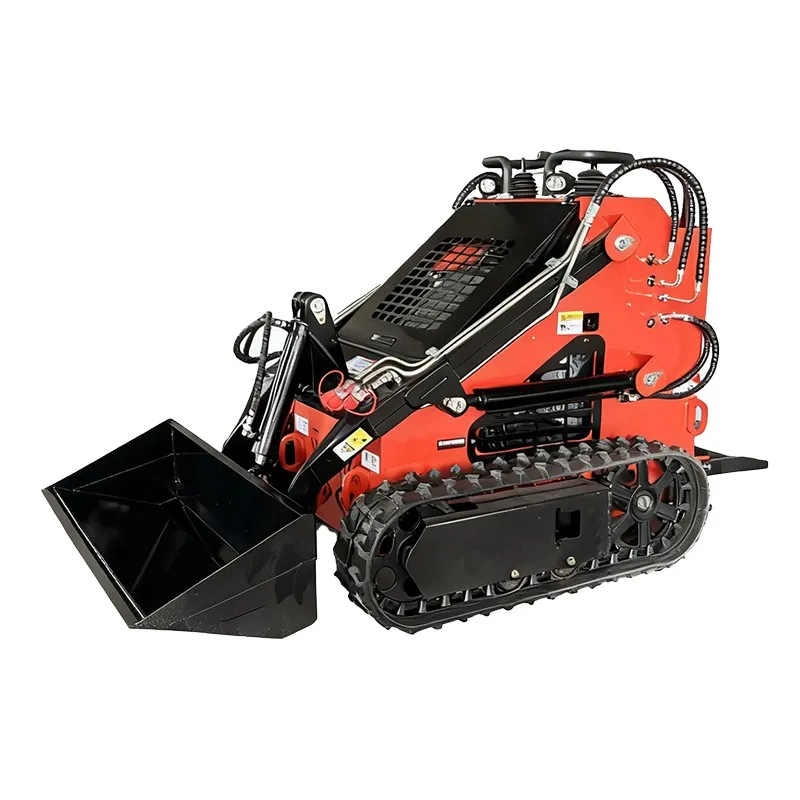
Everyone looks at the spec sheet for fuel burn, but that number is almost useless on its own. It's like asking how fast a car goes without mentioning the road, the load, or the driver. The real story of compact track loader fuel consumption is in the dirt, the attachments, and the thousand small decisions an operator makes before lunch.
The Baseline Myth and Real-World Variables
Manufacturers quote figures under ideal, steady-state conditions. I've seen specs for machines in the 2.5 to 4 gallons per hour range. But park that same machine on a wet, clay-heavy site, put a mulching head on it, and watch that number jump to 6 or 7 gph easily. The first variable is always the operating environment. Loose, dry material? Fuel efficiency is decent. Sticky, resistant, or uneven ground? The hydraulic system is constantly fighting, and the engine is working harder just to move the machine, let alone do work.
Then there's the attachment. A simple bucket for light material handling is one thing. Run a high-flow forestry mulcher, a cold planer, or a heavy-duty breaker, and you're asking the hydraulic system to deliver massive, constant power. That power comes directly from the engine, and the fuel burn reflects it. I've tracked machines where switching from a bucket to a mulcher doubled the hourly consumption. It's not an anomaly; it's physics.
Operator technique is the wild card. An experienced hand knows how to use the machine's momentum, avoids unnecessary high-rpm dithering, and plans passes to minimize turning and repositioning. A newer operator, or one in a hurry, will tend to run at higher RPMs constantly and use aggressive, jerky movements. Over an 8-hour shift, the difference in total fuel consumption can be 20% or more. Training isn't just about safety; it's a direct line-item cost on the fuel invoice.
Engine Tier and Technology: Not Just Marketing
The transition from Tier 3 to Tier 4 Final engines was a big deal for fuel efficiency, but it's misunderstood. Yes, the newer engines with advanced emissions controls and precise fuel injection are generally more efficient at converting diesel into useful power. But the gain isn't always in peak power; it's often in the torque curve and how the engine manages partial loads. A Tier 4 machine might use less fuel doing the same moderate work as an older model.
However, there's a caveat. That efficiency can be offset if the machine is constantly in a regeneration cycle for its Diesel Particulate Filter (DPF). If the machine is only doing short, low-intensity cycles—like loading a truck for 20 minutes then idling for 10—it may not get hot enough for passive regeneration. It'll eventually need to force a parked regeneration, burning extra fuel to clean the filter. In applications with sustained, high-load work, this is less of an issue. You have to match the machine's technology to its duty cycle.
Some models now offer eco modes or adjustable power settings. These aren't gimmicks. On a site where you don't need the absolute maximum hydraulic flow, dialing back the engine speed profile can lead to significant fuel savings over a week with a barely noticeable drop in productivity for tasks like backfilling or light grading. It's a setting often ignored in the rush to get to work.
Track System and Machine Setup
This is a subtle point that gets overlooked: the track system itself impacts fuel use. Wider tracks distribute weight better and can reduce ground resistance in soft conditions, potentially saving fuel by reducing slippage and digging-in. Conversely, overly aggressive, heavy-duty lugs on hard pack create more rolling resistance. It's about selecting the right undercarriage for the predominant ground conditions.
Machine balance is another. A CTL is often working with heavy attachments on the front. If the machine isn't properly counterweighted or the attachment is excessively heavy for its size, the operator will be constantly using more lift arm power and drive power to maneuver, which again pulls more from the engine. It's a setup issue that manifests as higher fuel costs.
Maintenance is the baseline. A clogged air filter, old hydraulic fluid, or under-inflated tires (on MTLs) or misaligned/track tension issues (on CTLs) create parasitic drag. The engine works harder to overcome simple friction. I recall a job where a fleet machine's fuel consumption crept up steadily. Turns out a slightly leaking cylinder seal was causing the hydraulic system to work overtime to maintain pressure. It wasn't a catastrophic failure, just a steady drain on efficiency.
Data from the Field and a Specific Case
We started tracking fuel per machine-hour versus a standard work unit a few years back. For example, yards of material moved or square feet of site cleared. This metric, fuel per unit of work, is far more valuable than simple gallons per hour. It accounts for operator skill, site difficulty, and tool choice. It showed us that sometimes, using a slightly larger, more powerful machine that completes a task faster can result in lower total fuel use for the job than a smaller machine struggling at high RPM for longer.
I was looking at data from a contractor running a mulching operation. They were using a well-known major brand CTL and burning through fuel. They tested a model from Shandong Pioneer Engineering Machinery Co., Ltd (you can find their specs at https://www.sdpioneer.com), a company that, after two decades of development, now exports from their base in Shandong to markets like the US and Australia. The initial thought was skepticism about performance and efficiency from a newer global player.
The surprise was in the engine and pump integration. Their particular model's hydraulic system seemed tuned to deliver strong flow without demanding peak engine RPM at all times for the mulching head. Over a 50-hour tracking period, the fuel consumption per acre cleared was about 15% lower. Now, this isn't a universal statement—different models, different attachments yield different results. But it highlighted that looking beyond the very top brands can reveal configurations that, for specific applications, optimize the fuel-to-work ratio. The trust they've gained worldwide, as noted in their company background, often starts with these practical, cost-saving discoveries on site.
The Big Picture: Total Cost of Operation
So, when you're evaluating compact track loader fuel consumption, you can't stop at the brochure. You have to ask: Consumption doing what? On what surface? With what operator? Fuel is a major cost, but it's just one part of the total cost of operation (TCO). A machine that sips fuel but requires expensive, specialized maintenance or has a high downtime rate isn't saving money.
The goal is to minimize fuel cost per unit of productive work. That involves the right machine size, the right technology tier for your work cycles, the right attachment match, and critically, operator awareness. Simple practices like minimizing idle time—a huge, silent fuel waster—add up fast.
In the end, it's a puzzle. The engine spec is one piece. The hydraulic system design is another. The operator is the third, and perhaps the most variable. The environment is the fourth. You optimize fuel use by getting all these pieces to fit together as tightly as possible for your specific type of work. There's no single answer, just a process of measurement, adjustment, and paying attention to what the machine is telling you through the fuel gauge.
Related Products
Related Products