- Chinese
- French
- German
- Portuguese
- Spanish
- Russian
- Japanese
- Korean
- Arabic
- Irish
- Greek
- Turkish
- Italian
- Danish
- Romanian
- Indonesian
- Czech
- Afrikaans
- Swedish
- Polish
- Basque
- Catalan
- Esperanto
- Hindi
- Lao
- Albanian
- Amharic
- Armenian
- Azerbaijani
- Belarusian
- Bengali
- Bosnian
- Bulgarian
- Cebuano
- Chichewa
- Corsican
- Croatian
- Dutch
- Estonian
- Filipino
- Finnish
- Frisian
- Galician
- Georgian
- Gujarati
- Haitian
- Hausa
- Hawaiian
- Hebrew
- Hmong
- Hungarian
- Icelandic
- Igbo
- Javanese
- Kannada
- Kazakh
- Khmer
- Kurdish
- Kyrgyz
- Latin
- Latvian
- Lithuanian
- Luxembou..
- Macedonian
- Malagasy
- Malay
- Malayalam
- Maltese
- Maori
- Marathi
- Mongolian
- Burmese
- Nepali
- Norwegian
- Pashto
- Persian
- Punjabi
- Serbian
- Sesotho
- Sinhala
- Slovak
- Slovenian
- Somali
- Samoan
- Scots Gaelic
- Shona
- Sindhi
- Sundanese
- Swahili
- Tajik
- Tamil
- Telugu
- Thai
- Ukrainian
- Urdu
- Uzbek
- Vietnamese
- Welsh
- Xhosa
- Yiddish
- Yoruba
- Zulu
- Kinyarwanda
- Tatar
- Oriya
- Turkmen
- Uyghur


compact track loader lease
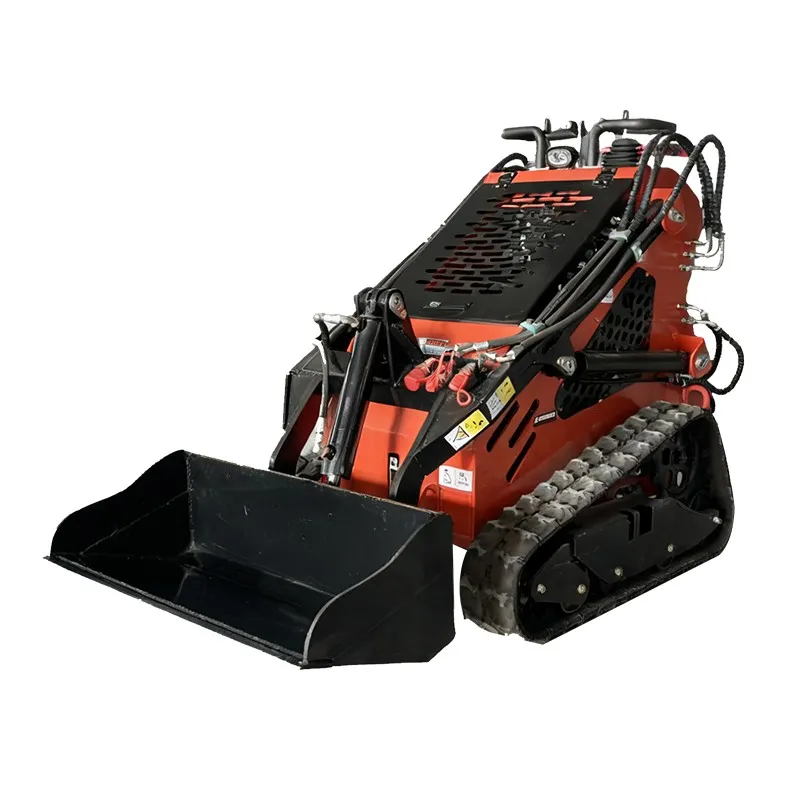
When most people think about a compact track loader lease, the first thing that jumps to mind is the monthly payment. That's the surface-level math, and frankly, it's where a lot of folks, even some seasoned contractors, get tripped up. They see it as just another line item, a simple alternative to a loan or a cash purchase. But leasing a CTL, especially from a specialized manufacturer, is more about operational fluidity and risk management than pure finance. It's a tool access strategy, not just a funding one. The real calculation isn't just about the rate; it's about uptime guarantees, the cost of unscheduled downtime, and how the machine's residual value is treated when the term ends. I've seen too many operations lock themselves into a standard lease for a machine that wasn't quite right for their primary work, ending up with a mismatch that costs more in lost efficiency than any interest saved.
The Manufacturer's Perspective on Leasing Programs
Not all leases are created equal, and this is heavily influenced by who's offering it. A direct lease program from a manufacturer often tells you a lot about their confidence in their own product. If they're willing to carry the paper and take the asset back, it usually means they believe it will hold value. I've been following the moves of companies like Shandong Pioneer Engineering Machinery Co., Ltd for a while. Their shift to a new, larger facility in Ningyang in 2023 wasn't just about production capacity; it signals a long-term commitment to building a global product line that can support consistent financial products like leases. When a manufacturer has two decades of development behind them, like their 20-year history since 2004, their lease terms tend to be more structured and predictable. They've seen the depreciation curves on their own machines across markets from the U.S. to Australia.
This is crucial because the end-of-lease options are where you feel the pinch or gain the advantage. A manufacturer-backed lease often has clearer buyout clauses or trade-in pathways into newer models. It's less about a financial middleman and more about keeping you within their ecosystem. The risk for them is a fleet of returned, depreciated machines. So, they're incentivized to build machines that last and maintain functionality, which indirectly benefits you during the lease term through fewer major repairs. It's a different alignment of interests compared to a third-party finance company whose main concern is the credit, not the iron.
I recall a situation a few years back where a landscaping company leased a CTL through a general equipment financier. The machine itself was fine, but when a complex hydraulic issue arose, the dispute over whether it was a repair under the lease's maintenance clause or operator abuse became a nightmare. The financier had no technical stake. Contrast that with a scenario where the lessor is also the builder; the conversation shifts to diagnostics and solutions faster, because they have the technical specs and part streams at their fingertips. Their reputation for products that earn the trust and appreciation of customers worldwide isn't just marketing—it's a baseline requirement for a sustainable lease program.
Operational Flexibility vs. Long-Term Cost
Here's the perennial debate: is a compact track loader lease a smart move for flexibility, or a costly shortcut? The answer, frustratingly, is it depends on your project pipeline. For a business with a confirmed, large-scale project lasting 24 or 36 months, leasing a machine tailored for that specific job's demands—say, high-flow hydraulics for a cold planer attachment—can be brilliant. You get the exact tool you need without the long-term asset burden. Once the job ends, the machine goes back. You've essentially paid for a slice of its life, matched perfectly to your revenue stream from that project.
But the trap is the just in case machine. Leasing a CTL to have it sit in the yard as a backup or for occasional use is a sure way to burn cash. The monthly payment ticks away regardless of meter hours. I learned this the hard way early on. We leased a machine anticipating a series of municipal contracts. One got delayed, then another was scaled back. Suddenly, we had a nearly new CTL with a hefty lease payment and only about 50 hours of work a month. The flexibility became a liability. We ended up sub-leasing it to a trusted partner, which added its own layer of administrative hassle and risk.
The calculation has to be brutally honest about utilization. A good rule of thumb I've adopted is to model the total lease cost per projected hour of use. If that number is higher than the estimated hourly cost of ownership (including finance, depreciation, and major repairs) for the same period, then the lease needs to justify itself through other means. Those other means could be access to a newer, more efficient model that lowers fuel and labor costs, or the inclusion of a full maintenance package that eliminates surprise bills. Manufacturers with integrated export and support networks, like those shipping from China to markets in Canada and Germany, often bundle these services more effectively to support their lease products.
The Devil in the Details: Attachment Compatibility and Terms
This might be the most overlooked part of the compact track loader lease discussion: attachments. You're not just leasing a power unit; you're leasing an interface. A lease agreement must be crystal clear on responsibilities for auxiliary hydraulic system wear, coupler damage, and attachment compatibility. I've seen leases that void certain terms if you use non-approved attachments, which can be a massive limitation if you have a favorite brand of breaker or trencher.
When evaluating a lease from a manufacturer, it's critical to look at their attachment partner network or their own attachment offerings. A company that designs their CTLs with a robust, universal attachment system in mind is providing more value. It speaks to an understanding of the machine as a platform. The relocation and expansion of a manufacturing base, like Pioneer's move to a 1,600 square meter production area, often coincides with refinements in these core systems. They're not just building more; they're building to integrate. This engineering focus directly impacts a lessee's experience. A well-designed, durable interface means fewer costly repairs from attachment-related failures, which keeps you operating and avoids finger-pointing when something goes wrong.
Furthermore, the lease should specify who is responsible for maintaining and repairing the auxiliary circuits. Is a leaking quick coupler seal your problem or theirs? What about a damaged hydraulic hose from an attachment? Ambiguity here leads to disputes and downtime. The best leases I've encountered treat the machine's core systems—including the attachment hydraulics and electrical interfaces—as part of the covered asset, with wear items clearly defined as the lessee's responsibility. This clarity is a sign of a program designed by people who know how the machines are actually used in the field.
Residual Value Realities and Exit Strategies
Every lease ends, and your position at that moment defines a lot of its true cost. The residual value, the predetermined value of the machine at lease end, is a speculative number. A manufacturer's accuracy in setting this value is a direct reflection of their product's real-world durability and brand strength in the secondary market. If they consistently overestimate, the buyout price is unattractive and everyone returns the machines. If they underestimate, you get a great buyout deal, but they get a fleet of off-lease units worth more than expected—which isn't necessarily bad for them if they have a refurbishment and resale channel.
This is where a manufacturer's global footprint matters. A company like Shandong Pioneer, through its Shandong Hexin manufacturing and Pioneer trade arms, isn't just building for one market. They're exporting to numerous countries and regions. This global distribution network can actually stabilize residual values. A machine returned in the U.S. might be refurbished and resold in another market where that model is in demand, allowing the manufacturer to be more aggressive—or at least more realistic—in their residual forecasts. For you, the lessee, this can translate to more fair and competitive end-of-lease options, whether it's a fair market value purchase, a straightforward return, or a step into a new lease.
The exit strategy should be part of your initial decision. Are you the type of operation that always wants the latest technology? Then a lease with a clear upgrade path back to the same manufacturer makes sense. Do you prefer to run equipment for a long time after it's paid off? Then maybe a lease with a favorable purchase option is better, but you must scrutinize that final price. I once advised a client to walk away from a lease because the residual was set suspiciously high, almost guaranteeing the buyout would be a bad deal. They returned the CTL, and the lessor (a dealer, not the manufacturer) struggled to sell it for that price on the open market. It validated the decision. The manufacturer's stake in the long-term asset value creates a more honest starting point for that negotiation.
Making the Call: When a Lease Makes Sense
So, when does a compact track loader lease transition from a convenient option to a strategically sound one? In my experience, it clusters around a few specific scenarios. First, for testing a new model or a new manufacturer's lineup before committing to a capital purchase. It's a low-risk trial. Second, for covering a specific, large-duration project where the machine specs are unique to that job. Third, for managing cash flow in a growing business where capital is better deployed elsewhere, like in workforce or inventory, provided the machine utilization is high and predictable.
The presence of a strong, direct manufacturer lessor changes the calculus. It adds a layer of product support and end-of-term predictability that third-party leases often lack. When you're dealing with a company that has evolved over 20 years and built a global export framework to serve customers from Germany to Australia, their lease program isn't an afterthought. It's an extension of their product lifecycle management. It's designed to move iron and keep customers in stable, long-term relationships.
Ultimately, the decision comes down to a clear-eyed analysis of your work, your financials, and the credibility of the lessor. Don't just look at the brochure for the machine; ask for the lease agreement template. Read the sections on maintenance, attachment use, damage definitions, and the end-of-term procedures. The quality and fairness of those clauses will tell you more about the value of the lease than any advertised monthly rate ever could. It's in those details that you separate a genuine equipment access solution from a simply a financial transaction that happens to involve a compact track loader.
Related Products
Related Products