- Chinese
- French
- German
- Portuguese
- Spanish
- Russian
- Japanese
- Korean
- Arabic
- Irish
- Greek
- Turkish
- Italian
- Danish
- Romanian
- Indonesian
- Czech
- Afrikaans
- Swedish
- Polish
- Basque
- Catalan
- Esperanto
- Hindi
- Lao
- Albanian
- Amharic
- Armenian
- Azerbaijani
- Belarusian
- Bengali
- Bosnian
- Bulgarian
- Cebuano
- Chichewa
- Corsican
- Croatian
- Dutch
- Estonian
- Filipino
- Finnish
- Frisian
- Galician
- Georgian
- Gujarati
- Haitian
- Hausa
- Hawaiian
- Hebrew
- Hmong
- Hungarian
- Icelandic
- Igbo
- Javanese
- Kannada
- Kazakh
- Khmer
- Kurdish
- Kyrgyz
- Latin
- Latvian
- Lithuanian
- Luxembou..
- Macedonian
- Malagasy
- Malay
- Malayalam
- Maltese
- Maori
- Marathi
- Mongolian
- Burmese
- Nepali
- Norwegian
- Pashto
- Persian
- Punjabi
- Serbian
- Sesotho
- Sinhala
- Slovak
- Slovenian
- Somali
- Samoan
- Scots Gaelic
- Shona
- Sindhi
- Sundanese
- Swahili
- Tajik
- Tamil
- Telugu
- Thai
- Ukrainian
- Urdu
- Uzbek
- Vietnamese
- Welsh
- Xhosa
- Yiddish
- Yoruba
- Zulu
- Kinyarwanda
- Tatar
- Oriya
- Turkmen
- Uyghur


Compact Track Loader Maintenance
You hear 'Compact Track Loader Maintenance' and most guys immediately think oil changes and greasing. That's the baseline, the absolute minimum. Where the real costs hide, and where machines like the ones we ship from our factory get a reputation for longevity or failure, is in the stuff nobody talks about in the manual. It's the track tension you check on a Tuesday afternoon because it just feels off, or the strange harmonic hum from the hydraulic pump that only appears after six hours of continuous grading. I've seen operators run a machine into the ground by religiously following the 250-hour service interval but completely ignoring the daily walk-around. That's the first, and biggest, misconception: maintenance is a schedule, not an observation.
The Daily Grind Isn't Just a Metaphor
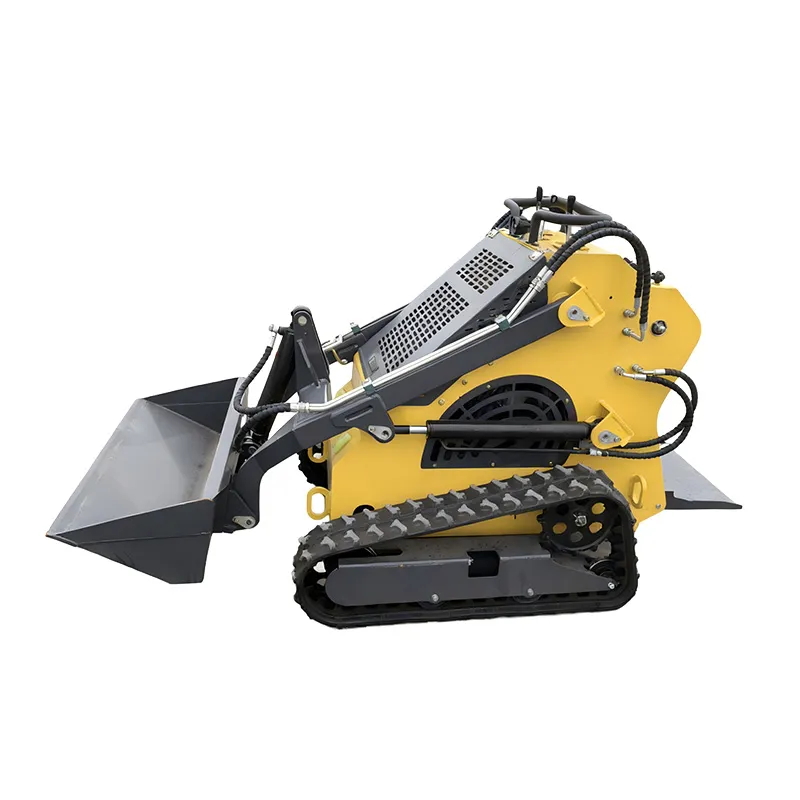
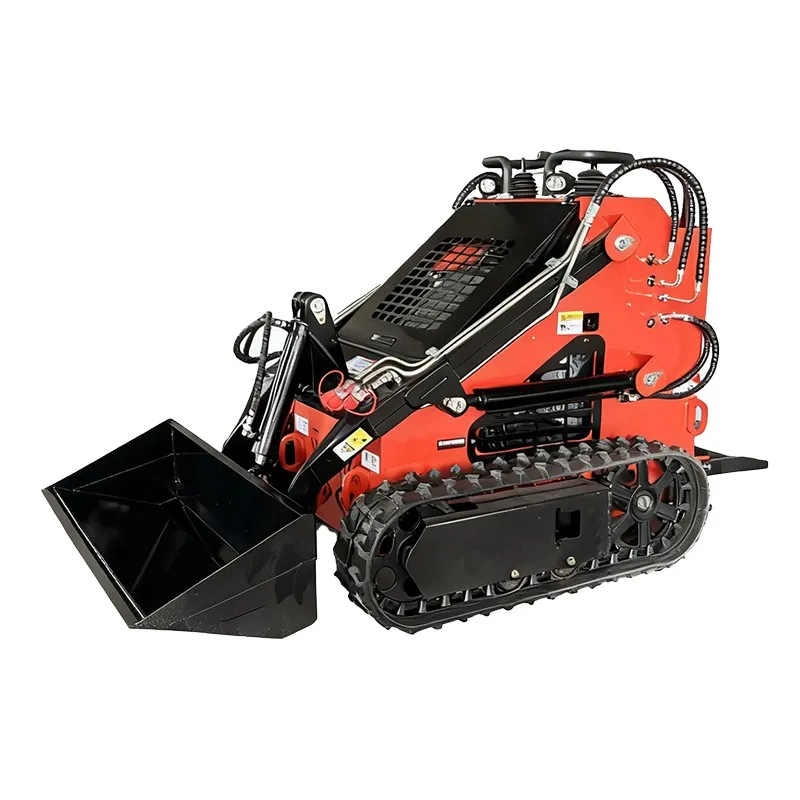
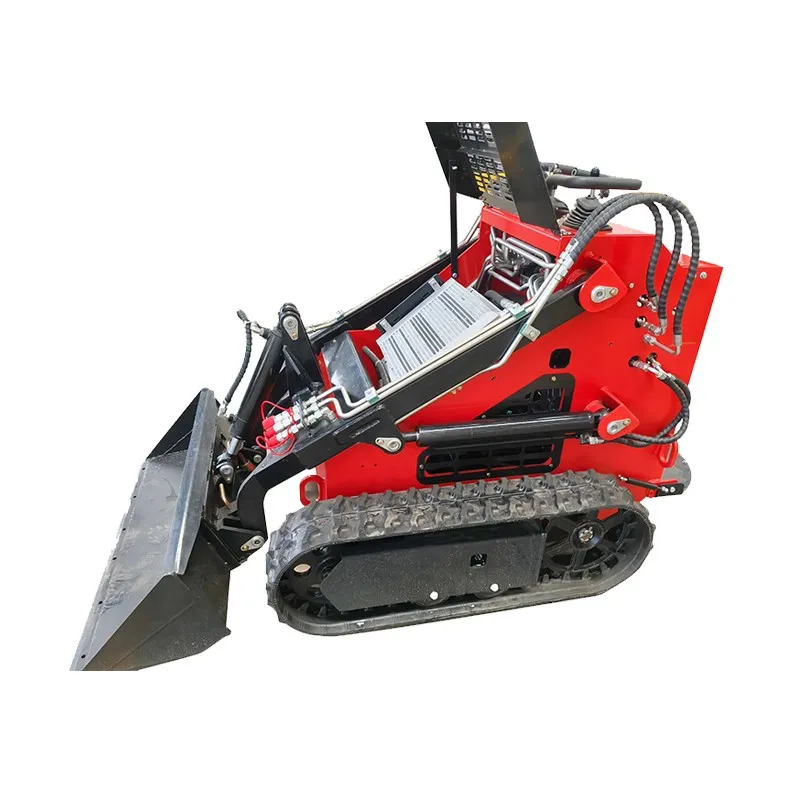
Let's start simple, with the undercarriage. This is the money pit. Everyone focuses on the engine, but a failed final drive or a set of shredded rollers will stop a job faster than a seized cylinder. The manual says inspect for damage. That's useless. You need to know what to feel for. After a day in sticky clay, you have to get down there with a bar and clean the inside of the tracks, not just spray them. Packed material acts like a grinding paste on the sprockets and idlers. I've had customers complain of premature wear, and nine times out of ten, the photo they send shows a compact track loader with its undercarriage completely packed solid. It's not a defect; it's an operator issue.
Then there's tension. Too tight, and you're overloading bearings, burning fuel. Too loose, and you get track whip and derailment. The two-finger rule of thumb? It's a starting point. On a cold morning, it'll feel different than on a hot afternoon after working in sand. You develop a sense for it. The machines we build at Shandong Pioneer Engineering Machinery Co., Ltd have robust undercarriages, but they're not magic. I recall a contractor in Australia running one of our units on a demolition site. He was going through rollers at an alarming rate. We dug into it—turns out he was running the tracks way too tight, thinking it gave him better traction in the rubble. We had to walk him through the actual, site-specific adjustment. It's not in the book.
And the rollers themselves. Don't just look for leaks. Spin them. Listen. A dry, grinding sound means the seal is gone and grease is out, dirt is in. That bearing is on borrowed time. Catching it early is a $50 seal kit. Missing it is a $400 roller assembly and downtime.
Hydraulics: Listening to the Machine's Pulse
Hydraulic systems on these compact track loaders are where operator feel meets mechanical reality. The fluid is the lifeblood, but everyone just checks the level. The color and smell tell a story. Milky fluid? You've got a water intrusion issue, probably from a cracked reservoir or a bad breather cap. Dark, burnt-smelling fluid? That system has been running hot, likely from a bypassing valve or a clogged cooler. We specify high-grade anti-wear hydraulic fluid for a reason. I've seen shops top up with generic tractor fluid to save a few bucks, and six months later, the pump starts whining with metal-on-metal wear.
Hose management is another silent killer. Not the blowouts—those are obvious. It's the constant chafing against a frame member, the slight kink behind the loader arm pivot. You have to trace lines with your hand, looking for that shiny spot on the hose guard or the stiff section where the inner reinforcement is fatiguing. A proactive hose replacement during a scheduled service is cheap insurance against a catastrophic failure that leaves the machine dead in a trench.
The auxiliary hydraulics for attachments are a common trouble spot. Quick-disconnect couplers get dirty, get forced, and then they leak or don't seat properly. That little drip becomes a gallon of lost fluid per shift, and it contaminates the coupling. A simple habit of wiping the couplers clean before connecting, and capping them when detached, adds years of service. It sounds trivial until you're the one billing for a new set of couplers and a system flush.
The Electrical Gremlins
Modern compact track loaders aren't just mechanical beasts. There's a control module, sensors, switches. The bane of my existence is intermittent electrical faults. A machine comes in stalling intermittently. The logs might not show a thing. Often, it's a chafed wire harness where it passes through the frame into the operator's platform. Vibration over thousands of hours wears through the insulation, causing a short that comes and goes. You need to know the common rub points—behind the seat mount, near the articulation joint. It's not a diagnostic code you can pull; it's pattern recognition from having seen a dozen machines with the same quirk.
Battery terminals are another classic. Corrosion isn't always the fluffy green kind. It can be a thin, almost invisible film that creates enough resistance to cause low-voltage issues for the computer, leading to erratic instrument panel readings or slow cranking. A yearly scrub with a terminal brush and a dab of dielectric grease is ten minutes of work that prevents a lot of head-scratching later.
Fluids and Filters: The Non-Negotiables
I'll say it: never, ever extend filter intervals. The oil might test fine, but the filter is holding the contaminants. That spin-on canister is the last line of defense for your engine and hydraulic components. We use and recommend quality filters because the cost of a failed turbocharger or a scored hydraulic piston dwarfs the price of a filter bank. And when you change the oil, change the filter. Always. It's a paired set.
Coolant is treated like water by too many people. It's not just for freeze protection. It has corrosion inhibitors that deplete over time. Letting old coolant sit in a system eats away at water pump seals and can cause cavitation in the cylinder liners. A simple coolant test with a refractometer twice a year is all it takes. I pushed for this to be part of the standard service checklist for our clients, and the reduction in cooling system-related warranty claims was noticeable.
Differential and final drive oils are the out of sight, out of mind fluids. They're supposed to last longer, but in high-stress, high-slip conditions—think constant turning in a tight space—they break down faster. A black, metallic-smelling gear oil is a sign of trouble. Draining it and finding a slurry of metal dust means you caught a bearing failure maybe just in time. Finding chunks means you're too late.
The Operator: The Most Critical Component
All this technical talk circles back to the person in the seat. The best compact track loader maintenance program in the world falls apart if the operator is abusive. Quick direction changes at high rpm, track hopping to spin the machine, running the hydraulic system at relief for minutes on end to force a stuck attachment—these are all death by a thousand cuts. You can build a machine tough, like we aim to do at our facility (you can see the kind of industrial scale we work with at https://www.sdpioneer.com), but no engineering can withstand sustained misuse.
Training isn't just about how to dig a trench. It's about machine empathy. Explaining that easing off the controls at the end of a cycle reduces shock loads on every pin and bushing. Teaching that letting the machine warm up for a minute allows oil to circulate to all the bearings. This stuff directly translates to lower repair bills and higher resale value. A well-maintained machine from a known brand holds its value, and that's a direct financial return on those daily five-minute checks.
Ultimately, maintenance isn't a cost center; it's the foundation of machine reliability and profitability. It's the difference between a compact track loader that's a trusted tool on site for 8,000 hours and one that's a constant source of headaches and bills by 3,000. The protocols matter, but the mindset matters more. It's about paying attention, understanding cause and effect, and respecting the machinery. That's what separates a parts changer from a real technician, and a machine owner from a true operator.
Related Products
Related Products