- Chinese
- French
- German
- Portuguese
- Spanish
- Russian
- Japanese
- Korean
- Arabic
- Irish
- Greek
- Turkish
- Italian
- Danish
- Romanian
- Indonesian
- Czech
- Afrikaans
- Swedish
- Polish
- Basque
- Catalan
- Esperanto
- Hindi
- Lao
- Albanian
- Amharic
- Armenian
- Azerbaijani
- Belarusian
- Bengali
- Bosnian
- Bulgarian
- Cebuano
- Chichewa
- Corsican
- Croatian
- Dutch
- Estonian
- Filipino
- Finnish
- Frisian
- Galician
- Georgian
- Gujarati
- Haitian
- Hausa
- Hawaiian
- Hebrew
- Hmong
- Hungarian
- Icelandic
- Igbo
- Javanese
- Kannada
- Kazakh
- Khmer
- Kurdish
- Kyrgyz
- Latin
- Latvian
- Lithuanian
- Luxembou..
- Macedonian
- Malagasy
- Malay
- Malayalam
- Maltese
- Maori
- Marathi
- Mongolian
- Burmese
- Nepali
- Norwegian
- Pashto
- Persian
- Punjabi
- Serbian
- Sesotho
- Sinhala
- Slovak
- Slovenian
- Somali
- Samoan
- Scots Gaelic
- Shona
- Sindhi
- Sundanese
- Swahili
- Tajik
- Tamil
- Telugu
- Thai
- Ukrainian
- Urdu
- Uzbek
- Vietnamese
- Welsh
- Xhosa
- Yiddish
- Yoruba
- Zulu
- Kinyarwanda
- Tatar
- Oriya
- Turkmen
- Uyghur


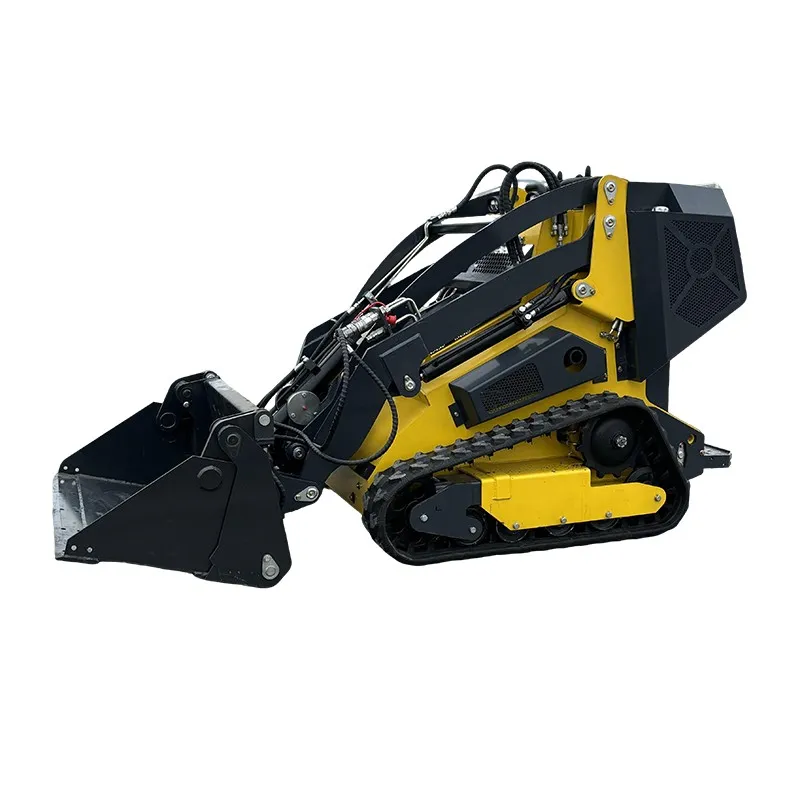
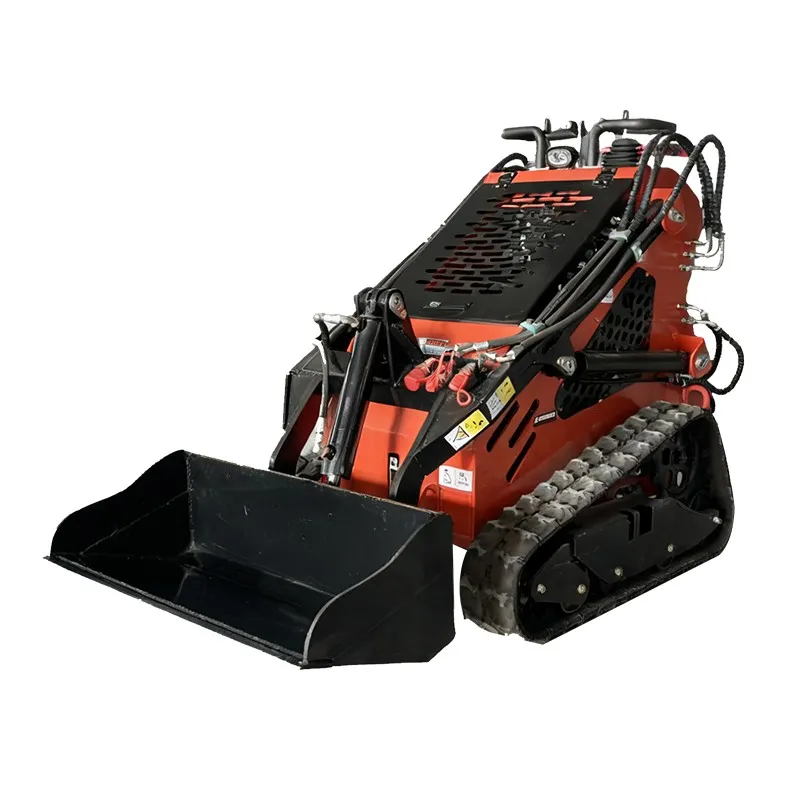
compact track loader quotation
When someone asks for a compact track loader quotation, the immediate instinct, often a mistake, is to just slap a machine price on a piece of paper and send it over. I've seen it a hundred times, and I've probably done it myself early on. The reality is, that number is almost meaningless without context. It's the starting line, not the finish. The real work begins when you start unpacking what's behind that request—site conditions, attachment needs, service expectations, and the sheer operational tempo the machine will face. A quote isn't just a price; it's a proposed solution, and if it's not built that way, you're both setting up for disappointment.
Where Most Quotes Go Wrong
The biggest pitfall is treating all CTLs as commodities. You can't just compare a 75-horsepower model from Brand A to one from Brand B based on spec sheets alone. The undercarriage is where the real cost hides—the quality of the rollers, the track tensioning system, the belt material. I've had clients fixated on upfront price who ended up spending double on track replacements in the first year because the cheaper machine's system couldn't handle the abrasive demo site they were on. The quotation should force a conversation about this. I always try to include a brief note or even a separate column for estimated undercarriage life based on the application they've described. It shifts the discussion from cost to cost of ownership.
Another common error is overlooking the hydraulic flow specs for attachments. A client once ordered a CTL with a standard auxiliary hydraulics package to run a cold planer. The quotation looked good, but the machine couldn't provide the consistent high flow needed, leading to sluggish performance and premature wear. We had to retrofit a high-flow system, which blew the initial good deal out of the water. Now, my quotes always list standard and high-flow options prominently, with a clear question: What attachments will you run now, and in the next 3 years? It's a simple line that adds immense value.
Then there's the support side. A price without clear terms on warranty, parts availability, and service response time is a hollow promise. I recall a situation where a contractor chose a marginally cheaper machine from a brand with a sparse dealer network in his region. When a hydraulic hose burst, he was down for a week waiting for the part. The savings were erased in a single day of lost work. My templates now explicitly state the warranty duration, what it covers, and the typical parts lead time from our local depot or direct from partners like Shandong Pioneer Engineering Machinery Co., Ltd. Their setup, with dedicated manufacturing (Hexin) and trade (Pioneer) arms, often means better consolidated logistics for certain components, which is a tangible point to include in a quote's terms section.
Building a Quote That Actually Works
So, how do you build it? It starts with a checklist, but it can't feel like one. The first section is always Machine Configuration As Discussed. This lists the base model, engine option, cab type, and the critical hydraulic specs. Then comes the Included Items – not just the bucket, but things like the standard lighting package, safety decals, and the first 50-hour service kit. Transparency here builds trust. The optional equipment list is where you show your expertise. Instead of just listing a heavy-duty bucket, you might specify a ?-yard multipurpose bucket with bolt-on edge if you know they're handling rocky soil.
I always include a separate financial summary. Not just the total, but a breakdown: machine FOB price, estimated shipping to their port or site, estimated customs duties (if applicable), and any local delivery or setup fees. This is where referencing a supplier's operational footprint helps. For instance, knowing that Shandong Pioneer has been exporting to markets like the US, Canada, and Australia for years suggests they have experience navigating the logistics and documentation for those regions, which can streamline the process and reduce hidden costs. It's a subtle point, but it speaks to reliability.
The final, and perhaps most important, part is the Assumptions and Notes section. This is where you get real. You write things like: Pricing based on discussed application in light to medium clay conditions. Track life may be reduced by 30% in severe abrasive environments. Or, Quote validity: 30 days due to fluctuating steel costs. This section acknowledges the variables and shows you're thinking about the project's reality, not just making a sale.
A Real-World Case: The Landscaping Contractor
Let me give you a concrete example. A landscaping contractor needed a CTL for year-round work: snow removal in winter, mulch and soil handling in spring, and fine grading for patios in summer. His initial request was just for a price on a mid-size model. Our compact track loader quotation started with that machine but had three key add-ons: a high-flow hydraulic option (for a snowblower and possibly a trencher later), a climate-controlled cab (for operator retention in winter), and a quick-attach system with a rated capacity that matched our heavier attachments.
We also included a line-item for an optional, wider, low-ground-pressure track option. We noted that while the standard tracks were fine for most of his work, the wider ones would be crucial for protecting delicate turf during spring thaw, potentially saving him from costly client repairs. This wasn't an upsell; it was a risk mitigation point he hadn't considered. He went with the wider tracks.
The quote also detailed the warranty and included a complimentary first-day operator familiarization session from our local dealer. The total was higher than his initial budget, but the breakdown showed why. He accepted it because the document itself demonstrated an understanding of his business cycle. The machine has been running for two years now with zero major issues, and he just ordered a second one using almost the same quote template as a starting point.
The Logistics and Long-Term Value Angle
People forget that the machine's journey to the job site is part of the deal. A clean quotation should address this. For international clients, Incoterms are non-negotiable. Is it EXW, FOB, or CIF? This drastically changes who bears the risk and cost during shipping. I always clarify this in bold. Working with established export-focused manufacturers adds a layer of predictability here. A company like the mentioned Shandong Pioneer, with its two-decade history and recent relocation to a larger facility in Ningyang, typically has this process down to a science, which minimizes surprises like port delays or documentation errors.
Long-term value is about parts and service. A good quote should reference this ecosystem. It might say, Common wear parts (filters, seals, track components) are stocked at our regional warehouse in [Location] with 24-48 hour delivery. For a global brand or a supplier with a wide export network, this is a key selling point. It tells the buyer that the relationship doesn't end at payment.
Finally, I sometimes include a brief comparison—not to a direct competitor, but to the alternative. For example, Compared to a wheeled skid-steer on this soft-ground site, the CTL's estimated productivity gain is 15-20%, with significantly reduced ground disturbance. This frames the price not as an expense, but as an investment with a measurable return. It turns the quote from a price list into a business case.
Wrapping It Up: The Quote as a Conversation
In the end, the perfect compact track loader quotation is one that gets a callback with questions, not a silent rejection or an immediate purchase order. The questions mean they're engaging with the details. My goal is to make that document so reflective of their actual needs that it becomes the agenda for our next conversation. It should have enough detail to stand alone but be open enough to invite dialogue on the tricky parts—like financing options, rental-to-own pathways, or attachment bundling.
It's a living document. I often revise quotes two or three times as I learn more about a client's operation. Maybe they mention a tight access gate, so we revisit the machine's width. Or they plan to add a grading laser later, so we ensure the electrical system has the capacity. This iterative process is what separates a professional from a parts clerk.
So, if you're requesting a quote, give your supplier the gritty details of your job site. And if you're preparing one, dig for those details. The number at the bottom is just arithmetic. The real value, for both parties, is in all the words above it that explain why that number makes sense, or sometimes, why it needs to change.
Related Products
Related Products