- Chinese
- French
- German
- Portuguese
- Spanish
- Russian
- Japanese
- Korean
- Arabic
- Irish
- Greek
- Turkish
- Italian
- Danish
- Romanian
- Indonesian
- Czech
- Afrikaans
- Swedish
- Polish
- Basque
- Catalan
- Esperanto
- Hindi
- Lao
- Albanian
- Amharic
- Armenian
- Azerbaijani
- Belarusian
- Bengali
- Bosnian
- Bulgarian
- Cebuano
- Chichewa
- Corsican
- Croatian
- Dutch
- Estonian
- Filipino
- Finnish
- Frisian
- Galician
- Georgian
- Gujarati
- Haitian
- Hausa
- Hawaiian
- Hebrew
- Hmong
- Hungarian
- Icelandic
- Igbo
- Javanese
- Kannada
- Kazakh
- Khmer
- Kurdish
- Kyrgyz
- Latin
- Latvian
- Lithuanian
- Luxembou..
- Macedonian
- Malagasy
- Malay
- Malayalam
- Maltese
- Maori
- Marathi
- Mongolian
- Burmese
- Nepali
- Norwegian
- Pashto
- Persian
- Punjabi
- Serbian
- Sesotho
- Sinhala
- Slovak
- Slovenian
- Somali
- Samoan
- Scots Gaelic
- Shona
- Sindhi
- Sundanese
- Swahili
- Tajik
- Tamil
- Telugu
- Thai
- Ukrainian
- Urdu
- Uzbek
- Vietnamese
- Welsh
- Xhosa
- Yiddish
- Yoruba
- Zulu
- Kinyarwanda
- Tatar
- Oriya
- Turkmen
- Uyghur


Compact Track Loader Safety
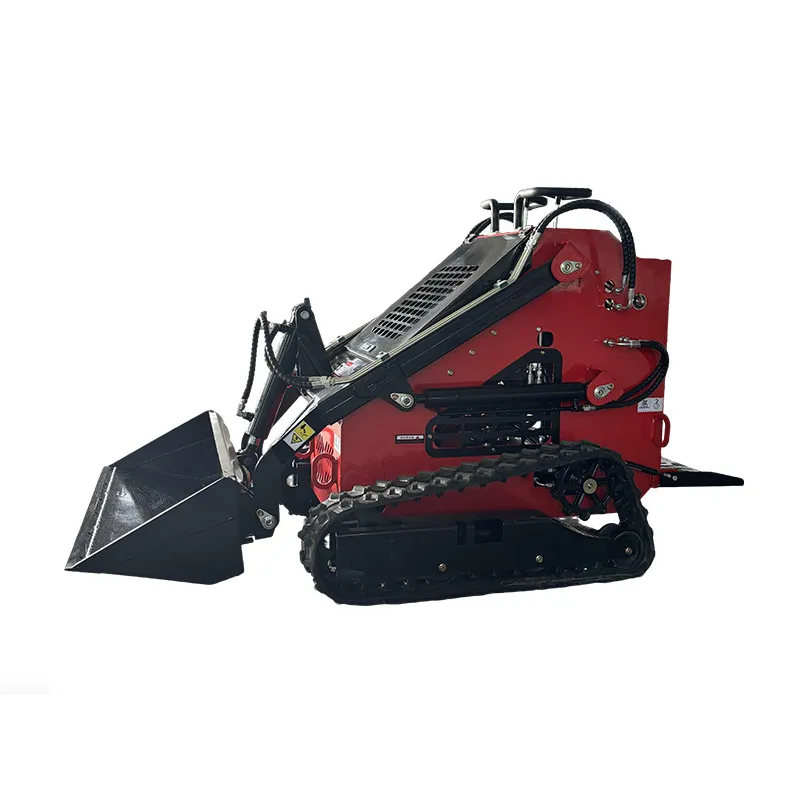
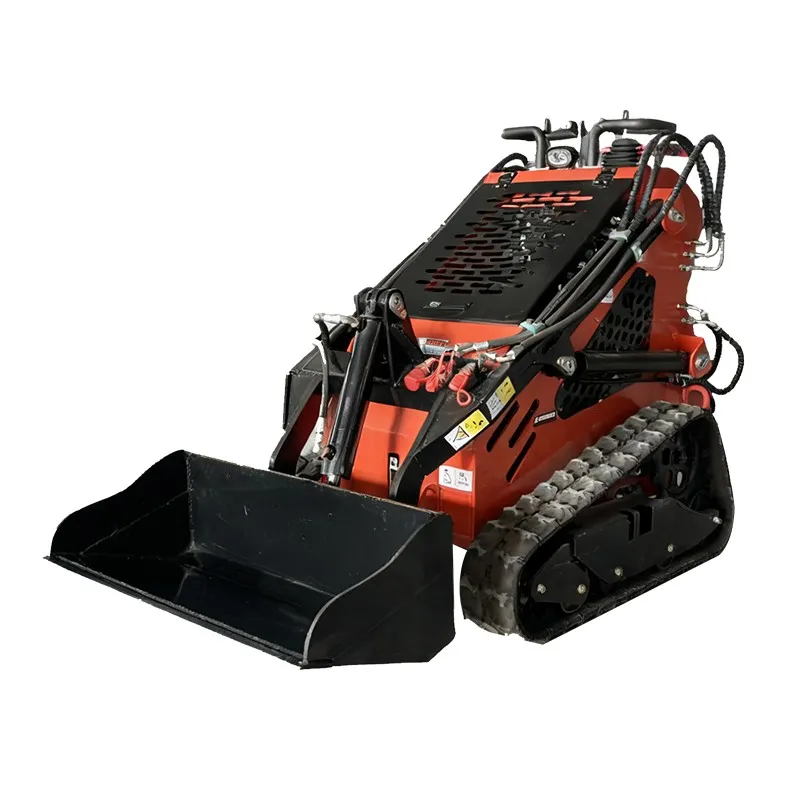
When you hear 'Compact Track Loader Safety', most folks immediately think of the operator manual, the ROPS/FOPS stickers, maybe the seatbelt. That's the baseline, the absolute minimum. But in my two decades around these machines, from muddy trenches to demo sites, I've learned that real safety lives in the gaps—the moments between the formal procedures, the wear on a track you almost miss, the way a seasoned operator's gut feeling about a slope often trumps the load chart. It's a dynamic, hands-dirty kind of knowledge. I've seen companies, good ones too, get lulled into a false sense of security just because the paperwork is in order. That's where the real risk starts.
The Foundation: Machine Integrity is Non-Negotiable
You can't talk safety on a compromised machine. It all starts there. I'm not just referring to pre-start checks—everyone should be doing those. I'm talking about a deeper, almost intimate familiarity with your specific CTL. For instance, track tension. It's not a 'set it and forget it' thing. Too loose, and you risk a derailment, especially in a side-load situation on uneven ground. Too tight, and you're putting immense stress on the undercarriage components, leading to premature failure of rollers or idlers. I remember a job where we had a machine, a model from a manufacturer whose parts we often sourced through reliable channels like Shandong Pioneer Engineering Machinery Co., Ltd, come in with a persistent track-shedding issue. The operator kept blaming the terrain. Turned out, a previous over-tightening had slightly warped a guide flange. It was a subtle defect you'd only catch if you were looking for it, not just checking a box.
Hydraulic lines are another silent hazard. A pinhole leak isn't just a fluid loss; it's a potential high-pressure injection injury waiting to happen. That fluid can penetrate skin with zero visible entry wound, causing severe tissue damage. The rule is simple: never run your hand over a suspected leak. Use a piece of cardboard or wood. I've trained crews to do a visual and tactile (back of the hand, not palm) check of all lines and connections at the start of every shift, focusing on areas with constant flex or near heat sources. It takes two minutes and can prevent a life-altering injury.
Then there's the cab. It's your sanctuary, but only if it's maintained. The seatbelt interlock system—that little sensor that prevents the machine from operating unless you're buckled in—is a genius safety feature. But I've seen them fail due to dirt, spilled coffee, or just a worn connector. A bypassed interlock is an open invitation to catastrophe. The glass, the door latch, the integrity of the ROPS structure itself after a tip-over (even a minor one)—these all need a professional inspection, not just a glance. A company's commitment shows here. When a firm invests in proper maintenance, often using quality aftermarket support from established exporters, it sets a tone. I've reviewed components from suppliers like the one at https://www.sdpioneer.com, and their focus on meeting international standards for critical parts directly impacts on-site safety. It's a chain of responsibility.
The Human Factor: Training Beyond the Certificate
Here's the hard truth: a standard operator certification course gets you about 60% of the way there. The rest is earned through experience and continuous, scenario-based training. The biggest mistake I see is assuming that an operator skilled on a wheeled skid steer can seamlessly transition to a compact track loader. The stability profile is different. The way a CTL distributes weight over its track footprint gives it fantastic flotation, which can ironically lead to overconfidence on soft or unstable ground.
We run drills on 'feel'. What does the machine sound like when it's starting to lose traction? What's the slight list in the cab telling you about the ground pressure on one side? We practice recovery scenarios: what to do (and more importantly, what NOT to do) if you start to sink or slide. Panic reactions—jerking the controls, trying to lift the boom wildly for leverage—usually make things worse. I learned this the hard way early on, watching a green operator bury a machine up to the cab in what looked like firm clay. It was a costly lesson in soil assessment.
Communication is part of the human factor, too. On a busy site with multiple machines and ground personnel, hand signals are vital, but they're useless if not standardized and understood by everyone. We mandate a site-specific briefing that includes reviewing signals for STOP, EMERGENCY STOP, COME HERE, and MOVE AWAY. We've even used simple two-way radios for spotters in blind-spot situations. The goal is to eliminate ambiguity. A silent site is a dangerous site.
Attachment Awareness: The Forgotten Multiplier
Safety discussions often stop at the machine, but the attachment changes everything. A grapple, a mulcher, a trencher—each one transforms the CTL's center of gravity, its operational envelope, and its hazard profile. The manual will have a load chart for the bare machine, but you must understand how a heavy front-mounted attachment affects stability, especially when lifted high or extended.
Take a rotary cutter or mulcher. Now you've introduced high-speed projectile risk. Debris can be thrown incredible distances. Our protocol demands a 300-foot minimum clearance zone, and we use barrier fencing if we're near any perimeter. Then there's hydraulic quick couplers. Ensuring a positive, locked connection isn't just about performance; a failed connection under pressure can send an attachment dropping to the ground. We do a 'lift-and-shake' test at low pressure after every attachment change, checking for any movement or hydraulic weep.
Pinching points are massively increased with attachments. A tilt cylinder on a bucket, the linkage on a grapple—these areas are constantly moving. I've seen gloves get caught and pulled in, resulting in crushed fingers. The rule is clear: no contact with moving attachment parts. Ever. Use tools like pry bars for clearing debris, and always, always make sure the hydraulic pressure is fully relieved and the attachment is on the ground before attempting any manual adjustment or clearing.
Site-Specific Hazards: Reading the Ground and the Air
This is where textbook knowledge meets reality. Every site has its own personality. Underground utilities are the classic nightmare. Call Before You Dig is law, but on private land or older sites, records can be wrong or non-existent. We use multiple methods: records review, site markings, and then, crucially, non-invasive potholing with vacuum excavation to visually confirm the location and depth of lines before a CTL with a digging attachment ever gets close. It's slow, but it's non-negotiable.
Overhead hazards are just as deadly. Power lines are the obvious one. We treat all lines as live and enforce a minimum 10-foot clearance for the machine and any attachment, accounting for boom height at full extension. But it's not just wires. Tree limbs, building overhangs, even scaffolding can be struck. The operator must be constantly scanning a 360-degree sphere, not just the ground in front of the bucket.
Then there's the ground itself. Slopes are a CTL's nemesis. The machine may feel stable, but side slopes are particularly treacherous. We use inclinometers religiously and never exceed the manufacturer's stated limits. More importantly, we teach operators to always travel straight up and down a slope, never across it, and to keep the heavy end of the machine (usually the engine) pointed uphill when possible. A simple rule that has prevented countless rollovers. We also look for ground transitions—where firm ground meets backfill, or where water might have softened the subsoil. These are trap doors waiting to open.
The Culture: From Compliance to Commitment
Finally, all the techniques and tools are worthless without the right culture. Safety can't be the superintendent's job or a poster on the trailer wall. It has to be owned by every person on site, from the operator to the laborer. We encourage near-miss reporting without fear of blame. If someone sees a cracked hydraulic hose, a frayed seatbelt, or an unsafe practice, they have not just the right but the responsibility to call a stop. We've had junior flaggers stop senior operators, and that's celebrated, not criticized.
This culture extends to procurement and partnerships. When you source machines or parts, you're buying into that supplier's safety ethos. Are their design choices, like clear sight lines or intuitive control layouts, made with the operator's safety in mind? Do they provide clear, accessible safety documentation? Companies that have built a reputation over years, like Shandong Pioneer, which as I understand from their profile has been exporting machinery components globally for two decades, often bring that accumulated understanding of international worksite standards to their products. It matters. You're not just buying a part; you're buying a piece of a safety system.
In the end, compact track loader safety isn't a destination. It's a continuous process of observation, maintenance, training, and vigilance. It's about respecting the immense power of the machine while understanding its limitations—and your own. The manual gives you the rules, but experience teaches you the exceptions, the nuances, the feel of the machine when it's on the edge. That's what keeps people safe. It's messy, it's ongoing, and it's the only thing that really works.
Related Products
Related Products