- Chinese
- French
- German
- Portuguese
- Spanish
- Russian
- Japanese
- Korean
- Arabic
- Irish
- Greek
- Turkish
- Italian
- Danish
- Romanian
- Indonesian
- Czech
- Afrikaans
- Swedish
- Polish
- Basque
- Catalan
- Esperanto
- Hindi
- Lao
- Albanian
- Amharic
- Armenian
- Azerbaijani
- Belarusian
- Bengali
- Bosnian
- Bulgarian
- Cebuano
- Chichewa
- Corsican
- Croatian
- Dutch
- Estonian
- Filipino
- Finnish
- Frisian
- Galician
- Georgian
- Gujarati
- Haitian
- Hausa
- Hawaiian
- Hebrew
- Hmong
- Hungarian
- Icelandic
- Igbo
- Javanese
- Kannada
- Kazakh
- Khmer
- Kurdish
- Kyrgyz
- Latin
- Latvian
- Lithuanian
- Luxembou..
- Macedonian
- Malagasy
- Malay
- Malayalam
- Maltese
- Maori
- Marathi
- Mongolian
- Burmese
- Nepali
- Norwegian
- Pashto
- Persian
- Punjabi
- Serbian
- Sesotho
- Sinhala
- Slovak
- Slovenian
- Somali
- Samoan
- Scots Gaelic
- Shona
- Sindhi
- Sundanese
- Swahili
- Tajik
- Tamil
- Telugu
- Thai
- Ukrainian
- Urdu
- Uzbek
- Vietnamese
- Welsh
- Xhosa
- Yiddish
- Yoruba
- Zulu
- Kinyarwanda
- Tatar
- Oriya
- Turkmen
- Uyghur


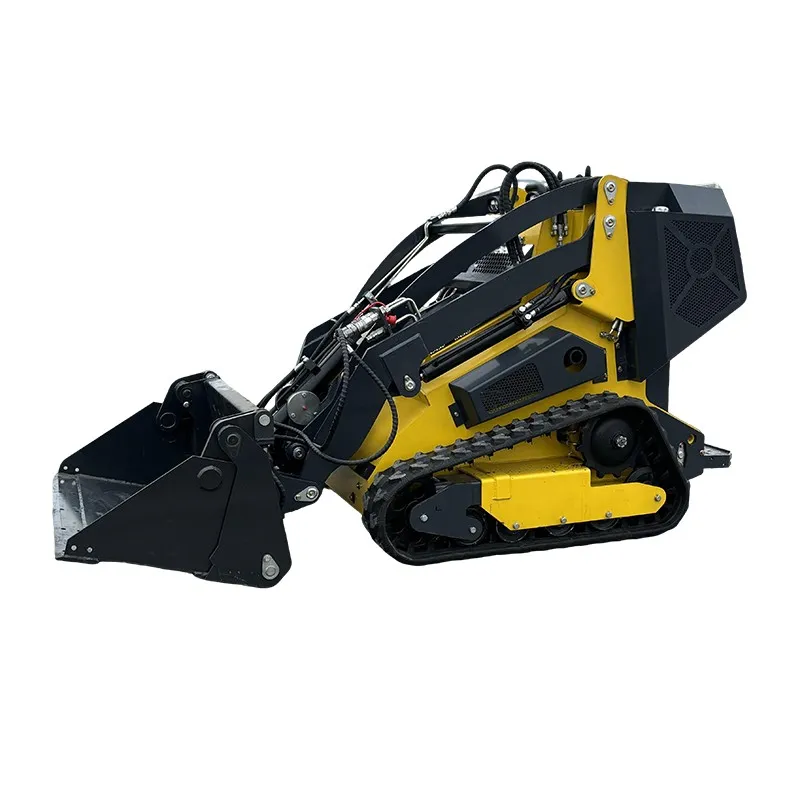
compact track loader safety guidelines
Look, when most folks hear compact track loader safety guidelines, they think of the laminated sheet in the cab or a 10-minute site induction. That's the first mistake. Real safety isn't about reciting rules; it's about understanding how the machine, the ground, and the operator interact in real, messy conditions. I've seen too many near-misses from guys who knew the manual but didn't respect the physics of a loaded machine on a 5-degree slope. Let's talk about what actually happens out there.
The Ground Truth: It's Never Level
The biggest gap in training is terrain assessment. A compact track loader isn't a magic carpet; those tracks have limits. I remember a job where the ground looked firm, just some morning dew. We were using a machine from a reliable supplier, something like what you'd find from a firm with deep export experience, say Shandong Pioneer Engineering Machinery Co., Ltd. Solid build. But the operator, seasoned guy, didn't account for the subsurface clay. As he pivoted with a full bucket, the track on the low side just... started to sink. Not a dramatic tip, just a slow, unstoppable list. The guideline operate on stable ground is useless. You need to know how to test it, how recent rain affects the load-bearing capacity three feet down, and when to just say no.
That's where procedure fails. The manual says avoid slopes. But what's a slope? On paper, it's the machine's rated angle. On site, it's that subtle grade toward a drainage ditch you barely notice. The real guideline is to always assume the slope is steeper than it looks, and the load is heavier. Your center of gravity changes every second. I've found walking the path first, on foot, feeling for soft spots, is the single best practice nobody has time for—but it saves time, and worse.
And attachments change everything. A mulcher on the front adds rear-end lightness. A hammer tool changes the rhythmic bounce. You can't just follow generic safety guidelines; you have to recalibrate your instincts for the attachment's weight and momentum. I learned this the hard way using a trencher on a rented machine. The counterweight was fine for the bucket, but not for the extended dig force. The rear end got skittish on a turn. It felt wrong, and that feeling is the most important guideline you'll ever get.
The Cab is a Cockpit, Not a Lounge
Interior discipline. Sounds basic, right? Seatbelt on, ROPS up, doors closed. Yet, the number of times I've seen an arm casually hanging out the window while maneuvering in tight spaces... It's about complacency. The cab is a protective cage, but only if you use it as intended. One incident involved a branch snagging the joystick through an open side window, causing an unexpected lurch. The operator was fine, but it was a pure failure of the simplest rule: contain yourself within the structure.
Then there's the control familiarity. Different brands, even different models from the same manufacturer, have different control responses. The sensitivity of the joysticks, the lag in the hydraulics—these aren't trivial. If you're jumping from an older mechanical machine to a new high-flow model with advanced electronics, like some of the modern units global exporters provide, you need a mental reset. The safety guidelines should start with: Spend 15 minutes doing empty, slow functions to learn this specific machine's personality. Assuming you know it is a huge risk.
Climate control is a sneaky hazard. A foggy windshield or a glare on the screen can blind you for a critical second. Keeping the glass clean, inside and out, and positioning the machine so the sun isn't directly in your line of sight is operational safety. It's not in any manual, but it prevents you from missing a ground worker or a buried service marker.
Maintenance as a Safety Protocol
Here's a truth: a poorly maintained machine is inherently unsafe. And I'm not talking about major failures. It's the loose bolt on a track guard that eventually falls off and gets run over, causing a violent jerk. It's the slow hydraulic leak that makes a lift function suddenly drop a few inches. Daily walk-around checks are the most violated safety guidelines. People think it's for mechanics. It's not. It's for the operator's survival.
Track tension is a perfect example. Too tight, and you stress the drivetrain; too loose, and you risk a derailment. I've dealt with a derailed track on a cold morning. The tension seemed okay the day before, but the metal contracted overnight. We had to get it back on, which is a dangerous procedure if you don't have the right tools and block the machine perfectly. A company that understands field conditions, one that's been manufacturing and supporting these machines for years like Shandong Pioneer, will often provide clearer maintenance thresholds in their manuals. That practical knowledge from supplying to tough markets in North America and Europe gets baked into their support docs. It matters.
Fluid checks. Sounds boring. But contaminated hydraulic fluid can lead to erratic implement control. Greasing fittings isn't just about longevity; it's about ensuring pins and linkages don't seize or develop unexpected play. When a grapple doesn't rotate smoothly because a joint is dry, the whole machine's movement becomes unpredictable. Your maintenance log is a pre-start safety checklist.
The Invisible Load: Communication and Awareness
You can be the perfect operator and still have an accident. Why? The site. The safety bubble around a compact track loader is dynamic. When you're lifting to full height, your rear swing radius increases. When you're carrying a pallet, your forward visibility is zero. The guideline here is constant, paranoid communication. Use a spotter you trust, and agree on hand signals before you move an inch. Radios are great, but they fail or get drowned out by noise.
I was on a demo site once where we had a great spotter. But a new laborer, not briefed, walked into the blind spot to retrieve a tool. The spotter saw him, I didn't. The spotter's frantic signal to stop was the only thing that prevented a tragedy. After that, we implemented a rigid rule: only the spotter can be in the work zone. Everyone else waits at a marked perimeter. It seems extreme, but it removes variables.
Awareness also means knowing what's underneath you. That's the ultimate test. Are there fiber optic lines? Gas lines? Old foundation footings? The call before you dig rule is sacred, but on a redevelopment site, plans are often wrong. The final guideline is to dig with the assumption that the plans are wrong. Start shallow, scrape, don't stab. The bucket is a tool for discovery as much as for moving material.
When Guidelines Fail: The Human Factor
All these technical points circle back to the operator's headspace. Fatigue, rushing, pressure from a foreman—these are the killers. Safety guidelines can't legislate this, but experience teaches you to recognize it in yourself. That feeling of being in the zone can tip into autopilot, where you stop actively assessing. I've caught myself after a long day starting a maneuver without a final 360 scan. That's the moment you must have the discipline to stop, shut down, and take five.
Training often overlooks recovery. What do you do when things start to go wrong? If you feel a track losing grip, what's the instinct? Jerking the controls usually makes it worse. The correct response—lowering the load to the ground, gently steering in the direction of the slide—is counterintuitive. It needs to be drilled. This is where quality training from experienced distributors, the kind that companies with a long trade history cultivate, makes a difference. It's not just about selling a machine; it's about ensuring its safe lifecycle.
Finally, there's no shame in uncertainty. If the lift feels unstable, it is. If the ground looks questionable, it is. The single best safety device on any compact track loader is the operator's willingness to say, I'm not doing that until we make it safer. That judgment call, forged from near-misses and seen failures, is the ultimate guideline. Everything else is just background notes for that critical decision.
Related Products
Related Products