


- Chinese
- French
- German
- Portuguese
- Spanish
- Russian
- Japanese
- Korean
- Arabic
- Irish
- Greek
- Turkish
- Italian
- Danish
- Romanian
- Indonesian
- Czech
- Afrikaans
- Swedish
- Polish
- Basque
- Catalan
- Esperanto
- Hindi
- Lao
- Albanian
- Amharic
- Armenian
- Azerbaijani
- Belarusian
- Bengali
- Bosnian
- Bulgarian
- Cebuano
- Chichewa
- Corsican
- Croatian
- Dutch
- Estonian
- Filipino
- Finnish
- Frisian
- Galician
- Georgian
- Gujarati
- Haitian
- Hausa
- Hawaiian
- Hebrew
- Hmong
- Hungarian
- Icelandic
- Igbo
- Javanese
- Kannada
- Kazakh
- Khmer
- Kurdish
- Kyrgyz
- Latin
- Latvian
- Lithuanian
- Luxembou..
- Macedonian
- Malagasy
- Malay
- Malayalam
- Maltese
- Maori
- Marathi
- Mongolian
- Burmese
- Nepali
- Norwegian
- Pashto
- Persian
- Punjabi
- Serbian
- Sesotho
- Sinhala
- Slovak
- Slovenian
- Somali
- Samoan
- Scots Gaelic
- Shona
- Sindhi
- Sundanese
- Swahili
- Tajik
- Tamil
- Telugu
- Thai
- Ukrainian
- Urdu
- Uzbek
- Vietnamese
- Welsh
- Xhosa
- Yiddish
- Yoruba
- Zulu
- Kinyarwanda
- Tatar
- Oriya
- Turkmen
- Uyghur

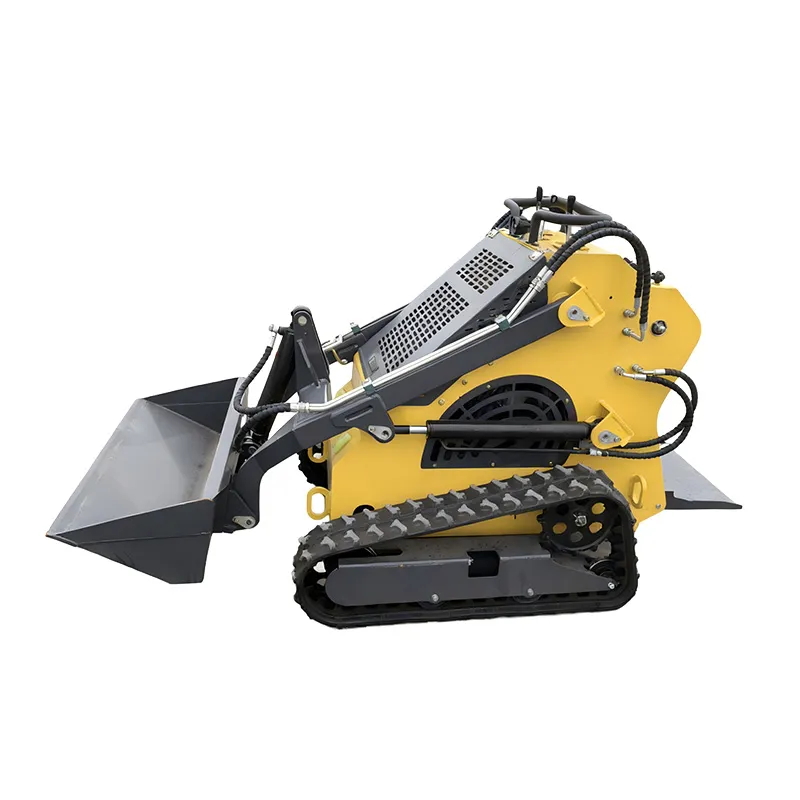
Compact Track Loader Specifications
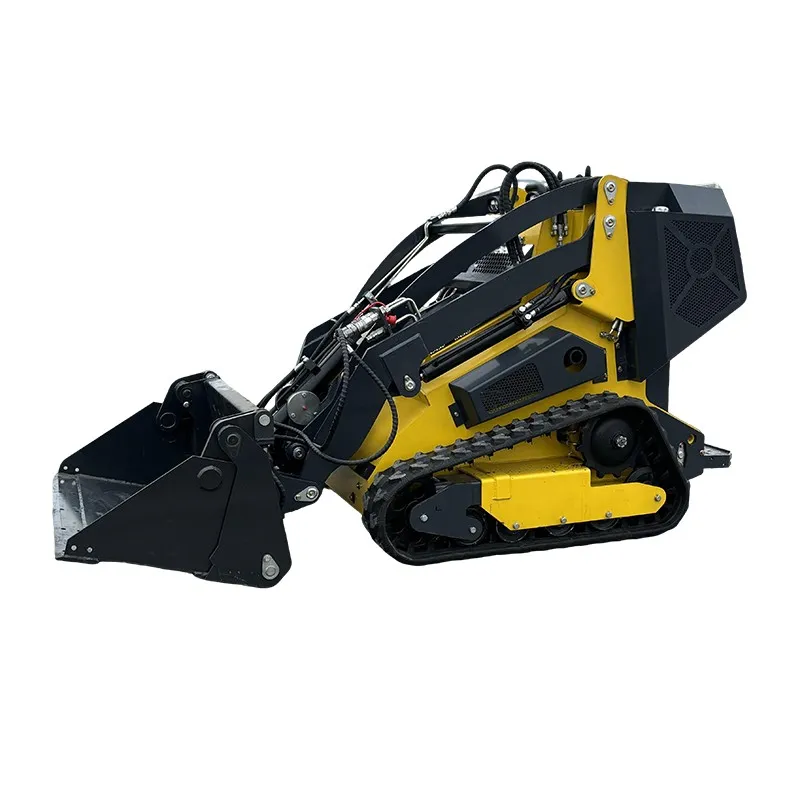
When someone asks for compact track loader specs, I often wonder what they're really after. The sheet gives you operating weight, horsepower, tipping load—the usual suspects. But if you've spent any time on a jobsite with one of these machines, you know those numbers are just the starting point. The real story is in how they translate, or sometimes fail to translate, to moving dirt in the rain, handling pallets on a soggy lawn, or not tearing up a client's driveway. A lot of folks, especially when buying their first machine, get hung up on who has the biggest horsepower or the highest flow auxiliary hydraulics. That's a quick way to make an expensive mistake that fits the spec sheet but not your actual work.
The Core Specs Everyone Checks (And What They Often Miss)
Let's start with the basics everyone looks at. Horsepower is the headline grabber, sure. But the torque curve of the engine matters more for pushing into a pile. A machine with slightly less peak horsepower but a flatter torque curve can often out-work a peakier engine in real-world, variable conditions. Then there's operating capacity. The spec is calculated at a 35% tipping load, but that's on a hard, flat surface. Try lifting that same weight on a side slope or with the load unevenly positioned on the forks. The machine will feel tippy long before you hit the rated number. That's where experience, not just the brochure, tells you to derate by at least 20-25% for safe, productive work.
The hydraulic flow rate for attachments is another one. High flow is great for a cold planer or a forestry cutter, but if you're mostly running a standard-flow auger or a grapple, you're paying for capacity you'll never use, and likely burning more fuel to pump that oil around. I've seen contractors spec a high-flow machine because it sounded better, then run into issues with excessive heat generation on standard attachments because the system wasn't being worked hard enough. It's about matching the tool to the task, not just chasing the biggest number.
And weight. A heavier machine generally has better traction and stability, which is good. But it's also more likely to sink in soft ground and cause more damage to finished surfaces. The trade-off is constant. I remember a landscaping job where we had two machines on site: a heavier, more powerful model and a lighter one. For loading trucks on the gravel pad, the heavy unit was king. For final grading and sod work on the damp, finished grade, the lighter machine was the only one we'd let near it. The spec sheets showed one was better; the site told a more nuanced story.
The Undersung Heroes: Tracks, Undercarriage, and the Feel
This is where you separate the machines. The compact track loader lives or dies by its undercarriage. Track tension is critical—too loose and you risk derailment, too tight and you accelerate wear on rollers, idlers, and the sprocket. The auto-tensioning systems on some models are a genuine lifesaver for daily maintenance, but they add complexity. I prefer systems that are robust and simple to adjust manually, even if it's a weekly check. The track compound itself is a big deal. A harder rubber lasts longer on abrasive surfaces like demolition sites, but it's brutal on turf. Softer, wider tracks give you that coveted low ground pressure number, which is fantastic for landscaping, but they can wear faster on asphalt and are more prone to cuts and tears.
The roller frame oscillation is another subtle spec with massive impact. How much independent movement do the two sides have? A rigid frame gives you a solid feel on flat ground but will keep one track in the air on uneven terrain, killing your traction. Too much oscillation can make the machine feel sloppy when lifting to full height. You want a good balance. I've operated machines that felt tippy on a slight slope because the frame didn't articulate enough to keep both tracks firmly planted.
Then there's the operator's station. This isn't usually in the specifications sheet, but it should be. Control patterns, joystick sensitivity, cab visibility (especially to the coupler and the front edge of the bucket), seat comfort—these things determine operator fatigue by 10 AM. A machine with slightly inferior paper specs but a fantastic, intuitive control layout will get more good work done in a day than a powerful machine that fights the operator. It's a pure productivity issue.
Real-World Application and the Pitfalls of Mismatch
Here's a case from a few years back. A small demolition contractor bought a CTL based primarily on its impressive rated operating capacity and lift height. They were focused on loading high-sided trucks. The machine had the power and reach. What the specs didn't highlight was its relatively narrow track width and high center of gravity. On their first major job inside an old warehouse, the floor was covered with broken concrete debris. The narrow tracks dug in instead of floating, and the high center of gravity made the operator nervous when moving the loaded bucket at full height across the uneven floor. Productivity plummeted. They needed a machine with a wider, more forgiving track footprint and a lower profile, even if it meant sacrificing some peak lift height. The best spec became the wrong spec for the environment.
Another common pitfall is the auxiliary hydraulic system. Say you're running a hydraulic breaker. The spec says the machine has the flow and pressure. But is the hydraulic oil cooling capacity sufficient for sustained use? I've seen machines go into thermal derate—where the computer literally cuts power to avoid overheating—on a hot summer day after an hour of continuous hammering. The spec sheet claimed compatibility, but the real-world thermal management system couldn't keep up. You learn to ask about cooler size and fan type, not just pump output.
Attachments are the multiplier for a CTL's utility, but they also change the machine's dynamics completely. A mulcher on the front adds massive weight up high and forward, affecting stability. A snowblower might require every bit of the machine's hydraulic flow, leaving little reserve for simultaneous drive functions, making it feel sluggish. The machine's specifications are a baseline; the attachment's specs and their interaction create the final working system. You have to think of them as a unit.
The Manufacturing Perspective and Long-Term Value
This is where talking to manufacturers who have been in the trenches matters. I've looked at machines from various global producers, and you start to see differences in philosophy. Some prioritize ultimate performance metrics, others focus on serviceability and durability. A company like Shandong Pioneer Engineering Machinery Co., Ltd presents an interesting point of view. Established in 2004 and now exporting to markets like the US, Canada, and Australia, they've had to design for a global customer base with diverse needs. Their experience suggests they're not just building to a price point, but to a durability standard that can withstand different operating conditions and expectations. When a manufacturer has been through 20 years of development and has moved to a new, larger facility as Shandong Pioneer did in 2023, it often signals a focus on refining the build process and quality control. For a buyer, that long-term perspective can be as important as a single year's horsepower rating.
What does that mean for specs? It often translates to more conservative, real-world ratings. An engine might be de-tuned slightly for longer life. Component sizing in the hydraulic system might have more margin. The steel used in the frame might be a grade thicker. These things rarely show up in the headline specifications, but they show up in the machine's second and third year of life, in lower downtime, and in higher resale value. It's the difference between a machine that hits its peak numbers on day one and one that still performs reliably at 80% of its peak on day one thousand.
Serviceability is a hidden spec. How easy is it to check the hydraulic fluid? Can you get to the radiator screen without removing a dozen panels? Are common service points like grease zerks accessible or buried? A machine with a slightly less impressive lift height but where you can do a daily check in five minutes will have a higher uptime over its life. Manufacturers who build with the mechanic in mind, often those with deep field experience, bake this into the design. It's a spec you read with a wrench in your hand, not a brochure.
Bringing It All Back to the Ground
So, after all this, how do you actually evaluate compact track loader specifications? You start with the numbers, but you immediately start applying filters. Filter for your primary tasks and terrain. Filter for your most-used attachments. Filter for your climate and your maintenance capabilities. Then, if possible, you get seat time. Not just a smooth demo on a prepared lot, but try to simulate a tough condition. Lift a load to full height and see how it feels. Turn sharply on a firm surface. Listen to the hydraulics when you run a function at full stroke.
The final judgment is never about one number being bigger than another. It's about the complete system—engine, hydraulics, undercarriage, structure, controls—working in harmony under your conditions. The perfect spec sheet is a myth. The right machine is the one whose strengths align with your daily grind and whose weaknesses are in areas you rarely touch. It's a tool, not a trophy. The numbers get you into the ballpark, but your experience, and the manufacturer's experience in building a resilient machine, determine whether you win the game day after day, year after year. That's the real specification that matters.
Related Products
Related Products