


- Chinese
- French
- German
- Portuguese
- Spanish
- Russian
- Japanese
- Korean
- Arabic
- Irish
- Greek
- Turkish
- Italian
- Danish
- Romanian
- Indonesian
- Czech
- Afrikaans
- Swedish
- Polish
- Basque
- Catalan
- Esperanto
- Hindi
- Lao
- Albanian
- Amharic
- Armenian
- Azerbaijani
- Belarusian
- Bengali
- Bosnian
- Bulgarian
- Cebuano
- Chichewa
- Corsican
- Croatian
- Dutch
- Estonian
- Filipino
- Finnish
- Frisian
- Galician
- Georgian
- Gujarati
- Haitian
- Hausa
- Hawaiian
- Hebrew
- Hmong
- Hungarian
- Icelandic
- Igbo
- Javanese
- Kannada
- Kazakh
- Khmer
- Kurdish
- Kyrgyz
- Latin
- Latvian
- Lithuanian
- Luxembou..
- Macedonian
- Malagasy
- Malay
- Malayalam
- Maltese
- Maori
- Marathi
- Mongolian
- Burmese
- Nepali
- Norwegian
- Pashto
- Persian
- Punjabi
- Serbian
- Sesotho
- Sinhala
- Slovak
- Slovenian
- Somali
- Samoan
- Scots Gaelic
- Shona
- Sindhi
- Sundanese
- Swahili
- Tajik
- Tamil
- Telugu
- Thai
- Ukrainian
- Urdu
- Uzbek
- Vietnamese
- Welsh
- Xhosa
- Yiddish
- Yoruba
- Zulu
- Kinyarwanda
- Tatar
- Oriya
- Turkmen
- Uyghur

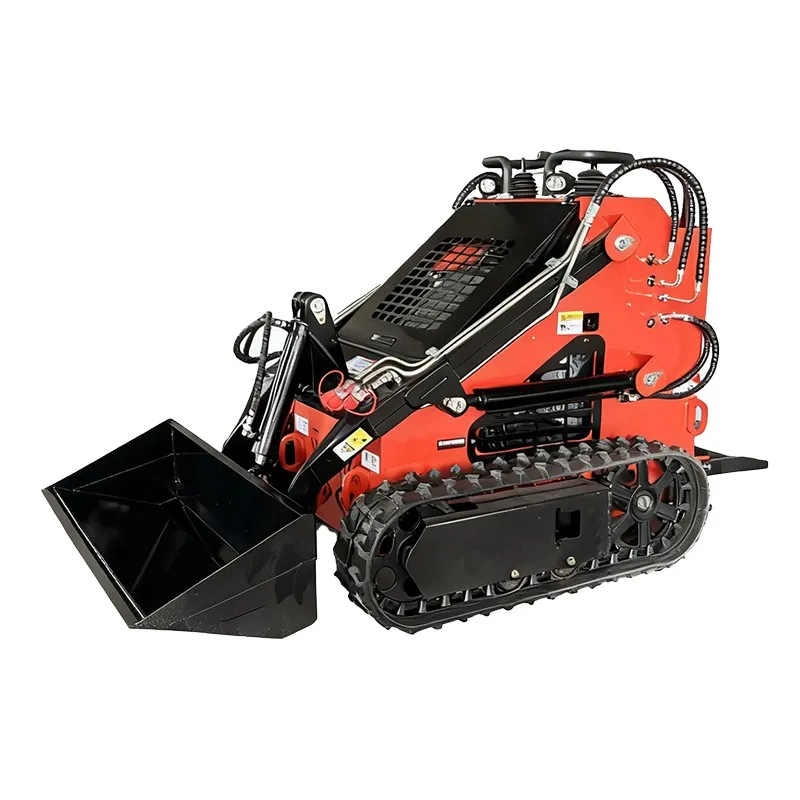
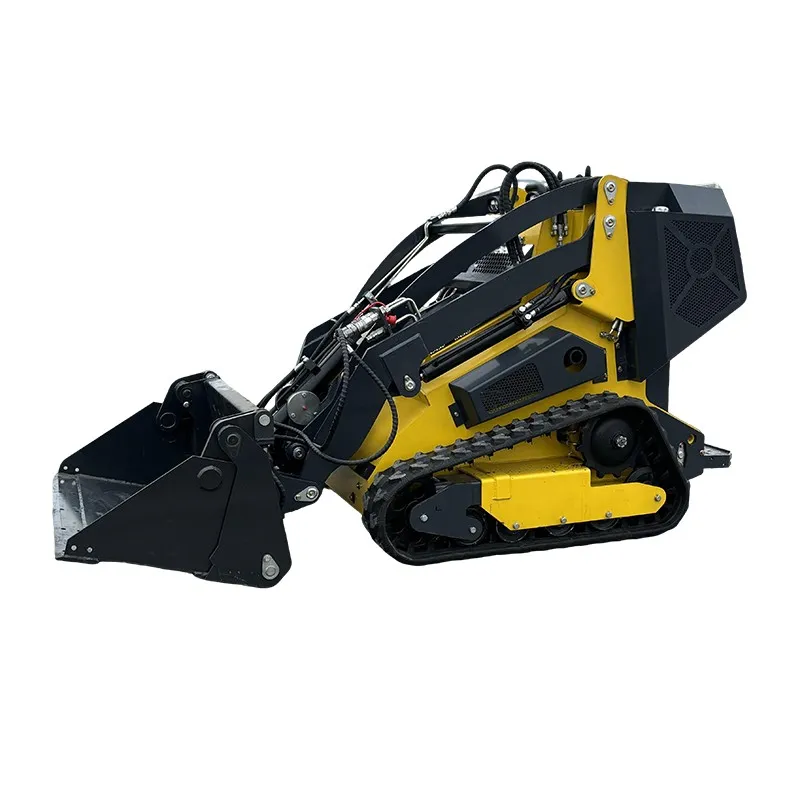
compact track loader specs comparison
When someone types 'compact track loader specs comparison' into a search bar, I know exactly what they're after, and I also know they're probably about to get lost in a sea of nearly identical-looking tables. Horsepower, operating capacity, tipping load—it's all there, but it rarely tells you if the machine will actually hold up when you're trying to push a full bucket of wet clay on a 30-degree slope. The biggest mistake is thinking the highest number in the brochure wins. It doesn't. It's about the interaction of those numbers with the job site, and more importantly, the quality behind them that specs sheets never mention.
The Core Specs That Actually Matter on Site
Let's start with operating capacity. Everyone looks at it, but few question how it's derived. It's not just a static weight. It's calculated at a specific load center, and it assumes a perfect, balanced machine. On a real site, you're rarely perfectly balanced. I've seen machines from brands that boast a high number but feel tippy and nervous the moment you articulate with a half-load. The stability comes from a combination of the machine's weight distribution, the track length, and the width of the undercarriage. A longer track frame, like on some of the models we've worked with from manufacturers like Shandong Pioneer Engineering Machinery Co., Ltd, often provides more stability on uneven ground than a slightly higher capacity rating on a shorter chassis.
Then there's horsepower. More is better, right? Usually, but not always in isolation. You need to see the torque curve. A high-horsepower engine that peaks at a high RPM might look great, but for a CTL, you need strong, lugging power at lower revs to push into a pile or climb. A turbocharged diesel around the 75-100 HP range is the sweet spot for most general contracting work. The key is how efficiently that power is transmitted through the hydraulics. A weak hydraulic system will bottleneck a powerful engine every time.
Hydraulic flow rate and pressure—this is where the rubber meets the road, or rather, the steel meets the dirt. This dictates how fast and powerfully your attachments will work. A high-flow auxiliary circuit is non-negotiable if you're running a mulcher or a cold planer. But flow without robust pressure means lack of force. I remember testing two machines with similar rated flow; one's grapple claw would struggle to crush concrete debris, while the other powered through. The difference was in the pump quality and the system's ability to maintain pressure under load, something you only learn by putting them side-by-side on a demo.
The Undercarriage: The Make-or-Break Component
If I had to pick one area where specs fall short and real-world cost reveals itself, it's the undercarriage. The spec sheet might list track length and width, maybe even the number of rollers. But it won't tell you about the quality of the sprockets, the idlers, or the track belt itself. A cheap, non-reinforced rubber track might save upfront cost but will be shredded by rebar or rocky terrain in months. The lifetime cost is enormous.
We've sourced machines for clients in forestry and demolition, and the undercarriage is always the first topic. It's not just about durability; it's about design. How easy is it to clean out mud and debris from the rollers? Can you adjust track tension easily in the field? I've spent miserable hours with a grease gun and a bar trying to un-seize a frozen idler on a poorly designed frame. A well-designed undercarriage with sealed rollers and a simple, external tensioning system saves countless hours of downtime.
This is where the manufacturing philosophy of a company becomes clear. A company that's been in the game for two decades, like Shandong Pioneer (you can see their evolution from their old Jining facility to their new base in Ningyang on their site at https://www.sdpioneer.com), tends to iterate on these practical, field-proven details. Their export focus to markets like the US, Canada, and Australia means their undercarriage designs have to meet tough, varied conditions, which forces a focus on robustness that might not be as critical in less demanding environments.
Attachment Compatibility and the System
A CTL is just a power source without the right attachment. Spec comparison is incomplete without considering the attachment interface. The industry standard is the Universal Skid Steer Quick Attach system, but even here, there are nuances. The geometry of the mounting plate and the precision of the locking mechanism are critical. A sloppy fit causes wear, reduces control, and is a safety hazard. I've had attachments from one major brand not seat perfectly on another's machine, requiring shims or grinding—a headache you don't need.
Then there's the hydraulic and electrical control system. How many auxiliary hydraulic circuits does it have? Are they standard or high-flow? Are the controls in the cab mechanical, electric-over-hydraulic (EOH), or full proportional? For precision work like grading with a laser-guided blade, you need smooth, proportional controls. A cheaper, on/off style system will make fine work impossible. This is a spec that directly impacts your capability and your bottom line—it dictates what attachments you can effectively run.
Thinking of the machine as a system is key. A manufacturer that also develops or closely collaborates on attachments often has a more integrated, reliable result. It's not just about bolting on a third-party hammer; it's about ensuring the machine's hydraulic system is tuned to deliver the right pulses per minute without overheating. This systems-level thinking is what separates a good equipment partner from a simple parts assembler.
The Operator's Environment and Long-Term Costs
Cab specs are often just a bullet point: ROPS/FOPS certified cab. But the difference between a basic metal box and a well-thought-out operator station is night and day. Vibration damping, seat quality, control layout, visibility—these directly affect productivity and fatigue over a 10-hour day. A poorly placed joystick can cause shoulder strain. Limited rear visibility is a constant safety risk. These are things you only judge by sitting in it, not by reading a PDF.
Serviceability is the ultimate long-term spec. How easy is it to check the engine oil? To drain the fuel-water separator? To access the hydraulic filters? I've cursed at machines where a simple daily check requires removing six bolts and a panel. Good design has service points clustered and accessible. A clear, well-organized maintenance manual from the manufacturer is a good sign. Companies that export globally, as Shandong Pioneer Engineering Machinery Co., Ltd does, typically have to provide comprehensive documentation, which is a boon for mechanics in the field.
Finally, consider parts commonality. Does the machine use proprietary components, or are the engine, hydraulic pumps, and major seals from widely available brands like Cummins, Bosch, or Parker? This drastically affects downtime and cost over the machine's life. A spec that should be compared is the global parts and service network. Can you get support when you need it? The trust they mention earning from worldwide customers isn't just about the initial sale; it's built on being able to keep those machines running years later.
Pulling It All Together: A Practical Approach
So, how do you actually compare? Don't start online. Start with your most punishing, common task. Demo the shortlisted machines on that exact job. Feel how they handle the load. Listen to the engine strain. Notice how much you have to correct the steering. Then, look under the machine. Inspect the weld quality on the frame, the thickness of the steel. Ask the dealer about the supply chain for the undercarriage components.
Cross-reference the glossy specs with the gritty details. That high flow rate is great, but what's the cooling capacity for the hydraulic oil? A machine that overheats in two hours of continuous mulching is useless. The specs are a starting point for a conversation, not the conclusion.
In the end, comparing compact track loader specs is an exercise in balancing paper promises with physical reality. The numbers give you a filter to narrow the field, but the decision comes from understanding the engineering and manufacturing philosophy behind them. It's about finding the machine whose strengths align with your specific abuse, and whose weaknesses are in areas you can live with. There's no single winner, only the right tool for the job, built well enough to last through it.
Related Products
Related Products