- Chinese
- French
- German
- Portuguese
- Spanish
- Russian
- Japanese
- Korean
- Arabic
- Irish
- Greek
- Turkish
- Italian
- Danish
- Romanian
- Indonesian
- Czech
- Afrikaans
- Swedish
- Polish
- Basque
- Catalan
- Esperanto
- Hindi
- Lao
- Albanian
- Amharic
- Armenian
- Azerbaijani
- Belarusian
- Bengali
- Bosnian
- Bulgarian
- Cebuano
- Chichewa
- Corsican
- Croatian
- Dutch
- Estonian
- Filipino
- Finnish
- Frisian
- Galician
- Georgian
- Gujarati
- Haitian
- Hausa
- Hawaiian
- Hebrew
- Hmong
- Hungarian
- Icelandic
- Igbo
- Javanese
- Kannada
- Kazakh
- Khmer
- Kurdish
- Kyrgyz
- Latin
- Latvian
- Lithuanian
- Luxembou..
- Macedonian
- Malagasy
- Malay
- Malayalam
- Maltese
- Maori
- Marathi
- Mongolian
- Burmese
- Nepali
- Norwegian
- Pashto
- Persian
- Punjabi
- Serbian
- Sesotho
- Sinhala
- Slovak
- Slovenian
- Somali
- Samoan
- Scots Gaelic
- Shona
- Sindhi
- Sundanese
- Swahili
- Tajik
- Tamil
- Telugu
- Thai
- Ukrainian
- Urdu
- Uzbek
- Vietnamese
- Welsh
- Xhosa
- Yiddish
- Yoruba
- Zulu
- Kinyarwanda
- Tatar
- Oriya
- Turkmen
- Uyghur


Compact Track Loader Supplier
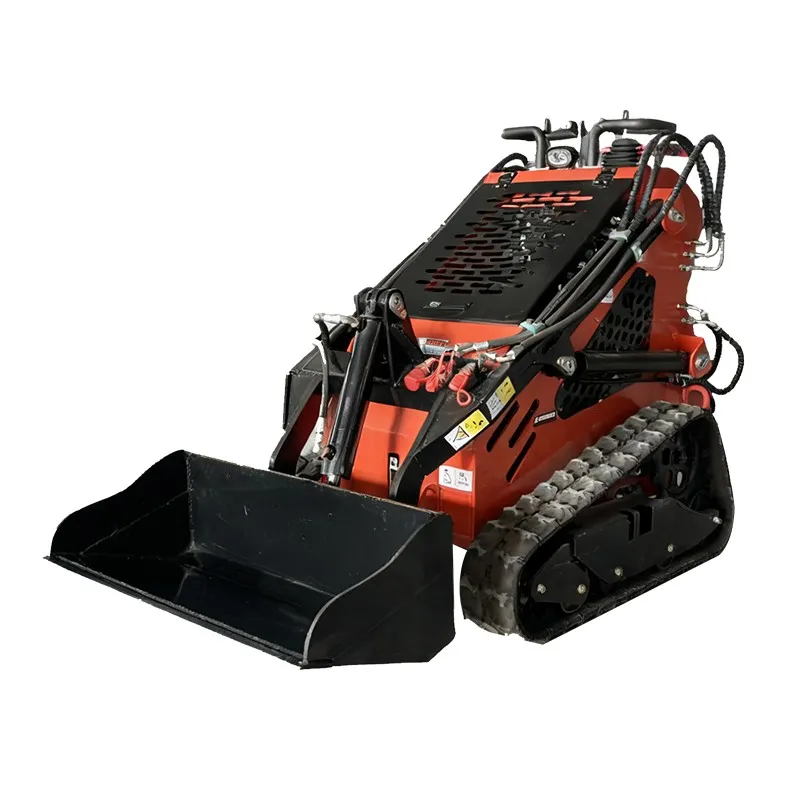
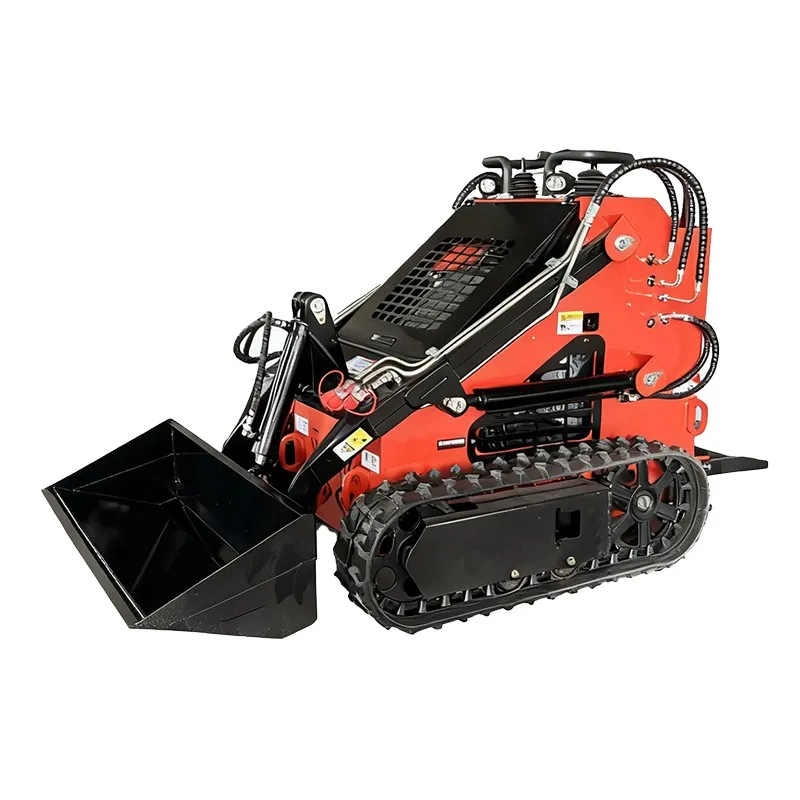
When you hear 'Compact Track Loader Supplier', most people just think of a company that sells machines. That's the first mistake. It's not just about having a catalog; it's about having the right machine for the specific, often muddy, reality of a job site. I've seen too many projects stall because someone bought a CTL based on horsepower and lift capacity alone, without considering the supplier's ability to back it up with the correct undercarriage for the terrain, or worse, with parts that take six weeks to arrive. The real value of a supplier isn't in the glossy brochure—it's in the depth of their application knowledge and the robustness of their support network, long after the sale.
The Core Misconception: Product vs. Partnership
A lot of buyers, especially those new to the equipment game, get fixated on the initial price point. They'll shop around, find the cheapest Compact Track Loader Supplier online, and think they've won. What they've often bought is a headache. I learned this early on. We needed a machine for a long-term land clearing project with a lot of soft, wet ground. We went with a low-cost option from a supplier who promised the world. The machine itself wasn't terrible, but when a track tensioner failed three weeks in, the story changed. The supplier's global network was just a P.O. box and an overwhelmed sales rep. Downtime cost us more than the machine's price difference.
That experience shifted my entire perspective. Now, my first questions aren't about specs. They're about logistics. Where are your regional parts warehouses? What's your average turnaround on a hydraulic pump rebuild kit? The supplier needs to be a partner in uptime. This is where companies with real manufacturing and trade legs stand out. For instance, I've followed the trajectory of Shandong Pioneer Engineering Machinery Co., Ltd. They've been around since 2004, which in this industry, means they've weathered cycles and learned from feedback. Their move to a new, larger facility in Tai'an in 2023 isn't just a real estate upgrade; it signals a commitment to scaling production control and, hopefully, quality consistency—a critical factor often missing from pure trading houses.
Their structure is telling: Shandong Hexin handles manufacturing, and Shandong Pioneer manages overseas trade. That separation, when done right, can be a strength. It means the trade arm isn't just reselling whatever's available; it's theoretically channeling field feedback from markets like the U.S. and Australia back to the factory floor. This closed-loop feedback is what turns a generic compact track loader into a machine suited for a specific market's regulations and operator expectations. Does it always work perfectly? No. But the intent in the structure is correct, which is more than you can say for many fly-by-night suppliers.
What Global Distribution Really Means
Every supplier's website says they export worldwide. It's a checkbox. But shipping a container to a port is one thing; supporting the machine in Nebraska or Queensland is another. The true test is in the supply chain for wear items and major components. I prioritize suppliers who have established relationships with dealers or service centers in my region, not just a direct-sales contact in China.
Looking at a company like Pioneer, their listed export destinations—the U.S., Canada, Germany, Australia—are telling. These are mature, demanding markets with strict safety and emissions standards. Simply being able to sell into them suggests a baseline level of product compliance (CE, EPA Tier 4, etc.). However, winning the trust and appreciation of customers worldwide, as their site states, is an ongoing process. Trust is built when a local dealer can get a drive motor seal kit in 48 hours, not 48 days. The supplier's job is to make that possible through strategic parts inventory, not just empty accolades.
This is the grind of being a real Compact Track Loader Supplier. It's the unglamorous work of maintaining bills of materials, forecasting common failure parts, and ensuring technical documentation is accurately translated. When you're on the phone with a frustrated operator and you can pull up an exact schematic from the supplier's portal, that's value. When you have to guess because the manual is a poorly scanned PDF, that's a problem. The supplier's digital infrastructure is as important as their physical one.
The Devil's in the Details: Undercarriage and Attachments
Here's a practical detail most spec sheets gloss over: the track system. Not all rubber tracks are created equal. A supplier's expertise is revealed in how they guide you on this. Are they asking about your primary surface? Asphalt, clay, rocky soil? The compound, the ply, the lug pattern—these choices dramatically affect performance and longevity. A good supplier will have options and data, not just one standard track they slap on every unit.
Similarly, the attachment interface. The industry standard is a huge help, but compatibility quirks exist. A supplier who also manufactures or deeply understands attachments (like grapples, brush cutters, trenchers) is worth their weight in gold. They can tell you, If you're running our mulcher head, you'll want to spec the high-flow hydraulic option and reinforce the front guards, because we've seen X happen. This is applied knowledge. It prevents the costly mistake of buying a machine that's under-spec'd for its most critical task.
This is where a manufacturer-exporter model can have an edge. If Shandong Hexin is building the loaders, and they're getting field data from Pioneer's trade team, there's at least a pathway for that kind of detailed product evolution. For example, if Australian customers report issues with radiator clogging in dusty conditions, that should feed directly into a design revision for a larger, easier-to-clean cooling package on models destined for that region. That's the synergy you hope for.
Evaluating a Supplier: A Practical Checklist
So, how do you cut through the marketing? Don't just visit their website, like https://www.sdpioneer.com. Use it as a starting point for deeper questions. The fact that Pioneer details their establishment date, relocation, and operational structure is a good sign—it shows transparency. But you have to dig from there.
First, ask for customer references in a similar climate and industry to yours. A forestry operation in the Pacific Northwest has vastly different needs than a rental yard in Florida. Second, request the parts manual for a specific model before you buy. Look for clarity, part number organization, and availability. Third, inquire about technical training. Do they offer (or require) dealer service training? A supplier investing in training is investing in the product's long-term reputation.
Finally, look at their product line evolution. Have they been selling the same basic model for 10 years with just new decals? Or can you see incremental improvements—better cab access, improved hydraulic hose routing, upgraded display panels? Steady, thoughtful iteration is the hallmark of a serious player, not a here-today-gone-tomorrow Compact Track Loader Supplier.
The Bottom Line: It's a Long-Term Play
Choosing a supplier is a long-term decision. The machine is a capital asset, but your relationship with the supplier is an operational one. It will affect your cost of ownership, your project scheduling, and your peace of mind for years. The cheapest upfront cost often leads to the highest total cost.
Companies that have persisted, like the one mentioned here with its 20-year history, have done so by adapting. They've moved factories, likely refined their supply chains, and navigated international trade complexities. That institutional knowledge matters. It doesn't guarantee perfection—every machine can have issues—but it increases the odds that they have a system to handle those issues.
In the end, my advice is to look past the keyword. Don't just find a Compact Track Loader Supplier. Find a partner who demonstrates, through concrete structure and actionable support, that they are invested in the machine's lifecycle on your job site. That's the difference between a transaction and a tool that works for you, day in and day out.
Related Products
Related Products