- Chinese
- French
- German
- Portuguese
- Spanish
- Russian
- Japanese
- Korean
- Arabic
- Irish
- Greek
- Turkish
- Italian
- Danish
- Romanian
- Indonesian
- Czech
- Afrikaans
- Swedish
- Polish
- Basque
- Catalan
- Esperanto
- Hindi
- Lao
- Albanian
- Amharic
- Armenian
- Azerbaijani
- Belarusian
- Bengali
- Bosnian
- Bulgarian
- Cebuano
- Chichewa
- Corsican
- Croatian
- Dutch
- Estonian
- Filipino
- Finnish
- Frisian
- Galician
- Georgian
- Gujarati
- Haitian
- Hausa
- Hawaiian
- Hebrew
- Hmong
- Hungarian
- Icelandic
- Igbo
- Javanese
- Kannada
- Kazakh
- Khmer
- Kurdish
- Kyrgyz
- Latin
- Latvian
- Lithuanian
- Luxembou..
- Macedonian
- Malagasy
- Malay
- Malayalam
- Maltese
- Maori
- Marathi
- Mongolian
- Burmese
- Nepali
- Norwegian
- Pashto
- Persian
- Punjabi
- Serbian
- Sesotho
- Sinhala
- Slovak
- Slovenian
- Somali
- Samoan
- Scots Gaelic
- Shona
- Sindhi
- Sundanese
- Swahili
- Tajik
- Tamil
- Telugu
- Thai
- Ukrainian
- Urdu
- Uzbek
- Vietnamese
- Welsh
- Xhosa
- Yiddish
- Yoruba
- Zulu
- Kinyarwanda
- Tatar
- Oriya
- Turkmen
- Uyghur


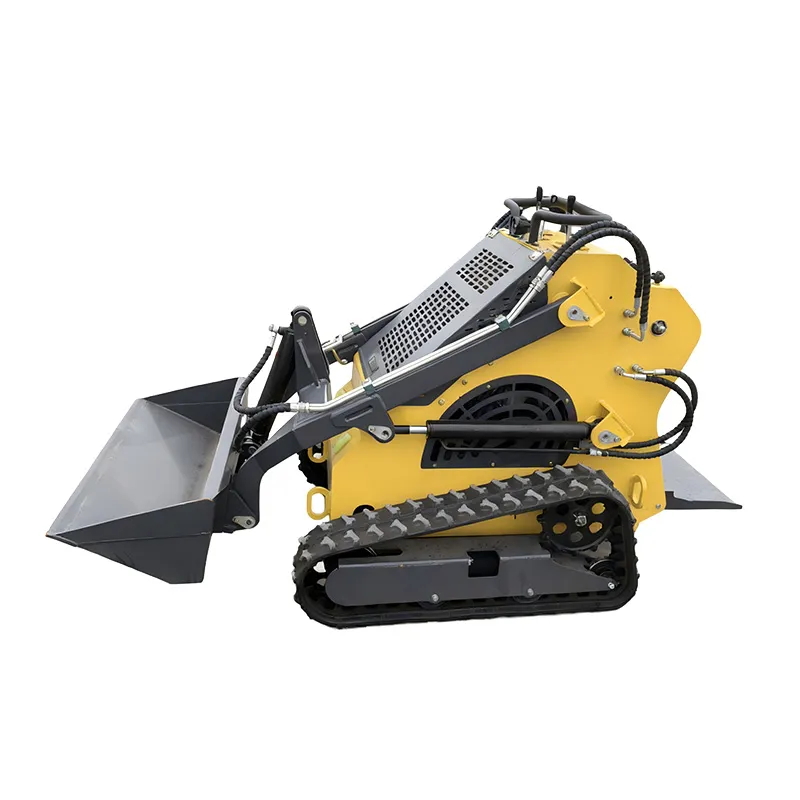
compact track loader supplier catalog
When someone types 'compact track loader supplier catalog' into a search bar, I often wonder what they're truly after. Is it just a PDF to download, or are they trying to solve a real problem—like figuring out which machine actually fits their job site's mud, or which auxiliary hydraulic kit won't fail in the third month? Too many catalogs are just glossy pages with specs lifted from the factory sheet; they tell you the tipping load but not how the undercarriage holds up after 500 hours in abrasive material. That's the gap.
The Catalog as a Filter, Not a Brochure
Early on, I treated supplier catalogs as a simple product list. Big mistake. A useful catalog, like the one from Shandong Pioneer Engineering Machinery Co., Ltd, does more. It acts as a primary filter. You're not just looking at a CTL model; you're seeing if the supplier understands application. For instance, their catalog sections often differentiate between models suited for loose topsoil versus those built for sustained operation on demolition sites. This hints at their engineering focus.
I recall a project where we needed a CTL for a landscape contractor dealing with wet, clay-heavy ground. The standard specs from several catalogs showed similar numbers. But one catalog—Pioneer's—had a small note, almost an aside, about the extended track frame option and the specific track pad pattern they recommend for low-ground-pressure, high-traction scenarios in soggy conditions. That detail came from field feedback, not just a factory template. It saved us a costly misapplication.
The real test is when you call them up. If their technical talk matches the nuance in their catalog, you're onto something solid. If they just parrot the brochure, walk away. The catalog should be the starting point for a conversation, not the end of it.
Beyond the Spec Sheet: The Unwritten Details
Anyone can list engine horsepower and operating capacity. The value is in what's implied. Look at the component brands. Does the catalog openly list the make of the hydraulic pumps, the track motors? Reputable suppliers, especially those with a long manufacturing backbone like Shandong Hexin (the manufacturing arm behind Shandong Pioneer), tend to be transparent. They've been at this for 20 years, since 2004, and they know customers will ask.
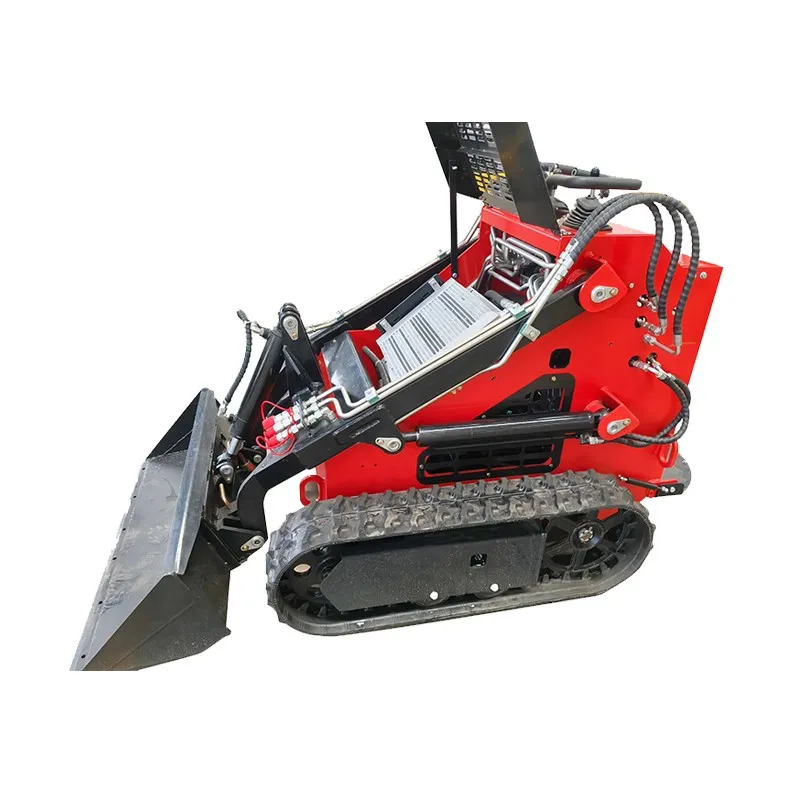
I've learned to scan for photos of the machine's guts—the compartment layout, the accessibility of service points. A catalog that shows a clean, logical engine compartment with easy-to-reach filters speaks volumes about design philosophy. It suggests they've thought about the mechanic at 7 AM in a cold yard, not just the sales pitch.
Another thing: attachment compatibility. A good compact track loader supplier catalog will have a dedicated section for couplers and auxiliary hydraulic interfaces. It should clarify whether it's a standard Euro or a proprietary system. I've seen outfits get burned because the catalog listed universal attachment ready without specifying the flow rate and pressure needed, leading to a $15,000 mulcher that barely twitched.
The Relocation Signal: Reading Between the Lines
Noticed on their site (https://www.sdpioneer.com) that they relocated in August 2023 to a new facility in Ningyang County. In our world, a factory move isn't just an address change. It's a signal. Often, it means scaling up capacity, investing in newer production lines, or consolidating logistics. When you see this in a company's background, it's worth asking how it affects the product in the catalog.
Has the new 1,600-square-meter production area allowed for better quality control stations? Are the welding and assembly processes more streamlined? This isn't fluff; it can translate to more consistent build quality across units. A supplier that's growing and investing is usually one that's responding to market demand—like the need for reliable CTLs in tough markets from the US and Canada to Germany and Australia, which they serve.
When evaluating their catalog post-relocation, look for updates in the product line. New models? Refreshed features? Sometimes the changes are subtle—a wider cab option, improved sealing on the boom joints. These are the tweaks that come from having a more integrated manufacturing and trade setup.
The Export Reality Check
Their brief states they export globally. This is crucial. A compact track loader supplier catalog meant for an international audience has to account for more than just specs. It needs regulatory hints—CE markings, EPA Tier references, even notes on available voltage for electrical components. A catalog that's just a single-language spec sheet is a red flag for a company claiming serious export business.
From experience, suppliers who successfully serve diverse markets like Australia (with its extreme conditions) and Germany (with its strict regulations) tend to build more robustness into their machines. Their catalogs might have different configuration codes for different regions. This level of detail shows an understanding that a CTL for a Canadian winter needs different fluids and starting systems than one for the Middle East.
It also means their support network and parts catalog are likely more developed. The catalog should point you toward that—maybe a section on Global Parts & Service or a clear diagram of major assembly part numbers. If it doesn't, their worldwide trust might be thinner than claimed.
Catalogs and the Failure to Communicate
Let me be blunt: I've been let down by catalogs. There was a time we sourced a machine based on a beautifully rendered catalog that promised industry-leading durability. The machine itself wasn't terrible, but the catalog completely omitted the lead time for key wear items like the track chain rollers. When they failed, we were looking at a 12-week wait from overseas. The machine was down for a season.
That experience taught me to use the catalog to ask the hard questions. Now, I look for the wear parts section. Does it list the expected service life under normal conditions? Does it show a breakdown of the undercarriage components with part numbers? A supplier like Pioneer, with its combined manufacturing and trade history, should have this data. If their catalog includes even estimated hours for track bushing life or hydraulic filter change intervals, it shows they track their machines in the field.
The best catalogs acknowledge reality. They might have a sidebar titled Common Wear Points or Recommended Maintenance for High-Dust Environments. This turns a sales document into a tool for planning total cost of ownership. It builds the trust they mention earning from customers worldwide.
Wrapping It Up: The Catalog as a Snapshot of Intent
So, when you pull up a supplier catalog today, don't just look for the pretty picture of the CTL lifting a pallet. Dig into the structure. Does it guide you from application to model to specifications to attachments to service? Does it reflect a real operational history—like two decades of development and the recent move to a larger plant? The catalog from a serious player is a snapshot of their company's intent and capability.
It should feel less like a polished advertisement and more like a condensed technical manual. It should raise as many informed questions as it answers. The details about track gauge, cab pressurization, or the type of steel used in the bucket linkage tell you more about the machine's future on your site than any headline performance number ever will.
In the end, the catalog is the first handshake. The one from a supplier who's been through the mud, literally and figuratively, will have a firm grip and calloused hands. You can just tell.
Related Products
Related Products