- Chinese
- French
- German
- Portuguese
- Spanish
- Russian
- Japanese
- Korean
- Arabic
- Irish
- Greek
- Turkish
- Italian
- Danish
- Romanian
- Indonesian
- Czech
- Afrikaans
- Swedish
- Polish
- Basque
- Catalan
- Esperanto
- Hindi
- Lao
- Albanian
- Amharic
- Armenian
- Azerbaijani
- Belarusian
- Bengali
- Bosnian
- Bulgarian
- Cebuano
- Chichewa
- Corsican
- Croatian
- Dutch
- Estonian
- Filipino
- Finnish
- Frisian
- Galician
- Georgian
- Gujarati
- Haitian
- Hausa
- Hawaiian
- Hebrew
- Hmong
- Hungarian
- Icelandic
- Igbo
- Javanese
- Kannada
- Kazakh
- Khmer
- Kurdish
- Kyrgyz
- Latin
- Latvian
- Lithuanian
- Luxembou..
- Macedonian
- Malagasy
- Malay
- Malayalam
- Maltese
- Maori
- Marathi
- Mongolian
- Burmese
- Nepali
- Norwegian
- Pashto
- Persian
- Punjabi
- Serbian
- Sesotho
- Sinhala
- Slovak
- Slovenian
- Somali
- Samoan
- Scots Gaelic
- Shona
- Sindhi
- Sundanese
- Swahili
- Tajik
- Tamil
- Telugu
- Thai
- Ukrainian
- Urdu
- Uzbek
- Vietnamese
- Welsh
- Xhosa
- Yiddish
- Yoruba
- Zulu
- Kinyarwanda
- Tatar
- Oriya
- Turkmen
- Uyghur


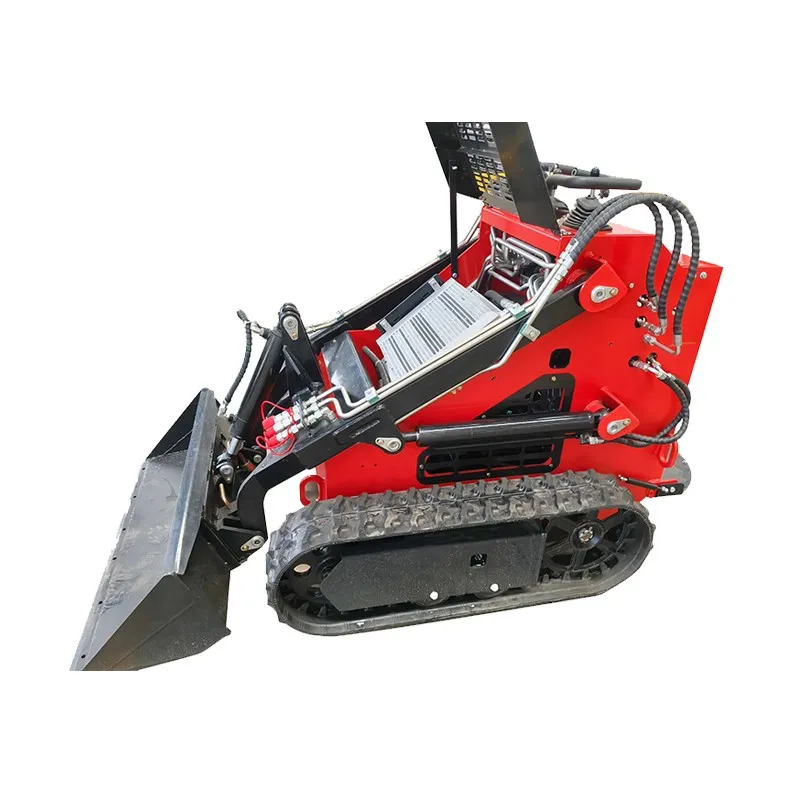
Compact Track Loader Supplier in China
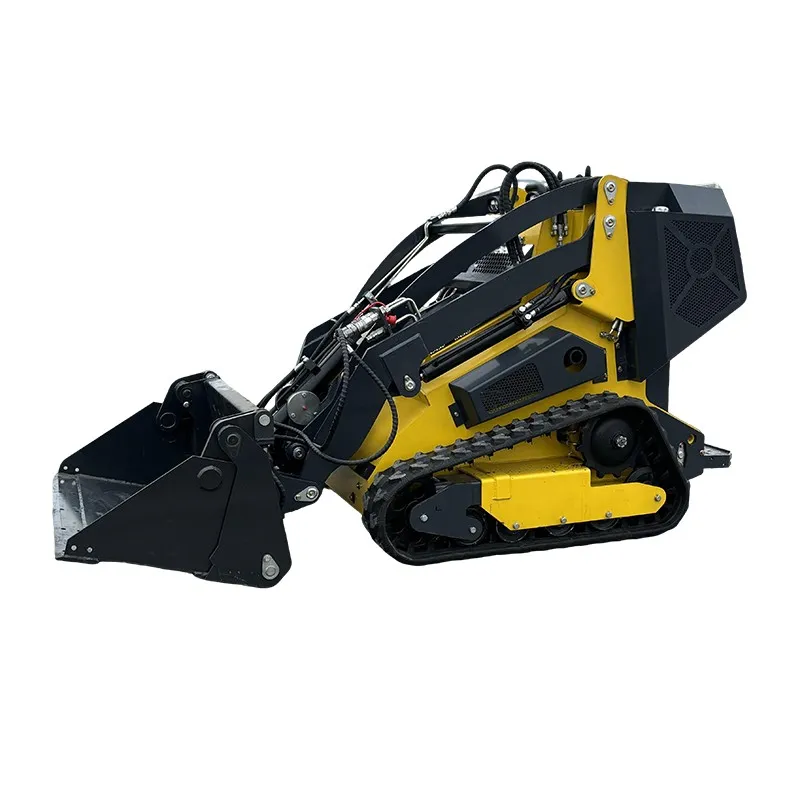
When you start looking for a Compact Track Loader Supplier in China, the sheer volume of options can be overwhelming. A common trap is equating a long factory history directly with superior product quality or assuming that a lower FOB price from a trading company always means a better deal. The reality on the ground is far more nuanced, shaped by regional manufacturing clusters, evolving component supply chains, and the critical distinction between dedicated manufacturers and export-focused traders. Having been through the process of sourcing, qualifying, and even stumbling with a few suppliers, I've found that the real value lies in understanding these subtleties.
The Shandong Cluster and the Manufacturing Reality
Jining and the broader Shandong province are undeniably a hub for construction machinery. When you visit, you see clusters of factories, some specialized, others more generalist. The establishment of a company here, like Shandong Pioneer Engineering Machinery Co., Ltd back in 2004, often roots it in this industrial ecosystem. Their initial 1,600 square meter facility in Jining was typical of the era—a scale allowing for focused assembly and testing. The recent relocation to a new site in Ningyang, Tai’an in 2023 is a telling move. It's not just an address change; it usually signals a planned expansion in production capacity or a strategic shift to access better logistics or a more modern industrial park. You have to ask what drove that move. Was it purely for space, or was it to streamline a more integrated production line?
This gets to the core of evaluating any Compact Track Loader Supplier in China. The physical footprint matters, but how it's organized matters more. A supplier might have a large area, but if a significant portion is just for storing finished units or generic components, it tells a different story than a facility with visible welding bays, dedicated hydraulic assembly stations, and a controlled paint booth. For compact track loaders, the undercarriage assembly and hydraulic system integration are where you see the technical competency—or lack thereof.
I recall visiting a supplier a few years back who boasted a large output. Their factory floor was busy, but a closer look revealed they were essentially assembling kits from sourced major subsystems. The final product was inconsistent; one unit's pump noise level would differ from the next. It was a lesson in distinguishing between an assembler and an integrated manufacturer. The latter might have a smaller-looking operation but controls more of the core processes, leading to better consistency. This is why the development and accumulation a company like Pioneer mentions over 20 years is a key phrase—it hints at process refinement, not just time passed.
The Dual-Entity Structure: Hexin and Pioneer
The setup described with Shandong Hexin handling manufacturing and Shandong Pioneer managing overseas trade is a very common, and often sensible, model in China. It's not inherently a red flag; in fact, it can be efficient. Hexin focuses on the production floor, QC, and engineering, while Pioneer interfaces with the global market, handles logistics, certifications, and customer service. The potential pitfall for a buyer is a communication gap between the two entities.
You need to ensure the trading arm has deep, real-time technical access to the factory. I've had situations where a request for a specific valve brand or a control pattern modification got lost in translation between the friendly sales rep at the trade company and the overworked factory engineer. The solution is to insist, during qualification, on a joint meeting or factory tour that includes personnel from both sides. See how they interact. Does the Pioneer sales manager walk the Hexin factory floor with familiarity, pointing out details? That's a good sign.
Their export footprint to markets like the US, Canada, Germany, and Australia is significant. Selling into these regions isn't just about price; it imposes requirements. For North America, it's about EPA Tier 4 engine compliance, ROPS/FOPS certifications, and meeting specific safety standards. For Australia, it's often about extreme duty cycles and dust management. A supplier consistently serving these markets has likely navigated complex certification processes and adapted their designs, which adds a layer of reliability. It means their product isn't just a domestic model rebadged for export; it's been pressure-tested by stringent market demands.
Beyond the Brochure: Assessing Real Capability
Anyone can put a glossy picture of a compact track loader on a website. The real assessment starts with the details they don't always volunteer. Ask about the standard and optional hydraulic components. Are they using well-known brand pumps and motors (like Parker, Danfoss, Bosch Rexroth) or entirely generic ones? The difference is in lifespan, serviceability, and peak performance under load. A serious supplier will have a clear BOM breakdown for critical systems.
Another practical point is the undercarriage. For a Compact Track Loader Supplier in China, the track system is a major cost and performance center. Do they manufacture their own rollers, idlers, and frames, or are they sourcing complete undercarriage assemblies? If sourcing, who is their tier-1 supplier? I once worked with a supplier who switched to a cheaper undercarriage source mid-contract without notification, leading to premature track wear and a major fallout. Now, I always specify and lock in the undercarriage brand/model in the PO.
Factory audits are irreplaceable. A video call tour of https://www.sdpioneer.com can show you the facade, but being there lets you observe the workflow. Look at the welding—is it robotic for critical joints, or all manual? Check the pre-delivery testing area. Do they have a proper test pad where units are run through cycles, or is it just a quick engine start in the yard? These observations tell you more about the final product's quality than any spec sheet.
Common Pitfalls and the Trust Factor
The phrase won the trust and appreciation of customers worldwide is marketing boilerplate, but the concept of trust is the currency here. It's built on transparency when problems arise. A new model might have a teething issue—a hose routing that chafes or a sensor that's too vulnerable. How a supplier handles this defines them. Do they proactively issue a service bulletin to all affected customers? Or do they wait for complaints and treat each as a one-off?
A pitfall I experienced early on was focusing solely on unit price and ignoring the total cost of ownership. A cheaper loader might use non-standard hydraulic fittings or a proprietary controller, making field repairs a nightmare and downtime expensive. Now, part of my supplier checklist includes requesting a full service manual and parts catalog for review. If they're hesitant or the documents are poorly translated and incomplete, it's a warning sign. A supplier like Pioneer, with a long trade history, should have these materials polished and ready.
Also, don't underestimate the value of their existing customer base in similar markets. Can they provide references for buyers in, say, Germany who use their loaders in agricultural applications? Speaking to that end-user can give you insights into real-world durability, parts support, and the supplier's responsiveness that you'll never get from a sales presentation.
The Path Forward: Strategic Sourcing
So, where does this leave someone looking for a reliable Compact Track Loader Supplier in China? It's a process of layered verification. Start with the macro: region, company history, and export record like that of Shandong Pioneer. Then drill down: understand their manufacturing and trade structure. Get specific on technical details and component origins. Finally, validate through audit and reference checks.
The goal isn't to find a perfect supplier—everyone will have strengths and weaknesses. The goal is to find a competent and transparent partner whose weaknesses are in areas you can manage. Maybe their lead time is longer because they do more in-house testing, which is a weakness in agility but a strength in quality. That might be an acceptable trade-off.
Ultimately, the supplier landscape is dynamic. A company's relocation, like Pioneer's move to Ningyang, is a moment of both risk and opportunity. It can strain their processes temporarily but also set them up for better quality control in the long run. Your job as a buyer is to ask the right questions to understand which scenario is unfolding. It's this gritty, detail-oriented ground game, far removed from glossy catalogs, that separates a successful long-term supply partnership from a disappointing transaction.
Related Products
Related Products