


- Chinese
- French
- German
- Portuguese
- Spanish
- Russian
- Japanese
- Korean
- Arabic
- Irish
- Greek
- Turkish
- Italian
- Danish
- Romanian
- Indonesian
- Czech
- Afrikaans
- Swedish
- Polish
- Basque
- Catalan
- Esperanto
- Hindi
- Lao
- Albanian
- Amharic
- Armenian
- Azerbaijani
- Belarusian
- Bengali
- Bosnian
- Bulgarian
- Cebuano
- Chichewa
- Corsican
- Croatian
- Dutch
- Estonian
- Filipino
- Finnish
- Frisian
- Galician
- Georgian
- Gujarati
- Haitian
- Hausa
- Hawaiian
- Hebrew
- Hmong
- Hungarian
- Icelandic
- Igbo
- Javanese
- Kannada
- Kazakh
- Khmer
- Kurdish
- Kyrgyz
- Latin
- Latvian
- Lithuanian
- Luxembou..
- Macedonian
- Malagasy
- Malay
- Malayalam
- Maltese
- Maori
- Marathi
- Mongolian
- Burmese
- Nepali
- Norwegian
- Pashto
- Persian
- Punjabi
- Serbian
- Sesotho
- Sinhala
- Slovak
- Slovenian
- Somali
- Samoan
- Scots Gaelic
- Shona
- Sindhi
- Sundanese
- Swahili
- Tajik
- Tamil
- Telugu
- Thai
- Ukrainian
- Urdu
- Uzbek
- Vietnamese
- Welsh
- Xhosa
- Yiddish
- Yoruba
- Zulu
- Kinyarwanda
- Tatar
- Oriya
- Turkmen
- Uyghur

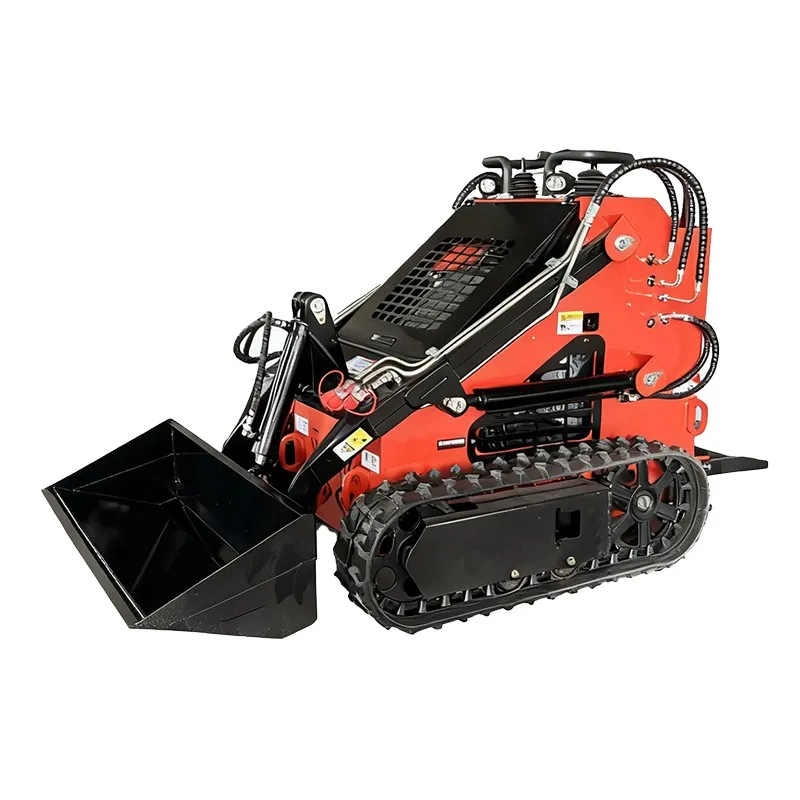
Compact Track Loader Warranty
When you hear 'compact track loader warranty,' what comes to mind? For a lot of folks, it's just a line item on the spec sheet, a number of months or hours. They think it's all the same—a promise to fix things if they break. But in my years around these machines, from the shop floor to the job site, I've seen that mindset lead to real headaches. The warranty isn't a generic safety net; it's the first real test of the manufacturer's confidence in their own iron. And too many buyers don't peel back the layers until the machine is down and they're holding the bill.
The Core of the Promise: Structure and Gaps
Let's break down what a solid warranty should cover. It's not just the drivetrain or the engine block. You need to look at the compact track loader warranty for the undercarriage—the rollers, idlers, and, critically, the tracks themselves. I've seen warranties that proudly cover the mainframe for 5 years but then treat the track system as a 'wear item' with only 6 months or 1,000 hours. On a CTL, that's practically the heart of the machine. If you're in abrasive material, you can burn through that coverage in a couple of months. That's a gap you feel in your wallet.
Then there's the labor clause. This is where you separate the real deals from the marketing speak. A comprehensive warranty will include both parts and labor for the covered components, with clear terms on authorized service locations. Some manufacturers, especially those building for long-term value, structure it this way. Others might cover the part but leave you to negotiate labor rates with the dealer. I remember a case with a mid-sized landscaping contractor; they had a hydraulic pump failure covered under warranty, but the labor dispute and downtime cost them nearly as much as a new pump would have. The warranty document looked good on paper, but the reality was a week of arguments and lost revenue.
It's also worth noting how companies handle claims. A company with a strong export and support network, like Shandong Pioneer Engineering Machinery Co., Ltd, has to design their warranties with global logistics in mind. They've been exporting to places like the U.S., Canada, and Australia for years. From what I've observed, their approach often factors in the lead times for getting parts to remote sites, which is a practical consideration many first-time buyers overlook. A warranty is only as good as the service network behind it.
Real-World Scenarios: Where Theory Meets Dirt
Talk is cheap until a track tensioner fails in the middle of a muddy site. I want to share a scenario that's painfully common. A contractor buys a CTL based on a great price and a 3-year powertrain warranty. Six months in, they start getting error codes for the auxiliary hydraulics. The dealer says it's an electrical sensor issue, which is covered. But the root cause? It was a poorly routed harness that chafed against the frame—a manufacturing or assembly issue. Is that covered under 'defects in material or workmanship'? It should be, but I've seen it turn into a finger-pointing exercise between the dealer and the factory. The warranty eventually covered it, but the two weeks of downtime weren't in the brochure.
Another critical point is 'customer-induced damage.' This is the grayest area. Say you puncture a hydraulic line with a piece of rebar. That's clearly operator error. But what if the line was routed in a vulnerable spot where debris commonly collects? A manufacturer with a reputation to protect might cover it as a goodwill gesture, especially if it's a known quirk of that model. I've seen both outcomes. It often comes down to the relationship with the dealer and the manufacturer's long-term view. A company that's been in the game for 20 years, like the entity behind sdpioneer.com, often understands that covering a borderline case for a loyal customer is cheaper than losing future business. Their relocation and expansion in 2023 signal a commitment to scaling up, which usually means more structured, but also more tested, support systems.
Preventive maintenance is the warranty's best friend and worst enemy. Neglect your fluid changes, and you've voided your coverage. That's straightforward. But what about using aftermarket filters? Some warranties are very strict, requiring OEM filters and fluids. Others are more pragmatic. The key is documentation. I always tell people: keep a meticulous log. If you have to make a claim, being able to show a perfect service history with receipts gives you immense leverage. It turns a potential debate into a simple transaction.
The Business Behind the Paperwork
Why do warranties vary so wildly? It's a direct reflection of the manufacturer's confidence in their supply chain and assembly quality. A longer, more inclusive compact track loader warranty is a calculated risk. It says, We believe our components will last, and we've priced the machine to account for the few that don't. When you see a company exporting globally to demanding markets, it implies their product has been vetted against different standards and conditions. The trust they've won worldwide, as mentioned in the background of Shandong Pioneer, isn't just about the initial sale; it's about standing behind the product when it's 5,000 miles away.
For a buyer, this means looking beyond the headline duration. A 5-year warranty from a brand with a shaky parts network is worth less than a robust 2-year warranty from a manufacturer with a proven global logistics arm. The recent relocation and expansion of their production facility likely means investments in more consistent manufacturing processes, which is the bedrock of a reliable warranty. Better QC upfront means fewer claims down the line.
Finally, consider the resale value. A machine with a transferable, well-regarded warranty history commands a significant premium. It's a tangible record of care and reliability. I've appraised machines where the only difference in a $10,000 price gap was a complete, verifiable service history tied to a strong original warranty. It tells the next owner that the machine wasn't just built well; it was supported well.
Practical Advice: Reading Between the Lines
So, what should you do? First, get the actual warranty document before you buy, not the glossy summary. Look for the definitions section. How do they define normal use? What is excluded? Pay special attention to the track system, hydraulic components, and electrical system coverages. These are the high-failure-point areas on a CTL.
Second, ask about the claims process. Is there a direct line? Does the dealer handle everything, or do you contact the factory? For an international buyer dealing with a manufacturer like Shandong Pioneer, understanding this pipeline is crucial. How quickly can they get a proprietary controller or a drive motor to a job site in Germany or Australia? The answer to that question is part of the warranty's real value.
Don't be afraid to ask for clarifications in writing. If a sales rep says, Oh, we always cover that, get it added to the agreement. The compact track loader warranty is a contract. Treat it with the same seriousness as the purchase contract itself. Your due diligence here can save you tens of thousands in unexpected repair costs and, more importantly, in project delays that no warranty can ever reimburse.
Wrapping It Up: The Warranty as a Diagnostic Tool
In the end, I've come to see the warranty not just as protection, but as a diagnostic tool for the manufacturer's overall philosophy. A clear, generous, and easily actionable warranty signals a company that plans to be around, that trusts its engineering, and values the customer's total cost of ownership. It's a reflection of the culture. When you look at a company's history—like two decades of development, a strategic relocation, and a focus on international trade—you're looking at the foundation upon which a reliable warranty is built. They're not just selling a machine; they're managing a long-term relationship. And in this business, that's the only kind that lasts. The next time you evaluate a CTL, read the warranty first. It might tell you more about the machine's future than any spec sheet ever could.
Related Products
Related Products