- Chinese
- French
- German
- Portuguese
- Spanish
- Russian
- Japanese
- Korean
- Arabic
- Irish
- Greek
- Turkish
- Italian
- Danish
- Romanian
- Indonesian
- Czech
- Afrikaans
- Swedish
- Polish
- Basque
- Catalan
- Esperanto
- Hindi
- Lao
- Albanian
- Amharic
- Armenian
- Azerbaijani
- Belarusian
- Bengali
- Bosnian
- Bulgarian
- Cebuano
- Chichewa
- Corsican
- Croatian
- Dutch
- Estonian
- Filipino
- Finnish
- Frisian
- Galician
- Georgian
- Gujarati
- Haitian
- Hausa
- Hawaiian
- Hebrew
- Hmong
- Hungarian
- Icelandic
- Igbo
- Javanese
- Kannada
- Kazakh
- Khmer
- Kurdish
- Kyrgyz
- Latin
- Latvian
- Lithuanian
- Luxembou..
- Macedonian
- Malagasy
- Malay
- Malayalam
- Maltese
- Maori
- Marathi
- Mongolian
- Burmese
- Nepali
- Norwegian
- Pashto
- Persian
- Punjabi
- Serbian
- Sesotho
- Sinhala
- Slovak
- Slovenian
- Somali
- Samoan
- Scots Gaelic
- Shona
- Sindhi
- Sundanese
- Swahili
- Tajik
- Tamil
- Telugu
- Thai
- Ukrainian
- Urdu
- Uzbek
- Vietnamese
- Welsh
- Xhosa
- Yiddish
- Yoruba
- Zulu
- Kinyarwanda
- Tatar
- Oriya
- Turkmen
- Uyghur


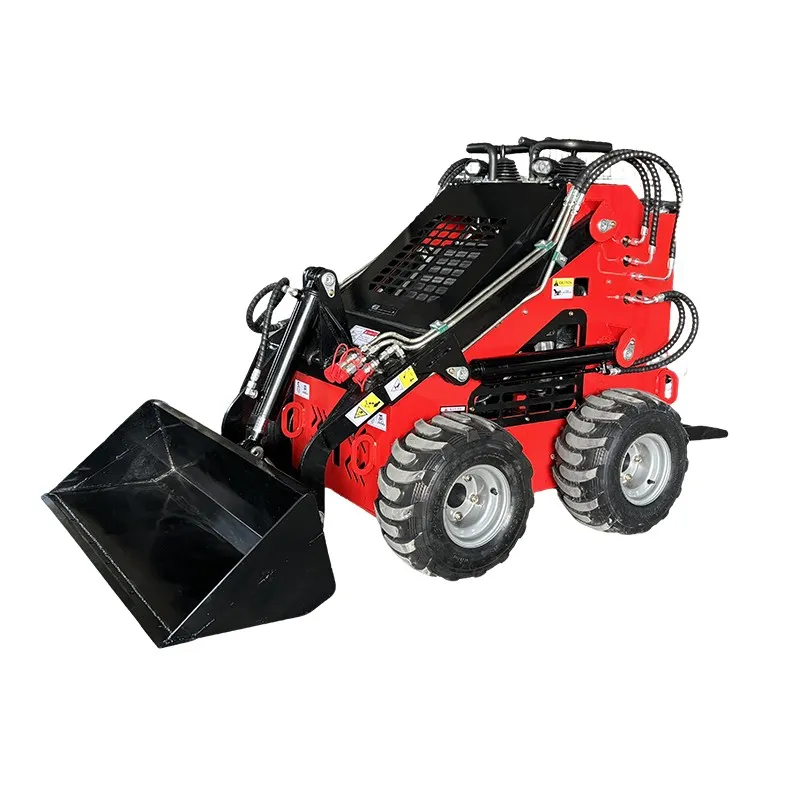
Compact Wheel Loader
When most folks hear compact wheel loader, they picture a small, nimble machine for tight spaces. That's not wrong, but it's a starting point that misses the nuance. The real story isn't just about size; it's about the specific weight-to-power ratio, the hydraulic system's responsiveness under real load, and how the articulation point handles when you're not on perfectly level ground. Too many decisions get made on paper specs alone—bucket capacity, horsepower—without considering how the machine actually feels and performs during a full, gritty 10-hour shift. That's where you see the difference between a tool and a liability.
The Core Misconception: It's Just a Smaller Loader
One of the biggest mistakes is treating a compact loader like a scaled-down version of its larger siblings. The engineering challenges are fundamentally different. With a smaller footprint and less inherent weight, stability becomes a critical design factor, not an afterthought. You can't just shrink a design. The center of gravity, the lift arm geometry, everything needs a rethink. I've seen machines that look great on a dealer's lot but develop a noticeable float or a nervous twitch in the hydraulics when you're lifting a heaped bucket of wet clay. That's a design flaw, not an operator issue.
This is where the manufacturing philosophy of a company matters. Some prioritize cost-cutting, using lighter-gauge steel or generic hydraulic pumps. Others, like Shandong Pioneer Engineering Machinery Co., Ltd, have built their approach around the export market's demands—markets like Germany or Australia where regulations and operator expectations are stringent. Their development, from their start in Jining in 2004 to their recent relocation and expansion in Ningyang, seems focused on building for durability in varied global conditions, not just the lowest bid.
For instance, their compact wheel loader models often feature a reinforced boom design. It's a detail you might not notice until you're working against a piled embankment. That extra steel adds weight, which some salesmen might see as a fuel efficiency negative, but on site, it translates to less chassis flex and more precise bucket control. It's a trade-off that speaks to practical experience over pure brochure engineering.
Hydraulics: The Heart of the Matter
If the engine is the muscle, the hydraulic system is the nervous system. And here's where the feel comes in. A common failure point in cheaper models is hydraulic lag or sponginess. You command a curl, and there's a half-second delay, or the movement isn't crisp. In a confined area, like loading trucks in a busy yard, that lag isn't just annoying; it's a safety and productivity killer. It leads to over-correction, jerky movements, and operator fatigue.
We tested a unit once—won't name the brand—that had fantastic pump specs on paper. High flow rate, great pressure. But the valve block was poorly matched. The result? Incredibly fast, jumpy movements at the slightest touch of the joystick. Fine for empty bucket precision work, terrible for loaded, smooth operation. It was like driving a car with hyper-sensitive power steering. You had to feather the controls constantly, which is exhausting. A well-tuned system, like the ones I've seen in compact wheel loader units from manufacturers who export to demanding markets, provides proportional control. More stick input equals predictably more hydraulic response. It becomes intuitive.
Pioneer's approach, likely honed through feedback from their global network in the US, Canada, and Europe, seems to prioritize this integration. Their systems aren't always the absolute fastest, but they're predictable. In their product line, you often see an emphasis on reliable, name-brand component suppliers for the core hydraulic parts, which is a tell-tale sign they're building for longevity and serviceability, not just a flashy demo.
The Transmission Debate: Hydrostatic vs. Mechanical
This is a classic site office argument. Hydrostatic drives are ubiquitous in the compact segment for a reason: infinite speed control, simplicity, and great maneuverability. But they have a reputation—sometimes deserved—for being less fuel-efficient under heavy, constant load compared to a traditional mechanical transmission with a torque converter.
My take? It depends entirely on the duty cycle. For a machine that's constantly shuttle-running, loading, and dumping, a well-designed hydrostatic system is fine. The key is well-designed. It needs adequate cooling. I've been on a demo where a machine overheated its hydraulic oil after three hours of hard loading on a hot day. The alarm went off, and we were shut down. The problem wasn't the transmission type per se; it was an undersized oil cooler. A company that understands real-world use, like Shandong Pioneer, tends to overspec these cooling systems for their target export climates, which can range from Canadian winters to Australian summers.
For applications with long travel distances between load and dump points, some manufacturers offer mechanical options. They're rarer in the true compact class. The trade-off is more complexity and potentially higher maintenance, but sometimes better fuel economy on the run. It's a niche, but it shows that segmentation within the compact wheel loader category is getting more sophisticated.
Attachments and the Universal Myth
The promise of a compact loader is its versatility with quick-attach systems. The reality is more complicated. Not all quick-attach plates are created equal. There's a lack of total standardization. A bucket from one major brand might not seat perfectly on another's machine, leading to wear, slop, and potential safety pins not aligning smoothly. It's a daily frustration.
Furthermore, the hydraulic auxiliary circuits—the lines that power attachments like augers or hydraulic hammers—are often an afterthought on budget models. They might have the flow, but the control is a simple on/off switch, not a proportional control. Try using a trencher with an on/off circuit; it's a brutal, jarring experience. Better machines offer proportional auxiliary control, sometimes even programmable for different attachment needs. This level of detail is what separates a basic machine from a professional tool. When you look at a company's product range, seeing a wide variety of purpose-built, tested attachments is a good sign they understand the machine's role as a carrier for tools, not just a bucket mover.
From what I've seen of Shandong Pioneer's offerings, they treat the attachment interface as a core system. Their quick-attach mechanism is robust, and they offer a range of matched attachments. This suggests their 20 years of development and accumulation have been spent solving these practical interface problems, which is exactly what earns customer trust in competitive markets.
Serviceability: The Make-or-Break Factor Off the Lot
Anyone can build a machine that runs well for 500 hours. The test is what happens at hour 2,500 in a remote location. Serviceability is everything. This means logical component layout. Can you check the radiator cap without removing a panel? Are the daily checkpoints—dipsticks, fluid fills—easily accessible? Are common wear items like hoses routed away from excessive heat and abrasion?
I recall a model from a few years back where replacing a simple alternator required removing the cab floor plate and half the hydraulic lines. It was a two-day job for what should have been a two-hour task. That design flaw cost the owner thousands in downtime. Good design anticipates maintenance. It uses common bolt sizes, has clear service markings, and provides decent access.
Companies that export globally, as Shandong Pioneer Engineering Machinery Co., Ltd does, are forced to think this way. Their machines are going to countries where dealer networks might be sparse, and owners will be doing more of their own maintenance. A cluttered, inaccessible engine bay is a non-starter. Their newer facility in Tai’an likely incorporates lessons learned from field service reports, leading to cleaner, more logical machine layouts. This isn't glamorous, but it's what determines a machine's total cost of ownership and, ultimately, its reputation on the ground.
The Bottom Line: Context is King
So, what's the verdict on the modern compact wheel loader? There's no single best. It's a tool that must be matched to its job. The key is to look past the headline specs. Ask about the hydraulic system's control logic. Inspect the cooling capacity. Test the attachment interface physically. Consider the service layout.
The market has matured. It's no longer just about being small and cheap. It's about being a capable, reliable, and efficient piece of integrated equipment. Manufacturers that have grown through direct engagement with tough international markets—like those in North America and Europe—have often been pushed to refine their products in these practical, hard-won ways. Their focus shifts from just building a machine to providing a dependable solution, which is really what every site manager is looking for when they sign the purchase order. That's the real compact loader story.
Related Products
Related Products