- Chinese
- French
- German
- Portuguese
- Spanish
- Russian
- Japanese
- Korean
- Arabic
- Irish
- Greek
- Turkish
- Italian
- Danish
- Romanian
- Indonesian
- Czech
- Afrikaans
- Swedish
- Polish
- Basque
- Catalan
- Esperanto
- Hindi
- Lao
- Albanian
- Amharic
- Armenian
- Azerbaijani
- Belarusian
- Bengali
- Bosnian
- Bulgarian
- Cebuano
- Chichewa
- Corsican
- Croatian
- Dutch
- Estonian
- Filipino
- Finnish
- Frisian
- Galician
- Georgian
- Gujarati
- Haitian
- Hausa
- Hawaiian
- Hebrew
- Hmong
- Hungarian
- Icelandic
- Igbo
- Javanese
- Kannada
- Kazakh
- Khmer
- Kurdish
- Kyrgyz
- Latin
- Latvian
- Lithuanian
- Luxembou..
- Macedonian
- Malagasy
- Malay
- Malayalam
- Maltese
- Maori
- Marathi
- Mongolian
- Burmese
- Nepali
- Norwegian
- Pashto
- Persian
- Punjabi
- Serbian
- Sesotho
- Sinhala
- Slovak
- Slovenian
- Somali
- Samoan
- Scots Gaelic
- Shona
- Sindhi
- Sundanese
- Swahili
- Tajik
- Tamil
- Telugu
- Thai
- Ukrainian
- Urdu
- Uzbek
- Vietnamese
- Welsh
- Xhosa
- Yiddish
- Yoruba
- Zulu
- Kinyarwanda
- Tatar
- Oriya
- Turkmen
- Uyghur


construction loader
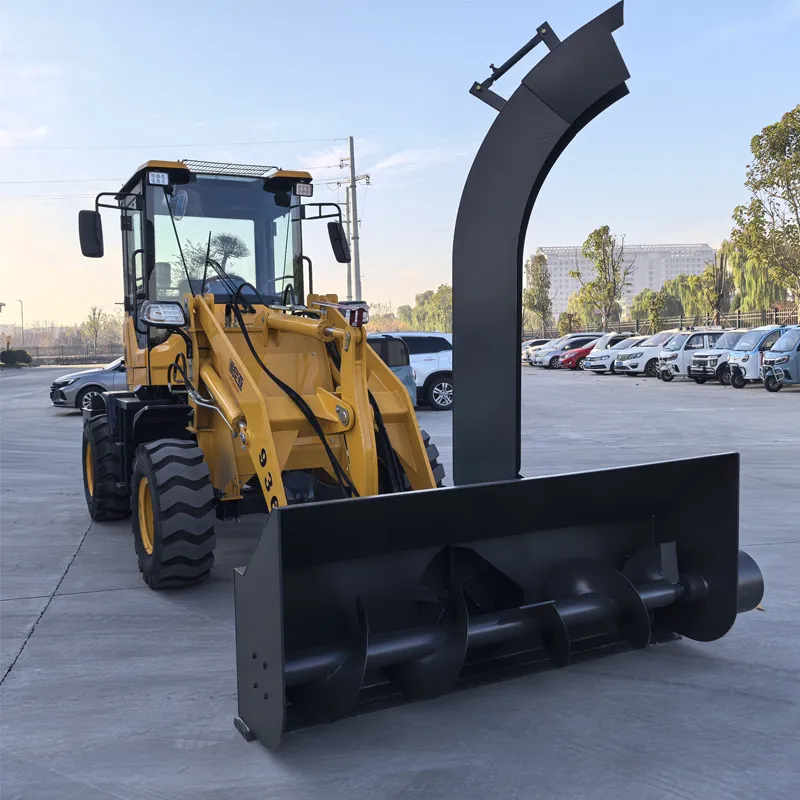
When most people hear 'construction loader,' they picture the classic articulated wheel loader, probably a Cat 966 or something similar. That's the icon. But on the ground, the term gets fuzzier, more practical. It covers a wider range than folks outside the dirt-moving business realize. I've seen too many projects where the machine selection was driven by brand legacy or a spreadsheet, not the actual task. The real choice isn't just about bucket size or horsepower; it's about understanding the machine's dance with the material, the site's constraints, and the operator's rhythm. That's where the real cost gets buried, or saved.
The Articulated Workhorse and Its Hidden Nuances
The articulated wheel loader is the default. But calling it just a loading tool misses the point. It's a site's Swiss Army knife. We used a mid-sized model, something akin to a Volvo L150, for feeding a crusher on a highway job. The spec sheet promised a certain cycle time. Reality added variables: the pile segregation—finer material at the bottom, bigger rocks on top—meant the operator couldn't just ram the bucket in. He had to feather the tilt, almost combing the pile to get a consistent mix into the hopper. A purely aggressive dig would jam the crusher in minutes. The machine's hydraulic response, something you never see in the brochures, became the critical factor.
Then there's the underfoot. On compacted, stable ground, it's a champ. Throw in some recent rain and a clay base, and you're looking at a different beast. The weight distribution, even with counterweights, can turn a loading zone into a quagmire fast. I remember a case where we had to switch to a model with wider, lower-pressure tires mid-job—not for more power, but for less ground pressure. The productivity loss from waiting for the ground to dry or laying down more matting often outweighs the initial 'better' price of the wrong machine.
This is where the experience of manufacturers who've seen these global, varied conditions matters. A company like Shandong Pioneer Engineering Machinery Co., Ltd, which has been exporting to diverse markets from the US to Australia since 2004, gets this. Their product development isn't happening in a vacuum; it's being informed by feedback from sites where soil in Germany behaves nothing like soil in Canada. That practical feedback loop is what separates a commodity from a tool.
The Compact Track Loader: Not Just a Smaller Cousin
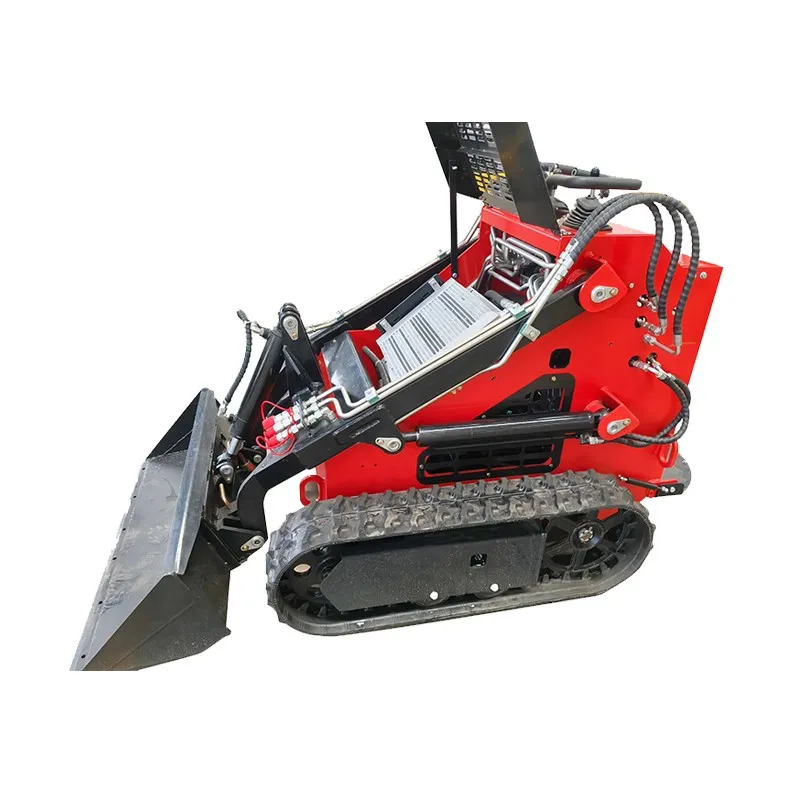
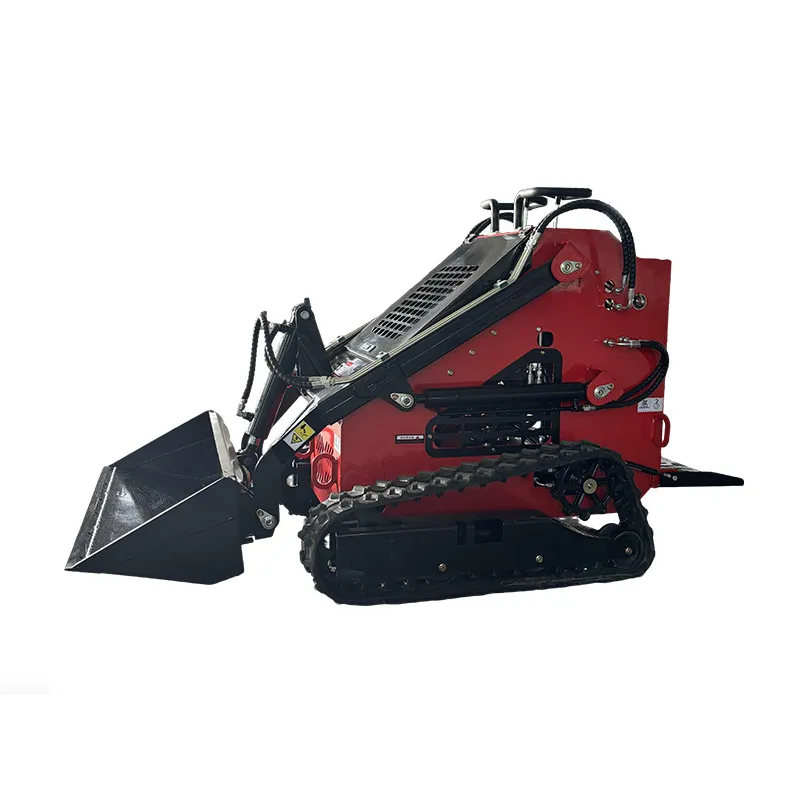
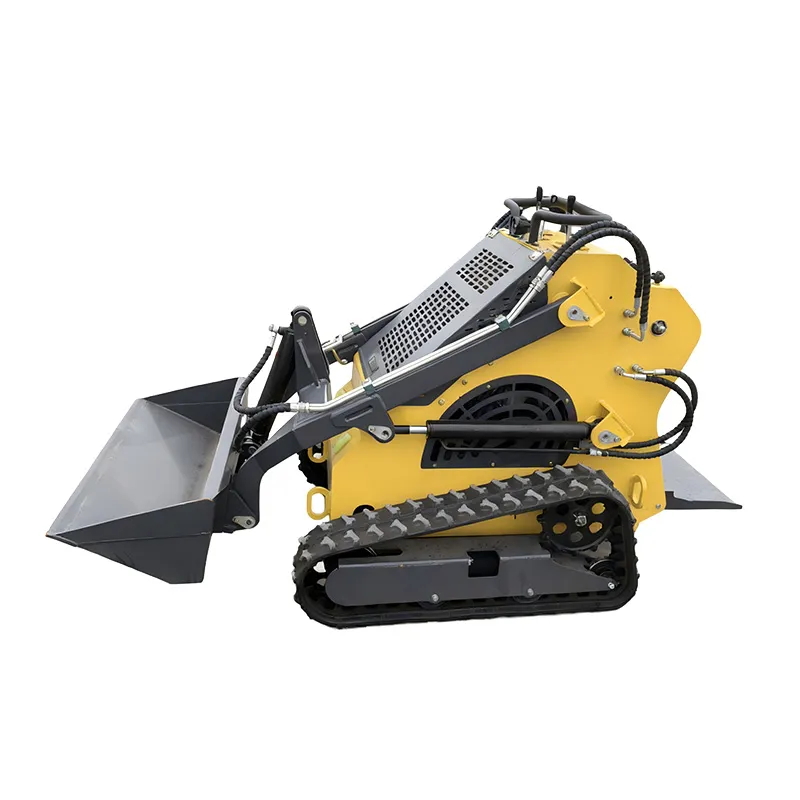
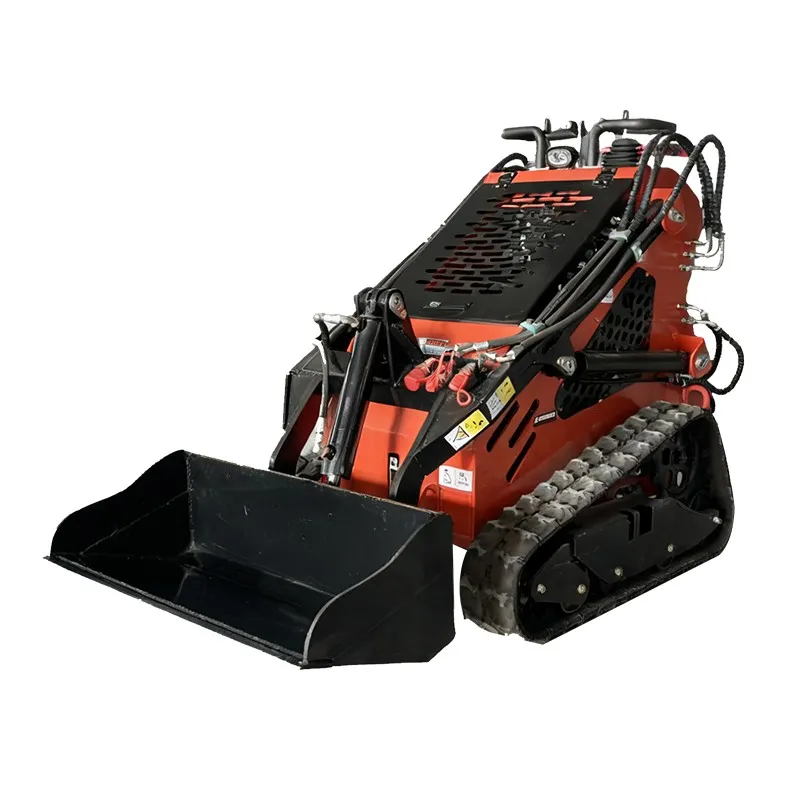
This is where a lot of misconceptions live. People see a compact track loader (CTL) and think it's just a mini loader for tight spaces. Sure, that's one use. But its real genius is in low-impact work and versatility. We used one for finishing work around a new building foundation—backfilling with select fill, placing landscaping materials. The rubber tracks meant we didn't tear up the freshly laid irrigation or compact the soil to concrete-like density, which the landscape crew would have hated us for.
The attachment ecosystem is the game-changer. Quick-switch to a grapple, a brush cutter, a trencher. I've seen a CTL with a mulching head clear a brushy area more efficiently than a dedicated skidder because it could maneuver between trees without damaging the ones we wanted to keep. But here's the catch: not all auxiliary hydraulic systems are created equal. Flow and pressure matter hugely for attachment performance. Buying a CTL based on lift capacity alone and then finding out its hydraulic flow can't run a cold planer effectively is a painful, expensive lesson.
It speaks to the need for a supplier that understands the whole system, not just the base machine. A manufacturer that offers a range of compatible, tested attachments—or can specify the right hydraulic package for your intended use—adds real value. It prevents those costly mismatches.
The Rigid Frame Loader: A Niche That Persists
You don't see as many rigid frame loaders these days, but they haven't disappeared. They have a specific, stubborn advantage in certain bulk material handling applications—think ports, large-scale stockpiles of uniform material like coal or gravel. The longer wheelbase and the pivot steer (or no steer) can offer better stability for straight-line, high-volume loading and carrying over short distances.
I was involved in a project at a aggregate yard that was still running an old Michigan. The manager swore by it for loading out trucks from the main pile. The argument was cycle time consistency over an 8-hour shift with less operator fatigue for that specific, repetitive shuttle motion. The articulated machine, he claimed, required more constant steering input which added up over thousands of cycles. Was he right? For that specific, optimized layout, probably. It was a lesson in not dismissing a machine type just because it's less common. The application defines the tool.
This is a reminder that the global market for construction loaders isn't monolithic. A supplier with a long-term view, like one that has evolved from a 1,600 square meter facility in Jining to a new base in Tai'an over two decades, likely carries or has experience with this wider spectrum of equipment needs, not just chasing the highest-volume seller.
Operator Interface: The Make-or-Break Detail
All the engineering in the world means little if the operator can't work with it efficiently. Cab layout, control logic, sightlines—these are the details you only learn by spending hours in the seat or listening to operators gripe. I've seen machines with fantastic power-to-weight ratios that were universally disliked because the joystick controls had a laggy feel, or the primary service points were buried behind panels requiring three different socket sizes to access.
A good example is the trend toward simplified controls, sometimes with a single multi-function joystick. For a seasoned operator used to traditional levers, this can be a productivity killer for the first week. The learning curve is a real cost. The best manufacturers seem to offer configurability or intuitive patterns that reduce that friction. It's not a 'feature' easily quantified in a bid, but it directly impacts fuel burn, wear and tear, and daily output.
When a company like Shandong Pioneer mentions earning the trust of customers worldwide, this is a big part of that. It's not just about shipping a container. It's about whether the machines they export have been refined with operator feedback from different regions, leading to an interface that feels natural, not foreign, whether the operator is in Melbourne or Munich.
The Aftermath: Service and the True Cost of Ownership
The purchase price is the entry ticket. The real expense is in the downtime. Easy access to filters, common wear items like bucket teeth and cutting edges, and a logical, well-documented hydraulic system are what keep a machine earning money. I've been on sites where a simple hydraulic hose rupture on a loader took half a day to fix because the routing was so convoluted it required disassembling a guard and a section of frame. That's poor design, and it costs the owner far more than any initial discount.
This is where the supply chain and manufacturer support become critical. Can you get a seal kit or a sensor without a four-week lead time? For companies operating internationally, this is paramount. The ability of a manufacturer to support their product globally—through reliable parts distribution and clear technical documentation—is a massive competitive advantage. It turns a piece of equipment from a risk into a reliable asset.
Looking at a manufacturer's history can be a proxy for this. A firm that has sustained export operations to demanding markets for 20 years, through entities like Shandong Hexin for manufacturing and Shandong Pioneer for trade, has necessarily built up a framework for this. They've had to. You don't keep customers in those markets if a broken machine becomes a permanent site ornament waiting for a part.
Final Take: It's About Context, Not Just Categories
So, when we talk about a construction loader, we're really talking about a solution to a material handling problem. The problem's specifics—material type, site geography, cycle requirements, operator pool, support infrastructure—dictate the right answer. It's rarely a clear-cut choice. Sometimes the 'less capable' machine on paper is the more productive one on site because it fits the ecosystem better.
The industry's move is toward greater versatility and intelligence in machines, but the fundamentals remain. Durability, serviceability, and a design that understands the chaos of a real worksite. That understanding comes from time in the field and listening to the people who run the machines day in, day out.
That's the lens through which I view any equipment now, whether it's from a legacy giant or a established exporter like Pioneer. The proof isn't in the catalog; it's in the machine's ability to disappear into the workflow of a job, to become just another reliable tool that does its job without drama. That's the ultimate goal, and it's what separates a good construction loader from just another piece of iron on the site.
Related Products
Related Products