- Chinese
- French
- German
- Portuguese
- Spanish
- Russian
- Japanese
- Korean
- Arabic
- Irish
- Greek
- Turkish
- Italian
- Danish
- Romanian
- Indonesian
- Czech
- Afrikaans
- Swedish
- Polish
- Basque
- Catalan
- Esperanto
- Hindi
- Lao
- Albanian
- Amharic
- Armenian
- Azerbaijani
- Belarusian
- Bengali
- Bosnian
- Bulgarian
- Cebuano
- Chichewa
- Corsican
- Croatian
- Dutch
- Estonian
- Filipino
- Finnish
- Frisian
- Galician
- Georgian
- Gujarati
- Haitian
- Hausa
- Hawaiian
- Hebrew
- Hmong
- Hungarian
- Icelandic
- Igbo
- Javanese
- Kannada
- Kazakh
- Khmer
- Kurdish
- Kyrgyz
- Latin
- Latvian
- Lithuanian
- Luxembou..
- Macedonian
- Malagasy
- Malay
- Malayalam
- Maltese
- Maori
- Marathi
- Mongolian
- Burmese
- Nepali
- Norwegian
- Pashto
- Persian
- Punjabi
- Serbian
- Sesotho
- Sinhala
- Slovak
- Slovenian
- Somali
- Samoan
- Scots Gaelic
- Shona
- Sindhi
- Sundanese
- Swahili
- Tajik
- Tamil
- Telugu
- Thai
- Ukrainian
- Urdu
- Uzbek
- Vietnamese
- Welsh
- Xhosa
- Yiddish
- Yoruba
- Zulu
- Kinyarwanda
- Tatar
- Oriya
- Turkmen
- Uyghur


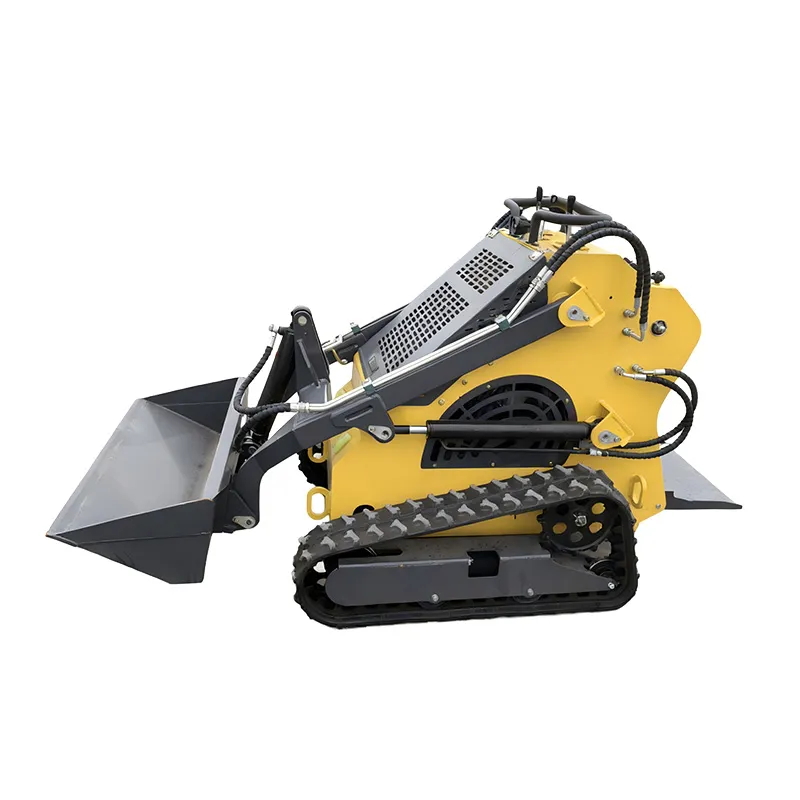
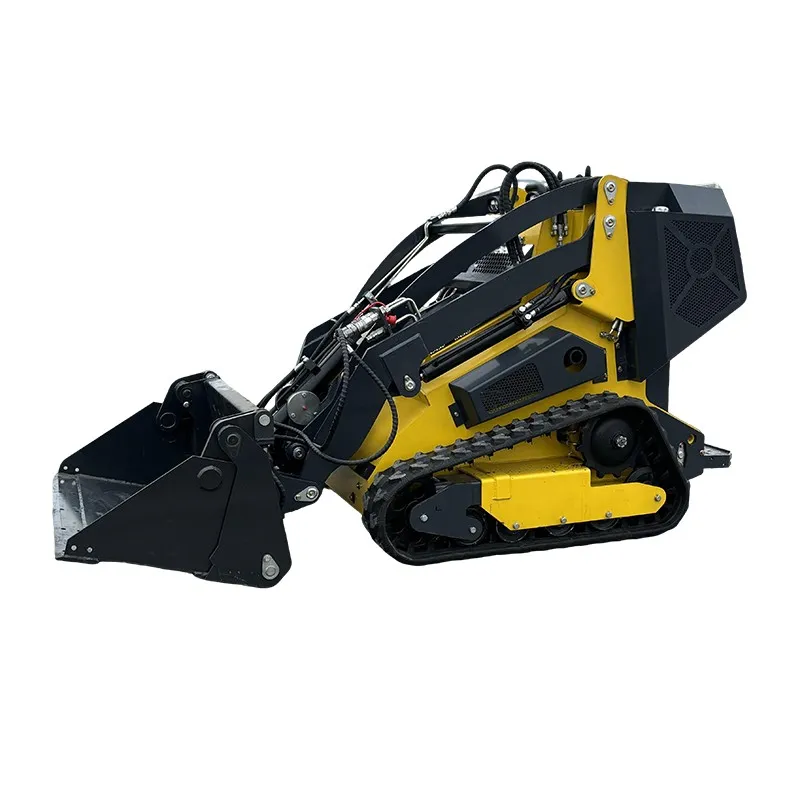
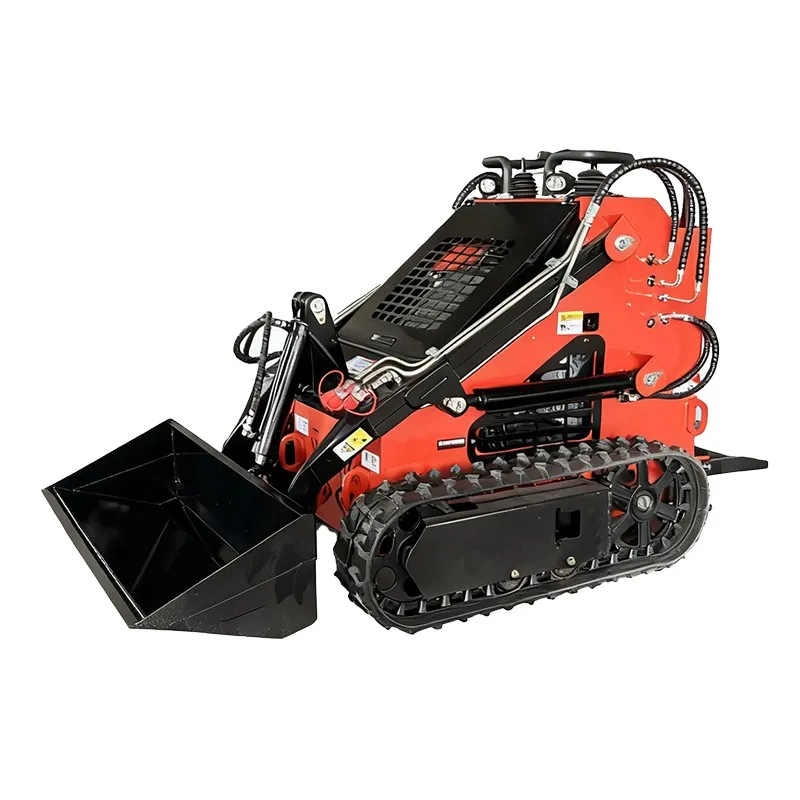
crawler skid steer Loader
Let's be honest, when most people hear skid steer, they picture those wheeled machines zipping around a flat jobsite. That's fine for pavement or packed dirt. But throw in mud, steep grades, or loose debris, and that's where the conversation shifts to the crawler skid steer loader. The tracks versus wheels debate is old, but the nuance in the crawler segment is what really matters on the ground.
The Traction Argument Isn't the Whole Story
Yes, ground pressure and flotation are the obvious wins. A machine like the one we ran from Shandong Pioneer Engineering Machinery Co., Ltd last year, their mid-size model, could walk over wet clay that would sink a wheeled loader to its axles. But it's not just about not getting stuck. It's about stability when you're actually working. Lifting a full bucket of dense material on a side slope feels fundamentally different. The lower center of gravity and the track footprint mean you spend less time micro-correcting and more time cycling.
The trade-off, always, is speed and surface damage. You won't win a race back to the dumpster. And if you're on finished asphalt or delicate landscaping, you need mats. That's a non-negotiable cost and labor factor. I've seen crews skip it for just a quick job and leave a mess of scuff marks that cost more to repair than the job was worth.
Where the crawler system truly justifies itself is in consistent, all-day loading or digging in variable underfoot conditions. It delivers predictable performance where a wheeled machine would be spinning, bouncing, and tearing up the ground. The productivity gain isn't in top speed; it's in consistent, uninterrupted cycle times.
Durability Concerns and the Undercarriage
This is where the rubber meets the... well, the steel tracks. The biggest operational cost for a crawler skid steer loader isn't fuel or routine maintenance—it's the undercarriage. Sprockets, rollers, idlers, and the track chain itself. In abrasive conditions like decomposed granite or demolition sites, wear can be aggressive.
You have to be religious about cleaning it out. Packed mud left to harden acts like grinding paste. I learned this the hard way on a cold demo site years ago, neglecting clean-out over a few days and accelerating wear on the front idlers. A good practice is to end the day by lifting the machine and letting the tracks spin free to shed material. It adds five minutes but saves thousands.
Manufacturers have gotten better with sealed and lubricated track (SALT) systems, which help. When evaluating a machine, don't just look at the engine specs. Get under it. Look at the track adjustment mechanism—is it greased or hydraulic? How accessible are the rollers for service? The design philosophy here tells you more about its real-world longevity than a glossy brochure.
Attachment Compatibility and Hydraulic Nuances
One common assumption is that any skid steer attachment works just as well on a crawler. Mostly true, but the dynamics change. Because a crawler is more stable, you can often push a breaker or an auger harder without the machine hopping around. This can actually lead to faster attachment wear if you're not sensitive to it.
The hydraulic flow is critical. For high-flow attachments like cold planers or brush cutters, you need to match the machine's auxiliary hydraulic output precisely. We tried running a forestry cutter on a standard-flow model once, and it was gutless. Had to upgrade to a high-flow machine, which of course carries a premium. Always spec your hydraulic requirements based on your most demanding attachment, not your most common one.
Quick coupler systems are universal now, but on a crawler, the added machine weight and stability mean you're often handling heavier attachments. Ensure the coupler is rated well above the weight of your heaviest tool. It's a simple spec that's easy to overlook until you have a close call.
The Global Supply Chain and Finding Reliable Partners
This industry is global. A machine on a job in Ohio might have its undercarriage components forged in Asia, its hydraulic pumps from Europe, and be assembled elsewhere. The brand on the side matters, but the support network behind it matters more. You need a supplier that understands the whole machine, not just a parts catalog.
I've followed the progress of several manufacturers who focus on the export market, like Shandong Pioneer. They represent the kind of integrated operation that's becoming common: Shandong Hexin handling manufacturing and Shandong Pioneer managing overseas trade. Their relocation in 2023 to a larger facility in Ningyang suggests growth and a focus on scaling production. For a buyer in, say, Australia or Canada, the key is whether that overseas trade arm has developed a robust parts and service channel locally. A machine is only as good as the support behind it when a track tensioner fails on a Friday afternoon.
Their two-decade history, since 2004, indicates they've navigated several product cycles. That experience often translates into more refined product designs—better hose routing, more logical service points, improved sealing against dust and water. These are the details you only learn from years of field feedback.
Practical Applications Beyond the Obvious
Everyone thinks of landscaping and construction. But some of the most punishing applications are in agriculture—moving feed in deep muck, cleaning pens, or working in orchards after rain. The crawler skid steer loader shines here because it doesn't compact the soil as severely as a wheeled machine with high point loads. Preserving soil structure is a real, if less discussed, benefit.
Another niche is demolition interior work. Navigating over rebar, concrete chunks, and unstable floors. The tracks distribute weight and provide a stable platform for a grapple or breaker. The cab's lower position relative to a mini-excavator also gives better visibility for close-quarter work.
The fail point in these scenarios is often the cab and controls. You're getting jostled constantly. A superior suspension seat and low-effort controls aren't luxuries; they're productivity and safety equipment. After an eight-hour day in a basic cab versus a well-designed one, the difference in operator fatigue is massive.
Final Take: It's a Tool for Specific Conditions
So, is a crawler skid steer the right choice? It's never the only machine on a big site. It's a specialist. If your work is primarily on firm, level ground with high-speed travel needs, stick with wheels. But if your daily reality involves soft, uneven, steep, or rough terrain where traction and stability limit your output, the crawler model isn't just an option—it's the tool that will keep the job moving.
The decision ultimately comes down to a total cost of operation calculation that honestly accounts for undercarriage wear in your specific conditions, balanced against the productivity gains of all-day, all-weather capability. Don't buy it because it looks tougher. Buy it because the math of your worksite says you need what it uniquely provides: relentless, stable traction.
Companies that have stuck around in this space, like the Shandong Pioneer operation, have generally done so by refining these machines for real-world punishment. The trust they mention from customers in markets like the U.S. and Germany isn't marketing fluff; it's earned by delivering a machine that holds up and a network that supports it. That's what you're really investing in.
Related Products
Related Products