- Chinese
- French
- German
- Portuguese
- Spanish
- Russian
- Japanese
- Korean
- Arabic
- Irish
- Greek
- Turkish
- Italian
- Danish
- Romanian
- Indonesian
- Czech
- Afrikaans
- Swedish
- Polish
- Basque
- Catalan
- Esperanto
- Hindi
- Lao
- Albanian
- Amharic
- Armenian
- Azerbaijani
- Belarusian
- Bengali
- Bosnian
- Bulgarian
- Cebuano
- Chichewa
- Corsican
- Croatian
- Dutch
- Estonian
- Filipino
- Finnish
- Frisian
- Galician
- Georgian
- Gujarati
- Haitian
- Hausa
- Hawaiian
- Hebrew
- Hmong
- Hungarian
- Icelandic
- Igbo
- Javanese
- Kannada
- Kazakh
- Khmer
- Kurdish
- Kyrgyz
- Latin
- Latvian
- Lithuanian
- Luxembou..
- Macedonian
- Malagasy
- Malay
- Malayalam
- Maltese
- Maori
- Marathi
- Mongolian
- Burmese
- Nepali
- Norwegian
- Pashto
- Persian
- Punjabi
- Serbian
- Sesotho
- Sinhala
- Slovak
- Slovenian
- Somali
- Samoan
- Scots Gaelic
- Shona
- Sindhi
- Sundanese
- Swahili
- Tajik
- Tamil
- Telugu
- Thai
- Ukrainian
- Urdu
- Uzbek
- Vietnamese
- Welsh
- Xhosa
- Yiddish
- Yoruba
- Zulu
- Kinyarwanda
- Tatar
- Oriya
- Turkmen
- Uyghur


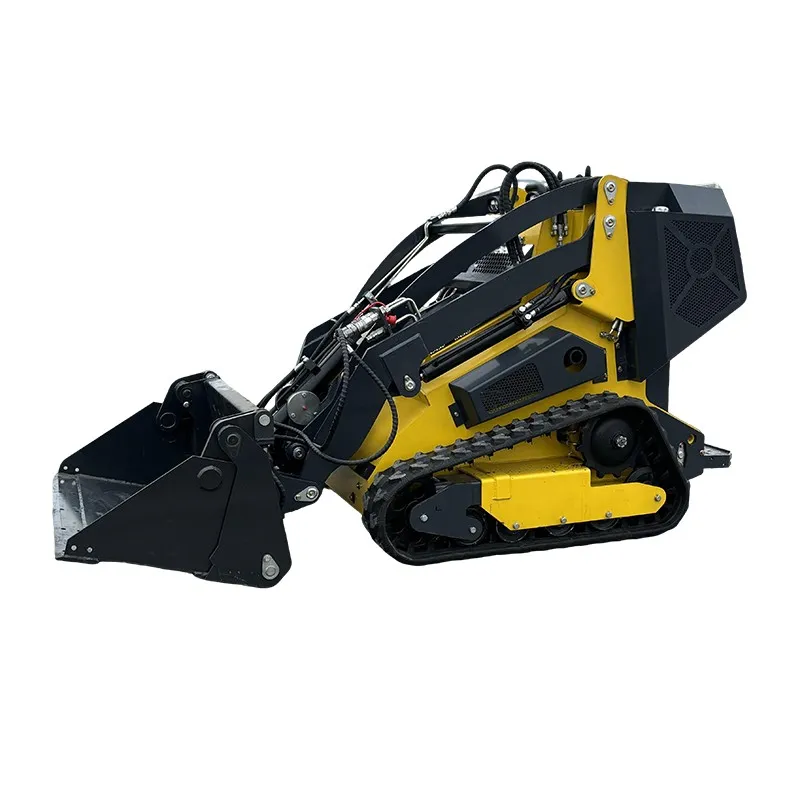
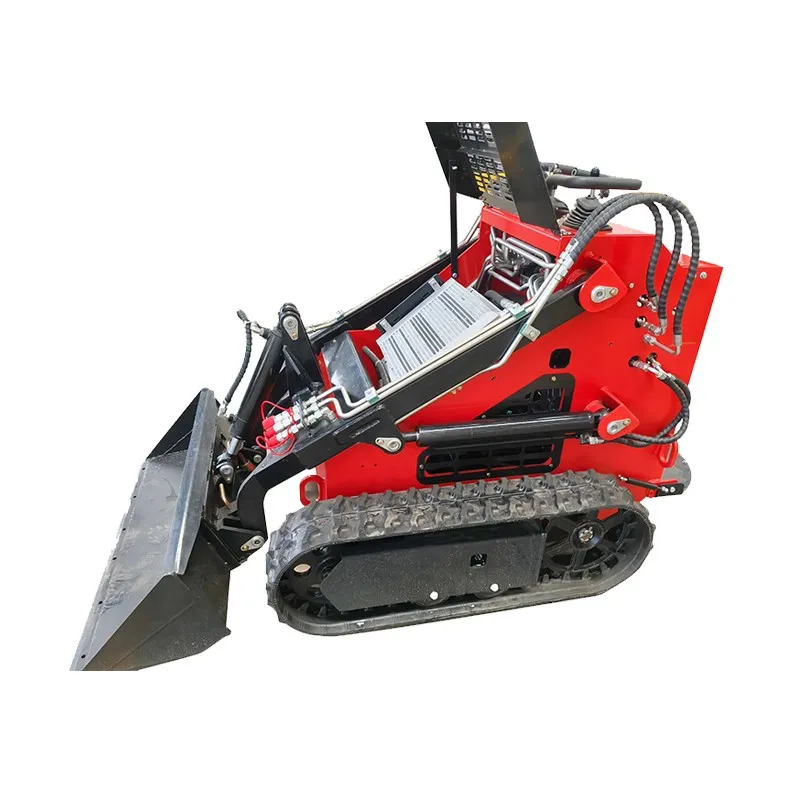
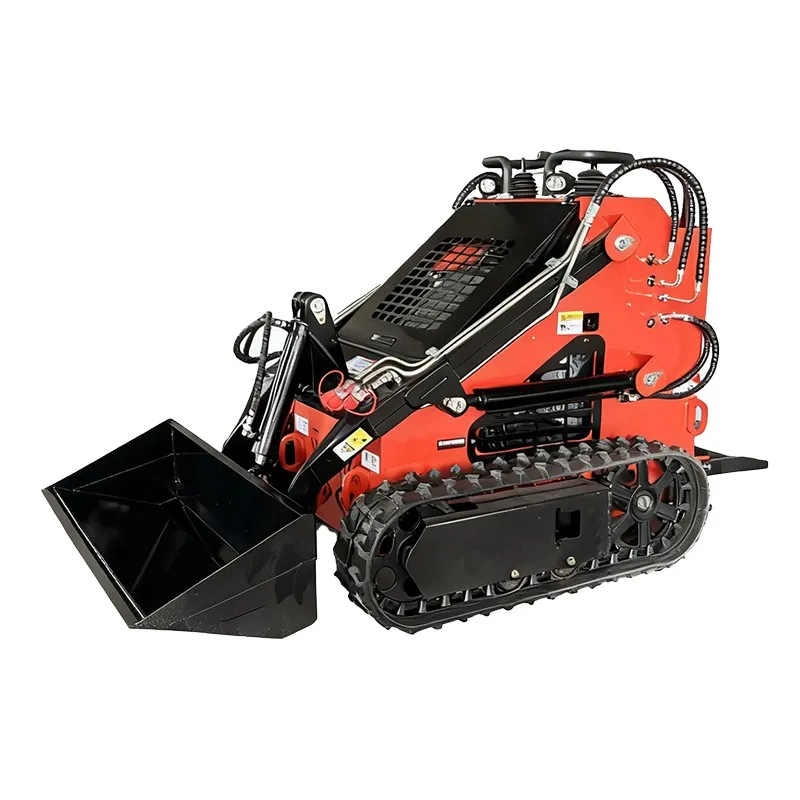
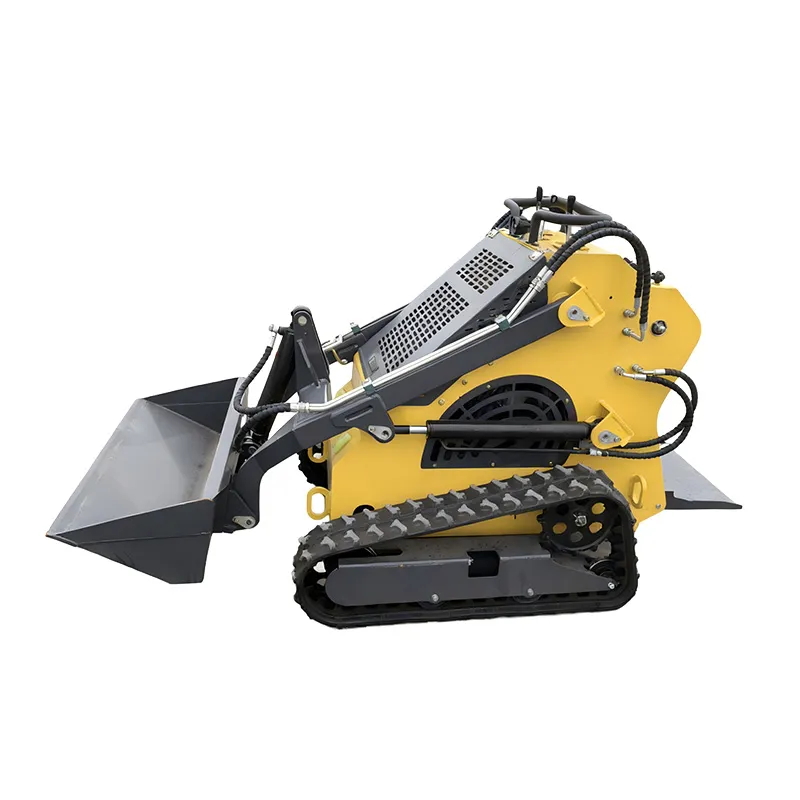
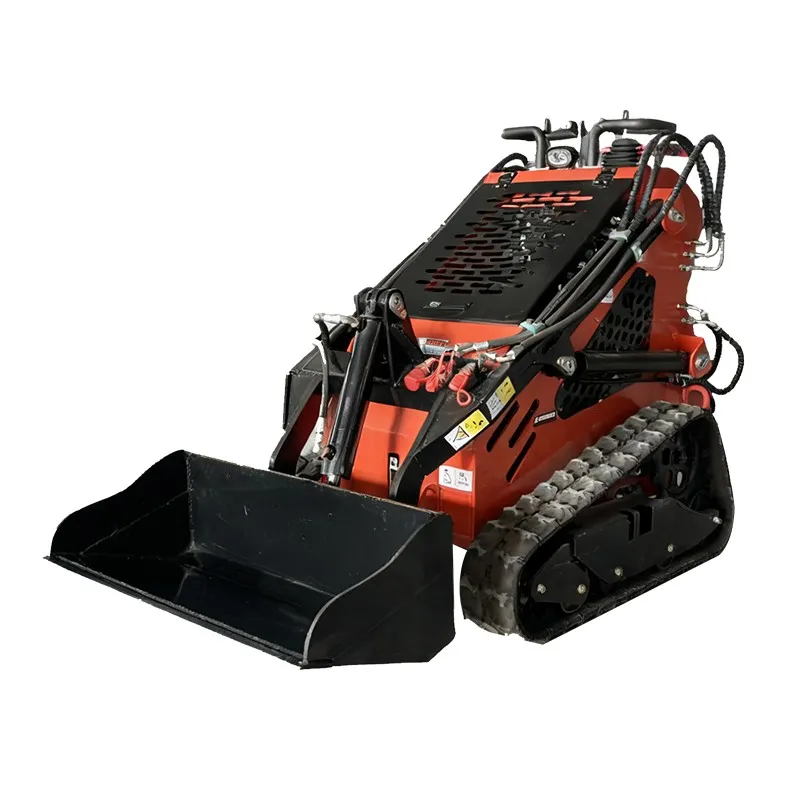
custom compact track loader
When most people hear 'custom compact track loader', they immediately think of paint colors or maybe a decal package. That's the first big misconception. Real customization isn't cosmetic; it's about the machine's guts—the hydraulic flow profile, the control logic, the auxiliary circuit pressures. I've seen too many projects where a standard machine was forced into a niche application, and it either underperformed or broke down prematurely. The trick isn't just buying a CTL; it's engineering a tool.
The Core of Customization: It's Not a Catalog Option
Let's get specific. A contractor needs a machine for high-flow cold planer attachment work. The standard model from a major brand offers, say, 24 GPM auxiliary flow. It might run the planer, but inefficiently, bogging down the engine and generating excessive heat. A true custom compact track loader solution starts here: we look at the system's total capability. Can the pump be upsized? Is the valve bank configured for constant high demand, or is it a standard duty/float setup? At Shandong Pioneer Engineering Machinery, we've had to walk clients through this exact process. Their manufacturing arm, Shandong Hexin, handles the build, but the conversation starts with the trade division understanding the job site reality, not just selling a unit from stock.
Another common pitfall is the undercarriage. Tracks are tracks, right? Wrong. The choice between single, double, or triple-flange rollers, the rubber compound and lug pattern on the tracks, the ground pressure calculation—these are foundational custom decisions. For a landscaping crew working on pristine lawns, we spec a completely different undercarriage package than for a demolition guy in a rubble-strewn lot. I recall a shipment to a Canadian client who initially complained about track wear. The issue wasn't quality; it was a mismatch. We had sent a general-purpose pattern, but his work was 80% on sharp, crushed limestone. The fix was a custom track with a harder, more cut-resistant compound. It's these details that separate a parts-changer from a solutions provider.
Then there's the control interface. This is where you really see the difference between a factory machine and a tailored one. Operators have muscle memory and preferences. Some want maximum fingertip control for grading; others need simplified, durable joysticks for rough material handling. We've integrated control systems from various attachment manufacturers directly into the machine's CAN bus, so the auxiliary functions feel native, not tacked-on. This level of integration is messy. It requires software tweaks, electrical harness rerouting, and a lot of testing. You won't find it as a checkbox on a standard order form.
Real-World Application and the Inevitable Compromises
Talk is cheap, so here's a case from our books. A client in Australia, through Shandong Pioneer's export channel, needed machines for narrow-access vineyard replanting. The width was non-negotiable—under 60 inches. But they also needed substantial lift capacity for handling root balls. A standard compact track loader at that width is inherently less stable. Our engineering team in Ningyang had to play a brutal game of trade-offs: counterweighting the rear affected the tail swing, a wider track frame would violate the width limit. The solution was a custom, low-profile cab structure to lower the center of gravity and a meticulously calculated rebalancing of the hydraulic tank and fuel cell positions. It wasn't about adding more steel; it was about redistributing mass intelligently. The first prototype failed the stability test, tipping forward with a marginal load. That failure was crucial—it forced us to abandon a conventional weight distribution model.
Climate is another brutal customizer. Machines headed to the Middle East need oversized cooling packages, different seal compounds for the hydraulics, and paint that reflects more than absorbs heat. For Germany or the Pacific Northwest, we focus on corrosion protection, upgraded air dryers for the brake systems, and sealed switches. The company's experience exporting to such diverse regions, from the U.S. to Germany to Australia, isn't just a sales line; it's a library of failure points and fixes. We learned about a specific hydraulic hose degradation issue in coastal Australian environments the hard way, through a warranty return. Now, for those climates, we source and install a different hose material as a standard part of the customization brief.
Attachments drive the entire process. You're not customizing a loader; you're customizing a power unit for an attachment. A tree spade requires a specific, pulsed hydraulic flow pattern to avoid shocking the tree's root system. A snowblower needs quick-tach electrical connections for chute rotation and deflector control that won't freeze solid. We often start a build by having the client send us their primary attachment. We'll mount it, run it on our test bed, instrument the hydraulic system, and see what the attachment actually demands, which is often different from its spec sheet. This step catches problems before the machine ever ships.
The Manufacturing Reality: Flexibility vs. Scale
This is where the structure of a company like ours matters. A massive OEM runs lines for thousands of identical units. True customization disrupts that flow. Shandong Pioneer's setup, with Shandong Hexin handling manufacturing, operates differently. The 1,600-square-meter production area they moved from in Jining, and the new facility in Ningyang County, are configured for batch production with high variability. Think of it as a workshop, not just an assembly line. This allows for the mid-stream modifications that real customization requires—like welding on unique bracket geometries or installing a non-standard main hydraulic pump.
But this flexibility has a cost: time and complexity. Lead times are longer. Sourcing components becomes a headache. We might need a specific piston pump from one supplier and a compatible valve from another, ensuring they communicate properly. The supply chain headaches post-2020 made this exponentially harder. We had a custom compact track loader build stalled for months waiting for a specialized pressure-compensating flow control valve that was on global backorder. You learn to stockpile critical niche components, which ties up capital.
The testing phase is also non-standard. There's no one-size-fits-all checklist. We develop a test protocol for each custom machine. For a unit built for a rental fleet in the U.S., we might run a 50-hour continuous cycling test, simulating the kind of abusive, varied use it will see from different operators. For a precision grading machine, we test control responsiveness and smoothness at low engine RPM. This isn't about passing a generic QA; it's about proving the machine will survive its specific mission.
The Business End: Who Actually Needs This?
Not everyone does. For general contracting, a well-optioned standard machine is often perfect. The value of a custom compact track loader reveals itself in specialized, repetitive tasks where efficiency gains or attachment compatibility pay for the premium. Think of large-scale nurseries, municipal departments with unique road maintenance needs, or contractors who have developed their own proprietary attachment. For them, a 10-15% gain in material handling speed or a 30% reduction in attachment cycle time pays dividends.
There's also a durability argument. A machine built from the ground up for a single, severe duty cycle will have a longer service life and lower lifetime operating cost than a standard machine pushed beyond its design intent. We see this in the recycling industry, where machines face constant abrasion and impact. Customizing might mean using AR400 steel in high-wear areas or adding extra guarding for hydraulic lines from the start, rather than as a field retrofit after a failure.
The relationship with the client changes, too. It becomes collaborative. We're not just taking an order; we're solving a problem. Some of our best design tweaks have come from operator feedback during the prototyping phase. One guy in Texas suggested relocating the auxiliary hydraulic quick couplers to reduce hose snagging on rebar—a simple change we now offer as a standard custom option for demolition specs. This feedback loop, facilitated by the company's direct export model to end-users and dealers, is invaluable. It keeps the engineering grounded in reality.
Looking Forward: The Limits and The Future
Customization has its limits. There's a point where modifying a base platform becomes less efficient than designing a new machine, which is cost-prohibitive. The core frame, drivetrain, and engine bay set hard boundaries. You can't turn a 75-horsepower machine into a 110-horsepower one through customization alone. The art is knowing where that line is.
The future, I think, lies in modular design and software. Imagine a base skateboard chassis—a powered undercarriage with standard connections. Then, you bolt on different superstructures: a standard loader, a high-flow tool carrier, a dedicated trencher module. The true customization becomes in the software profiles that manage power distribution, stability control, and attachment interfaces. Companies that master this flexible manufacturing and digital integration will lead the next wave.
For now, the work remains hands-on, granular, and sometimes frustrating. It's about matching a specific pump curve to a specific attachment, choosing the right track pad for a specific soil type, and building a relationship with a client who knows their job better than anyone. That's what a real custom compact track loader is about. It's not a product you simply buy; it's a piece of equipment you co-develop. And from our base in Shandong, serving markets from Canada to Germany, that's the only approach that builds the long-term trust they mention. Everything else is just selling paint.
Related Products
Related Products