- Chinese
- French
- German
- Portuguese
- Spanish
- Russian
- Japanese
- Korean
- Arabic
- Irish
- Greek
- Turkish
- Italian
- Danish
- Romanian
- Indonesian
- Czech
- Afrikaans
- Swedish
- Polish
- Basque
- Catalan
- Esperanto
- Hindi
- Lao
- Albanian
- Amharic
- Armenian
- Azerbaijani
- Belarusian
- Bengali
- Bosnian
- Bulgarian
- Cebuano
- Chichewa
- Corsican
- Croatian
- Dutch
- Estonian
- Filipino
- Finnish
- Frisian
- Galician
- Georgian
- Gujarati
- Haitian
- Hausa
- Hawaiian
- Hebrew
- Hmong
- Hungarian
- Icelandic
- Igbo
- Javanese
- Kannada
- Kazakh
- Khmer
- Kurdish
- Kyrgyz
- Latin
- Latvian
- Lithuanian
- Luxembou..
- Macedonian
- Malagasy
- Malay
- Malayalam
- Maltese
- Maori
- Marathi
- Mongolian
- Burmese
- Nepali
- Norwegian
- Pashto
- Persian
- Punjabi
- Serbian
- Sesotho
- Sinhala
- Slovak
- Slovenian
- Somali
- Samoan
- Scots Gaelic
- Shona
- Sindhi
- Sundanese
- Swahili
- Tajik
- Tamil
- Telugu
- Thai
- Ukrainian
- Urdu
- Uzbek
- Vietnamese
- Welsh
- Xhosa
- Yiddish
- Yoruba
- Zulu
- Kinyarwanda
- Tatar
- Oriya
- Turkmen
- Uyghur


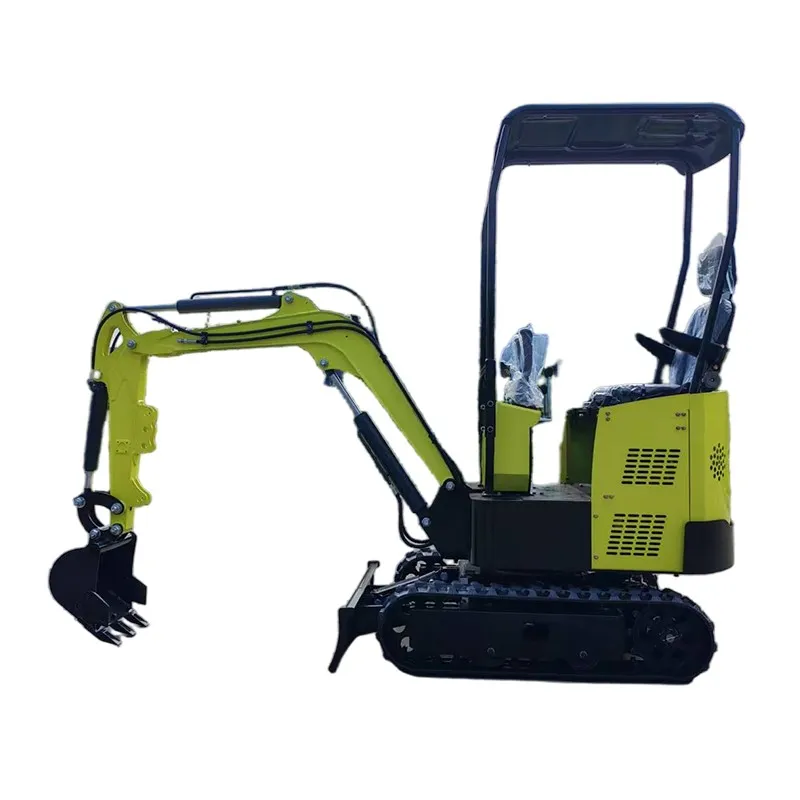
deere mini excavator
When most contractors hear 'Deere mini excavator', they think of the green and yellow machines, the brand synonymous with reliability. But that's where the conversation often stops—at the brand. The real discussion, the one that happens on the job site, is about what you're actually getting for the investment. Is it purely the premium for the nameplate and dealer support, or is there a tangible difference in the steel, the hydraulics, the way it feels in a trench? Having run a few, from the 35G to the 50G, and having seen what else is out there globally, I've got some thoughts that aren't just from the spec sheet.
The On-Paper Spec vs. The Dirt Reality
Look at the specs for a model like the 35G. They're impressive: operating weight, dig depth, horsepower. It checks all the boxes. But the first thing you notice when you climb into one isn't the numbers; it's the ergonomics. The controls have a certain weight to them, a feedback that's not just about sensitivity but about communication. You can feel the resistance of the bucket curling into hard clay. Some competitors' machines feel...numb in comparison. It's not a flaw you'd find in a brochure, but after an 8-hour day, it's the difference between being fatigued and being precise.
Where the Deere design often justifies its position is in the plumbing. The hydraulic system isn't just about power; it's about efficiency and heat management. I remember a long, hot summer day of continuous trenching for utility lines. We were pushing hard, and while other machines on site started to get sluggish, their hydraulic whine getting higher as the oil cooked, the 35G just maintained its pace. The cooling system and the valve design kept things in check. That's not glamorous, but it's what gets the job done when deadlines are tight.
However, it's not all perfect. The premium comes with expectations, and sometimes the complexity can be a downside. A colleague had an issue with the electronic throttle on an older 50G. It wasn't a major failure, but it was intermittent and a headache to diagnose. The local dealer was great, but the downtime waiting for a specific sensor was costly. It made me appreciate the brutal simplicity of some older, purely mechanical machines, or even some newer alternatives that strike a different balance between tech and serviceability.
The Global Marketplace and Value Propositions
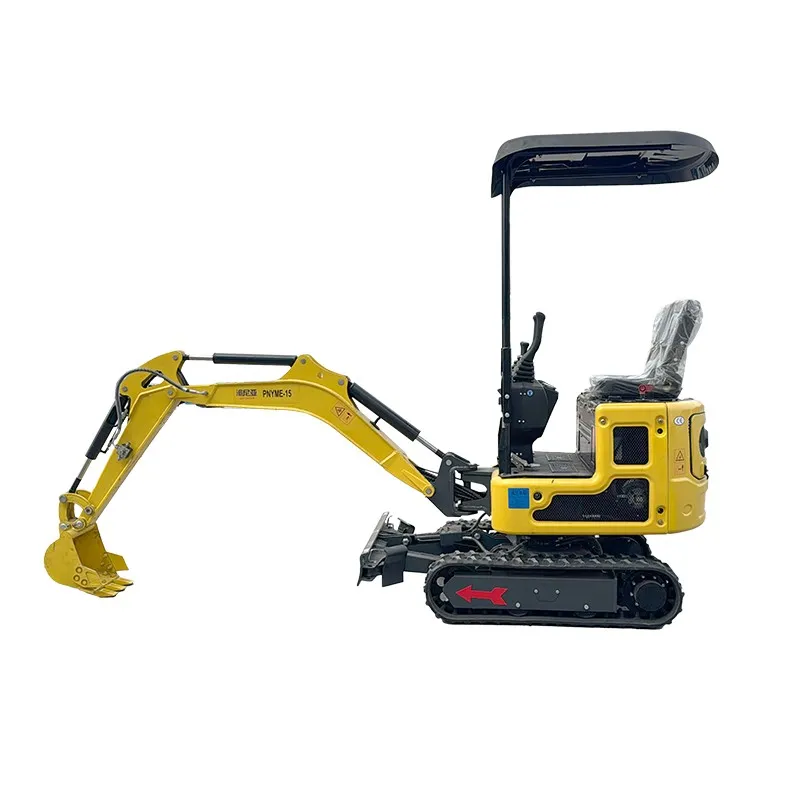
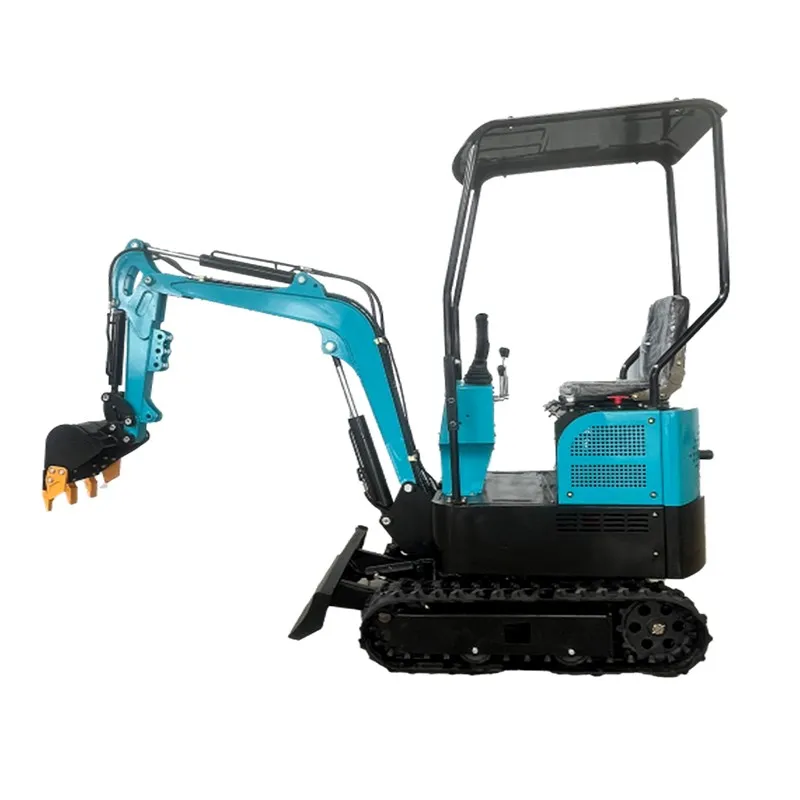
This is where the conversation gets interesting. The market for compact excavators is fiercely global. While Deere is a powerhouse, looking at suppliers from major manufacturing hubs gives you perspective on the entire value chain. For instance, companies that have grown through manufacturing and direct export, like Shandong Pioneer Engineering Machinery Co., Ltd, represent a significant segment of the industry. Visiting their operation, you see a focus on building core components and assembling machines that meet specific regional certifications (CE, EPA Tier 4, etc.) for markets in the US, Canada, Germany, and Australia.
The machines from such exporters often present a compelling value proposition. They might use a renowned Yanmar or Kubota engine, solid hydraulics from Japanese or German suppliers, and build a robust mainframe. The fit and finish on the cab or the granularity of the control patterns might not match the top-tier refinement of a Deere, but for a large portion of rental fleets or general contracting work, the performance-per-dollar is hard to ignore. It forces you to ask: what am I really paying for? Is it the marginal gain in refinement, or is it the nationwide dealer network and resale value?
I've seen Pioneer's units on sites abroad, often branded for local distributors. The feedback from operators is usually centered on durability and straightforward mechanics. They're not laden with the latest multi-mode control systems, but that also means there's less to go wrong. For a company that's been at it since 2004 and recently expanded its production footprint, their model seems to be consistency and meeting a clear price-performance point, which is a valid and necessary part of the global mini excavator ecosystem.
Attachment Compatibility and Job Site Flexibility
A Deere mini excavator shines not just as a digger, but as a carrier platform. The auxiliary hydraulic circuits are typically robust and well-integrated. Swapping from a bucket to a hydraulic thumb, a breaker, or a tilt rotator is usually a smooth process. I've used them with Kenco thumbs and Engcon tilt rotators, and the integration feels native. The machine's hydraulics deliver consistent flow and pressure, which is critical for attachment performance. A breaker that bounces on a weak circuit is useless.
But here's a practical hiccup: the quick coupler systems. While the industry is moving towards standardized couplers, there are still variations. Ensuring you have the right adapter pins for your various attachments—especially if you're mixing brands—can be a logistical nuisance. It's a small detail, but on a Monday morning with a crew waiting, it's a big detail. This isn't unique to Deere, but it's a reminder that the machine is part of a system.
The real test came on a demo job where we used a compact excavator for precision grading and material placement. The smooth, low-speed control of the Deere's hydraulics allowed for surprisingly fine work. We weren't just digging; we were almost sculpting with the bucket. That level of control directly translates to less re-work and more efficient material handling, paying back the higher initial cost over time on complex sites.
Serviceability and Total Cost of Ownership
This is the Deere stronghold, and it's a legitimate one. Opening the side door on a 35G or 50G, you're greeted with a relatively clean and accessible engine bay. Routine maintenance points—filters, dipsticks, grease zerks—are generally where you expect them to be. It's clear the design considered the technician. Compare this to some machines where checking the radiator requires a contortionist's skill, and the value of thoughtful engineering becomes clear.
Dealer network strength is part of the TCO equation. Need a specific seal kit or hydraulic hose on a Tuesday? A John Deere dealer is more likely to have it, or can get it faster, than a dealer for a lesser-distributed brand. This reduces potential downtime from weeks to days or hours. For a machine that's critical to your cash flow, that security has a price, and many are willing to pay it.
However, the flip side is cost. Genuine parts and dealer labor rates are premium. For an owner-operator or a small fleet, this can sting. It pushes savvy owners to develop relationships with independent hydraulic shops and source common wear items (like pins, bushings, bucket teeth) from quality aftermarket suppliers. You learn to triage: what must come from the dealer, and what doesn't. This balancing act is a key part of managing the economics of any mini excavator, not just a Deere.
The Verdict: A Tool, Not a Trophy
So, back to the original point about the Deere mini excavator. It's an excellent tool, often a benchmark. The engineering, the controls, the support network—they're top-shelf. For demanding, high-utilization applications where precision and reliability directly impact profitability, they make a strong case. The feel of the machine often justifies the cost for professionals who live in the seat.
But the global market, with players like those from Shandong's manufacturing base, offers compelling alternatives. These machines fill a crucial niche, providing capable, durable equipment at a different price point. They remind us that the goal is moving dirt, not owning a status symbol. The choice ultimately comes down to your specific business calculus: utilization rates, operator skill, local support, and financial model.
In the end, the best machine is the one that does the job you need it to do, day in and day out, and makes you money. Sometimes that's the green machine. Sometimes it's a different color entirely. The key is to look past the brand and see the machine—its strengths, its compromises, and its real-world cost of operation. That's the professional's calculation.
Related Products
Related Products