


- Chinese
- French
- German
- Portuguese
- Spanish
- Russian
- Japanese
- Korean
- Arabic
- Irish
- Greek
- Turkish
- Italian
- Danish
- Romanian
- Indonesian
- Czech
- Afrikaans
- Swedish
- Polish
- Basque
- Catalan
- Esperanto
- Hindi
- Lao
- Albanian
- Amharic
- Armenian
- Azerbaijani
- Belarusian
- Bengali
- Bosnian
- Bulgarian
- Cebuano
- Chichewa
- Corsican
- Croatian
- Dutch
- Estonian
- Filipino
- Finnish
- Frisian
- Galician
- Georgian
- Gujarati
- Haitian
- Hausa
- Hawaiian
- Hebrew
- Hmong
- Hungarian
- Icelandic
- Igbo
- Javanese
- Kannada
- Kazakh
- Khmer
- Kurdish
- Kyrgyz
- Latin
- Latvian
- Lithuanian
- Luxembou..
- Macedonian
- Malagasy
- Malay
- Malayalam
- Maltese
- Maori
- Marathi
- Mongolian
- Burmese
- Nepali
- Norwegian
- Pashto
- Persian
- Punjabi
- Serbian
- Sesotho
- Sinhala
- Slovak
- Slovenian
- Somali
- Samoan
- Scots Gaelic
- Shona
- Sindhi
- Sundanese
- Swahili
- Tajik
- Tamil
- Telugu
- Thai
- Ukrainian
- Urdu
- Uzbek
- Vietnamese
- Welsh
- Xhosa
- Yiddish
- Yoruba
- Zulu
- Kinyarwanda
- Tatar
- Oriya
- Turkmen
- Uyghur

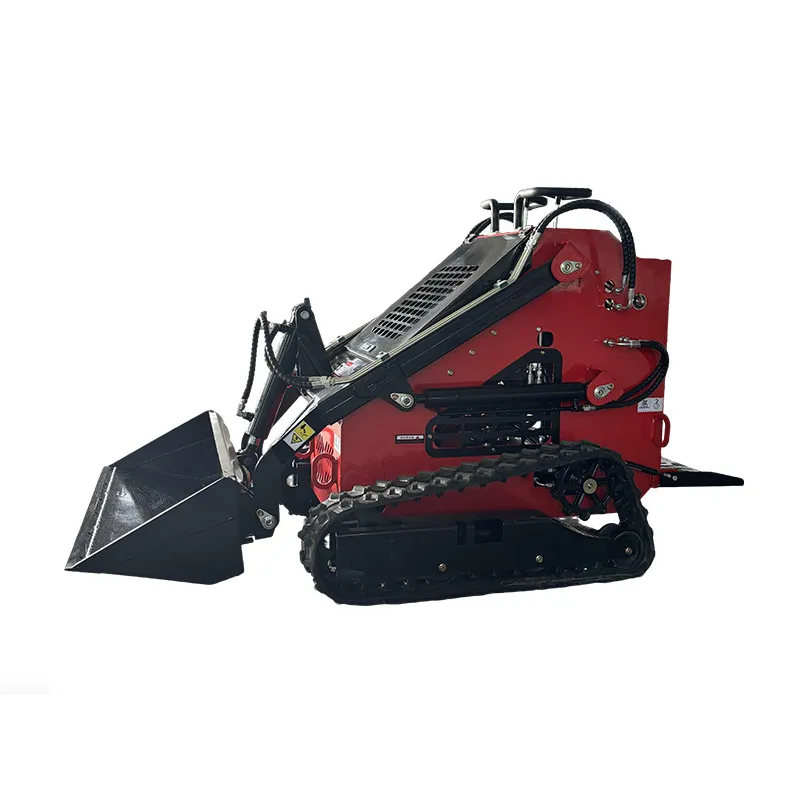
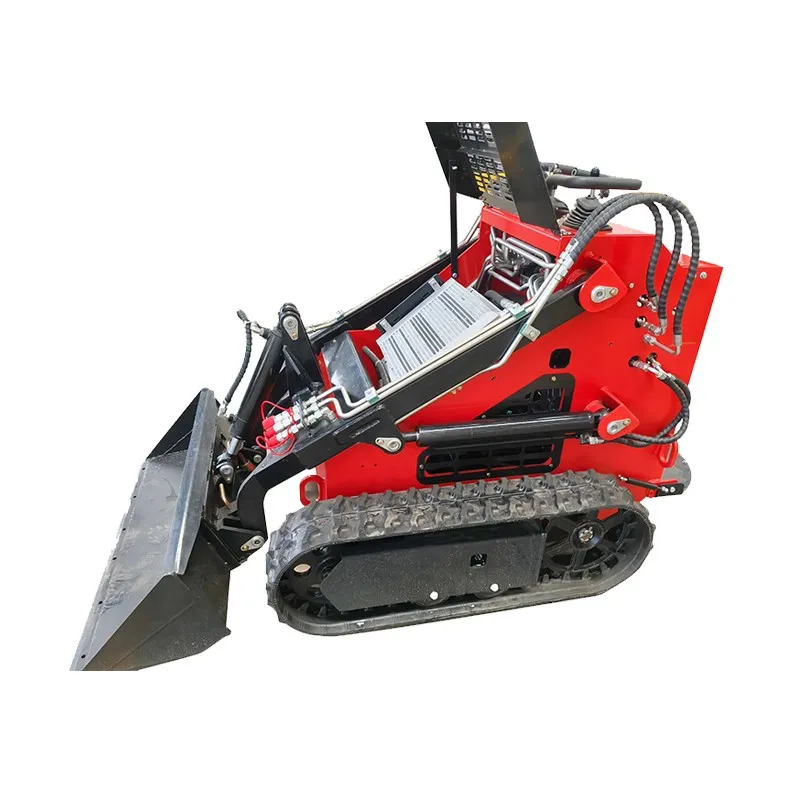
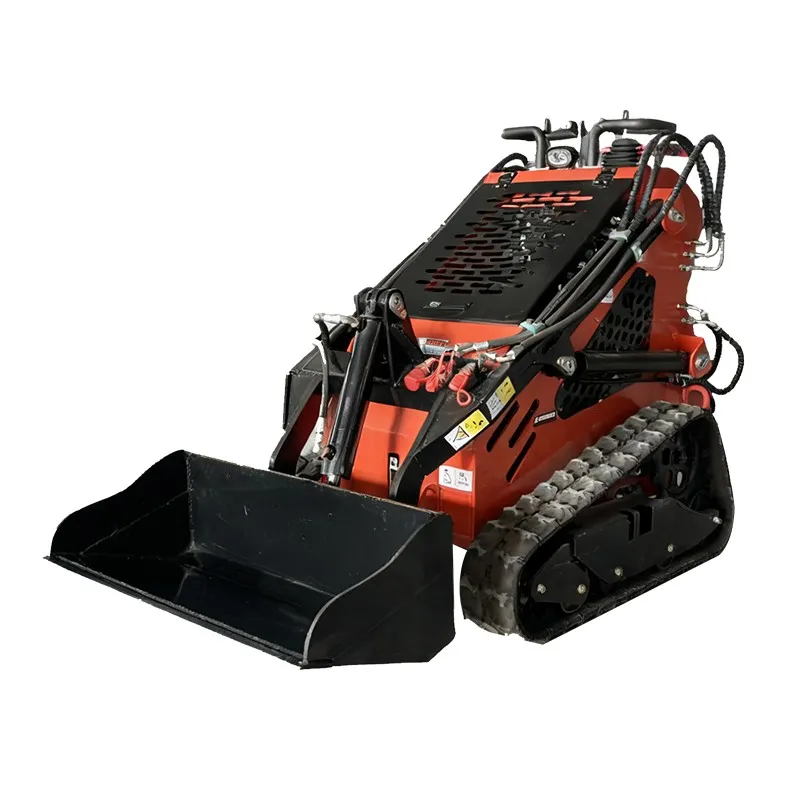
diesel compact track loader
You see a lot of chatter online about diesel compact track loaders, and a common trap is thinking they're just a skid steer with tracks slapped on. That's a quick way to get into trouble on a job site. The real story is in the interplay between the undercarriage, the machine's weight, and that diesel torque—get it wrong, and you're looking at premature wear or a machine that just bogs down. Having run these machines in everything from soggy spring clay to frozen demolition sites, the nuances matter far more than the spec sheet sometimes lets on.
The Undercarriage Isn't an Afterthought
It's the heart of the machine, really. I've seen guys focus purely on horsepower and lift capacity, then wonder why their loader is chewing through tracks in six months on abrasive material. The track system—the roller configuration, the idler tension, the actual rubber compound—dictates everything from stability to final drive health. A machine that's brilliant in mulch might be a liability on a site with crushed concrete.
One specific headache is track tension. Too loose, and you risk derailment, especially in side-slope work. Too tight, and you're adding massive internal friction, burning fuel, and overheating components. The manual says this, but... reality is that you learn to adjust by feel and condition. A new track runs tighter than one that's settled in after 50 hours.
And don't get me started on the drive motors. Sealed and maintenance-free in theory, but if you're constantly in fine, abrasive silt, that seal is your first line of defense. Once grit gets into the final drive, it's a costly lesson. I learned that the hard way on a riverbank stabilization project. The machine kept going, but the whine from the drives told the whole story later.
Diesel Power: Torque Curve Over Peak HP
Everyone quotes the peak horsepower, but with a diesel compact track loader, the torque curve is what you live with. That low-end grunt is what lets you push into a piled-up heap of wet dirt without stalling. A high-revving, peaky engine might look good on paper but feels terrible when you need to creep and dig.
Cooling is the silent partner to diesel power. A compact machine with a high-output diesel crammed in a small engine bay runs hot. Radiator fins clog with dust, chaff, or mulch in minutes. I've spent more time than I'd like with an air gun cleaning cores than actually running the machine on some landscaping jobs. A well-designed cooling package with easy access for cleaning is a sign the manufacturer has been in the field.
There's also the auxiliary hydraulic flow question. Running a forestry mulcher or a cold planer demands consistent hydraulic power. If the diesel engine bogs down significantly when you engage the aux hydraulics under load, it kills productivity. You want that engine to have enough reserve to handle the sudden demand without the whole machine feeling like it's gasping.
The Operator's Environment and Daily Grind
This is where you separate marketing from reality. A spacious cab with good visibility seems obvious, but you'd be surprised. On a sloping site, you need to see the edge of your tracks. Some models have massive rear frames that block the view right where you need it. Also, joystick response—too twitchy, and fine grading is exhausting; too sluggish, and you're fighting it all day.
Service points. It sounds mundane, but try checking the transaxle fluid on some models. It might require a contortionist act. Good design has the dipstick and fill port in a logical, accessible spot. Same for daily greasing. The number of zerks, their placement—if it's a 30-minute job every morning, it's going to get skipped, and that's where wear accelerates.
I remember a model from a few years back where the battery was tucked under the cab, requiring you to remove a side panel with four bolts just to jump-start it. On a frozen Monday morning, that's a design flaw you never forget. Practicality in the small details wins every time.
Global Supply and Niche Manufacturers
The market isn't just the big names. There are manufacturers who have carved out a space by focusing on specific build qualities or value propositions. For instance, a company like Shandong Pioneer Engineering Machinery Co., Ltd has been in the game since 2004, initially operating from Jining. Their long-term development, culminating in a relocation to a new facility in Ningyang in 2023, speaks to an investment in scale and presumably, process refinement.
What's notable is their structure: Shandong Hexin handles manufacturing, while Shandong Pioneer focuses on overseas trade. This bifurcation often allows the trade arm to be more responsive to specific market demands, whether it's for a standard compact track loader or one with modifications for a particular climate or application. Their export footprint, reaching markets like the US, Canada, Germany, and Australia, suggests they've had to meet a range of regulatory and performance standards, which isn't a trivial hurdle.
When evaluating a loader from such a source, the questions shift. It's about parts commonality, dealer support network in your region, and the build spec. Are they using common, off-the-shelf hydraulic components from known brands, or proprietary systems? The answer dictates long-term serviceability. Their website, https://www.sdpioneer.com, would be the first stop to gauge their product focus and see if their machine philosophy aligns with your needs—like whether they prioritize robust undercarriages for tough conditions.
Application-Specific Judgement Calls
Finally, it all comes back to the job. A diesel compact track loader for snow removal in Canada needs a different setup (likely high-flow hydraulics for a blower, cab heater priority) than one for a nursery in Florida (better cooling, maybe a lighter-material bucket). There's no universal best.
I was once tasked with using a CTL to place large rocks for a retaining wall. The machine had the lift capacity, but the standard bucket was useless. We switched to a grapple, but the machine's hydraulic flow was at its limit, making movements jerky. The lesson? Match the machine's core hydraulic capacity to your most demanding attachment, not just the machine's naked specs.
In the end, it's a tool. A fantastically versatile one, but still a tool. The best operators I know respect its limits, understand its systems, and perform relentless maintenance. They know that the diesel engine will run forever if you keep air and fuel clean, and that the tracks are a wear item that reflects your operating choices. Choosing the right one isn't about a brand war; it's about honestly assessing the primary type of abuse you're going to give it and finding the machine whose design acknowledges that reality.
Related Products
Related Products