


- Chinese
- French
- German
- Portuguese
- Spanish
- Russian
- Japanese
- Korean
- Arabic
- Irish
- Greek
- Turkish
- Italian
- Danish
- Romanian
- Indonesian
- Czech
- Afrikaans
- Swedish
- Polish
- Basque
- Catalan
- Esperanto
- Hindi
- Lao
- Albanian
- Amharic
- Armenian
- Azerbaijani
- Belarusian
- Bengali
- Bosnian
- Bulgarian
- Cebuano
- Chichewa
- Corsican
- Croatian
- Dutch
- Estonian
- Filipino
- Finnish
- Frisian
- Galician
- Georgian
- Gujarati
- Haitian
- Hausa
- Hawaiian
- Hebrew
- Hmong
- Hungarian
- Icelandic
- Igbo
- Javanese
- Kannada
- Kazakh
- Khmer
- Kurdish
- Kyrgyz
- Latin
- Latvian
- Lithuanian
- Luxembou..
- Macedonian
- Malagasy
- Malay
- Malayalam
- Maltese
- Maori
- Marathi
- Mongolian
- Burmese
- Nepali
- Norwegian
- Pashto
- Persian
- Punjabi
- Serbian
- Sesotho
- Sinhala
- Slovak
- Slovenian
- Somali
- Samoan
- Scots Gaelic
- Shona
- Sindhi
- Sundanese
- Swahili
- Tajik
- Tamil
- Telugu
- Thai
- Ukrainian
- Urdu
- Uzbek
- Vietnamese
- Welsh
- Xhosa
- Yiddish
- Yoruba
- Zulu
- Kinyarwanda
- Tatar
- Oriya
- Turkmen
- Uyghur

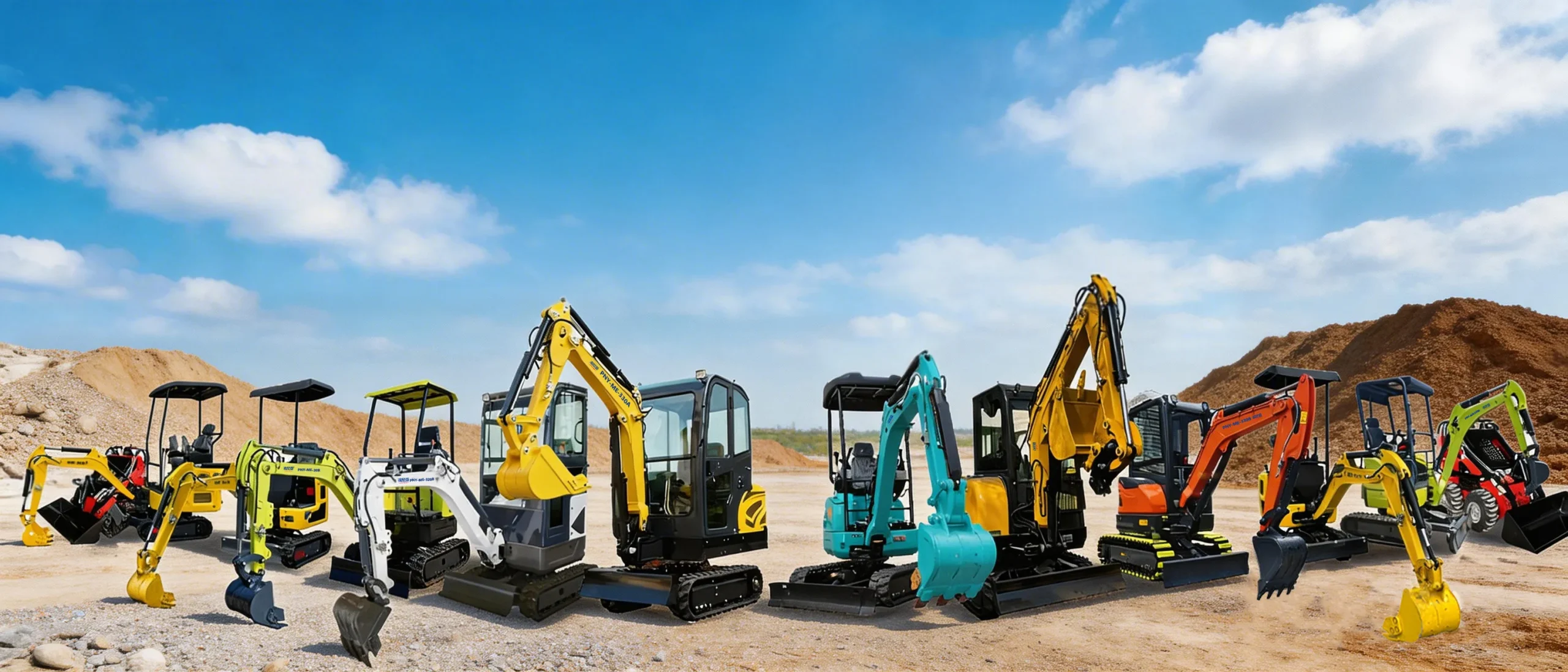
doosan mini excavator
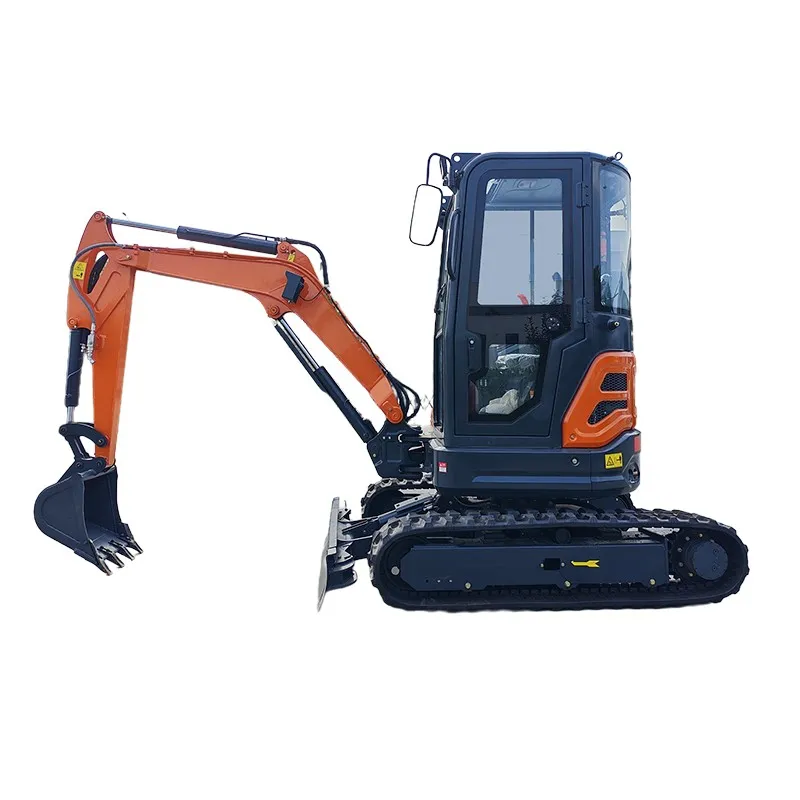
When most people think of a Doosan mini excavator, they picture that classic orange paint and maybe recall a spec like 2.5-ton or zero tail swing. That's the marketing talking. The real story starts after you've put a thousand hours on one, when you've learned its quirks, its stubbornness in cold starts, and where its hydraulic system truly shines or falls short compared to a Kubota or a Yanmar. It's not just a machine; it's a partner on a tight urban site or a remote farm job, and your choice often comes down to details no brochure will ever tell you.
The Workhorse Reputation and Where It Comes From
Doosan's strength, in my view, has always been building a solid, no-nonsense chassis. The undercarriage on their DX series, say the DX27Z-7 or the DX35Z-7, can take a beating. I've seen them on demo sites where they're not babied at all, scraping over concrete rubble day in and day out. The track frames feel rigid, and the idlers and rollers hold up better than some competing models in the same class that seem to prioritize a lighter weight for transport. This robustness gives them that workhorse label. But it's a trade-off. That solid feel sometimes translates to a slightly higher overall machine weight, which can be a subtle factor when you're calculating transport costs or working on extremely soft ground.
Where the reputation gets fuzzy is with the powertrain. The Perkins engines in earlier models were famously durable but could be loud and thirsty. The transition to Doosan's own engines aimed for better fuel efficiency and emissions compliance. From my experience, the newer engines are smoother and definitely meet Tier 4 Final standards without the complex DPF regeneration headaches some brands had, but there's a period around the models where we saw some inconsistency in fuel rail pressure sensors—a small part that caused disproportionate downtime. It's the kind of thing a seasoned operator or service manager would grumble about, knowing it's a known issue but not a deal-breaker.
The hydraulics are another point of professional judgment. Doosan mini excavators aren't the fastest in cycle time, not like a Takeuchi that feels almost twitchy. Their control pattern is deliberately weighted towards precision and smoothness, especially in the proportional auxiliary hydraulics. For fine grading work or operating a hydraulic thumb or breaker, that smooth flow is golden. But if your primary job is moving bulk material fast, you might feel it's a tad deliberate. It's a design choice, not a flaw.
The Spare Parts Ecosystem and a Reliable Partner
This is where theory meets the gritty reality of keeping machines running. One major advantage Doosan has cultivated is a decent global parts network. But decent isn't perfect. For common wear items like filters, seals, and track components, supply is generally good. However, for some electronic control modules (ECUs) or specific pump parts, lead times can stretch if you're not near a major distributor. This is why establishing a relationship with a reliable supplier who understands the pipeline is critical.
In this context, companies that specialize in the lifecycle support of these machines become invaluable. I've worked with suppliers who just drop-ship boxes and others who provide actual technical backup. The difference is night and day. A partner like Shandong Pioneer Engineering Machinery Co., Ltd (you can find their details at https://www.sdpioneer.com) exemplifies the latter. They're not just a vendor; with a manufacturing arm (Shandong Hexin) and two decades of focus on the export market, they've built a business on understanding what international customers—from the US to Australia—actually need: not just a machine, but the certainty of support. Their recent relocation and expansion in Ningyang, Tai’an, signals a commitment to scaling up that support capability. For an equipment owner, knowing your parts channel has that kind of backend stability matters more than a slight discount on the initial purchase.
I recall a specific instance where a client's DX55R had a failure in its swing motor. The local dealer quoted a three-week wait. We reached out to a channel partner with deep manufacturing links, and they cross-referenced the part, confirmed compatibility with a unit from their inventory, and had it air-freighted out in days. The downtime saved was worth triple the part's cost. That's the value of a mature supply chain, and it's often overlooked in the buying decision.
On-Site Realities: Where Doosan Mini Excavators Excel and Struggle
Let's talk about the cab. Doosan's cabs on the -7 generation and newer are good. They're quiet, the seat is comfortable, and the controls are intuitive. But the joystick pattern… some love it, some hate it. It's a matter of muscle memory. If you're coming from a different brand, there's a re-learning curve. The climate control, however, is robust—a small thing until you're in a freezing winter or a blistering summer day. I've had fewer complaints about HVAC in Doosan machines than in some others.
The real test is in tight spaces. The zero-tail-swing (ZTS) models, like the DX27Z-7 or DX35Z-7, are fantastic for urban infill work, working right next to foundations or fences. You can spin 360 degrees without a care. But remember, zero tail swing doesn't mean the counterweight doesn't extend upward. I've seen a rookie operator, used to a conventional tail swing, clip a low-hanging eave because he forgot about the machine's height profile during the swing. It's a lesson learned once.
Another practical note is the dozer blade. Doosan integrates theirs quite well. It's sturdy and provides excellent stability for lifting tasks. However, the hydraulic angle adjustment feature, while useful, adds another set of hoses and cylinders that can be vulnerable to snagging in really rough demolition sites. Sometimes, the simpler manual pin-adjust blade on a basic model is the smarter choice for harsh environments. It's about matching the features to the job, not just getting the most options.
The Cost of Ownership: A Long-Term View
Initial purchase price is just the entry ticket. The real cost is in maintenance, repairs, and resale value. Doosan mini excavators historically hold their value reasonably well, thanks to that durability reputation. But you have to feed them proper care. The service intervals are straightforward, but the location of some grease points and filters can be… let's say, engineer-oriented. The fuel filter on some older models was tucked in a spot that required a contortionist to change. They've improved this in newer models.
Fuel consumption is competitive but not class-leading. Where you save money is potentially in lower repair frequency for major structural components. I've rarely seen a cracked mainframe on a Doosan mini, something that can't be said for all brands. However, the electrical systems, as they've gotten more complex, require technicians with proper diagnostic tools. The days of fixing everything with a wrench and a multimeter are fading.
This is where the total ecosystem matters again. Your operating cost is tied to your support network. A company with a long-term view, like the mentioned Shandong Pioneer, which exports globally and has seen the product evolve over 20 years, understands that their business depends on your machine's uptime. They're incentivized to ensure the parts and knowledge flow smoothly. This isn't just about selling a Doosan mini excavator; it's about sustaining its working life across different continents and job sites, which ultimately protects your investment.
Final Judgment: A Tool for the Discerning Operator
So, would I recommend a Doosan mini excavator? It depends. For a rental fleet needing absolute simplicity and lowest upfront cost, there might be more disposable options. But for an owner-operator or a small to mid-sized contracting firm that needs a reliable, precise, and durable machine that will be a core part of their fleet for years, it's a top-tier contender. Its strengths are in its solid construction, smooth hydraulics for precision work, and an improving support network globally.
The key is to look past the glossy catalog. Operate one. Feel the controls. Check the service access points. Talk to other owners about their long-term experiences, especially with the specific model year you're considering. And critically, vet your dealer or parts supplier. Are they a box-mover or a technical partner? A supplier's depth, like that demonstrated by a firm with both manufacturing and two decades of export expertise, can be the deciding factor between a machine that's a profitable asset and one that's a constant source of downtime.
In the end, a Doosan mini excavator is more than the sum of its specs. It's a well-engineered tool that rewards proper maintenance and operational understanding. It has its quirks and its brilliant points. Choosing it isn't just about buying a machine; it's about buying into a system—one where the quality of the support behind the scenes is as important as the iron in front of you. That's the real professional calculation.
Related Products
Related Products