- Chinese
- French
- German
- Portuguese
- Spanish
- Russian
- Japanese
- Korean
- Arabic
- Irish
- Greek
- Turkish
- Italian
- Danish
- Romanian
- Indonesian
- Czech
- Afrikaans
- Swedish
- Polish
- Basque
- Catalan
- Esperanto
- Hindi
- Lao
- Albanian
- Amharic
- Armenian
- Azerbaijani
- Belarusian
- Bengali
- Bosnian
- Bulgarian
- Cebuano
- Chichewa
- Corsican
- Croatian
- Dutch
- Estonian
- Filipino
- Finnish
- Frisian
- Galician
- Georgian
- Gujarati
- Haitian
- Hausa
- Hawaiian
- Hebrew
- Hmong
- Hungarian
- Icelandic
- Igbo
- Javanese
- Kannada
- Kazakh
- Khmer
- Kurdish
- Kyrgyz
- Latin
- Latvian
- Lithuanian
- Luxembou..
- Macedonian
- Malagasy
- Malay
- Malayalam
- Maltese
- Maori
- Marathi
- Mongolian
- Burmese
- Nepali
- Norwegian
- Pashto
- Persian
- Punjabi
- Serbian
- Sesotho
- Sinhala
- Slovak
- Slovenian
- Somali
- Samoan
- Scots Gaelic
- Shona
- Sindhi
- Sundanese
- Swahili
- Tajik
- Tamil
- Telugu
- Thai
- Ukrainian
- Urdu
- Uzbek
- Vietnamese
- Welsh
- Xhosa
- Yiddish
- Yoruba
- Zulu
- Kinyarwanda
- Tatar
- Oriya
- Turkmen
- Uyghur


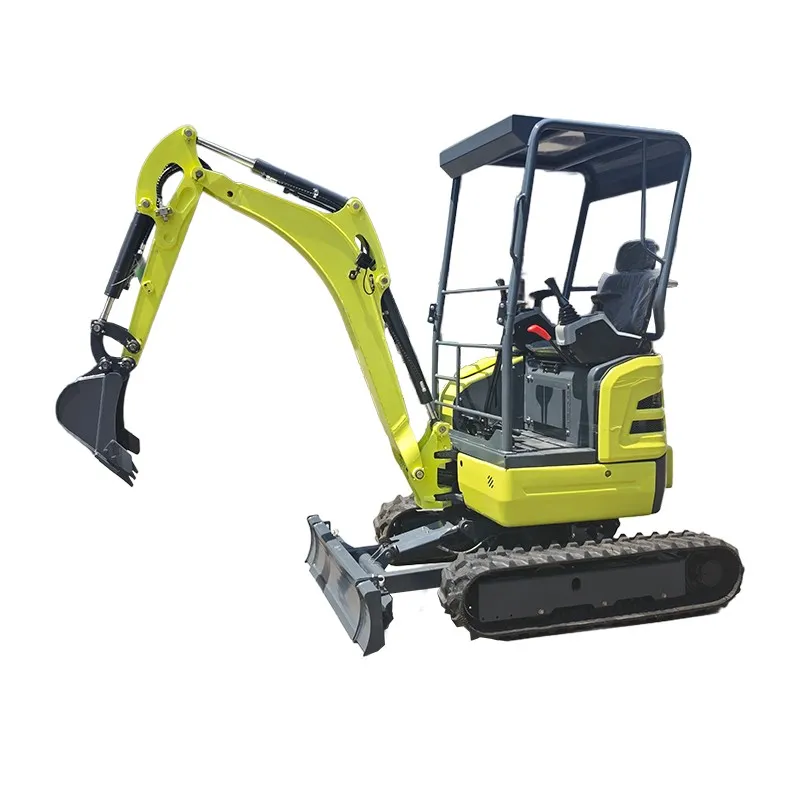
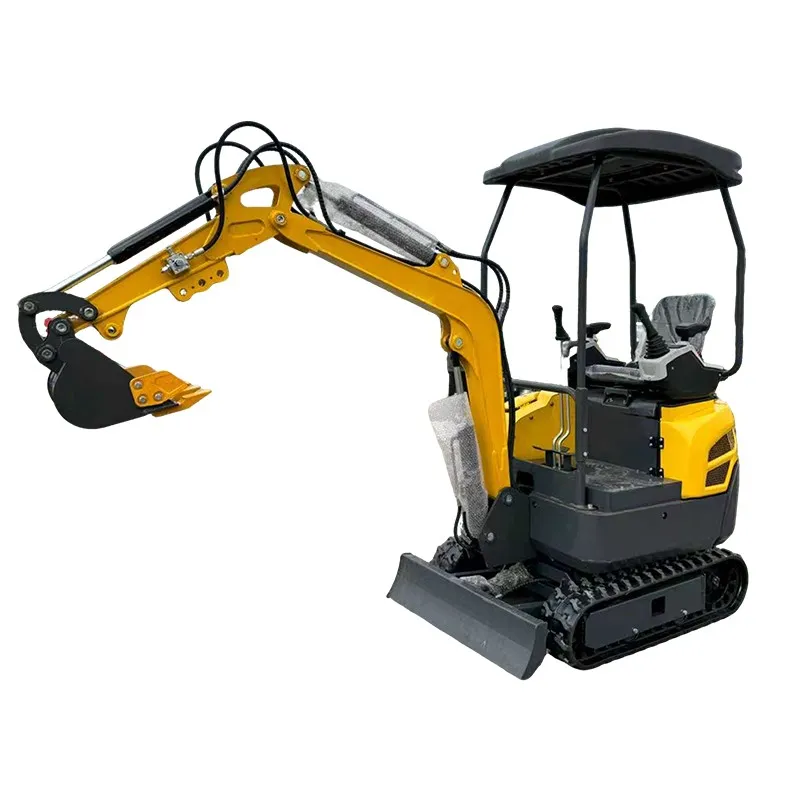
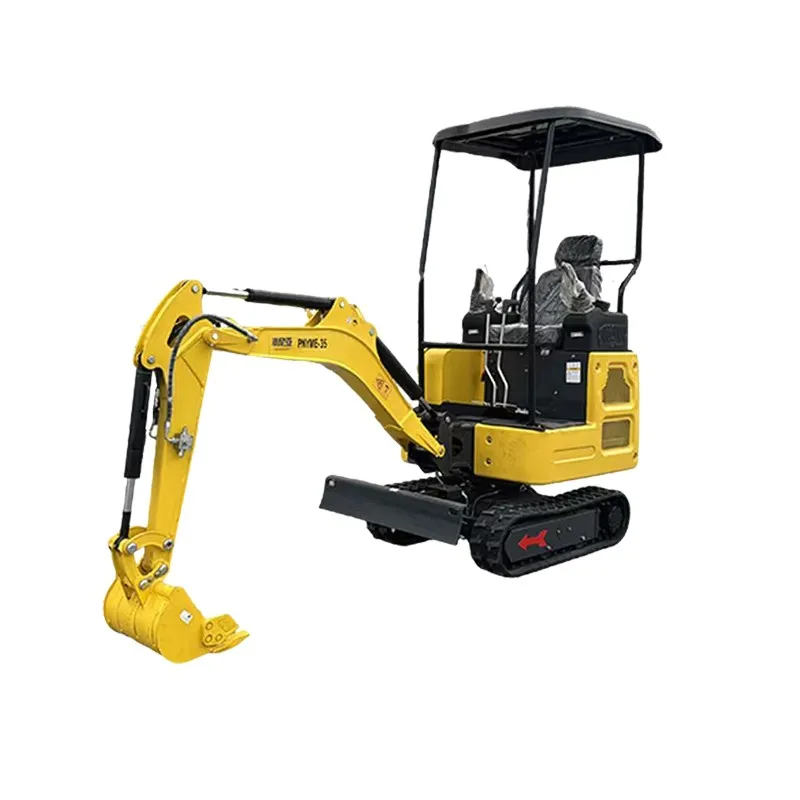
Eco-friendly Small Excavator
When you hear 'eco-friendly small excavator', most folks immediately jump to electric models. That's the first misconception. It's not just about the power source; it's a systems approach—emissions, noise, fluid leaks, even the longevity and recyclability of components. I've seen too many projects where a so-called 'green' machine was chosen just for its battery, only to create a logistical nightmare on a remote site with no charging infrastructure. The real conversation should start with the application, not the label.
The Electric Push and Its Real-World Hiccups
The industry push towards electric is undeniable. For urban landscaping, indoor demolition, or work in noise-sensitive zones, a solid 1.8-ton electric model is a game-changer. The zero local emissions and drastically reduced noise are tangible benefits. But here's the catch we learned the hard way: duty cycle and temperature. We trialed a well-known European electric mini-excavator on a suburban utility job. It performed brilliantly for four hours. Then, as the digging got tougher and the ambient temperature climbed past 95°F, the battery management system throttled the power output to prevent overheating. We were effectively running at 60% capacity, killing our schedule. It wasn't the machine's fault; it was an application mismatch. The sales specs never highlight that thermal derating curve.
This leads to the critical question of total cost of ownership. The upfront price is steep, often double that of a diesel equivalent. You're betting on saving fuel and maintenance costs. But if your operation isn't set up for overnight charging, or if a battery pack fails out of warranty, those savings evaporate. I know a contractor who had to replace a pack after three years—the cost was nearly that of a new conventional machine. It set their green transition back years.
So, does this mean electric is a failure? Absolutely not. For a company like Shandong Pioneer Engineering Machinery Co., Ltd, which exports globally, the key is offering the right tool for the market. On their platform at https://www.sdpioneer.com, you'll see they've navigated this by providing options. They understand that a contractor in Germany facing strict inner-city emission zones has a completely different need than one in rural Australia. Their approach isn't about pushing one technology, but about fitting the machine to the regulatory and physical environment. That's practical eco-friendliness.
The Unsung Hero: Advanced Diesel and Hybrid Systems
While electric grabs headlines, the quiet evolution in diesel technology is where a lot of the real, reliable 'green' gains are happening for small excavators. We're talking about Tier 4 Final and Stage V engines. The common gripe was that the exhaust treatment systems (DPFs, SCR) were too bulky for compact equipment, robbing power and being a maintenance headache. That's changed. The newer integrated systems are surprisingly robust.
I remember testing a 3.5-ton model from a Japanese manufacturer a few years back. It had a DPF that supposedly only needed regeneration every few hundred hours. On a tight trenching job with constant low-load, low-RPM work—typical for pipe laying—the soot load built up faster than anticipated. We got a derate warning in the middle of a critical section. The solution wasn't a shop visit, but a manual parked regeneration that took 25 minutes. It was an operational pause we hadn't planned for. The lesson? Eco-friendly also means operator training. The machine was clean, but the workflow needed adjustment.
Then there are hydraulic system innovations. Variable-flow hydraulics that match pump output to actual demand, not just running at full pressure constantly. This cuts fuel consumption by 15-20% on some models I've operated. It's less sexy than an electric motor, but the fuel savings and reduced thermal stress on the hydraulic oil are massive for both the environment and the owner's wallet. This is the kind of detail you appreciate after thousands of hours in the seat, not from reading a brochure.
Material Efficiency and On-Site Impact
Eco-friendliness extends beyond the exhaust pipe. Consider the machine's footprint—literally. A compact, well-designed undercarriage that minimizes ground pressure allows work on sensitive terrain without needing to lay down excessive matting or gravel. I've used a small excavator with a patented wide-track option for a wetland boardwalk project. We avoided damaging the root systems of the perimeter trees, which a heavier or less maneuverable machine would have torn up. That's an environmental win that never gets quantified in an emissions chart.
Then there's the issue of hydraulic fluid. Leaks are inevitable over a machine's life. The shift to biodegradable hydraulic oils is significant, especially for municipalities working near waterways. It's a more expensive fluid, but the cost of a spill cleanup with conventional oil is astronomical by comparison. We started specifying it on all our municipal contracts after a minor leak on a job near a storm drain caused a huge regulatory fuss. The machine itself wasn't at fault, but its fluid was.
Durability is the ultimate form of sustainability. A machine that lasts 10,000 hours instead of 7,000 before a major overhaul creates less waste and consumes fewer resources over its lifespan. This is where manufacturing philosophy matters. A company with two decades of development, like Shandong Pioneer, which started in 2004 and recently expanded its facilities, has likely iterated on designs to improve structural integrity and component life. Their long-term presence in markets from North America to Europe suggests they're building machines to last in diverse conditions, which is a fundamental, if overlooked, aspect of being eco-friendly.
The Dealer and Support Network: The Green Link Everyone Forgets
You can have the most environmentally advanced machine on paper, but if it's down for weeks waiting for a proprietary part or a specialist technician, you've lost all the efficiency gains. The carbon footprint of air-freighting a controller from overseas is substantial. A practical eco-friendly small excavator needs a support ecosystem that minimizes downtime and logistics.
This is a major advantage for manufacturers with established global logistics. When I see that a company like Shandong Pioneer operates through Hexin for manufacturing and Pioneer for overseas trade, it tells me they've structured for international support. For a customer in Canada or Australia, knowing there's a dedicated trade channel and likely regional parts stocking makes the ownership proposition more viable. A reliable machine that stays working is greener than a theoretically perfect one that's often idle.
Furthermore, a good dealer provides the guidance to actually achieve the machine's eco-potential. They should be the ones explaining the real-world implications of battery care, DPF regeneration cycles, or the proper break-in procedure for a new hybrid system. Without this, the operator falls back on old habits, and the technology's benefits are never fully realized.
Looking Ahead: It's About the Right Tool, Not Just a New Tool
The future isn't exclusively electric, diesel, or hybrid. It's context-specific. For a big rental fleet in a metropolitan area, a fleet of electric minis makes perfect sense. They can be centrally charged, deployed on short-duration city jobs, and rotated easily. For a general contractor working on varied, remote sites, a modern, efficient diesel or a diesel-electric hybrid might be the truly responsible choice, balancing performance, reliability, and overall emissions across the entire project lifecycle.
The goal for professionals in this field is to cut through the marketing. When evaluating an eco-friendly small excavator, the checklist should be brutal: What is the real, site-tested duty cycle? What is the total cost of ownership over 5 years, including energy, maintenance, and potential downtime? What is the manufacturer's track record for durability and parts support? How does its design minimize on-site environmental disturbance beyond just tailpipe emissions?
Companies that have weathered market cycles, like the one behind https://www.sdpioneer.com, having grown from a 1,600 square meter facility to a new base after 20 years, understand this. Their customer trust, as noted, is built on providing workable solutions, not just following trends. The eco-friendly tag is earned in the mud and grit of job sites worldwide, through machines that help contractors get work done efficiently, cleanly, and profitably—day in and day out. That's the only standard that matters.
Related Products
Related Products