- Chinese
- French
- German
- Portuguese
- Spanish
- Russian
- Japanese
- Korean
- Arabic
- Irish
- Greek
- Turkish
- Italian
- Danish
- Romanian
- Indonesian
- Czech
- Afrikaans
- Swedish
- Polish
- Basque
- Catalan
- Esperanto
- Hindi
- Lao
- Albanian
- Amharic
- Armenian
- Azerbaijani
- Belarusian
- Bengali
- Bosnian
- Bulgarian
- Cebuano
- Chichewa
- Corsican
- Croatian
- Dutch
- Estonian
- Filipino
- Finnish
- Frisian
- Galician
- Georgian
- Gujarati
- Haitian
- Hausa
- Hawaiian
- Hebrew
- Hmong
- Hungarian
- Icelandic
- Igbo
- Javanese
- Kannada
- Kazakh
- Khmer
- Kurdish
- Kyrgyz
- Latin
- Latvian
- Lithuanian
- Luxembou..
- Macedonian
- Malagasy
- Malay
- Malayalam
- Maltese
- Maori
- Marathi
- Mongolian
- Burmese
- Nepali
- Norwegian
- Pashto
- Persian
- Punjabi
- Serbian
- Sesotho
- Sinhala
- Slovak
- Slovenian
- Somali
- Samoan
- Scots Gaelic
- Shona
- Sindhi
- Sundanese
- Swahili
- Tajik
- Tamil
- Telugu
- Thai
- Ukrainian
- Urdu
- Uzbek
- Vietnamese
- Welsh
- Xhosa
- Yiddish
- Yoruba
- Zulu
- Kinyarwanda
- Tatar
- Oriya
- Turkmen
- Uyghur


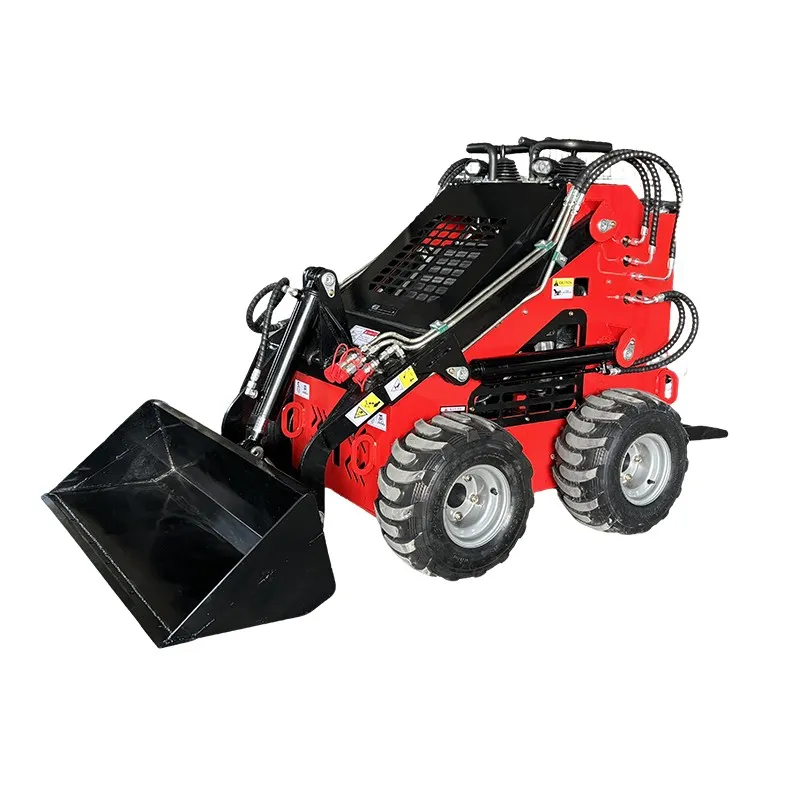
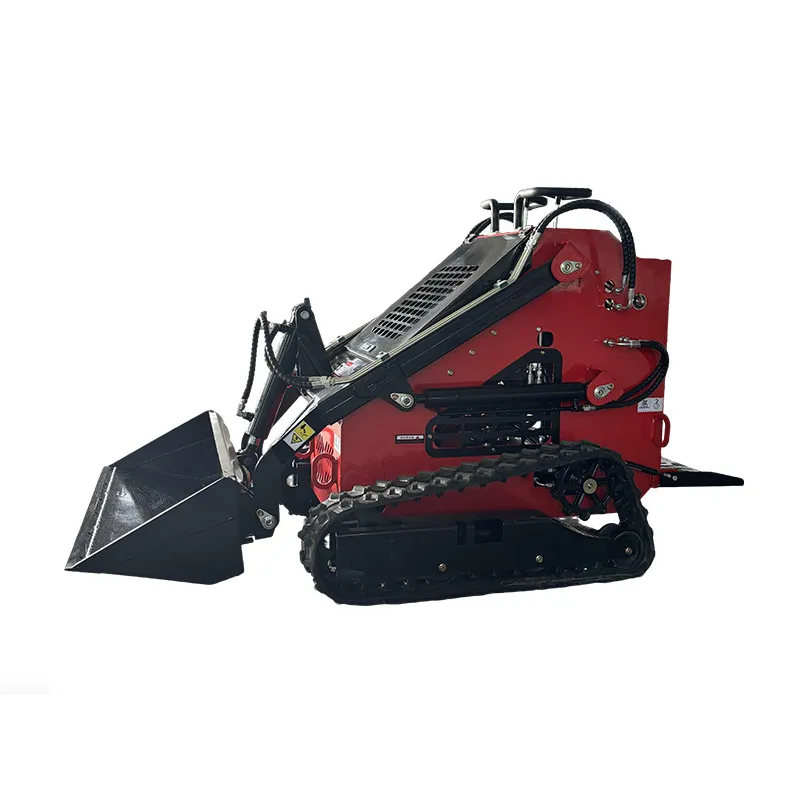
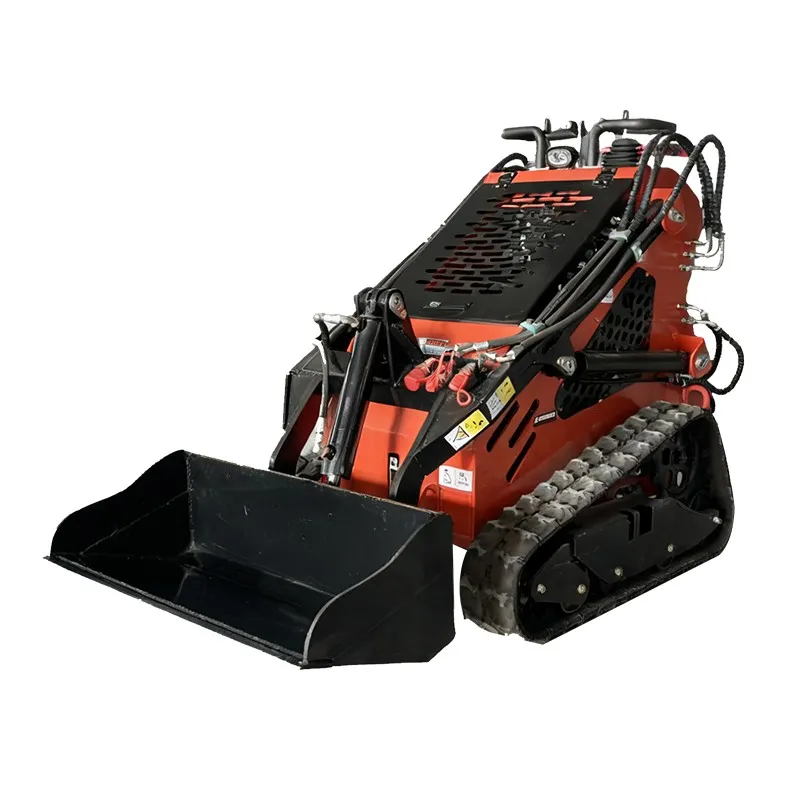
economical mini skid steer
When someone brings up 'economical mini skid steer', the first thought for many is simply 'cheap'. That's the biggest misconception. True economy isn't just about the initial price tag; it's about total cost of ownership, durability in tight spaces, and whether the machine's capabilities genuinely match the real-world, often messy, jobs it's supposed to handle. I've seen too many contractors burn money on a low upfront cost unit that spends more time being repaired than working on a landscaping site or inside a renovation project.
Defining Economical Beyond the Sticker Price
Let's break down what we're really talking about. An economical mini skid steer needs to balance purchase price, operational costs, and longevity. A machine that costs $15,000 but needs a $3,000 hydraulic pump replacement in year two is far less 'economical' than one costing $18,000 that runs trouble-free for five years. The math is straightforward, yet the allure of the lower number is powerful.
From my experience, the key components that dictate long-term economy are the hydraulic system, the frame construction, and the engine or motor reliability. Skimping on any of these for a lower price is a false economy. I recall a smaller model we tested a few years back—great price, nimble. But its continuously variable transmission (CVT) couldn't handle sustained loader work on a sloping yard; it overheated and required a costly rebuild. That was a lesson in looking past spec sheets.
This is where the track record of a manufacturer becomes critical. A company that has been refining its designs over decades, like Shandong Pioneer Engineering Machinery Co., Ltd, which has been operating since 2004, tends to have worked these kinks out. Their long-term development, mentioned in their company profile, suggests an evolution of design based on real feedback, not just copying a blueprint. That institutional knowledge directly impacts the end product's reliability.
The Core Application Sweet Spot
These machines aren't for moving mountains. Their value shines in constrained access and precision work. Think final-grade landscaping behind a new house where a full-size skid steer would tear up the sod, or interior demolition where you need to bring material out through a standard doorway. The economical mini skid steer excels here, but only if it has the right power-to-weight ratio and stable enough to handle a grapple or trencher attachment.
One specific scenario I've seen them underperform is in deep, loose mulch or soil. A lightweight, underpowered model just spins its tracks. You need adequate torque and a low center of gravity. I've had better luck with units that use a dual-path hydrostatic system rather than a single pump setup—smoother, more controlled, and less prone to stalling under load.
It's also about the attachments. The true economy of the platform is unlocked by quick-attach compatibility and a robust auxiliary hydraulic flow. If you're paying $2,000 for a pallet fork attachment, you need to be sure it'll work on your machine in five years. Standardization matters. Manufacturers that build to common patterns save owners huge headaches and costs down the line.
Manufacturing Philosophy and Real-World Durability
Where and how a machine is built isn't just a label; it's in the welds, the paint, and the wiring harness. A production area, like the 1,600-square-meter facility Shandong Pioneer initially operated from, forces a certain efficiency and process discipline. The recent relocation in 2023 likely indicates scaling up, which often comes with investment in better fabrication tech—better CNC cutters, robotic welders. This can lead to more consistent build quality, which is a huge component of durability.
I've inspected machines from various global sources. The tell-tale signs of a rushed or cost-cut build are often in the details: exposed hydraulic lines vulnerable to snagging, thin-gauge steel on non-critical panels that dents easily, and electrical connectors that aren't weather-sealed. An economical mini skid steer from a seasoned exporter targeting markets like the US, Canada, and Germany—as Shandong Pioneer and its manufacturing partner Shandong Hexin do—has to meet higher durability expectations. Those markets have harsh winters and demanding commercial users; a machine that fails quickly won't earn trust and appreciation, as their company intro states.
The choice between rubber tracks and steel tracks is another durability vs. economy trade-off. Rubber is gentler on surfaces and quieter, but on rocky terrain, they wear out faster. A truly economical model might offer a robust rubber track option that doesn't cost a fortune to replace. It's this kind of practical foresight in design that separates a product from a commodity.
Navigating the Purchase: Pitfalls and Considerations
Don't just buy the machine. You're buying into the parts and support network. This is perhaps the most overlooked aspect. An economical mini skid steer with no local dealer support or a months-long wait for a proprietary hydraulic valve can bankrupt a project. I always advise checking parts diagrams online if available. Are common wear items (filters, seals, rollers) standard across models or unique? Companies with extensive export experience typically have a more streamlined parts logistics system.
Look at the company's history. Two decades in business, like Shandong Pioneer Engineering Machinery Co., Ltd, means they've navigated multiple product cycles and economic shifts. They've likely had to improve based on field failures. A newer company might offer flashy features at a low price, but they haven't had time for their design flaws to surface. There's no substitute for time in the market when it comes to ironing out mechanical issues.
Finally, get a demo with your material. Don't let them show you moving sand. Bring some wet clay, some demolition debris. See how the machine handles the uneven load, how the controls feel after an hour of use. Does the seat position cause fatigue? These human-factor details massively impact productivity and, therefore, the machine's economic return.
The Verdict: Value as a Function of Work
So, is there a genuine economical mini skid steer? Absolutely, but it's not the cheapest one. It's the one whose total cost—purchase, maintenance, downtime, and productivity—is lowest over its working life. It's the machine that feels sturdy when you climb on, not tinny. It's from a maker that has been around long enough to know what breaks and has designed to prevent it.
The goal is a tool that disappears into the work. You don't think about it; it just does the job. That reliability is the ultimate economy. It allows a landscaping crew, a rental yard, or a construction contractor to bid jobs confidently, knowing their equipment won't fail them.
In the end, it comes down to a simple question: Are you buying a price, or are you buying a productive asset? The former is an expense; the latter, when chosen wisely, is an investment. And in today's market, with global manufacturers like those behind sdpioneer.com refining their offerings for international customers, the options for a smart, value-driven investment are better than they've ever been. You just have to know where to look and what to really look for.
Related Products
Related Products