


- Chinese
- French
- German
- Portuguese
- Spanish
- Russian
- Japanese
- Korean
- Arabic
- Irish
- Greek
- Turkish
- Italian
- Danish
- Romanian
- Indonesian
- Czech
- Afrikaans
- Swedish
- Polish
- Basque
- Catalan
- Esperanto
- Hindi
- Lao
- Albanian
- Amharic
- Armenian
- Azerbaijani
- Belarusian
- Bengali
- Bosnian
- Bulgarian
- Cebuano
- Chichewa
- Corsican
- Croatian
- Dutch
- Estonian
- Filipino
- Finnish
- Frisian
- Galician
- Georgian
- Gujarati
- Haitian
- Hausa
- Hawaiian
- Hebrew
- Hmong
- Hungarian
- Icelandic
- Igbo
- Javanese
- Kannada
- Kazakh
- Khmer
- Kurdish
- Kyrgyz
- Latin
- Latvian
- Lithuanian
- Luxembou..
- Macedonian
- Malagasy
- Malay
- Malayalam
- Maltese
- Maori
- Marathi
- Mongolian
- Burmese
- Nepali
- Norwegian
- Pashto
- Persian
- Punjabi
- Serbian
- Sesotho
- Sinhala
- Slovak
- Slovenian
- Somali
- Samoan
- Scots Gaelic
- Shona
- Sindhi
- Sundanese
- Swahili
- Tajik
- Tamil
- Telugu
- Thai
- Ukrainian
- Urdu
- Uzbek
- Vietnamese
- Welsh
- Xhosa
- Yiddish
- Yoruba
- Zulu
- Kinyarwanda
- Tatar
- Oriya
- Turkmen
- Uyghur

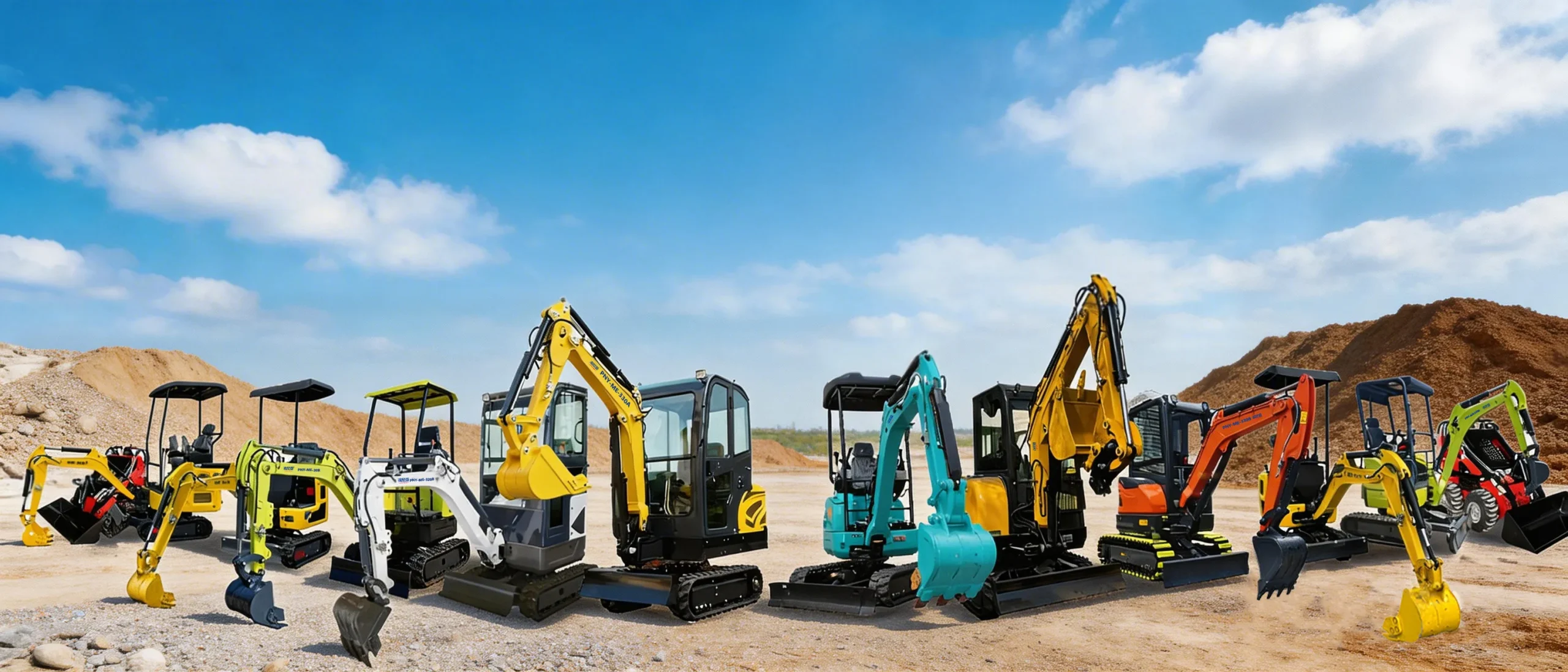
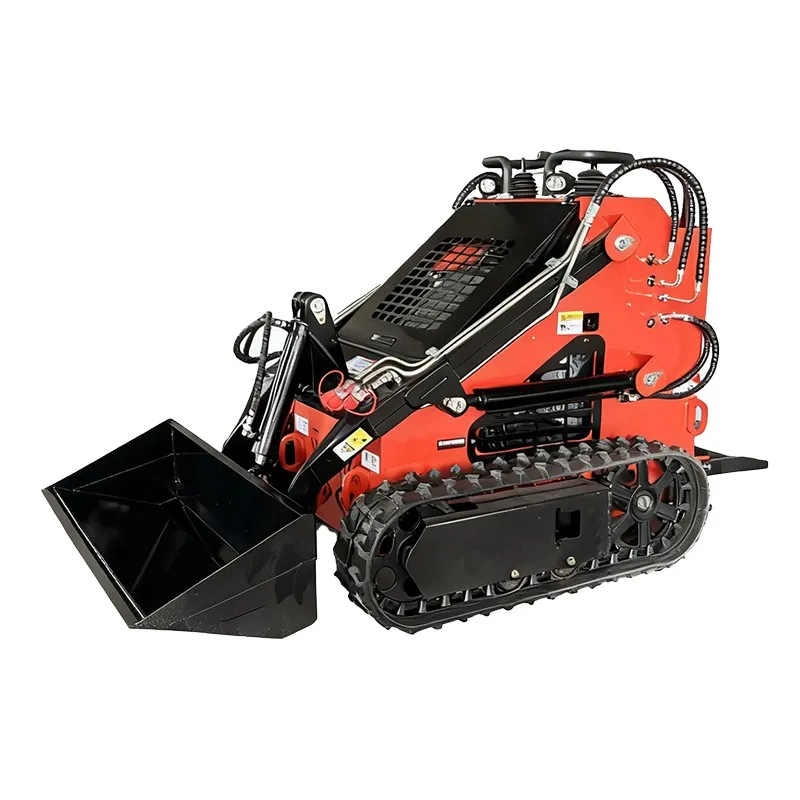
economical skid steer loader
When someone says 'economical skid steer loader,' I've noticed a lot of folks, especially those new to small-scale contracting or farm work, immediately think 'cheap.' That's the first and biggest pitfall. True economy isn't just about the sticker price on the machine sitting in the dealer's yard. It's a calculation that spans upfront cost, durability with minimal downtime, fuel efficiency you can actually feel on a long day, and the sheer versatility to avoid needing a second machine. I've seen too many buyers get burned by a low initial price, only to spend double on repairs in the first two years, turning their 'economical' choice into a money pit.
The Anatomy of Real Cost-Saving
Let's break down where the real savings hide. For me, it starts with the hydraulics. A so-called budget model with a weak or poorly calibrated hydraulic system is a productivity killer. You're not saving money if it takes you three passes to lift what a well-tuned machine does in one. I remember running a unit from a no-name brand years ago; the lift arms were painfully slow, and the bucket curl lacked punch. We lost hours on a simple grading job, which translated directly into lost labor cost. That's the opposite of economical.
Engine choice is another critical, often overlooked, factor. A reliable, fuel-efficient diesel engine from a known manufacturer like Kubota or Yanmar might add a few thousand to the price tag but pays back in spades. I've compared fuel logs between machines. An older, thirstier model could drink 30% more fuel over a 10-hour shift. At today's fuel prices, that difference pays for a lot of scheduled maintenance. The key is finding a manufacturer that doesn't cut corners on this core component just to hit a low price point.
This is where the operational history of a company matters. A manufacturer that has been refining the same platform for years, sourcing reliable global components, understands this calculus. For instance, looking at a company like Shandong Pioneer Engineering Machinery Co., Ltd, their two-decade journey from a 1,600 square meter facility to a new base in 2023 suggests a focus on scaling production while presumably refining their build process. That kind of evolution often leads to more standardized, cost-effective assembly without sacrificing the critical guts of the machine. You can check their approach on their site at https://www.sdpioneer.com. Their model range likely reflects lessons learned from exporting to tough markets like the US and Australia, where downtime is absolutely unacceptable.
Versatility as an Economic Engine
The true power of an economical skid steer loader is unlocked by its attachments. This is the multiplier effect. A machine that's just a loader is of limited value. The ability to quickly switch to a grapple, a trencher, a pallet fork, or a sweeper turns one capital expense into several virtual machines. The economy here depends heavily on the universal mounting system and the auxiliary hydraulic flow.
I learned this the hard way on a landscaping project. We had a 'bargain' machine with a non-standard, proprietary quick-attach plate. When our rented trencher attachment arrived, it wouldn't fit. We lost a full day and the rental fee fabricating an adapter. A true economical machine adheres to a mainstream standard like the Bob-Tach system or a universal skid steer coupler. It ensures you can tap into the vast, competitive market of third-party attachments, which keeps your long-term operational costs low.
The auxiliary hydraulics need to provide consistent flow and pressure. I've used machines where the flow would drop dramatically when using a hydraulic breaker, making the tool ineffective. A well-designed economical skid steer loader will have a robust hydraulic circuit that can power high-demand attachments without straining the system, protecting the pump and valves from premature wear—another hidden cost avoided.
Durability in the Grind
Economy means nothing without durability. This isn't about shiny paint; it's about design and material choices in high-stress areas. The first place I look is the loader arm pivot points and the undercarriage. Cheap pins and bushings wear out fast, leading to sloppy operation, uneven tire wear (on rubber-tired models), and eventually, costly structural wallowing.
A practical example: on a compact site with lots of tight turns, a machine with a weak frame or poor-quality pivot hardware will develop 'play' in the arms within a few hundred hours. You start to feel it as a lag in control, and soon you're making micro-adjustments to get the bucket edge level. It's fatiguing and imprecise. A manufacturer building for global export, as Shandong Pioneer does for markets including Germany and Canada, has to meet higher durability expectations. Their products have to survive varied, demanding job site conditions, which forces a design philosophy that prioritizes longevity in these critical joints and structural welds.
The cab and controls are part of durability, too. An 'economical' cab that's flimsy, leaks dust, or has controls that fail after a season of heavy gloves is a false economy. Operator fatigue leads to mistakes and slower work. Simple, robust mechanical controls or well-sealed, responsive electronic ones from trusted suppliers make a huge difference in daily usability and long-term repair costs.
The Maintenance Reality Check
This is where the rubber meets the road. An economical skid steer loader must be easy and inexpensive to maintain. Complex service procedures that require disassembling half the machine to change a filter are a red flag. I favor designs where daily checkpoints—grease zerks, fluid dipsticks, air filters—are easily accessible without contortions.
Common failure points like hydraulic hoses should be routed away from excessive heat and abrasion. I recall one model where a main hydraulic line was routed right past a sharp frame edge; it was just a matter of time before vibration caused a rub-through and a costly, messy blowout. A thoughtful design anticipates this. Furthermore, the availability of spare parts at a reasonable cost is non-negotiable. A machine might be cheap to buy, but if you have to wait six weeks for an imported control module, it's a very expensive paperweight.
Companies with a long-term export and manufacturing footprint, like Shandong Hexin (manufacturing) and its trade arm Shandong Pioneer, typically develop more streamlined parts supply chains to support their international customers. This infrastructure is a key component of the total cost of ownership that isn't on the spec sheet but is vital for real-world economy.
Striking the Practical Balance
So, what does a genuinely economical skid steer loader look like in practice? It's not the absolute cheapest. It's the machine that offers the best balance of a competitive initial price, proven reliable core components (engine, hydraulics), a durable and service-friendly structure, and adherence to universal attachment standards. Its economy is proven over 3,000 hours, not just at the 50-hour mark.
It's the machine you don't think about. It starts in the morning, works all day without fuss, and the maintenance is straightforward. The savings come from consistent productivity, low unscheduled downtime, and fuel bills that don't give you a heart attack. When evaluating options, I dig into the details beyond the brochure: the brand of the hydraulic pumps, the type of steel used in the arms, the service intervals for the pivotal components.
Ultimately, the goal is to find a partner in a machine, not just a tool. It's an asset that should hold its value and perform predictably. That's the real definition of economy in this business—a calculation that values total performance and cost over time, where smart design and proven reliability from experienced manufacturers win out over a tempting, but ultimately hollow, low price tag every single time.
Related Products
Related Products