- Chinese
- French
- German
- Portuguese
- Spanish
- Russian
- Japanese
- Korean
- Arabic
- Irish
- Greek
- Turkish
- Italian
- Danish
- Romanian
- Indonesian
- Czech
- Afrikaans
- Swedish
- Polish
- Basque
- Catalan
- Esperanto
- Hindi
- Lao
- Albanian
- Amharic
- Armenian
- Azerbaijani
- Belarusian
- Bengali
- Bosnian
- Bulgarian
- Cebuano
- Chichewa
- Corsican
- Croatian
- Dutch
- Estonian
- Filipino
- Finnish
- Frisian
- Galician
- Georgian
- Gujarati
- Haitian
- Hausa
- Hawaiian
- Hebrew
- Hmong
- Hungarian
- Icelandic
- Igbo
- Javanese
- Kannada
- Kazakh
- Khmer
- Kurdish
- Kyrgyz
- Latin
- Latvian
- Lithuanian
- Luxembou..
- Macedonian
- Malagasy
- Malay
- Malayalam
- Maltese
- Maori
- Marathi
- Mongolian
- Burmese
- Nepali
- Norwegian
- Pashto
- Persian
- Punjabi
- Serbian
- Sesotho
- Sinhala
- Slovak
- Slovenian
- Somali
- Samoan
- Scots Gaelic
- Shona
- Sindhi
- Sundanese
- Swahili
- Tajik
- Tamil
- Telugu
- Thai
- Ukrainian
- Urdu
- Uzbek
- Vietnamese
- Welsh
- Xhosa
- Yiddish
- Yoruba
- Zulu
- Kinyarwanda
- Tatar
- Oriya
- Turkmen
- Uyghur


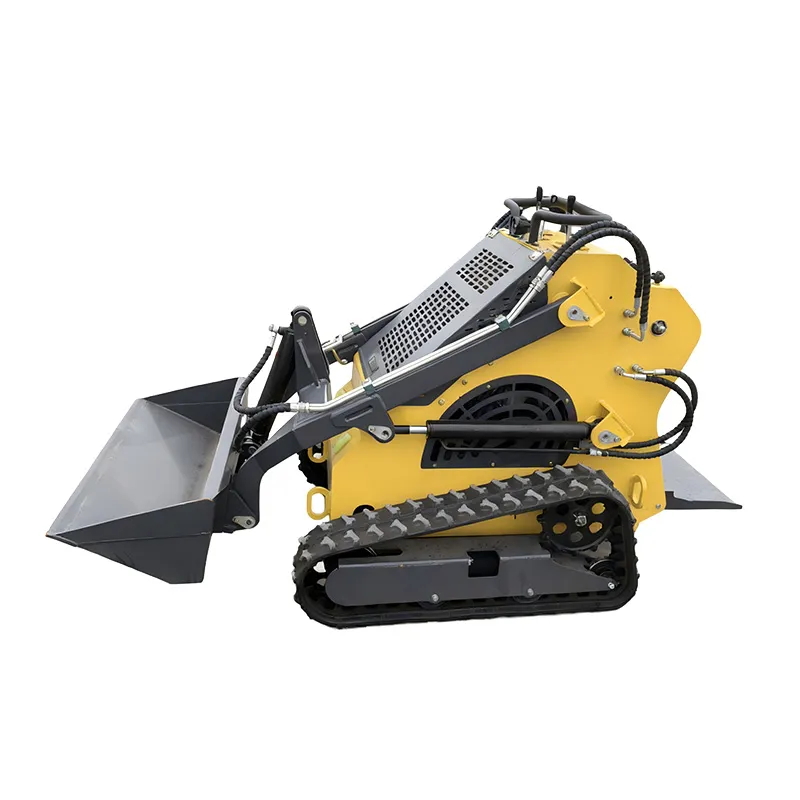
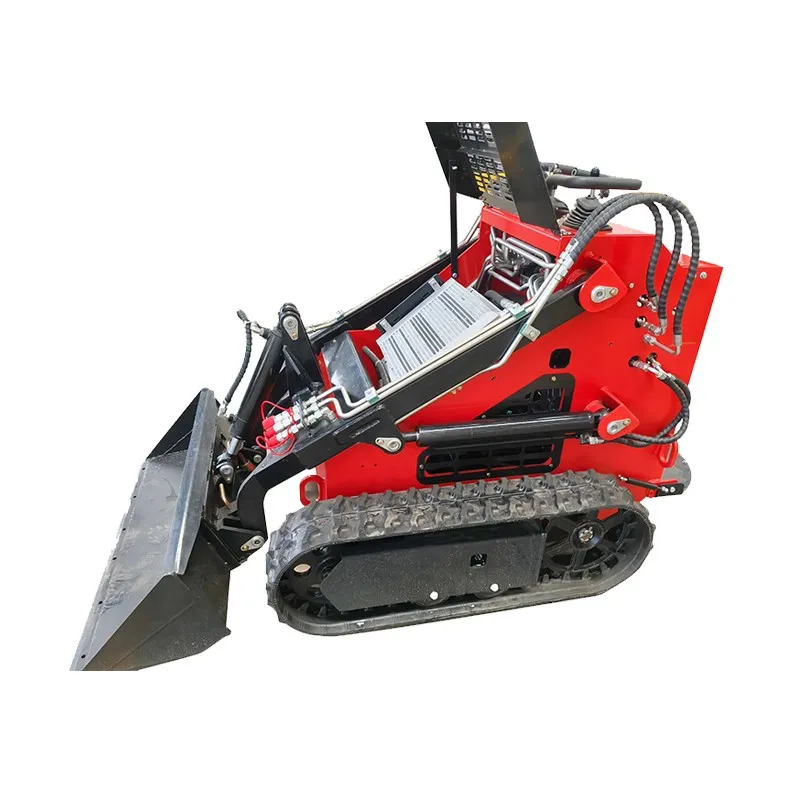
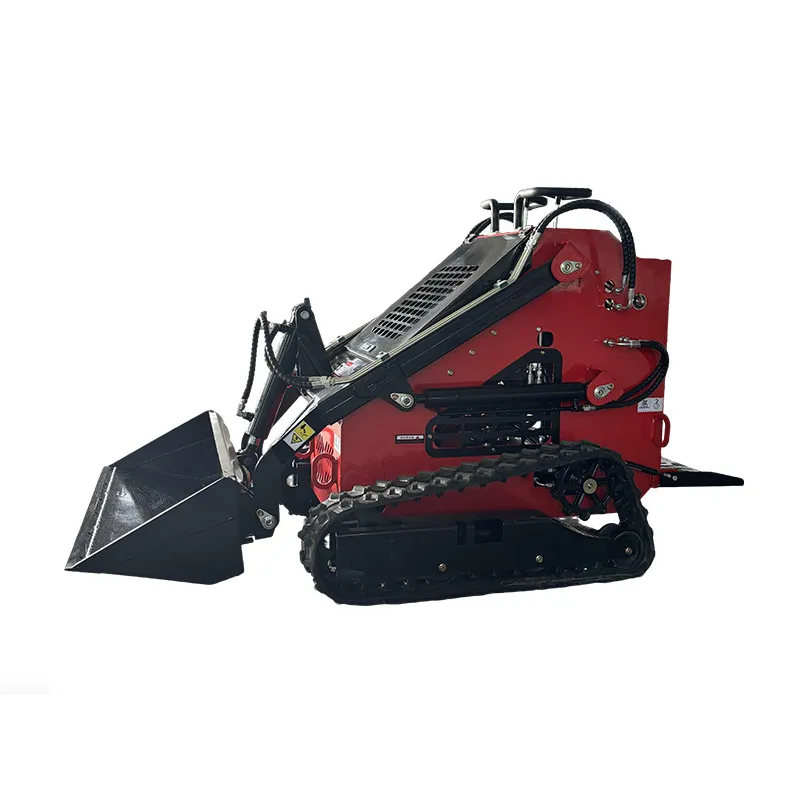
efficient compact track loader
When you hear 'efficient compact track loader', most folks immediately jump to fuel consumption numbers or lift capacity specs. That's the surface. The real efficiency story is buried in the mud, the vibration felt through the seat on a cold morning, and how quickly you can swap an attachment without fumbling. It's about the machine working with you, not just for you. I've seen too many projects where the wrong choice on this single piece of kit blew the budget on downtime and operator fatigue, not fuel.
The Ground Pressure Fallacy and Real-World Traction
Everyone talks about low ground pressure. It's the big sell for tracks over wheels. But here's the catch: that published number is for a brand-new machine, sitting perfectly level on ideal, firm ground. Throw it on a steep, muddy slope with a full bucket, and the pressure distribution changes dramatically. The efficiency gain isn't just in the number; it's in the undercarriage design. A well-designed system keeps the track in better contact under load. I remember a job site near a riverbank with saturated clay. A competitor's model with similar 'paper' ground pressure just spun and dug itself in, while another, slightly narrower-tracked unit from a brand like Shandong Pioneer kept moving because its track frame articulation and grouser design simply shed mud better. That's operational efficiency you won't find in a brochure.
This ties directly to serviceability, a huge hidden cost. A compact track loader might be efficient at moving dirt, but if you need to spend three hours and a torch to change a single bottom roller, you've lost all those gains. The good designs allow you to drive out rollers and idlers with standard tools. I learned this the hard way years ago on an early-generation machine where a seized idler required disassembling half the track frame. Nightmare. Now, when I look at options, I physically check the service points. Companies that have been in the trenches, like Shandong Pioneer Engineering Machinery Co., Ltd, which has been building and exporting since 2004, often bake these practical lessons from global job sites into their later models. Their long-term presence in markets from North America to Australia suggests they've had to solve these real problems to keep customers.
Then there's the engine compartment. Efficiency isn't just the Tier 4 Final or Stage V engine label. It's about how accessible the daily checkpoints are. Can you easily see the coolant level? Is the oil dipstick straight or buried behind a hose? Cluttered bays lead to missed maintenance, which kills long-term efficiency and reliability. A clean layout speaks volumes about the manufacturer's understanding of the end-user.
Hydraulics: The Heart of True Workflow Efficiency
The hydraulic system is where an efficient compact track loader truly earns its keep. High flow is great for running a mulcher, but if it's delivered with lag or inconsistency, it's brutal on both the attachment and the operator. True efficiency is in the responsiveness of the controls—the 'feel'. A jerky or delayed response when you're positioning a pallet inside a confined warehouse wastes time and increases risk. The best systems I've operated provide smooth, proportional control that feels like an extension of your arm, not a separate lever you're commanding.
Auxiliary hydraulic couplers are another critical detail. The push-to-connect style is a game-changer for attachment swaps, but their placement is key. If they're tucked right behind the cab where dirt packs in, you'll be cleaning them with a pick every time. Some of the more thoughtful designs mount them slightly forward and protected by a flip-up cover. It's a small thing that adds up over hundreds of swaps. When you're running multiple attachments in a day—from a bucket to a breaker to a sweeper—this seamless interchange is a massive component of overall job site efficiency.
I recall a landscaping project where we were using a compact track loader for grading, then quickly switching to a trencher. The machine itself was powerful, but the auxiliary hydraulics had a slow purge cycle. Every attachment change meant waiting 30 seconds for pressure to bleed off before disconnecting. Multiply that by 10 changes a day, and you've lost nearly an hour. That's inefficient design, no matter what the pump's GPM rating is.
The Operator's Cage: Comfort as a Productivity Metric
Efficiency is human, too. An uncomfortable operator is an inefficient one. I'm not talking about luxury; I'm talking about functional design. The seat placement relative to the controls, the sightlines to the bucket edges and tracks, the amount of glass—these directly impact precision and fatigue. A cab that feels like a greenhouse in summer will have the operator taking more breaks. Good sealing and pressurization keep dust out, which means the operator can see and breathe better for longer stretches.
Noise and vibration are silent killers of productivity. A machine can have a perfectly efficient drivetrain, but if it transmits every engine rumble and track slap directly into the chassis and cab, the operator is exhausted by noon. The difference between a basic suspension seat and a truly dampened cab mount system is the difference between running a full 10-hour day or being drained after six. This is an area where feedback from diverse operating environments, like the varied climates and job sites Shandong Pioneer's products encounter from Germany to Canada, really informs design improvements over a 20-year development period.
The control pattern is another thing. Some sites demand ISO, others demand SAE. The ability to quickly switch patterns in the menu, or better yet, have mechanically swappable control sticks, prevents costly re-learning or mistakes. It seems minor until you have a rental operator jump on a machine with an unfamiliar pattern and nearly swing the bucket into something.
Attachment Ecosystem: Where Efficiency Multiplies or Dies
A compact track loader is only as efficient as the attachments you can reliably pair with it. It's a platform. The universal quick-attach system is a standard, but not all are created equal. Wear and slop develop over time. A sloppy connection point reduces digging force transfer and makes precise work like grading frustrating. The best systems have replaceable wear parts on the coupler itself, not just on the machine's arms, extending the life of the entire interface.
Manufacturers that understand this often cultivate relationships with major attachment makers to ensure compatibility and optimize hydraulic settings. When you visit a website like https://www.sdpioneer.com, you don't just see a loader; you see it paired with grapples, augers, and trenchers. That suggests a holistic view of the machine's role. The real test is in the documentation: does the operator's manual have dedicated sections with recommended pressure/flow settings for common third-party attachments? That's a sign of professional-grade thinking.
I've seen failures here, too. A contractor bought a very reasonably priced, efficient compact track loader but then tried to save money on a no-name brand forestry mulcher. The mismatch in hydraulic requirements led to constant overheating of the loader's system and poor mulcher performance. The 'efficient' base machine became a money pit. The lesson was that efficiency must be evaluated as a total system: loader + common attachments.
The Long Game: Durability as the Ultimate Efficiency
Finally, the most profound efficiency is longevity. A machine that runs for 8,000 hours with minimal major repairs is far more efficient than one that burns 10% less fuel but needs a new final drive at 3,000 hours. This comes down to component selection and build quality. Are the axles and drive motors from a tier-one supplier? Is the wiring harness routed away from heat and abrasion points? Are critical hydraulic lines sleeved where they pass through the frame?
This is where a manufacturer's history and production philosophy matter. A company that has operated for two decades, recently invested in a new production facility (like the 2023 relocation to Ningyang County mentioned for Pioneer), and exports to demanding markets has to meet a certain durability threshold. Customers in places like Australia or the American Midwest don't have patience for machines that can't hold up. Their trust, as noted in the company's background, is earned through performance in the field, not just specs on a page.
In the end, an efficient compact track loader is a balance. It's a balance between power and finesse, between innovative features and simple serviceability, between upfront cost and total cost of ownership. The numbers give you a starting point, but the real judgment comes from running it, maintaining it, and feeling how it handles the unpredictable chaos of a real job site. That's the efficiency that pays the bills.
Related Products
Related Products