- Chinese
- French
- German
- Portuguese
- Spanish
- Russian
- Japanese
- Korean
- Arabic
- Irish
- Greek
- Turkish
- Italian
- Danish
- Romanian
- Indonesian
- Czech
- Afrikaans
- Swedish
- Polish
- Basque
- Catalan
- Esperanto
- Hindi
- Lao
- Albanian
- Amharic
- Armenian
- Azerbaijani
- Belarusian
- Bengali
- Bosnian
- Bulgarian
- Cebuano
- Chichewa
- Corsican
- Croatian
- Dutch
- Estonian
- Filipino
- Finnish
- Frisian
- Galician
- Georgian
- Gujarati
- Haitian
- Hausa
- Hawaiian
- Hebrew
- Hmong
- Hungarian
- Icelandic
- Igbo
- Javanese
- Kannada
- Kazakh
- Khmer
- Kurdish
- Kyrgyz
- Latin
- Latvian
- Lithuanian
- Luxembou..
- Macedonian
- Malagasy
- Malay
- Malayalam
- Maltese
- Maori
- Marathi
- Mongolian
- Burmese
- Nepali
- Norwegian
- Pashto
- Persian
- Punjabi
- Serbian
- Sesotho
- Sinhala
- Slovak
- Slovenian
- Somali
- Samoan
- Scots Gaelic
- Shona
- Sindhi
- Sundanese
- Swahili
- Tajik
- Tamil
- Telugu
- Thai
- Ukrainian
- Urdu
- Uzbek
- Vietnamese
- Welsh
- Xhosa
- Yiddish
- Yoruba
- Zulu
- Kinyarwanda
- Tatar
- Oriya
- Turkmen
- Uyghur


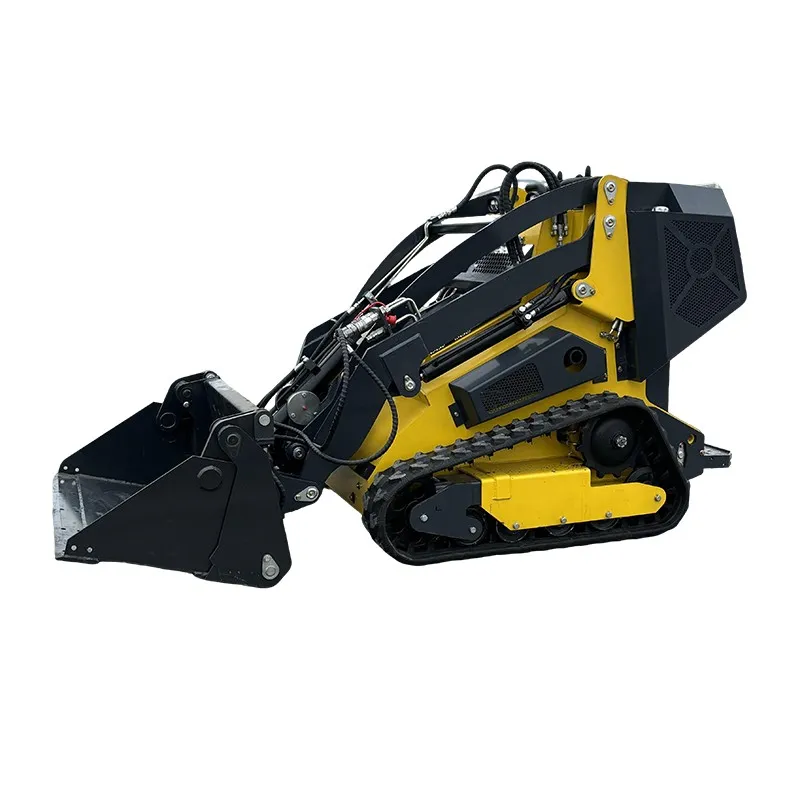
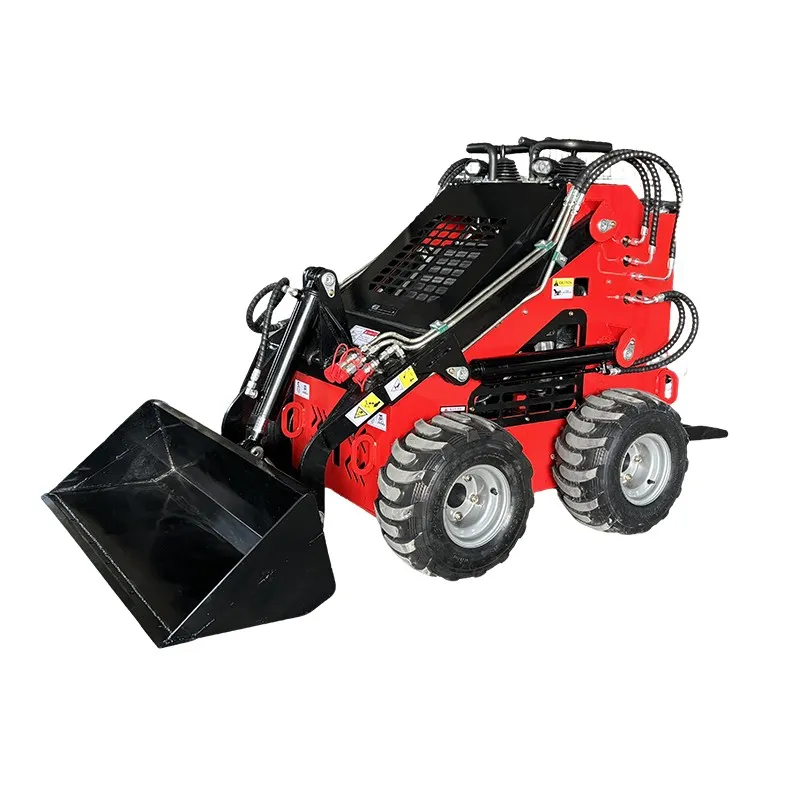
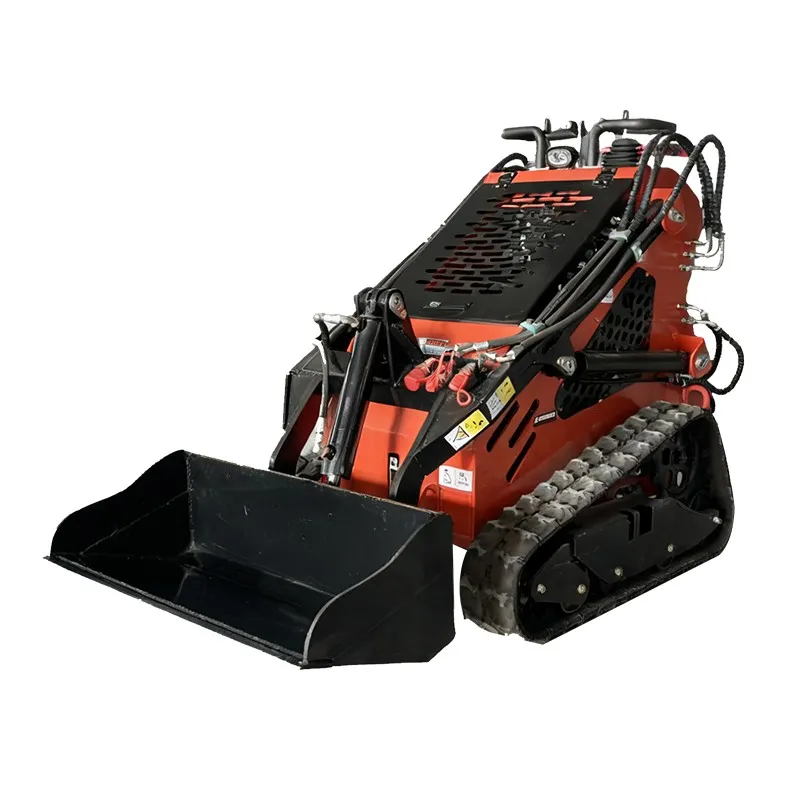
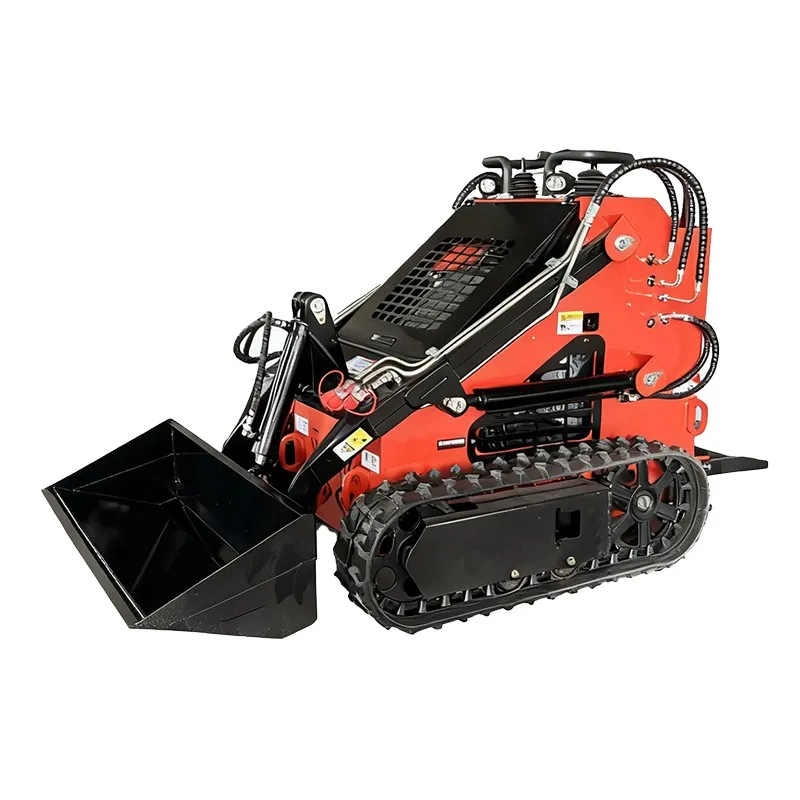
Electric Skid Steer Loader
When you hear 'electric skid steer loader', the first thing most guys think is 'not enough runtime' or 'can't handle real work'. I get it. For years, that was the industry chatter, a kind of dismissive shrug. But having spent the last few years actually running and specifying these machines on sites, that mindset is becoming outdated, fast. The real conversation isn't about if they work, but where they excel and where they still make you scratch your head. It's a tool with a very specific sweet spot.
The Practical Shift: Where Electric Makes Sense Now
Let's be clear, I'm not saying to replace your diesel fleet tomorrow. For a 10-hour demolition day, you still need the dinosaur. But for indoor work? It's a no-brainer. We used a compact electric model from a manufacturer like Shandong Pioneer Engineering Machinery Co., Ltd on a warehouse retrofit. Zero fumes meant we could keep working with other trades right next to us, no ventilation headaches. The silence was almost unnerving at first—you could actually hear someone calling you from across the floor. The productivity bump came from not having to stop for air quality checks or shuffling schedules.
The other obvious win is municipal work and suburbs. Early morning landscaping, noise ordinance zones, campuses. The lack of engine roar is a massive benefit you only appreciate once you've been the contractor who didn't get the complaint call. The instant torque is also something the spec sheets don't do justice to. It's not about top speed, it's about the immediate, smooth push into a pile of mulch or gravel. No lag, no smoke, just go.
But here's the catch we learned the hard way: not all jobsites are plug-ready. We took one for granted on a site with 'temporary power'. The generator meant to charge it was… underwhelming. We ended up with a machine at 30% by lunch because the genny couldn't keep up with the charger's draw while also powering other tools. That day was a lesson in total site power planning, not just machine specs. You can't just think about the loader; you have to think about its ecosystem.
Battery Realities and Operational Mindset Change
Everyone obsesses over battery life. What's the runtime? It's the wrong first question. The right question is, What's the duty cycle of my specific task, and what's the recharge opportunity? Running a breaker all day is different from sporadic loading and drifting. We've found that with a standard 8-hour shift of mixed material handling (not constant max effort), a modern 80-100 kWh pack gets you through, but with anxiety. You start watching the gauge like a hawk after hour six.
This leads to the biggest operational shift: opportunity charging. It's not like diesel where you fill up at dawn and forget it. It's about plugging in during every coffee break, lunch, or any downtime over 15 minutes. You have to treat the battery like your phone. This requires buy-in from the operator and foreman. If the crew culture is machine sits idle at break, you'll have problems. It needs to be machine gets plugged in at break.
Cold weather is another nuance. We had a project in early spring, mornings just below freezing. The battery capacity took a noticeable hit, maybe 15-20% less usable energy until things warmed up. The machine itself worked fine, but the discharge curve was steeper. The solution was parking it in a heated tent overnight if possible, or just factoring in reduced runtime on those days. It's a manageable variable, but one you must plan for, unlike a diesel which just turns over a bit harder.
The Component Dance: What Breaks Differently
Maintenance is simpler, but not absent. No engine oil, filters, DEF, or cooling system nightmares. That's huge. But you trade that for attention to the electrical system and, crucially, the hydraulic system. The hydraulics still work just as hard, if not harder, because operators tend to use the instant power more aggressively. We saw hose failure rates similar to diesel machines, but pump wear seemed different—less cavitation from a steady electric motor vs. a rumbling diesel, but more consistent high-pressure cycles.
The electric motors themselves are pretty robust, but their controllers are sensitive to moisture and dust ingress. One unit we operated had a fault code triggered purely by conductive dust buildup on a sensor connector—something that would never bother a mechanical engine. Cleaning became part of the weekly check, not just a visual inspection. It's a different kind of getting your hands dirty.
Then there's the issue of dealer support. This is where partnering with a manufacturer that has a clear roadmap matters. A company like Shandong Pioneer, which has been manufacturing and exporting machinery globally for two decades, understands that an electric machine isn't just a product you ship. It's a product you need to support with trained technicians and accessible parts. Their move to a new, larger facility in 2023 suggests a commitment to scaling up this kind of capacity, which is as important as the machine's specs. You can have the best loader, but if a fault code requires a specialist flown in, it's a paperweight.
The Cost Equation: It's Not Just Sticker Price
The upfront cost still stings. An electric skid steer can carry a 30-50% premium over a comparable diesel. The finance guys balk. But the calculation has to be total cost of operation. We tracked one unit over a year against a diesel twin. Fuel savings were dramatic, especially with diesel price volatility. Zero spend on engine oil, filters, and AdBlue. Regenerative braking seems like a small thing, but it saves a meaningful amount on brake wear, especially on sites with a lot of back-and-forth movement.
Where the math gets fuzzy is battery depreciation. What's the resale value in 5 years with a battery at 80% of its original capacity? The market is still figuring that out. It's a risk. For now, these machines make the most sense in high-utilization, fuel-sensitive, or access-sensitive applications where the operational savings pay down the premium quickly. Think of them as a precision tool, not a general-purpose workhorse.
For a global exporter, this cost profile actually opens doors. Markets with high fuel costs, strict emissions regulations, or premium green building standards are natural fits. It's no surprise to see companies with a long export history, like the one behind https://www.sdpioneer.com, pushing electric models into regions like North America, Europe, and Australia. They're responding to a market pull that's very real, driven by contractor demands and sometimes regulatory pushes.
Looking Down the Jobsite: The Future is Mixed Fleet
So where does this leave us? The electric skid steer loader isn't a revolution that replaces everything. It's an evolution that finds its place. The most efficient sites I see now are running a mixed fleet. A big diesel loader for bulk earthmoving, a nimble electric for finish work indoors and around sensitive areas. It's about matching the tool to the task with more granularity than ever before.
The technology is moving fast. Batteries are getting denser, chargers faster. The next hurdle isn't technical, it's infrastructural. Jobsite power distribution needs to evolve. We might see standardized, high-power charging stations on larger sites, just like we have fuel trailers now.
For manufacturers, the game is about reliability and support. It's one thing to build an electric prototype, another to build thousands that can survive in a muddy, dusty, vibration-filled environment for years. That requires the kind of deep manufacturing and iterative design experience that comes from companies that have been in the trenches of heavy equipment for years, like the 20-year history you see with Shandong Pioneer's entities. The electric drivetrain is new, but the machine around it—the arms, the frame, the hydraulics, the seals—that's classic, hard-won engineering knowledge. That's what keeps the machine running when the novelty wears off and it's just another piece of equipment that needs to get the job done.
Related Products
Related Products