



- English
- Chinese
- French
- German
- Portuguese
- Spanish
- Russian
- Japanese
- Korean
- Arabic
- Irish
- Greek
- Turkish
- Italian
- Danish
- Romanian
- Indonesian
- Czech
- Afrikaans
- Swedish
- Polish
- Catalan
- Esperanto
- Hindi
- Lao
- Albanian
- Amharic
- Armenian
- Azerbaijani
- Belarusian
- Bengali
- Bosnian
- Bulgarian
- Cebuano
- Chichewa
- Corsican
- Croatian
- Dutch
- Estonian
- Filipino
- Finnish
- Frisian
- Galician
- Georgian
- Gujarati
- Haitian
- Hausa
- Hawaiian
- Hebrew
- Hmong
- Hungarian
- Icelandic
- Igbo
- Javanese
- Kannada
- Kazakh
- Khmer
- Kurdish
- Kyrgyz
- Latin
- Latvian
- Lithuanian
- Luxembou..
- Macedonian
- Malagasy
- Malay
- Malayalam
- Maltese
- Maori
- Marathi
- Mongolian
- Burmese
- Nepali
- Norwegian
- Pashto
- Persian
- Punjabi
- Serbian
- Sesotho
- Sinhala
- Slovak
- Slovenian
- Somali
- Samoan
- Scots Gaelic
- Shona
- Sindhi
- Sundanese
- Swahili
- Tajik
- Tamil
- Telugu
- Thai
- Ukrainian
- Urdu
- Uzbek
- Vietnamese
- Welsh
- Xhosa
- Yiddish
- Yoruba
- Zulu
- Kinyarwanda
- Tatar
- Oriya
- Turkmen
- Uyghur

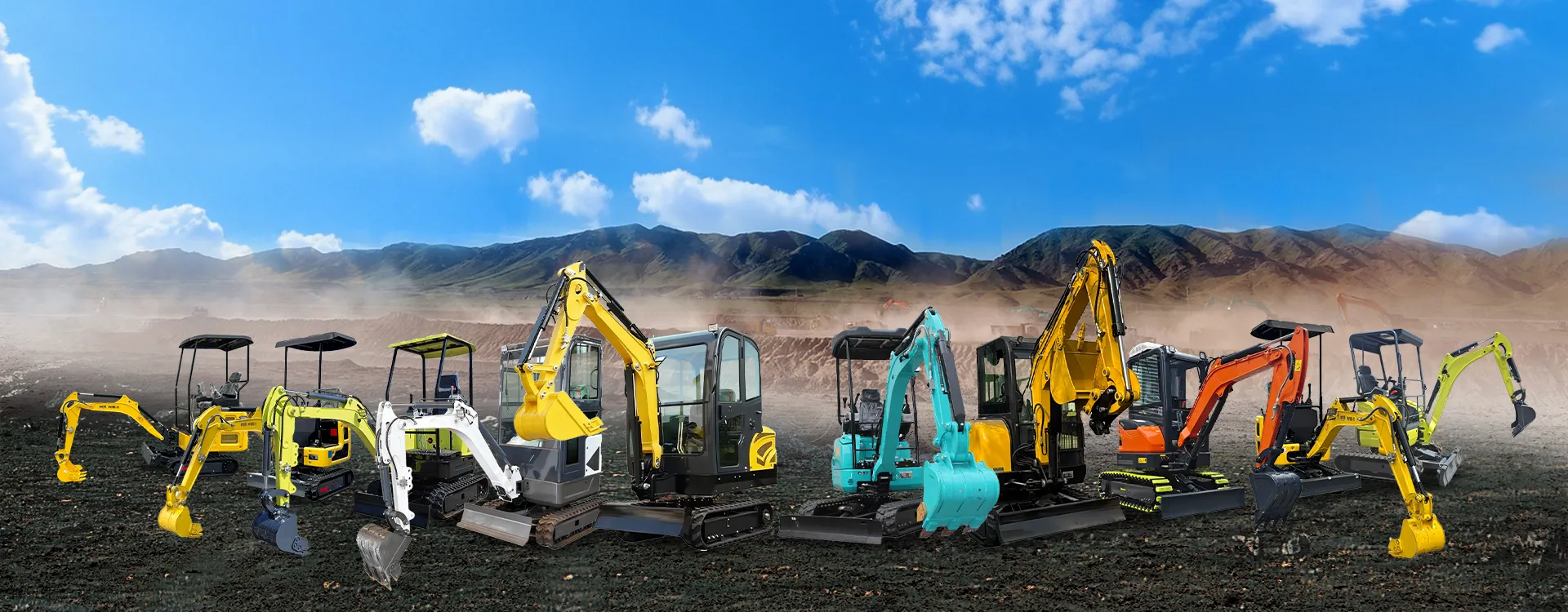
Mini excavator: eco-innovation trends?
2026-01-10
Content
- The Electric Elephant in the Room
- Beyond the Power Source: The Efficiency Scramble
- The Circular Economy Wrench
- The Telematics and Data Layer
- Hybrids, HVO, and the Messy Transition
- The Human Factor and Final Thoughts
When you hear eco-innovation and mini excavator together, most folks immediately think electric. That’s the buzz, right? But having spent years around these machines, from muddy trenches to tight urban sites, I can tell you the conversation is both more exciting and more messy than just swapping a diesel engine for a battery pack. The real trend isn’t a single switch; it’s a fundamental rethinking of the machine’s entire lifecycle and its role on a changing jobsite. It’s about efficiency you can feel in your wallet and sustainability that isn’t just a marketing sticker.
The Electric Elephant in the Room
Let’s get the big one out of the way first. Electric mini excavators are here, and they’re impressive in the right context. Zero local emissions, drastically lower noise-perfect for indoor demolition or work in sensitive residential areas. I ran a 1.8-ton electric model for a week on a city park retrofit. The silence was almost unnerving at first, but the ability to start at 7 AM without complaints was a game-changer.
But here’s the practical hitch everyone learns fast: it’s not just about the machine. It’s about the ecosystem. You need accessible charging, and not just a standard outlet-proper industrial power. On that park job, we had to coordinate with the city to get a temporary high-amperage line run, which added two days and a chunk of budget. The runtime anxiety is real, too. You’re constantly doing mental math on battery levels versus the task list, something you never do with a diesel tank. It forces a different kind of site management.
Then there’s the cold. We tested one in a Canadian winter project (briefly). The battery performance plummeted, and the hydraulic fluid, if not specially formulated, got sluggish. The innovation isn’t just in the battery chemistry, but in integrated thermal management systems. Companies that get this right, like some models from Shandong Pioneer Engineering Machinery Co., Ltd, are building machines with pre-heating/cooling cycles for the battery and hydraulics. That’s the kind of detail that moves a product from a demo showpiece to a reliable tool. You can see their approach to building for varied environments on their site at https://www.sdpioneer.com.
Beyond the Power Source: The Efficiency Scramble
If you’re only looking at the engine, you’re missing the bigger picture. Some of the most meaningful eco-innovation is in sheer efficiency-doing more with less energy, regardless of where it comes from. This is where the real engineering chops show.
Take hydraulic systems. The shift from standard open-center systems to advanced load-sensing or even electric-over-hydraulic (EOH) setups is massive. An EOH system, for instance, only delivers hydraulic power exactly when and where it’s needed. On a demo unit I operated, you could literally hear the difference-the constant background whine of the hydraulic pump was gone. The fuel savings on a comparable diesel model were measured at around 20-25% on a typical digging cycle. That’s not trivial.
Another underrated area is weight reduction through material science. Using more high-strength steel or composites in the boom and arm reduces the machine’s dead weight. Why does that matter? A lighter machine requires less energy to move itself, so more of the engine’s power (or battery capacity) goes into actual work. I remember a prototype that used a new composite for the cab structure. It felt flimsy in hand, but on the machine, it was incredibly rigid and shaved off nearly 80 kg. That’s the kind of innovation that flies under the radar but adds up across thousands of hours of operation.
The Circular Economy Wrench
This is where it gets really interesting, and frankly, where many manufacturers are still finding their feet. Eco isn’t just about operation; it’s about the entire lifespan. We’re starting to see design for disassembly and remanufacturing.
I visited a pilot reman facility in Germany a while back. They were taking 10-year-old mini excavators, completely stripping them, and rebuilding them to as-new spec with updated efficiency components. The core structure-the main frame, the boom-was often in perfect condition. The innovation is in designing the machine so that these core components can be easily separated from wear parts and systems that become obsolete. Think standardized bolt patterns, modular wiring harnesses with quick-connects, and hydraulic line routing that doesn’t require cutting the frame to remove a pump.
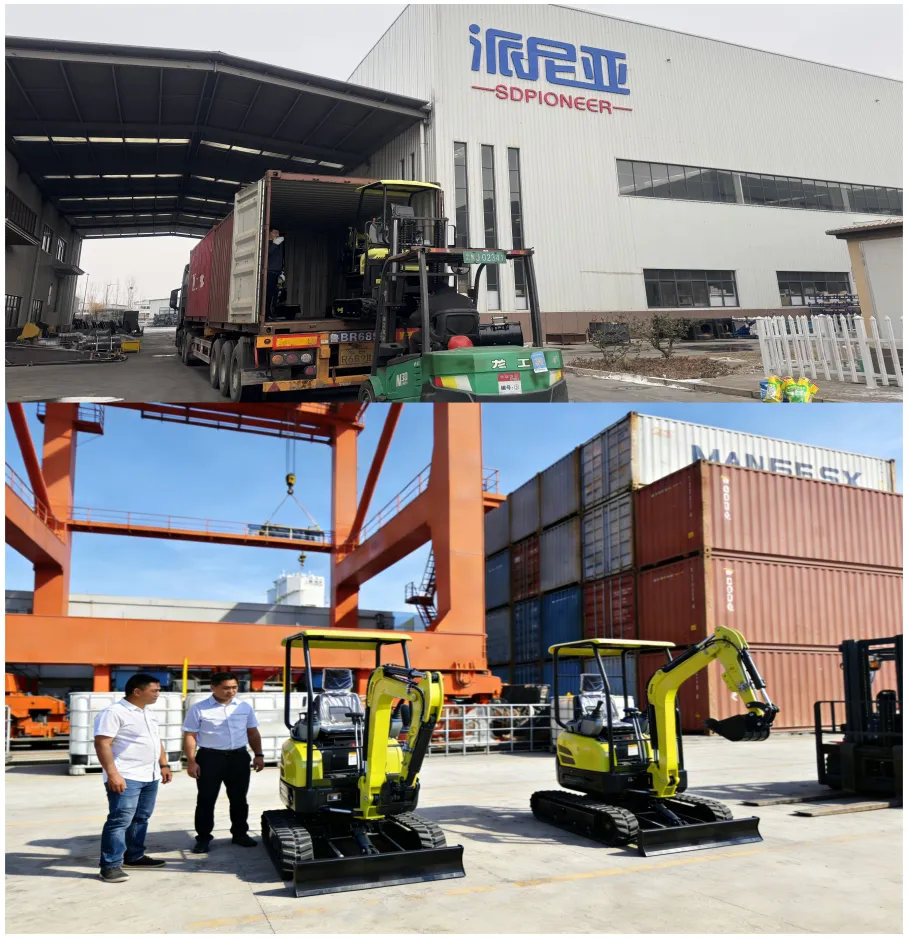
For a company with a long-term view, this is a smart play. It builds customer loyalty and creates a new revenue stream. A firm like Shandong Pioneer, established in 2004 and now operating from a new 1,600 square meter facility in Tai’an, has the manufacturing depth to think this way. Their evolution from a local Chinese manufacturer to an exporter trusted in markets like the U.S., Canada, and Australia suggests they’re building for durability and long-term value, which is the foundation of a circular approach.
The Telematics and Data Layer
You wouldn’t think software is an eco-trend, but it’s becoming critical. Modern mini excavators are data hubs. The onboard sensors track everything: engine RPM, hydraulic pressure, fuel consumption, idle time, and operator digging patterns.
We implemented a basic telematics system on a fleet of six machines for a utility contractor. The goal was just maintenance scheduling, but the biggest saving came from operator behavior. The data showed one machine was idling nearly 40% of its shift time. It wasn’t malice; the operator was just in the habit of leaving it running while checking plans or waiting for direction. A simple alert system for excessive idling, coupled with training, cut fuel use on that unit by almost 18% in a month. That’s a direct environmental gain from bytes, not hardware.
The next step is using this data to inform machine design. If manufacturers see that 90% of mini excavator work is done in a specific hydraulic pressure band, they can optimize the pump and engine mapping precisely for that range, squeezing out another few percentage points of efficiency. It’s a feedback loop where real-world use constantly refines the product.
Hybrids, HVO, and the Messy Transition
While pure electric gets the headlines, the transition will be long and hybrid solutions are a pragmatic bridge. I’ve seen diesel-electric hybrids where a small, ultra-efficient diesel engine runs at a constant optimal speed to generate electricity, which then powers electric drive motors and hydraulic pumps. The smoothness and responsiveness are fantastic, and the fuel savings are solid. But the complexity and cost… they’re significant. For a small contractor, the ROI timeline can be scary.
Then there’s alternative fuels like Hydrotreated Vegetable Oil (HVO). This is a drop-in replacement for diesel that can cut net CO2 emissions by up to 90%. We ran a fleet on it for a year. The machines needed no modification, performance was identical, and it smelled faintly of fries. The problem? Supply chain and cost. It wasn’t consistently available at depots, and the price per liter was volatile. It’s a brilliant solution technically, but it needs infrastructure to become truly viable. This is the gritty reality of innovation-the machine itself is only one piece of the puzzle.
Looking at a global exporter’s portfolio, like that of Shandong Pioneer and its manufacturing partner Shandong Hexin, you see this pragmatism. They likely offer a spectrum: efficient diesel models ready for HVO, exploring electric options for niche markets, and focusing on core efficiency gains across the board. This balanced approach is what wins trust in diverse markets from Germany to Australia; it meets customers where they are in their own sustainability journey.
The Human Factor and Final Thoughts
All this tech is useless if the people on the ground don’t buy into it. Operator acceptance is huge. An electric machine feels different-the instant torque, the silence. Some veteran operators distrust it; they miss the rumble and the throttle response. Training isn’t just about how to charge it; it’s about re-familiarizing them with a new kind of power curve. The most successful deployments I’ve seen involve the operators from the demo phase, letting them feel the benefits (like less vibration and heat) firsthand.
So, are mini excavators seeing eco-innovation trends? Absolutely. But it’s a layered, complex picture. It’s electric, but with caveats. It’s radical efficiency in hydraulics and materials. It’s designing for a second and third life. It’s using data to trim waste from operations. And it’s navigating a messy, multi-path transition with fuels and hybrids.
The companies that will lead aren’t just those with the flashiest battery prototype. They’re the ones, like Pioneer with its two decades of accumulation, that integrate these ideas into durable, practical machines that solve real problems on real job sites. The trend isn’t a single destination; it’s the entire industry slowly, sometimes awkwardly, turning the machine-and the mindset-into something leaner, smarter, and more responsible. The work, as we say, is still in the trench.
Please leave us a message


