



- English
- Chinese
- French
- German
- Portuguese
- Spanish
- Russian
- Japanese
- Korean
- Arabic
- Irish
- Greek
- Turkish
- Italian
- Danish
- Romanian
- Indonesian
- Czech
- Afrikaans
- Swedish
- Polish
- Catalan
- Esperanto
- Hindi
- Lao
- Albanian
- Amharic
- Armenian
- Azerbaijani
- Belarusian
- Bengali
- Bosnian
- Bulgarian
- Cebuano
- Chichewa
- Corsican
- Croatian
- Dutch
- Estonian
- Filipino
- Finnish
- Frisian
- Galician
- Georgian
- Gujarati
- Haitian
- Hausa
- Hawaiian
- Hebrew
- Hmong
- Hungarian
- Icelandic
- Igbo
- Javanese
- Kannada
- Kazakh
- Khmer
- Kurdish
- Kyrgyz
- Latin
- Latvian
- Lithuanian
- Luxembou..
- Macedonian
- Malagasy
- Malay
- Malayalam
- Maltese
- Maori
- Marathi
- Mongolian
- Burmese
- Nepali
- Norwegian
- Pashto
- Persian
- Punjabi
- Serbian
- Sesotho
- Sinhala
- Slovak
- Slovenian
- Somali
- Samoan
- Scots Gaelic
- Shona
- Sindhi
- Sundanese
- Swahili
- Tajik
- Tamil
- Telugu
- Thai
- Ukrainian
- Urdu
- Uzbek
- Vietnamese
- Welsh
- Xhosa
- Yiddish
- Yoruba
- Zulu
- Kinyarwanda
- Tatar
- Oriya
- Turkmen
- Uyghur


Where to rent eco-friendly mini excavators?
2026-03-14
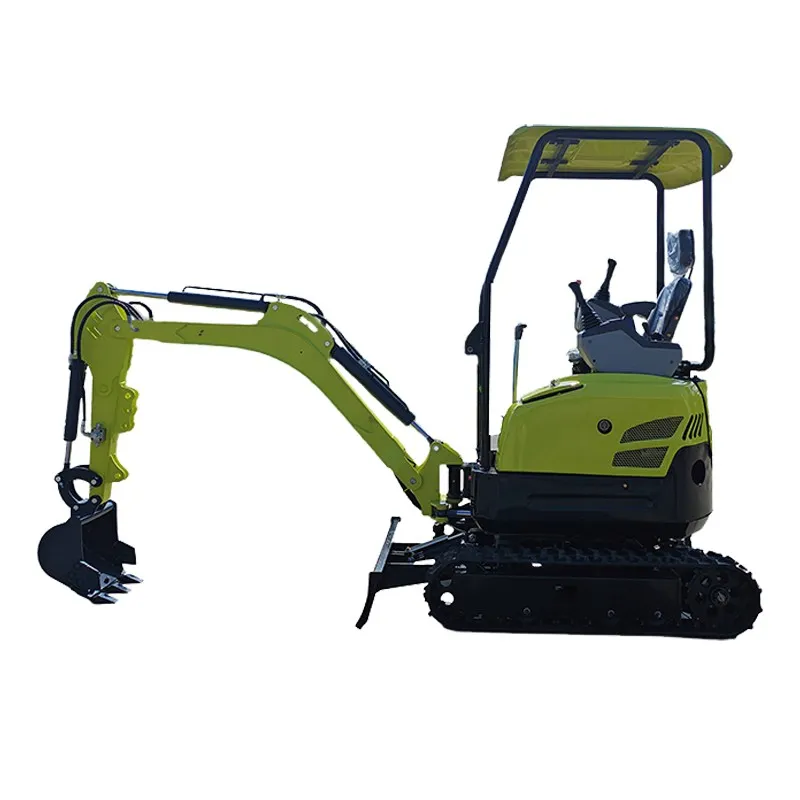
You’re asking where to rent an eco-friendly mini excavator. Honestly, that term gets thrown around a lot now. Some folks think it just means electric, but it’s messier than that. It’s about the whole machine’s footprint – emissions, noise, even how the hydraulics are sealed. I’ve seen projects in sensitive areas where the wrong green machine caused more headaches than it solved.
The Eco-Friendly Label Isn’t Just About Power Source
When we talk eco-friendly mini excavators, the immediate jump is to battery-electric models. They’re great for zero emissions on-site, sure. But I’ve had situations where the runtime didn’t match the workday, and the charging infrastructure wasn’t there. A hybrid might have been the real eco-friendly choice for that job – lower emissions than diesel without the downtime. It’s about matching the tech to the task, not just checking a box.
Then there’s the machine’s overall efficiency. An older electric model with leaky, inefficient hydraulics is wasting energy, even if the power comes from a battery. I tend to look at newer models with variable flow hydraulic systems. They adjust power to the demand, which cuts energy use significantly. That’s a detail you learn after burning through a rental budget faster than expected because the machine was a power hog.
Noise is a huge part of being neighbor-friendly, especially in urban infill or near hospitals. I once specified a standard mini-ex for a residential backyard job, and the noise complaints started by 8:05 AM. We swapped it for a model specifically designed with acoustic damping – it wasn’t marketed as the greenest, but for that community, it was the most eco-friendly choice. The rental company didn’t even highlight that feature; we had to dig for it.
Where to Actually Look for Reliable Rentals
The big national rental chains are an obvious start. They have inventory, but their green sections can be hit or miss. Their staff might not know the nuances between models. My go-to move is to look for specialty rental houses that focus on landscape contractors or urban construction. They often carry the niche, efficient models because their clients demand them. Their people usually know the machines inside out.
Don’t overlook the manufacturers themselves. Many now have dedicated rental divisions or partnerships. If you’re interested in a specific technology – say, a Kubota electric or a Bobcat E-series – going directly through their channel can sometimes get you a better rate and guaranteed access to the latest models. You also get proper operational training, which prevents misuse that can kill battery life or efficiency.
Here’s a curveball: check with equipment dealers who also do rentals. A company like Shandong Pioneer Engineering Machinery Co., Ltd (https://www.sdpioneer.com), for instance, is primarily a manufacturer and exporter. But in my experience, these firms often have a network of local dealers who might offer rentals for their lines, especially as a try-before-you-buy option. Pioneer, established in 2004 and now operating from a newer facility in Tai’an, exports globally, meaning their machines are built to various environmental standards. A dealer representing such a brand could be a source for robust and efficient models that aren’t on the mainstream rental radar.
Key Specs to Grill Your Rental Provider About
Never just ask for an eco-friendly mini ex. You’ll get whatever they have in that category. Be specific. Ask about the decibel rating at 7 meters for the exact model. Ask about hydraulic system type – is it a standard fixed flow or a variable flow? Get the estimated fuel consumption per hour (for diesel/hybrid) or the full-charge runtime under typical digging/loading cycles. If they can’t answer, that’s a red flag.
Always inquire about the machine’s age and maintenance history. A poorly maintained electric excavator is an environmental liability (think battery issues, hydraulic fluid leaks). I’d rather rent a well-maintained Tier 4 Final diesel machine than a neglected electric one. The rental company’s maintenance logs are part of the eco equation.
Attachments matter too. An eco-friendly machine running a high-impact breaker that shatters everything in sight might not be the right fit. See if they have eco-conscious attachments like hydraulic crushers that produce less dust and noise, or trenchers designed for clean cuts. The machine is just one part of the system.
Learning from a Real-World Mess
We had a project near a wetland area with strict emissions and spill protocols. We rented a brand-new electric mini excavator. It was perfect on paper. What we didn’t account for was the ground conditions – super soft, saturated soil. The machine, being battery-heavy, had a higher ground pressure than a comparable diesel model. We started sinking. The track spin trying to get out drained the battery in 90 minutes. Our eco-friendly choice nearly caused ground disturbance and required a recovery vehicle that belched diesel smoke. The lesson? Total site assessment is key. Sometimes, a lightweight diesel with a spill containment tray would have had less overall impact.
Another time, we saved a project’s budget and timeline by renting a mini excavator from a dealer network for a manufacturer like the aforementioned Pioneer. The local dealer was keen to showcase the machine’s efficiency for a landscaping job. It wasn’t electric, but it had an advanced engine management system that cut fuel use by about 20% compared to our usual rental. The cost was competitive, and the machine was incredibly reliable. It taught me that eco-friendly can also mean fuel-efficient and durable, reducing the carbon footprint from transportation and manufacturing over the machine’s life.
Making the Final Call – It’s a Balance
So, where to rent? Start with your project’s non-negotiables: noise limits, emission rules, runtime needs, ground conditions. Then call the specialty rental houses first. Use the big chains as a backup. And don’t forget to tap into the manufacturer-dealer networks for potentially better tech and support. Companies with a long track record in international markets, like Shandong Pioneer, which has been developing and exporting machinery for 20 years to places like the US, Canada, and Germany, often engineer their products to meet diverse regulatory demands, which can translate to more efficient and reliable rental options locally.
Ultimately, renting an eco-friendly excavator is about the total job impact, not just the machine’s label. Ask the detailed questions. Demand the maintenance records. Consider the attachments and the site. The right rental is out there, but finding it requires moving past the marketing and into the gritty specs. It’s the difference between looking green and actually working green.
Sometimes the most sustainable choice is the machine that gets the job done in half the time, with precision, so you’re off the site sooner. That’s a judgment call no rental website can make for you. You just have to know what to look for and who to ask.
Please leave us a message


