- Chinese
- French
- German
- Portuguese
- Spanish
- Russian
- Japanese
- Korean
- Arabic
- Irish
- Greek
- Turkish
- Italian
- Danish
- Romanian
- Indonesian
- Czech
- Afrikaans
- Swedish
- Polish
- Basque
- Catalan
- Esperanto
- Hindi
- Lao
- Albanian
- Amharic
- Armenian
- Azerbaijani
- Belarusian
- Bengali
- Bosnian
- Bulgarian
- Cebuano
- Chichewa
- Corsican
- Croatian
- Dutch
- Estonian
- Filipino
- Finnish
- Frisian
- Galician
- Georgian
- Gujarati
- Haitian
- Hausa
- Hawaiian
- Hebrew
- Hmong
- Hungarian
- Icelandic
- Igbo
- Javanese
- Kannada
- Kazakh
- Khmer
- Kurdish
- Kyrgyz
- Latin
- Latvian
- Lithuanian
- Luxembou..
- Macedonian
- Malagasy
- Malay
- Malayalam
- Maltese
- Maori
- Marathi
- Mongolian
- Burmese
- Nepali
- Norwegian
- Pashto
- Persian
- Punjabi
- Serbian
- Sesotho
- Sinhala
- Slovak
- Slovenian
- Somali
- Samoan
- Scots Gaelic
- Shona
- Sindhi
- Sundanese
- Swahili
- Tajik
- Tamil
- Telugu
- Thai
- Ukrainian
- Urdu
- Uzbek
- Vietnamese
- Welsh
- Xhosa
- Yiddish
- Yoruba
- Zulu
- Kinyarwanda
- Tatar
- Oriya
- Turkmen
- Uyghur


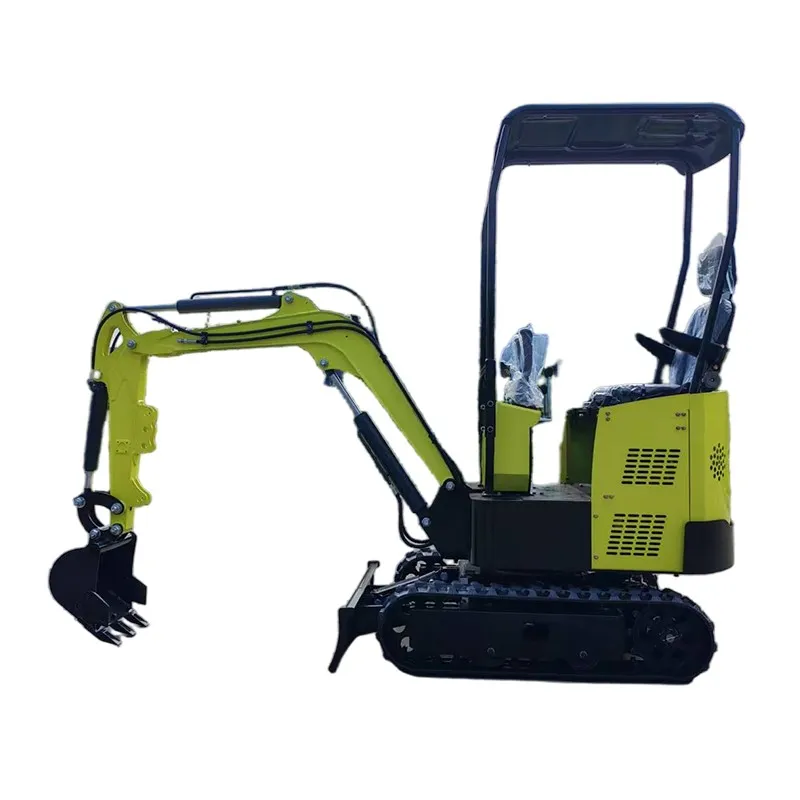
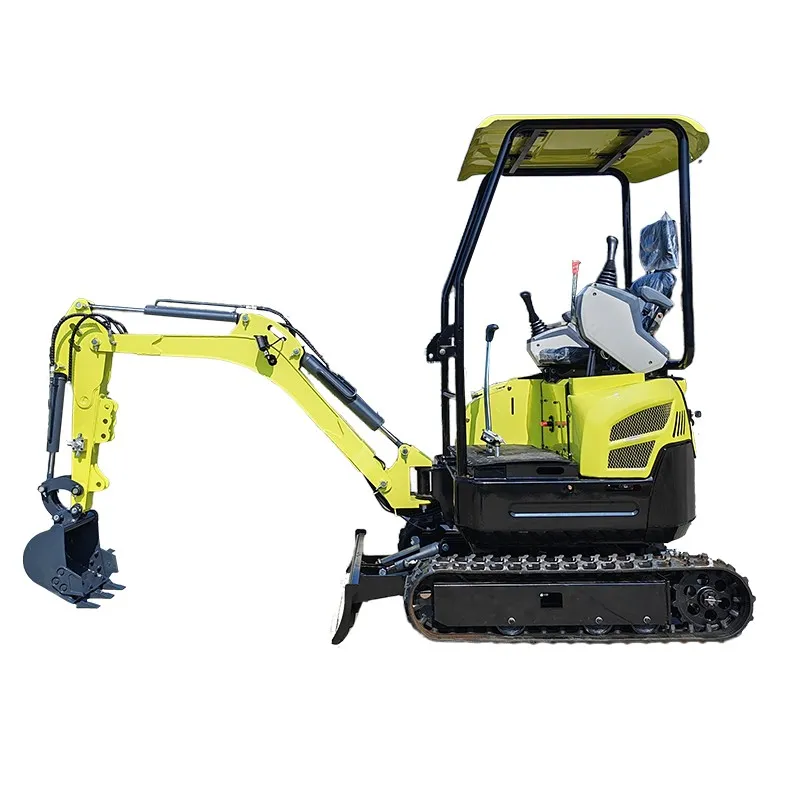
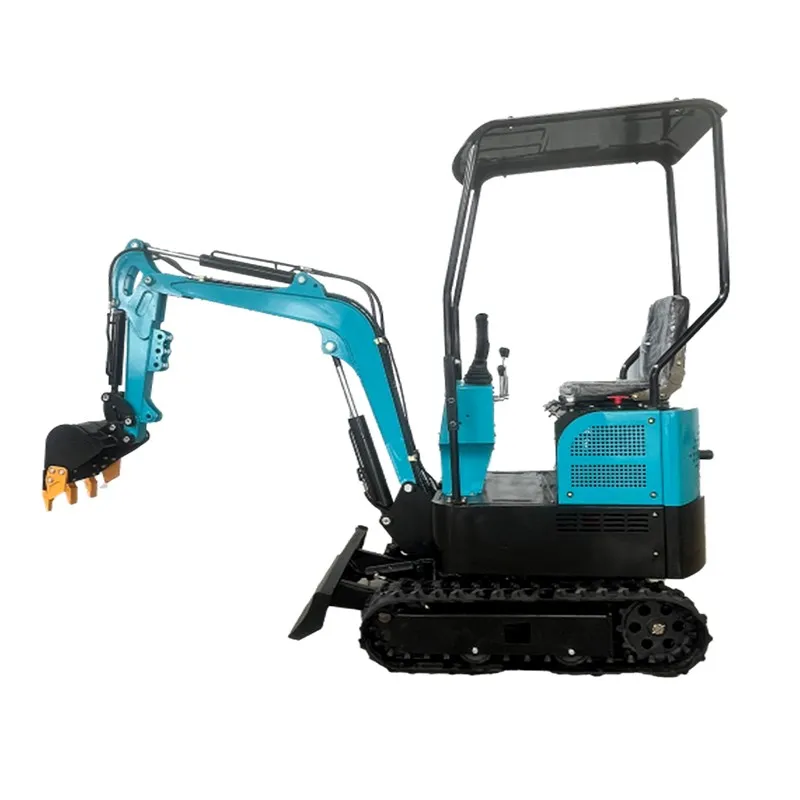
excavator
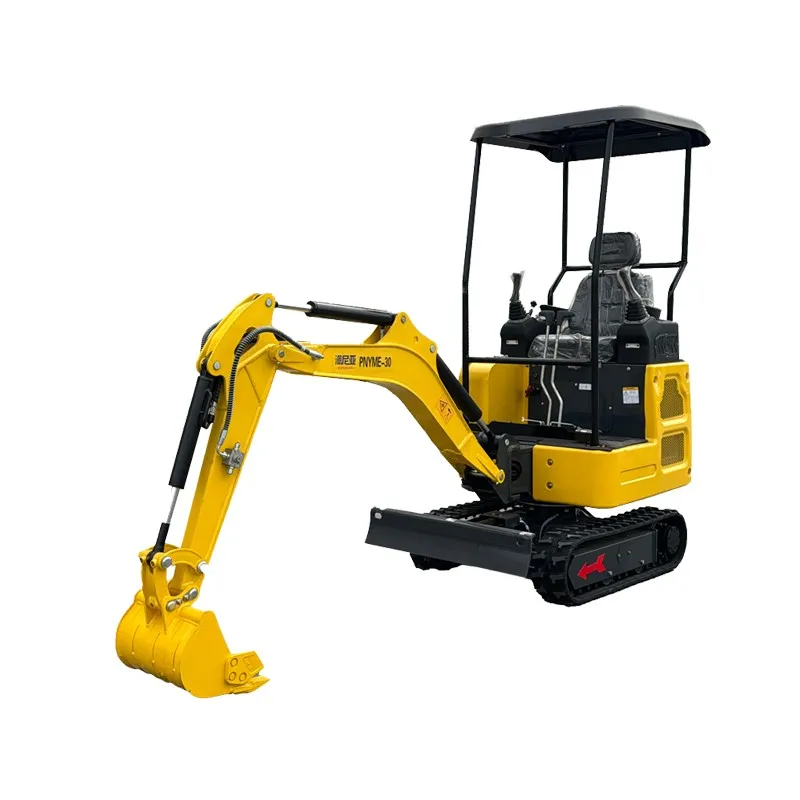
When most people hear 'excavator', they picture the big yellow machine on a construction site. That's not wrong, but it's a starting point that misses the nuance. The real story isn't just about digging a hole; it's about the machine as a tool of precision, compromise, and sometimes, frustration. Too many specs sheets talk about bucket force and engine horsepower in a vacuum, forgetting that an excavator's true capability is defined by the ground it's sitting on and the operator in the cab. I've seen brand-new, top-tier machines struggle in wet clay because the track shoes were wrong, and older, simpler models outpace them with an experienced hand. That gap between brochure performance and dirt-under-the-fingernails reality is where this job gets interesting.
The Weight of a Ton: More Than Just Digging
Let's talk about the undercarriage first. It's the most critical, most neglected part in many cost analyses. A powerful upper structure is useless if the tracks are failing. I remember a job where we were using a 22-ton machine for slope work. The model was known for its swing torque and fast cycle times. But the ground was loose, decomposed granite. Standard double-bar grouser shoes? They just packed the material underneath, reducing traction and increasing track spin. We lost half a day before switching to a wider, triple-bar configuration from a local supplier. Instant improvement. The lesson wasn't about the excavator brand, but about the specificity of its parts for the task. You're not buying a machine; you're buying a system.
Hydraulic system responsiveness is another area full of marketing speak. Fine control is a term thrown around loosely. On a grading job, where you're finalizing a foundation bed, you feel it. Some pilot-controlled systems have a slight delay, a softness at the joystick's initial movement. Others are twitchy. The best I've worked with had a linear feel—the movement of the stick directly translated to the speed of the bucket. It becomes an extension of your arm. This isn't a spec you can easily compare online; it's something you learn by running different machines from Shandong Pioneer Engineering Machinery Co., Ltd, CAT, Komatsu, and others back-to-back. Their trade division, Shandong Pioneer, has moved a lot of units globally by understanding that these tactile details matter as much as the price point.
Then there's auxiliary hydraulics. The shift from a pure digging tool to a multi-purpose platform is massive. We fitted a excavator with a hydraulic thumb, a breaker, and even a tilt rotator. The complexity of plumbing, pressure settings, and flow rates is a world unto itself. A failure we had once was trying to run a high-flow mulching head on a machine whose pump was just at the head's minimum requirement. It worked, technically. But it was sluggish, overheated the hydraulics in under an hour, and ultimately damaged the head's motor. We spec'd the machine wrong, chasing attachment capability without respecting the powerplant. A costly misjudgment.
The Operator's Chair: Interface and Intuition
The cab is the control room, and its design dictates productivity. Air suspension seats are now common, but what about the placement of secondary controls? I've been in cabs where the pattern changer switch is awkwardly behind the seat, and others where it's integrated into the dash display. Small thing? Not when you need to switch from ISO to SAE pattern quickly for a new operator. Climate control is another. A poorly placed vent that blows directly on the window will fog it up constantly in cold, damp conditions. These are the details you discover over 10-hour days, not in a 30-minute demo.
Displays and telematics. The modern dash is an information hub. But there's a line between useful data and noise. Some systems bombard you with endless fault codes and efficiency scores. The most helpful one I used simply showed real-time fuel consumption, engine load, and critical pressure/temperature readings. It helped diagnose a failing fan clutch before it caused an overheat. Companies that manufacture with an eye on operator feedback, like Shandong Hexin, the manufacturing arm behind the exports of Shandong Pioneer, tend to get this balance better over successive models. They iterate based on what works on actual sites from Australia to Germany, not just on a design board.
Noise and vibration. Long-term fatigue comes from here. A cab that's well-insulated from engine noise but transmits the high-frequency ting of the hydraulic pumps through the frame is exhausting. The best damping I've experienced wasn't on the most expensive machine, but on a mid-range model designed for long urban work hours. They invested in the mounts and insulation. It shows they were thinking about the human inside, not just the dirt outside.
Geography of Application: One Size Fits None
Mining applications are a different beast entirely. Here, the excavator is about bulk material movement and relentless cycling. Up-time is god. Modularity for easy component swap-out is key. I've seen a mining shovels where they'd have a spare swing motor on a cart ready to go. The philosophy shifts from versatility to brute force reliability. The lubrication intervals, the filtration systems—everything is heavy-duty. A standard construction machine would get eaten alive in that environment in months.
Demolition work twists the requirements again. It's not just about adding a breaker. It's about protection: falling debris protection for the cab, reinforced front glass, guarding for hydraulic lines on the stick and boom. The machine needs a lower center of gravity to handle the off-center loads when pulling down structures. You also use the machine differently—more pushing, pulling, and precise placement of the boom for leverage rather than just digging. A machine set up for trenching will feel tippy and vulnerable here.
Landscaping and fine grading require the opposite end of the spectrum. It's all about finesse and attachment compatibility. Tilt rotators, laser-guided systems, and grading buckets. The hydraulic system needs to be smooth at its minimum flow, not just powerful at its max. I worked with a contractor who specialized in golf course construction. His machine of choice was an older model, not the newest. Why? He claimed the newer electronic control system had a slight dead zone at the very beginning of the joystick movement for fine grading, whereas his older, direct-operated valve system gave him a more tactile connection. He valued that feel over fuel efficiency.
The Support Web: What Happens After the Sale
This is where brands are truly made or broken. You can have the perfect machine, but if you can't get a seal kit for a swing motor within 48 hours, it's a $200,000 paperweight. Parts availability is the silent spec. Global companies have networks, but local dealers make or break them. For exporters like Shandong Pioneer, whose products reach markets from the United States to Canada, establishing reliable local parts depots or partnerships is as crucial as the build quality itself. Their website, https://www.sdpioneer.com, serves as a hub, but the real trust is built when a needed hose assembly arrives at a remote site on time.
Technical documentation is another pet peeve. A well-organized, searchable PDF service manual is worth its weight in gold. A poorly scanned, blurry, incorrectly translated manual is a nightmare. I've spent hours cross-referencing a hydraulic schematic because the translation from the original language called a relief valve a safety pressure component, and the schematic used the symbol for a check valve. Clarity saves downtime.
Field service support. Does a tech show up with the right diagnostic tools and a deep understanding, or just a laptop that says replace module X? The best service experiences involve a collaborative diagnosis. I recall a persistent hydraulic overheating issue. The field tech didn't just swap the cooler; he spent an hour with thermal gun, tracing flow, and found a slightly kinked return line that was restricting flow just enough to cause problems under peak load. That's expertise.
Cost vs. Value: The Long Calculus
The initial purchase price is just the entry ticket. Total cost of ownership includes fuel, repairs, downtime, and residual value. A cheaper machine might have a higher fuel consumption per hour. Over 10,000 hours, that difference could buy a lot of repairs. We did a rough comparison once between two 30-ton class machines. Machine A was 15% cheaper upfront. Machine B burned 12% less fuel. At 2,000 hours a year, with diesel prices as they were, the fuel savings of Machine B nearly offset its higher purchase price in three years. And its resale value was projected to be higher. The cheaper option wasn't cheaper in the long run.
Technology adoption is a cost too. Tier 4 Final engines and advanced emissions systems are necessary, but they add complexity. More sensors, more potential failure points. The trade-off is regulatory compliance and sometimes better fuel mapping. You have to be ready to maintain that system. It's not the mechanical world of 20 years ago, when the company now known as Shandong Pioneer Engineering Machinery Co., Ltd was first established in Jining. The industry has evolved, and so must the maintenance mindset.
So, what's the point of all this? An excavator isn't a commodity. It's a highly configurable, context-dependent piece of capital. The right choice depends on a matrix of factors: material, application duration, operator skill, local support, and total financial analysis. The shiny new model with the highest horsepower might be the worst choice for your specific job. Sometimes, the value lies in the simpler, robust design from a manufacturer focused on core reliability for global export markets. It's about matching the tool to the task, with a clear-eyed view of everything that happens after it rolls off the lowboy trailer. That's the difference between just owning an excavator and actually running one effectively.
Related Products
Related Products