- Chinese
- French
- German
- Portuguese
- Spanish
- Russian
- Japanese
- Korean
- Arabic
- Irish
- Greek
- Turkish
- Italian
- Danish
- Romanian
- Indonesian
- Czech
- Afrikaans
- Swedish
- Polish
- Basque
- Catalan
- Esperanto
- Hindi
- Lao
- Albanian
- Amharic
- Armenian
- Azerbaijani
- Belarusian
- Bengali
- Bosnian
- Bulgarian
- Cebuano
- Chichewa
- Corsican
- Croatian
- Dutch
- Estonian
- Filipino
- Finnish
- Frisian
- Galician
- Georgian
- Gujarati
- Haitian
- Hausa
- Hawaiian
- Hebrew
- Hmong
- Hungarian
- Icelandic
- Igbo
- Javanese
- Kannada
- Kazakh
- Khmer
- Kurdish
- Kyrgyz
- Latin
- Latvian
- Lithuanian
- Luxembou..
- Macedonian
- Malagasy
- Malay
- Malayalam
- Maltese
- Maori
- Marathi
- Mongolian
- Burmese
- Nepali
- Norwegian
- Pashto
- Persian
- Punjabi
- Serbian
- Sesotho
- Sinhala
- Slovak
- Slovenian
- Somali
- Samoan
- Scots Gaelic
- Shona
- Sindhi
- Sundanese
- Swahili
- Tajik
- Tamil
- Telugu
- Thai
- Ukrainian
- Urdu
- Uzbek
- Vietnamese
- Welsh
- Xhosa
- Yiddish
- Yoruba
- Zulu
- Kinyarwanda
- Tatar
- Oriya
- Turkmen
- Uyghur


excavator manufacturer in China
When you hear 'excavator manufacturer in China', the immediate image for many is a vast, faceless industrial complex churning out identical yellow machines. That's the first misconception. The reality is far more fragmented and nuanced, a mix of sprawling state-backed giants and, more interestingly, a whole ecosystem of specialized, often regionally-focused players. The key isn't just finding a manufacturer; it's identifying the right tier and philosophy for your specific needs—be it raw price-point, custom engineering, or long-term reliability in harsh conditions. It's a landscape I've navigated for over a decade, and the learning curve was less about specs on paper and more about understanding factory floors, supply chain quirks, and the actual priorities behind the production lines.
The Shandong Cluster: More Than Just Geography
If you're serious about sourcing, your map quickly zooms in on Shandong. It's not just a province; it's the undisputed heartland of China's construction machinery component and assembly network. Places like Jining, Linyi, and Qingdao form a dense cluster. The advantage here isn't just lower logistics costs between foundries, hydraulic pump suppliers, and assembly plants. It's about an ingrained industrial culture. You find workshops that have been making a single, perfect pin or bushing for three generations. This ecosystem is what allows companies, even those not among the top five national brands, to achieve surprising levels of vertical integration and cost control.
This brings me to a specific observation. I recall visiting a excavator manufacturer in Jining years ago—a typical setup from the early 2000s boom. The factory was functional but showed the strains of rapid expansion: parts inventory spilling into walkways, inconsistent weld finishing from station to station. They could build a machine, no doubt, but the process felt reactive. This is the context in which many firms like Shandong Pioneer Engineering Machinery Co., Ltd started. Established in Jining in 2004, their early phase was likely emblematic of that era: mastering production fundamentals within this rich supply chain, navigating the intense domestic competition. Their recent relocation in 2023 to a new facility in Ningyang, Tai’an, signals a common maturation path—outgrowing the initial workshop and investing in a more structured production environment. It's a tangible move from survival to stability.
The cluster's downside? Homogeneity. When everyone has access to similar component suppliers from the same industrial park, differentiation becomes a real challenge. You see a lot of machines that are mechanically 90% identical. The real differentiators then become design tweaks, quality control rigor, and, critically, the depth of post-sales support. A manufacturer's choice of hydraulic system (e.g., Kawasaki vs. a domestic brand) or their in-house cab fabrication process often tells you more about their market positioning than their brochure does.
The Export Mentality: Beyond Just Shipping a Container
There's a vast gap between a factory that can sell domestically and one built for sustained export. I've seen technically sound machines fail in overseas markets because the manufacturer viewed export as a simple transaction, not a partnership. The requirements are different: documentation in perfect English, CE markings that are genuinely certified, wiring harnesses that match European standards, and the readiness to supply odd spare parts years down the line. It's a filter that separates the committed from the opportunistic.
Companies that operate distinct entities for manufacturing and overseas trade, like the structure behind Shandong Pioneer (handling overseas trade) and its related manufacturing arm, often grasp this duality better. This separation isn't bureaucratic; it's strategic. The domestic factory focuses on production efficiency, while the international arm builds interfaces—language, compliance, logistics, and customer relationship management. It's a model that acknowledges the different skill sets required. Their mention of exporting to markets like Germany, Australia, the US, and Canada is telling. These aren't the easy export destinations; they are highly regulated, competitive, and quality-sensitive. Gaining a foothold there, even for niche products, suggests a focus on compliance and specification adherence that goes beyond the baseline.
A failure I witnessed firsthand: a manufacturer shipped a batch of 20-ton excavators to a South American distributor without adapting the cooling system for sustained high-altitude operation. The engines overheated within months. The factory's response was slow, treating it as an anomaly rather than a design oversight. The distributor was left holding the bag. This experience underlined that a true export partner needs proactive engineering support, not just reactive salesmanship. The trust they mention winning worldwide is earned precisely by avoiding such pitfalls.
The Product Reality: Between Standard Models and Custom Demands
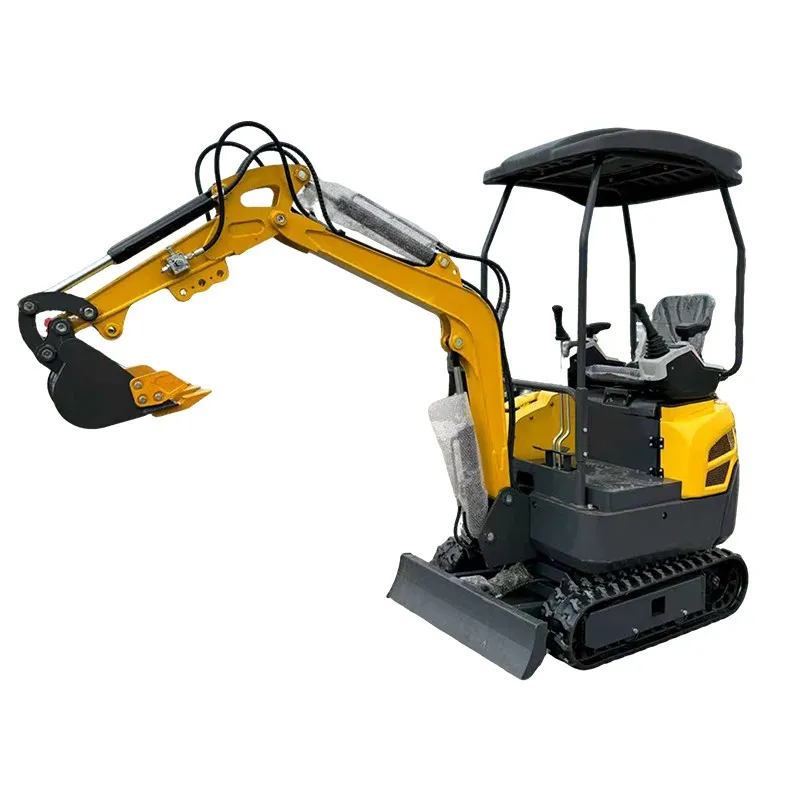
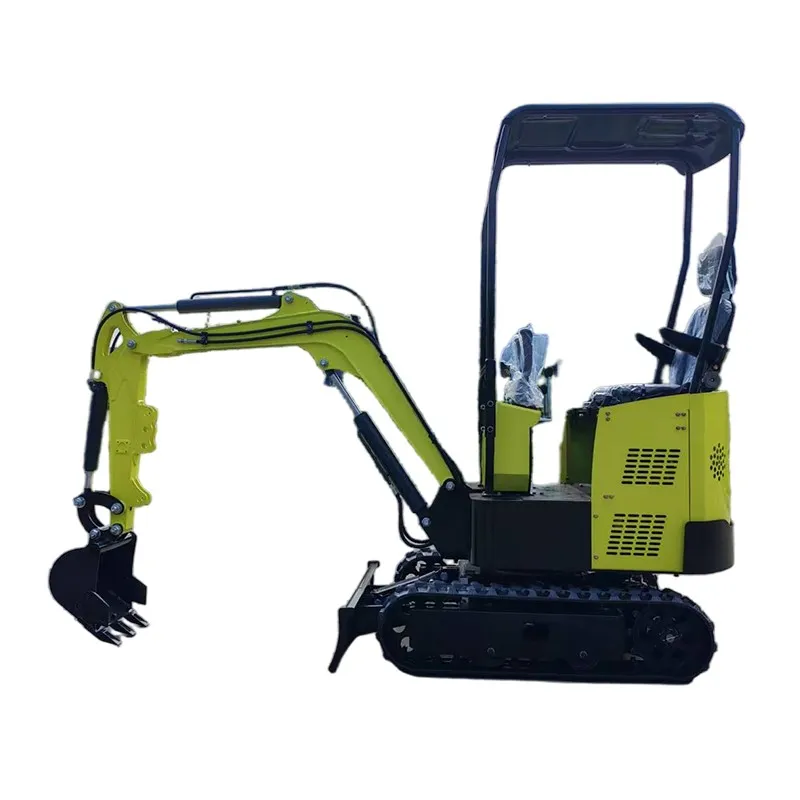
Walk into any major manufacturer's product catalog, and you'll see a familiar range: mini excavators, mid-sized, and large mining beasts. The real test comes with customization. I remember a project requiring excavators with a specific, non-standard hydraulic circuit layout for a special attachment. The largest brands quoted long lead times and high minimum order quantities. A mid-sized excavator manufacturer in China, however, was more agile. Their engineering team sat in the same compound as the workshop. We sketched on a whiteboard with the lead engineer, and they prototyped the modification on a test bench within two weeks. This agility is a hidden strength of many Chinese manufacturers outside the absolute top tier.
However, this agility has limits. The same factory might struggle with metallurgical consistency in their undercarriage parts under extreme abrasive conditions, a area where the Japanese and Korean brands have decades of refined experience. It's a trade-off. For a quarry operation running machines 24/7, that consistency is paramount. For a rental fleet needing a reliable, cost-effective machine for general construction, the value proposition shifts dramatically. Pioneer, with its two-decade development, likely sits in this pragmatic middle ground—capable of building robust standard models and handling sensible customizations for the export market, leveraging the Shandong supply chain for cost-effectiveness without chasing the extreme low-price, low-quality segment.
The details matter. For instance, the choice between a standard ISO cab and a customized, upgraded cabin with better insulation and air conditioning. For the factory, it's a sourcing and assembly issue. For the end-user in Australia's outback or Canada's north, it's a operator retention and productivity issue. The best export manufacturers I've worked with think in terms of total cost of ownership for the end-user, not just FOB price. They'll suggest a better-quality hydraulic hose in a critical location because they know it will save their distributor a warranty headache later.
The Verification Process: Looking Beyond the Brochure
You never truly know a manufacturer until you audit their process. A glossy website and perfect English emails are table stakes. The due diligence happens on the ground. I always ask to see three things: the welding station for the main frame, the hydraulic assembly and testing area, and the final inspection and paint booth. The state of these areas is incredibly revealing. Are welders using consistent, automated processes for critical joints, or is it largely manual? Is the hydraulic test rig actually logging pressure and flow data, or is it just a power-on check? Is paint preparation thorough, with proper phosphating, or is it just a quick spray over potential rust points?
A 1,600 square meter production area, as was Shandong Pioneer's original footprint, suggests a focused, possibly lean operation. Their expansion to a new facility is a positive data point, but the proof is in the new process control. When visiting such factories, I look for evidence of process documentation, quality checkpoints, and traceability. Can they trace a specific pump on a specific machine back to its batch and supplier? This level of control is what separates reliable partners from assemblers.
Another practical tip: ask to speak to the head of quality control directly, not just the sales manager. His concerns and priorities will tell you more about the company's culture than any sales pitch. If he's empowered to halt the production line over a minor fitting, that's a great sign. If he seems subordinate to the production schedule manager, proceed with caution. The relocation after 20 years suggests an investment in capability, but the real test is how that new space is organized and managed.
The Path Forward: Consolidation and Specialization
The Chinese excavator manufacturer landscape is undergoing a quiet consolidation. The low-end, pure price-war segment is getting squeezed by rising material costs and smarter buyers. The future, in my view, belongs to two types of players: the integrated giants who compete on technology and global service networks, and the specialized exporters who compete on deep understanding of specific market niches, reliable quality, and true partnership.
For a company like Pioneer, with its established export channels and recent investment in a new manufacturing base, the path seems to be the latter. The trust they've built over 20 years is their core asset. The next phase is about deepening that—perhaps by developing excavator variants optimized for the soil conditions of their key export regions, or by building even stronger digital support tools for their distributors. It's about moving from being a source of machines to being a source of solutions for their partners' business needs.
Ultimately, finding the right excavator manufacturer in China is less about finding the biggest and more about finding the most aligned. It's a match between your market's demands and their factory's capabilities and culture. It requires peeling back layers, asking operational questions, and valuing transparency over initial price. The manufacturers that survive and thrive will be those who understand that their product isn't just the excavator that leaves the dock, but the entire package of reliability, support, and adaptability that follows it around the world for the next decade.
Related Products
Related Products