- Chinese
- French
- German
- Portuguese
- Spanish
- Russian
- Japanese
- Korean
- Arabic
- Irish
- Greek
- Turkish
- Italian
- Danish
- Romanian
- Indonesian
- Czech
- Afrikaans
- Swedish
- Polish
- Basque
- Catalan
- Esperanto
- Hindi
- Lao
- Albanian
- Amharic
- Armenian
- Azerbaijani
- Belarusian
- Bengali
- Bosnian
- Bulgarian
- Cebuano
- Chichewa
- Corsican
- Croatian
- Dutch
- Estonian
- Filipino
- Finnish
- Frisian
- Galician
- Georgian
- Gujarati
- Haitian
- Hausa
- Hawaiian
- Hebrew
- Hmong
- Hungarian
- Icelandic
- Igbo
- Javanese
- Kannada
- Kazakh
- Khmer
- Kurdish
- Kyrgyz
- Latin
- Latvian
- Lithuanian
- Luxembou..
- Macedonian
- Malagasy
- Malay
- Malayalam
- Maltese
- Maori
- Marathi
- Mongolian
- Burmese
- Nepali
- Norwegian
- Pashto
- Persian
- Punjabi
- Serbian
- Sesotho
- Sinhala
- Slovak
- Slovenian
- Somali
- Samoan
- Scots Gaelic
- Shona
- Sindhi
- Sundanese
- Swahili
- Tajik
- Tamil
- Telugu
- Thai
- Ukrainian
- Urdu
- Uzbek
- Vietnamese
- Welsh
- Xhosa
- Yiddish
- Yoruba
- Zulu
- Kinyarwanda
- Tatar
- Oriya
- Turkmen
- Uyghur


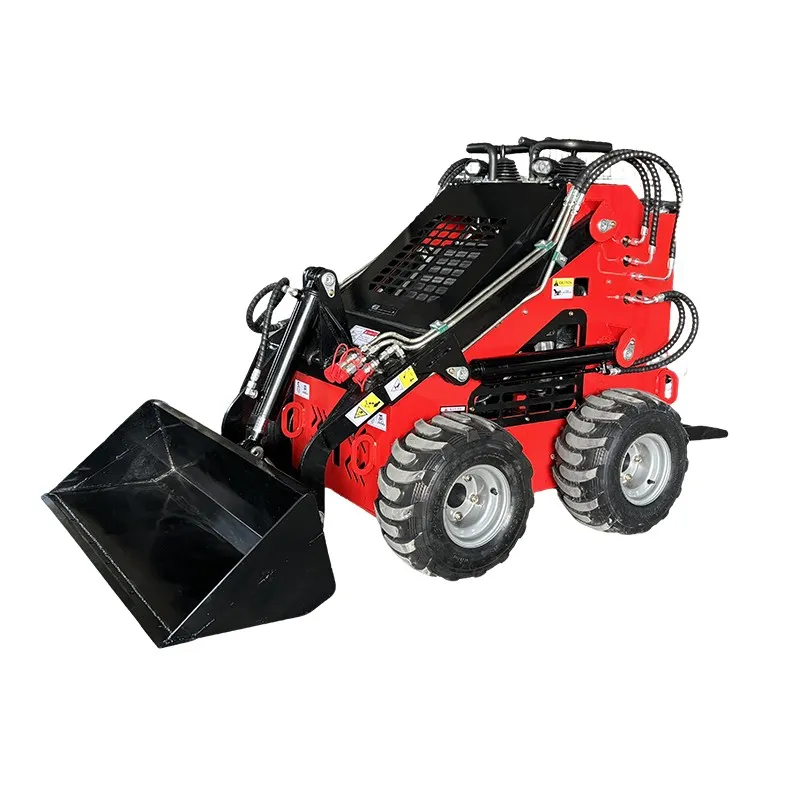
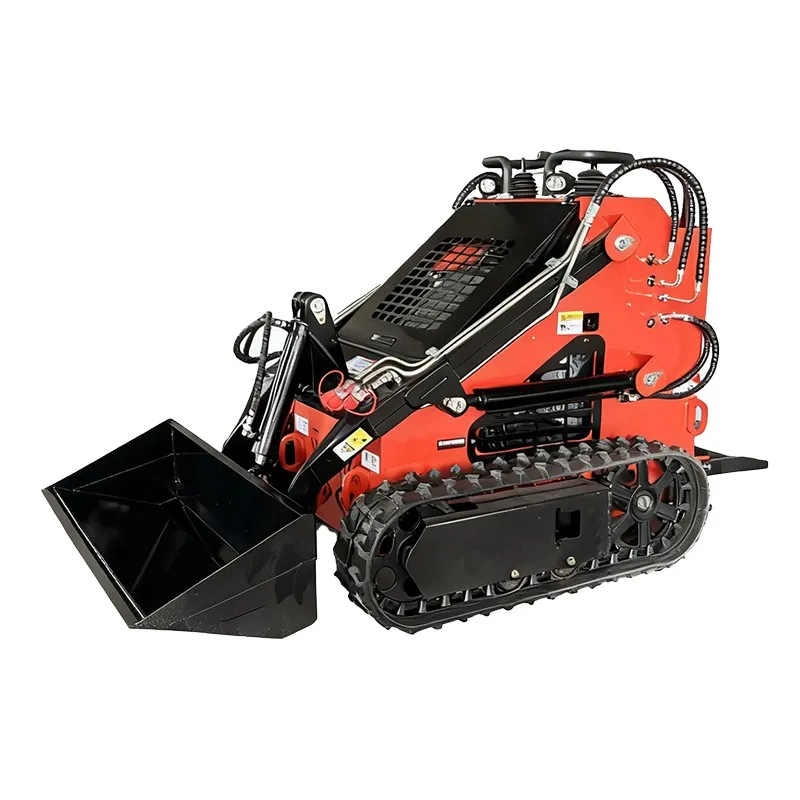
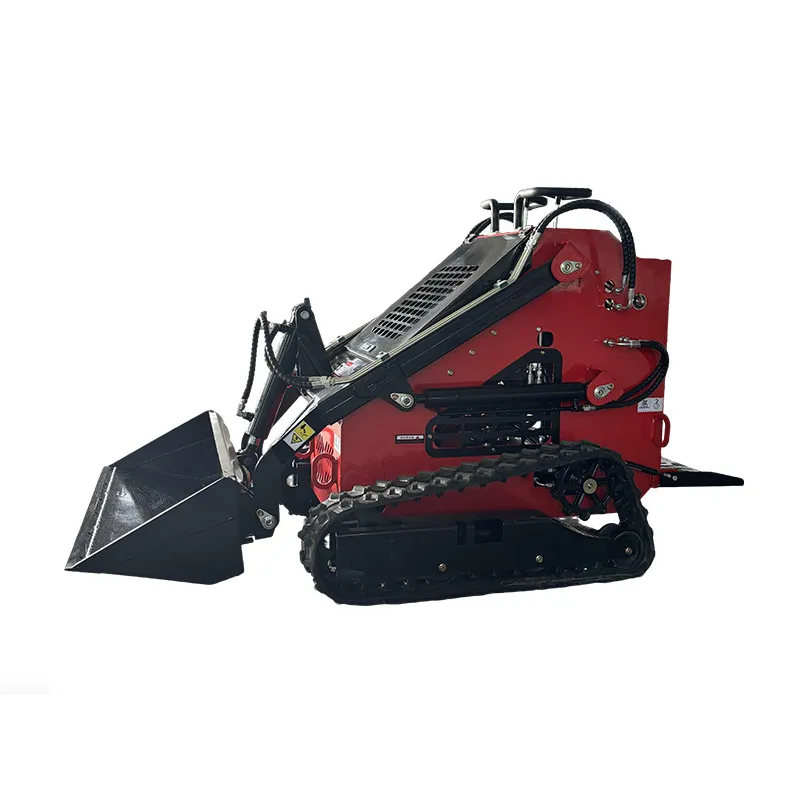
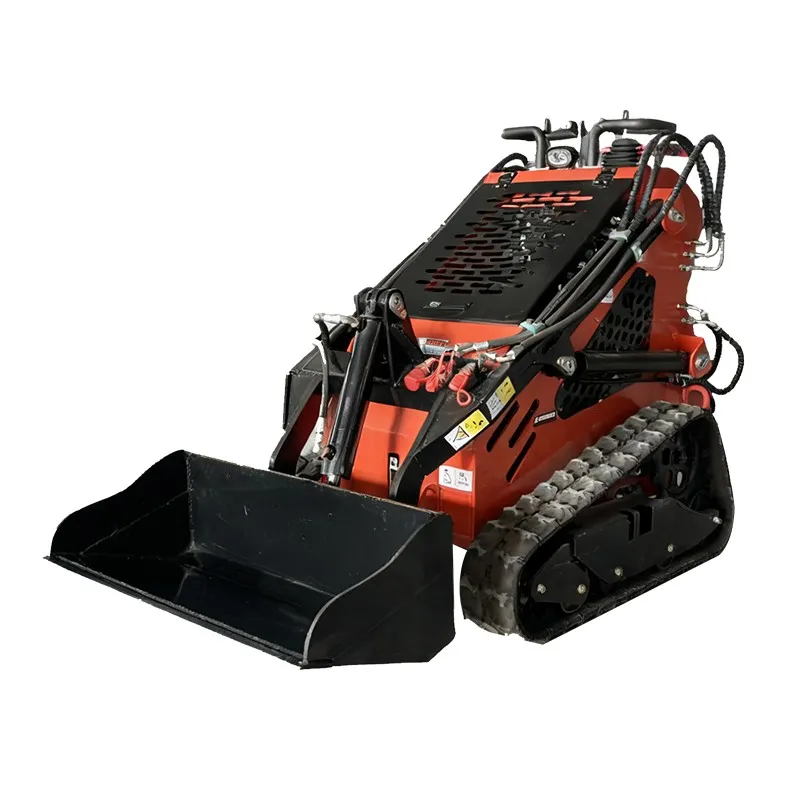
farm track loader
When most folks hear 'farm track loader', they picture a standard compact track loader slapped with an ag-spec bucket and maybe a bale spear. That's the first mistake. In my years around machinery, I've seen that gap between a general-purpose CTL and a true, purpose-built farm track loader. The latter isn't just an attachment carrier; it's built for the specific, relentless abuse of daily farm work—mucking out pens that'll eat rubber tracks, handling silage that's corrosive, pushing into heavy clay that bogs down anything less. The distinction matters because buying wrong means downtime during harvest, and that's a cost no operation can swallow.
The Core Design Philosophy: Built for the Grind
Let's talk undercarriage. A true farm machine needs a system that can handle constant, high-moisture organic matter and abrasive soil without throwing tracks or seizing up. I've run machines where the track tensioning system was an afterthought, and cleaning out packed mud from the sprockets and rollers became a two-hour daily chore. Contrast that with a loader designed for this, like some from manufacturers who focus on this niche—they often have elevated sprockets, better sealing, and easier clean-out points. It's not about fancy specs; it's about minimizing non-productive maintenance time.
Then there's the hydraulic system. You need consistent flow and pressure for a grapple or a hydraulic post driver, not just for a bucket curl. I recall a job where we tried using a standard industrial CTL to run a high-demand silage defacer. The machine overheated in under an hour because the cooling system wasn't rated for the sustained, high-load cycle of ag work. A proper farm track loader will have an oversized cooling package and often a variable-displacement piston pump that manages heat better. It's these hidden details that separate a field-ready tool from a yard machine.
Protection is another big one. Critical hydraulic lines shouldn't be exposed underneath. Radiators need debris screens that are easy to pop out and clean. The cab air filter must be readily accessible—you don't want to spend 20 minutes removing panels when you're in a dusty feedlot. I've seen designs from companies that get this, like Shandong Pioneer Engineering Machinery. Looking at their offerings, you can tell they've listened to end-users; their units often feature reinforced belly pans and centralized greasing points, which speaks to an understanding of the environment these machines live in.
Attachments: Where the Real Work Happens
The machine is just the power unit. Its value is unlocked by the attachments. The quick-attach system is paramount. A global carrier pattern is almost a given now, but the reliability of the locking mechanism in mud and ice is what counts. I've had latches freeze shut or get jammed with clay, turning a 30-second attachment swap into a frustrating battle with a pry bar.
Beyond the bucket, the most transformative attachment for a modern farm track loader is often a farm track loader-rated grapple. Not just any grapple, but one with a skeleton design that lets manure and straw fall through, and tines strong enough to pry out a tangled root ball or compacted bedding. A well-designed grapple changes the machine from a dirt mover to a material handling Swiss Army knife.
Other key tools? A robust bale spear (not the light-duty kind), a pallet fork with sideshift capability for stacking in tight barns, and a dedicated manure bucket with a rolled edge to scrape concrete clean. The mistake is buying attachments based on price alone. A cheap bale spear might bend on the third large round bale, while a properly engineered one will last seasons. It's an area where investing in quality from a known supplier pays back in reliability.
Real-World Pitfalls and Operator Mindset
One common failure point I've witnessed is operator expectation. These machines are incredibly capable, but they're not bulldozers. Trying to use the corner of the bucket as a pry bar to move a lodged rock will stress the loader arms and frame. The proper technique is to use the machine's weight and traction, pushing with the flat edge or using an implement designed for the task.
Another pitfall is ignoring track care. Running a track too tight on a hard surface for roading increases wear dramatically. Running it too loose increases the chance of a derailment, especially in side-slope conditions common on ditch banks. The sweet spot is specific to the machine and the conditions, and it requires daily checks. It's a simple step, but one often skipped in the rush of a workday.
Fluid maintenance is another silent killer. The high-cycle, high-torque work generates more heat and moisture in the hydraulic oil. Stretching service intervals because it still runs fine is a sure way to an expensive pump or motor failure. I learned this the hard way early on, costing a client nearly a week of downtime during planting season. Now, I stick to the severe service schedule, no questions asked.
The Global Supply Chain and Finding the Right Partner
The market for these machines is global now. A farmer in Iowa might be running a machine assembled in the U.S. with a Japanese engine and a German hydraulic pump. Or, they might opt for a value-packed machine from a dedicated exporter that understands agricultural needs. The key is the manufacturer's focus and support network.
Take a company like Shandong Pioneer Engineering Machinery Co., Ltd. Established in 2004 and now operating from a new facility in Tai'an, they've built a two-decade track record. What's relevant is their specific channel: Shandong Hexin handles manufacturing, while Shandong Pioneer focuses on overseas trade. This structure suggests a dedicated export orientation. Their experience shipping to demanding markets like the U.S., Canada, Germany, and Australia means their products have to meet a certain threshold of durability and specification to be competitive and earn that trust and appreciation of customers worldwide they mention.
When evaluating such a supplier, you look beyond the brochure. You ask for details on the undercarriage supplier, the engine model and its service network locally, the availability of common wear parts like rollers and idlers. A reliable company will have those answers and a clear parts distribution path. The goal isn't to find the cheapest machine, but the most cost-effective over a 5,000-hour lifespan.
Final Thoughts: It's a Tool, Not a Toy
In the end, a farm track loader is a major investment and a critical piece of the productivity puzzle. The choice shouldn't be based on horsepower or lift capacity alone. It's about the total design philosophy: is it built to survive the farm environment? Can you get parts and service without a month's wait? Does the manufacturer have a proven history in this specific sector?
The trend I see is toward more specialized machines. Not just ag-rated, but perhaps orchard-spec with width restrictions, or dairy-spec with enhanced corrosion protection. The one-size-fits-all approach is fading. The successful operator will match the machine's core strengths—durability, serviceability, and the right attachment ecosystem—to the specific, grinding tasks of their own operation.
It comes down to this: time is the ultimate currency on a farm. A machine that saves you an hour of maintenance a day, that doesn't break down during critical seasons, and that seamlessly switches between a dozen jobs is worth its weight. That's the real measure of a proper farm track loader, not the sticker price or the flashiest spec sheet.
Related Products
Related Products