


- Chinese
- French
- German
- Portuguese
- Spanish
- Russian
- Japanese
- Korean
- Arabic
- Irish
- Greek
- Turkish
- Italian
- Danish
- Romanian
- Indonesian
- Czech
- Afrikaans
- Swedish
- Polish
- Basque
- Catalan
- Esperanto
- Hindi
- Lao
- Albanian
- Amharic
- Armenian
- Azerbaijani
- Belarusian
- Bengali
- Bosnian
- Bulgarian
- Cebuano
- Chichewa
- Corsican
- Croatian
- Dutch
- Estonian
- Filipino
- Finnish
- Frisian
- Galician
- Georgian
- Gujarati
- Haitian
- Hausa
- Hawaiian
- Hebrew
- Hmong
- Hungarian
- Icelandic
- Igbo
- Javanese
- Kannada
- Kazakh
- Khmer
- Kurdish
- Kyrgyz
- Latin
- Latvian
- Lithuanian
- Luxembou..
- Macedonian
- Malagasy
- Malay
- Malayalam
- Maltese
- Maori
- Marathi
- Mongolian
- Burmese
- Nepali
- Norwegian
- Pashto
- Persian
- Punjabi
- Serbian
- Sesotho
- Sinhala
- Slovak
- Slovenian
- Somali
- Samoan
- Scots Gaelic
- Shona
- Sindhi
- Sundanese
- Swahili
- Tajik
- Tamil
- Telugu
- Thai
- Ukrainian
- Urdu
- Uzbek
- Vietnamese
- Welsh
- Xhosa
- Yiddish
- Yoruba
- Zulu
- Kinyarwanda
- Tatar
- Oriya
- Turkmen
- Uyghur

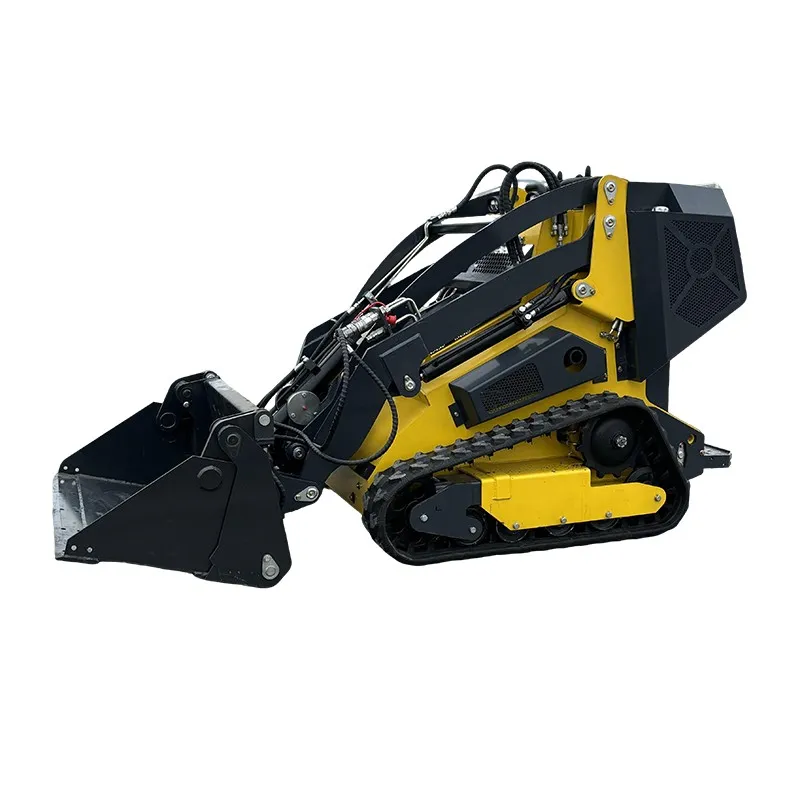
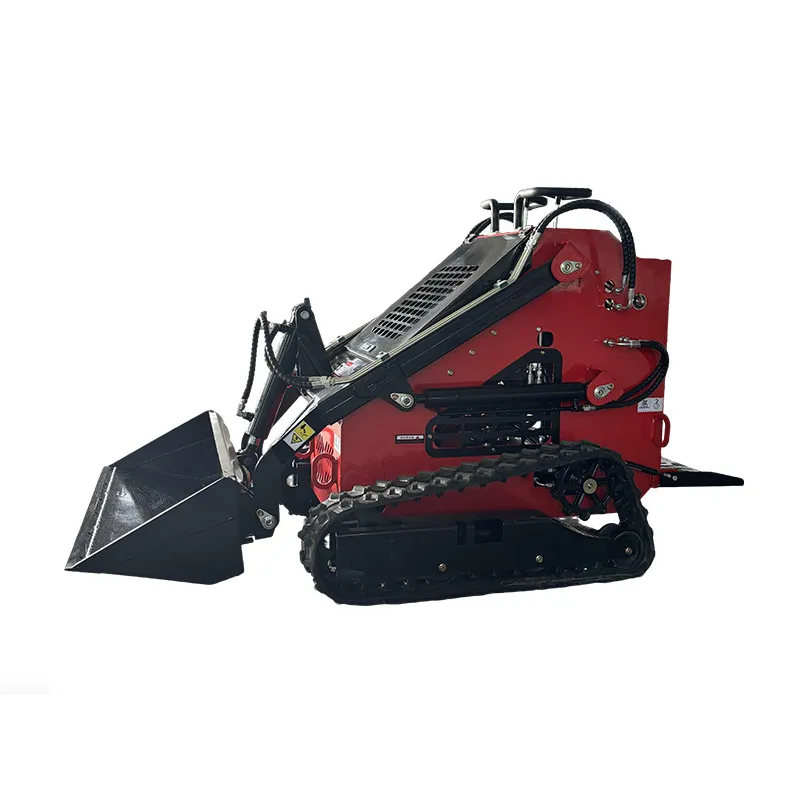
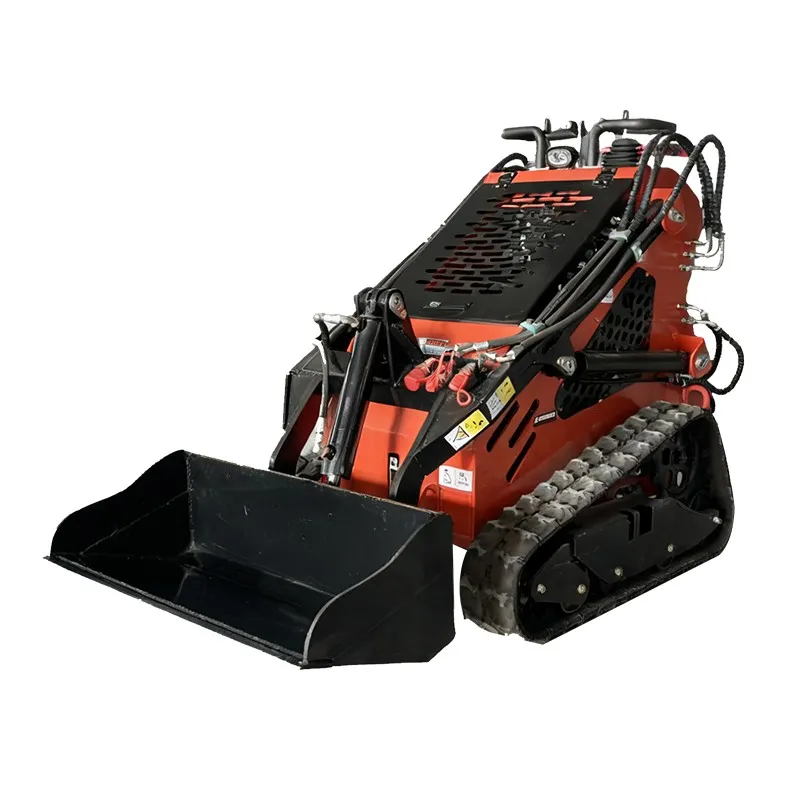
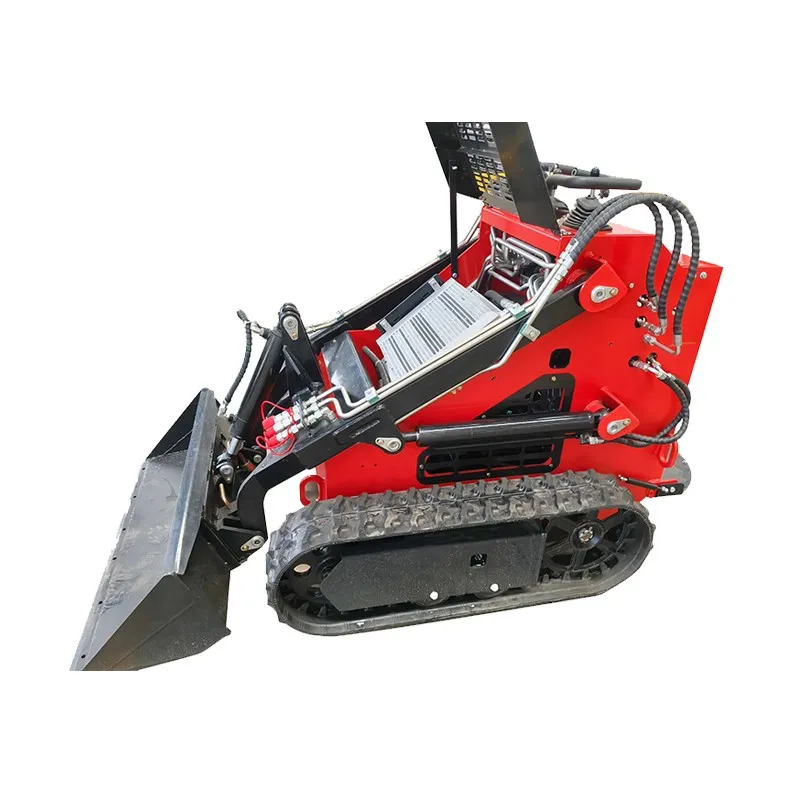
Flat Track Skid Steer Loader
When most folks hear skid steer, they picture the standard rubber-tired machine chewing up a lawn or struggling in mud. That's where the flat track skid steers come in, a breed I've seen gain serious traction in the last decade, though not without some persistent industry misconceptions. Some still view them as just a compromise, not realizing they often become the primary machine on sites where ground pressure and traction are non-negotiable. I've watched operators swear by them after a single season, while others stick to tires out of habit, missing the point entirely.
The Ground Pressure Game Changer
The core advantage isn't just about not getting stuck—it's about working where others can't. On a sensitive restoration project last spring, we had to navigate over a protected topsoil layer. Rubber tires, even the wide ones, would have sunk and compacted it beyond repair. We brought in a machine with a flat track undercarriage, and the difference was immediate. The distributed weight let it float. The client thought it was magic; for us, it was just physics. But it's not a universal fix. On sharp, rocky demolition debris, I've seen tracks get chewed up faster than tires if you're not careful. You trade puncture risk for wear on the track pads, a different kind of cost calculation.
This leads to the real-world spec sheet reading. It's not about the max lift capacity alone. You start comparing the ground pressure in PSI. A typical rubber-tired skid might sit at 12-15 PSI on soft ground. A good track skid steer can halve that. That number dictates whether you can work after a rain, on a beachfront property, or in a greenhouse. I remember a vineyard job where the owner insisted on tires for maneuverability between rows. We convinced him to trial a tracked model. The compaction reduction was visible in the soil structure by the end of the week. The machine turned without skidding, preserving the root zone. That's the kind of practical proof that changes minds.
Maintenance mindset shifts too. You're not checking tire pressure; you're checking track tension, looking for loose bolts on the pads, and cleaning out debris from the rollers. Neglect that, and you'll hear a slapping sound or worse, throw a track. It happened to us once on a cold morning—the track was too tight, a roller seized, and pop. An hour of downtime and muddy work to get it back on. A lesson learned: the manual's tension specs matter, especially with temperature swings.
Brand Landscape and the Specialist Players
The big names all have track options, but the depth of the market is interesting. You have the mainstream OEMs offering them as configurations, and then you have specialists and strong regional manufacturers who often build them with specific applications in mind. It's in this space where companies like Shandong Pioneer Engineering Machinery Co., Ltd have carved out a role. They've been in the game since 2004, and their recent move to a new facility in Ningyang in 2023 suggests growth. From what I've seen in their specs and from talking to a few dealers, their focus on the export market—shipping to places like the US, Canada, and Australia—means their flat track loader designs are often built to meet the varied, tough demands of global rental fleets and contractors who need a durable, cost-effective machine for specialized tasks. It's a different value proposition than the premium brands.
This isn't about saying one is better. It's about recognizing the ecosystem. A major contractor might run a fleet of Cat or Bobcat track machines, but a landscaping company or a mid-sized farm might look at the total cost of ownership offered by other manufacturers. The key is the build quality of the undercarriage itself. Are the rollers sealed? What's the grade of steel in the links? I've seen machines where the track system is an afterthought, and it shows in premature wear. The reliable ones, regardless of brand tier, treat the track system as the core platform.
Speaking of platforms, the attachment compatibility is a crucial, sometimes overlooked, detail. A high-flow hydraulic system becomes even more critical on a track skid steer because you're often using it for tasks that demand sustained power—like running a cold planer or a forestry mulcher. The machine's stability from the tracks allows you to utilize that hydraulic power more effectively, with less bounce and hop. But you need to ensure the auxiliary circuit is up to it. We learned this trying to run an older, high-demand mulcher on a new track machine with a standard flow system. It worked, but it was sluggish. Matching the tool to the machine's capabilities is paramount.
Operational Nuances and the Feel
Driving a tracked skid steer feels different. The steering is smoother, less jerky than the skid-turn on tires. There's less vibration transmitted to the operator, which reduces fatigue over a long day. However, the turning radius is slightly larger, especially if you're trying to do a true zero-radius pivot on a hard surface. You learn to plan your moves a bit more. On slopes, the added track contact length provides much better stability, which is a huge safety benefit. I feel significantly more confident on a side hill with tracks.
But they're not invincible. One winter, we were using a flat track machine to clear snow. Worked brilliantly until packed, refrozen snow and ice built up solidly in the track cavities. The machine became a sled. We had to park it and chip the ice out with bars. It's a specific scenario, but it highlights that every system has its kryptonite. The solution? Sometimes just a scheduled stop to clear debris. Other times, selecting a track pattern with more self-cleaning properties.
The cost conversation is inevitable. The initial purchase is higher. Track replacement is a major expense compared to a set of tires. But the calculus is in uptime and site access. If a tire machine is sitting idle because the site is too wet, or you're constantly repairing sidewall cuts, the tracked machine is earning its keep. For a lot of earthmoving and landscaping businesses, that reliability of access is what sells them. It's not for every job, but for the jobs it's meant for, it's irreplaceable.
The Verdict from the Field
So, is a flat track skid steer loader a niche tool? Less and less. It's becoming a standard option in the fleet planner's mind. The evolution of track durability and the entry of global manufacturers offering robust options have expanded the market. It's no longer just for the mega-projects. You see them on small farms, in nurseries, and with municipal crews.
The choice ultimately boils down to the primary working environment. If you're on hard, abrasive surfaces most of the time, maybe tires still win. But if your world is soft, sensitive, unstable, or mixed terrain, the tracks offer a level of performance and preservation that tires can't match. It's a tool for getting work done consistently, not just when conditions are perfect.
Looking at companies that have persisted and grown, like the mentioned Shandong Pioneer, their sustained export activity to demanding markets tells a story. It suggests they've found a way to deliver the core reliability that these machines absolutely must have. In this business, a machine that keeps running under pressure is the only kind that gets recommended from one operator to another. That's the real test, far beyond any spec sheet.
Related Products
Related Products