



- Chinese
- French
- German
- Portuguese
- Spanish
- Russian
- Japanese
- Korean
- Arabic
- Irish
- Greek
- Turkish
- Italian
- Danish
- Romanian
- Indonesian
- Czech
- Afrikaans
- Swedish
- Polish
- Basque
- Catalan
- Esperanto
- Hindi
- Lao
- Albanian
- Amharic
- Armenian
- Azerbaijani
- Belarusian
- Bengali
- Bosnian
- Bulgarian
- Cebuano
- Chichewa
- Corsican
- Croatian
- Dutch
- Estonian
- Filipino
- Finnish
- Frisian
- Galician
- Georgian
- Gujarati
- Haitian
- Hausa
- Hawaiian
- Hebrew
- Hmong
- Hungarian
- Icelandic
- Igbo
- Javanese
- Kannada
- Kazakh
- Khmer
- Kurdish
- Kyrgyz
- Latin
- Latvian
- Lithuanian
- Luxembou..
- Macedonian
- Malagasy
- Malay
- Malayalam
- Maltese
- Maori
- Marathi
- Mongolian
- Burmese
- Nepali
- Norwegian
- Pashto
- Persian
- Punjabi
- Serbian
- Sesotho
- Sinhala
- Slovak
- Slovenian
- Somali
- Samoan
- Scots Gaelic
- Shona
- Sindhi
- Sundanese
- Swahili
- Tajik
- Tamil
- Telugu
- Thai
- Ukrainian
- Urdu
- Uzbek
- Vietnamese
- Welsh
- Xhosa
- Yiddish
- Yoruba
- Zulu
- Kinyarwanda
- Tatar
- Oriya
- Turkmen
- Uyghur


Flexible excavator
When most people hear 'flexible excavator,' they picture a small, rubber-tracked machine squeezing into a tight backyard. That's part of it, sure, but it's a surface-level view. The real flexibility isn't just about physical size—it's about the machine's adaptability to tasks that standard excavators balk at, and the operational mindset it demands from the operator. I've seen too many projects buy one thinking it's a cure-all, only to find its limits the hard way.
The Core Misconception and Physical Reality
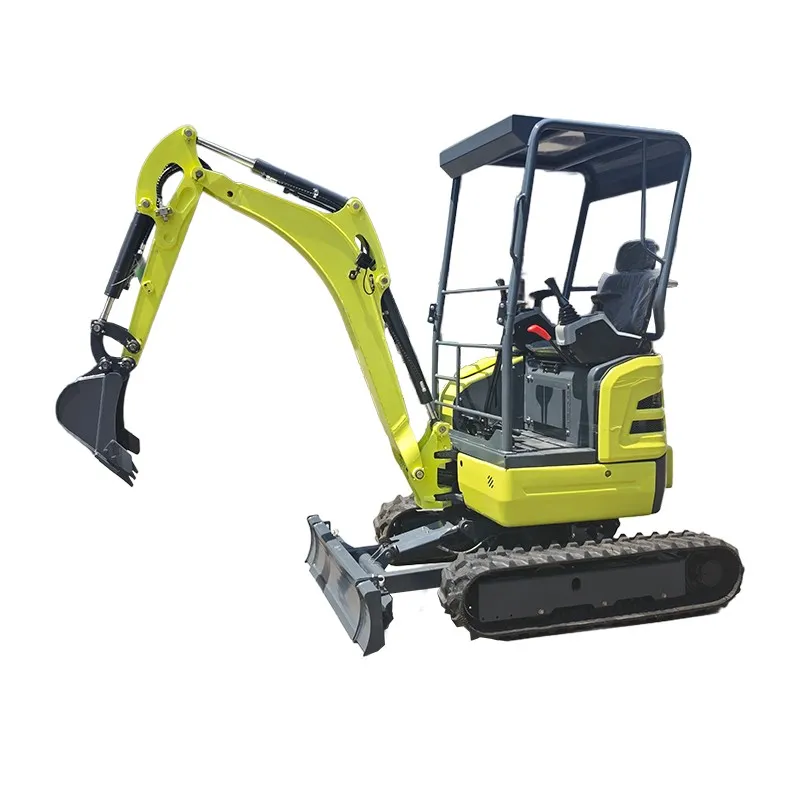
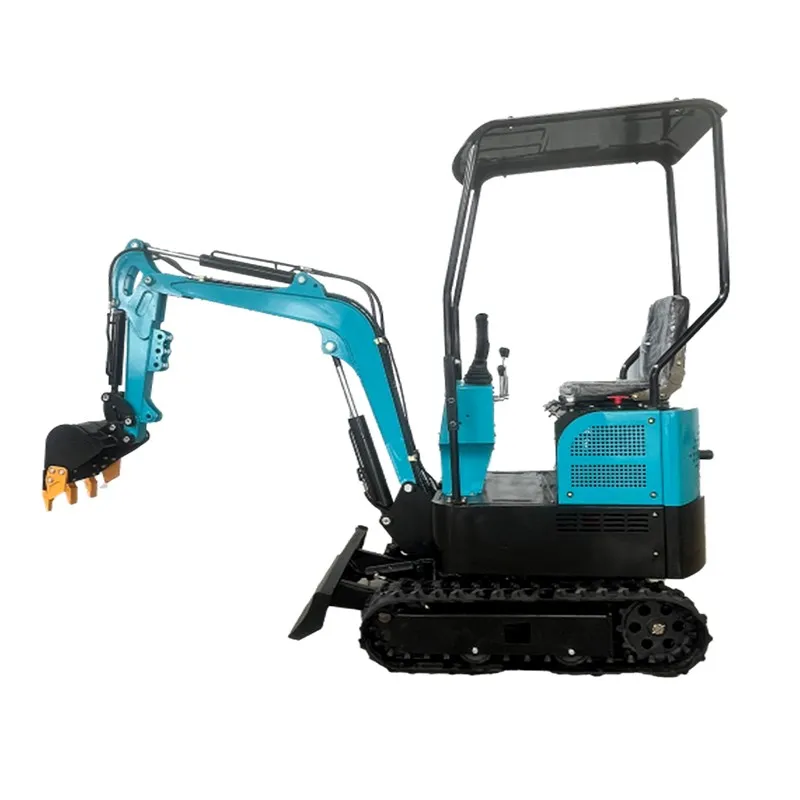
The biggest mistake is equating flexibility solely with compactness. A truly flexible excavator is a system. It's the combination of a narrow body, yes, but also a slew of offset booms, wrist-action buckets, and a hydraulic system that allows for precise, independent movement. You're not just digging a hole; you're often digging a hole while the upper structure is rotated 90 degrees to avoid a gas line, with the bucket tilting to grade a sidewall in one pass.
I remember a retrofit job in an old city center, working next to a historic brick wall. A standard mini-excavator would have needed constant repositioning, risking contact. We used a model with a side-shifting boom—a key feature for real flexibility. It could dig the trench parallel to the wall while the tracks remained stationary a safe distance away. That's the nuance. The flexibility is in the range of motion, not just the footprint.
This physical reality dictates your attachments. A tiltrotator isn't a luxury here; it's the joint that makes the machine's arm truly functional. Without it, you're just swinging a rigid tool. I've sourced specialized grapples and drilling heads from partners who understand this integrated need. It’s about creating a toolchain, not just buying a base machine.
Operational Flexibility: The Human Factor
This leads to the second layer: operational flexibility. These machines punish poor planning. You can't just muscle through. You need to sequence tasks mentally before you even start the engine. Where will the spoil go? How will I place the pipe? The confined spaces that demand a flexible excavator leave no room for figure it out as I go.
We learned this early on. A drainage job beneath a low-hanging canopy. The machine fit, but we didn't plan for the limited dump height. We ended up having to shovel out the bucket by hand at the full reach of the arm—a brutal lesson in ergonomics and time loss. The machine was capable, but our method wasn't flexible. Now, we always mock up the critical lifts and dumps on site with a measuring tape first.
The controls become an extension of your hands. Modern machines with customizable joystick layouts help, but there's a feel you develop for the machine's balance when it's fully extended on uneven ground. You're constantly making micro-adjustments, feeling for the ground's give through the seat. It's a more intimate, demanding type of operation compared to running a 20-ton machine on open ground.
The Manufacturing Perspective and Real-World Fit
Seeing how these machines are built changes your view on their limits. It's not just about welding thick steel. The pivot points on the boom, the routing of hydraulic hoses to prevent pinch points at full articulation—these are the details that separate a durable machine from one that develops slop in the joints after a few hundred hours.
This is where manufacturers with a focus on core structural integrity and sensible design earn their keep. I've followed the work of companies like Shandong Pioneer Engineering Machinery Co., Ltd (https://www.sdpioneer.com). Their two-decade progression, from their start in Jining to their recent relocation and expansion in Ningyang, mirrors the industry's evolution. They’ve built a foundation in manufacturing and overseas trade, supplying to demanding markets like Germany and Australia. That kind of longevity suggests an understanding of the global need for reliable, task-adapted machinery, not just commodity products. Their export footprint indicates their machines are being tested in varied job site conditions, which is where true flexibility is proven or broken.
When evaluating a flexible excavator, I now look at the serviceability of those critical joints. Can I grease the kingpost easily? Are the hose banks protected? A design that considers maintenance is a design that understands the machine will be worked hard in awkward positions, where downtime is exponentially more costly.
Case in Point: Success and Failure in Utility Work
Let's get concrete. A successful application: fiber optic installation in a suburban neighborhood with mature landscaping. The client wanted minimal turf damage. We used a 2.5-ton flexible model with rubber tracks and a laser-guided trenching bucket. The machine traversed the lawn without tearing it up, dug a clean, narrow trench to exact depth along a curved path, and backfilled neatly. The flexibility here was in environmental adaptation and precision. The job sold itself for the next three blocks.
Now, the failure. A sewer lateral repair in an alleyway. The machine access was fine. The issue was the ground—unexpectedly rocky shale about two feet down. The machine, while flexible, was lightweight. The tracks didn't have the downforce to anchor properly for hard digging. We spent more time trying to get a bite than actually digging. We should have assessed the soil history more critically or planned for a small breaker attachment from the start. The machine's flexibility was irrelevant against the material's resistance. We finished, but the margin was gone. It highlighted that flexibility has a strength ceiling.
These experiences force you to develop a checklist: Access dimensions, soil conditions, primary task, secondary tasks, attachment changes, and egress plan. The machine is one variable in a complex equation.
The Niche and Its Justification
So, where does the flexible excavator sit? It's not a replacement for a standard mini or a mid-size machine. It's a specialist. Its niche is defined by constraints: physical, environmental, and task-based. Its ROI isn't measured in cubic yards of dirt moved per hour, but in its ability to complete jobs that other machines simply cannot access or would cause unacceptable collateral damage to complete.
The market for them is growing, precisely because urban infill, retrofit work, and sensitive site work is growing. Manufacturers responding to this aren't just making smaller machines; they're engineering more capable tool-carriers. It's about the interface between the machine and the work.
Looking at suppliers, the ones that last, like the aforementioned Shandong Pioneer, seem to grasp this. Their two-decade development and focus on international standards suggest a commitment to building for these specific, demanding applications rather than chasing the lowest price point. In this niche, reliability and thoughtful design are the currencies of trust.
Ultimately, a flexible excavator is a mindset in steel and hydraulics. It demands more from the buyer in terms of task analysis, more from the operator in terms of finesse, and more from the manufacturer in terms of durable, intelligent design. When all three align, it's a remarkably powerful solution. When one element is off, you're just left with a small, expensive machine that can't do the job. That's the real-world judgment you have to make, and there's no brochure that can give you the answer.
Related Products
Related Products

Best Selling Products
Best Selling Products
Related Search
Related Search- s450 t4 v2 bobcat skid steer loader
- best mini excavator for price
- compact track loader specs comparison
- high capacity compact track loader
- Small hydraulic construction machine
- 2006 bobcat s175 skid steer loader
- Skid Steer for Road Work
- medium size mini excavator
- Compact Skid Steer Loader
- caterpillar mini excavator for sale


