- Chinese
- French
- German
- Portuguese
- Spanish
- Russian
- Japanese
- Korean
- Arabic
- Irish
- Greek
- Turkish
- Italian
- Danish
- Romanian
- Indonesian
- Czech
- Afrikaans
- Swedish
- Polish
- Basque
- Catalan
- Esperanto
- Hindi
- Lao
- Albanian
- Amharic
- Armenian
- Azerbaijani
- Belarusian
- Bengali
- Bosnian
- Bulgarian
- Cebuano
- Chichewa
- Corsican
- Croatian
- Dutch
- Estonian
- Filipino
- Finnish
- Frisian
- Galician
- Georgian
- Gujarati
- Haitian
- Hausa
- Hawaiian
- Hebrew
- Hmong
- Hungarian
- Icelandic
- Igbo
- Javanese
- Kannada
- Kazakh
- Khmer
- Kurdish
- Kyrgyz
- Latin
- Latvian
- Lithuanian
- Luxembou..
- Macedonian
- Malagasy
- Malay
- Malayalam
- Maltese
- Maori
- Marathi
- Mongolian
- Burmese
- Nepali
- Norwegian
- Pashto
- Persian
- Punjabi
- Serbian
- Sesotho
- Sinhala
- Slovak
- Slovenian
- Somali
- Samoan
- Scots Gaelic
- Shona
- Sindhi
- Sundanese
- Swahili
- Tajik
- Tamil
- Telugu
- Thai
- Ukrainian
- Urdu
- Uzbek
- Vietnamese
- Welsh
- Xhosa
- Yiddish
- Yoruba
- Zulu
- Kinyarwanda
- Tatar
- Oriya
- Turkmen
- Uyghur


front loader skid steer
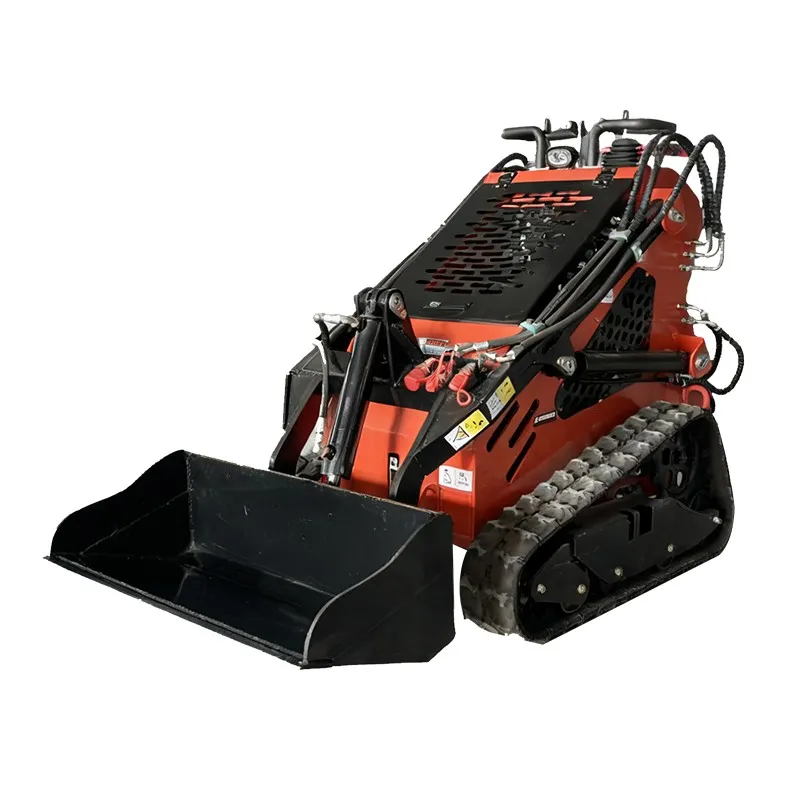
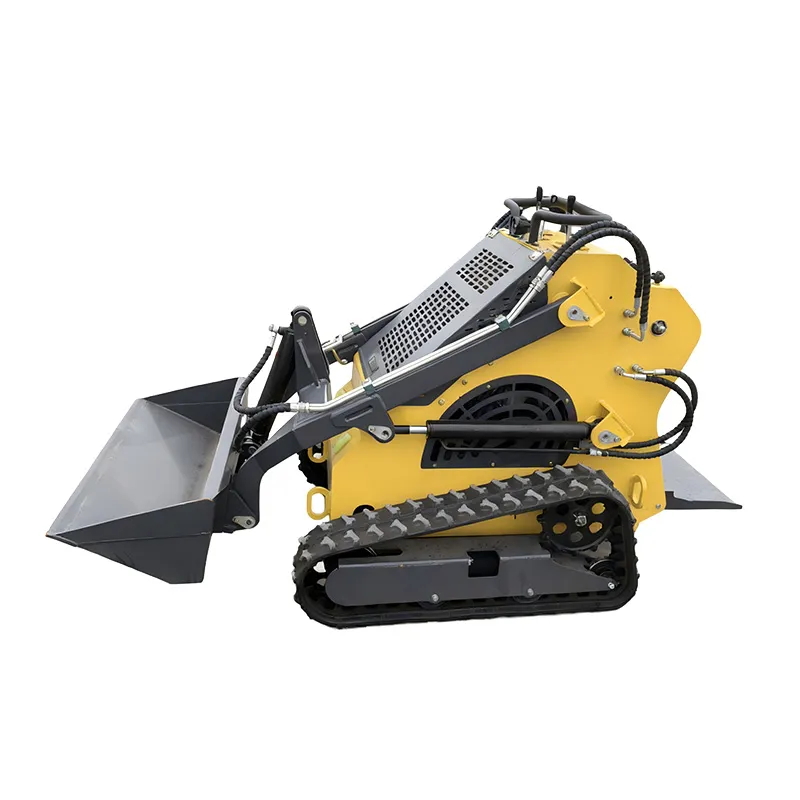
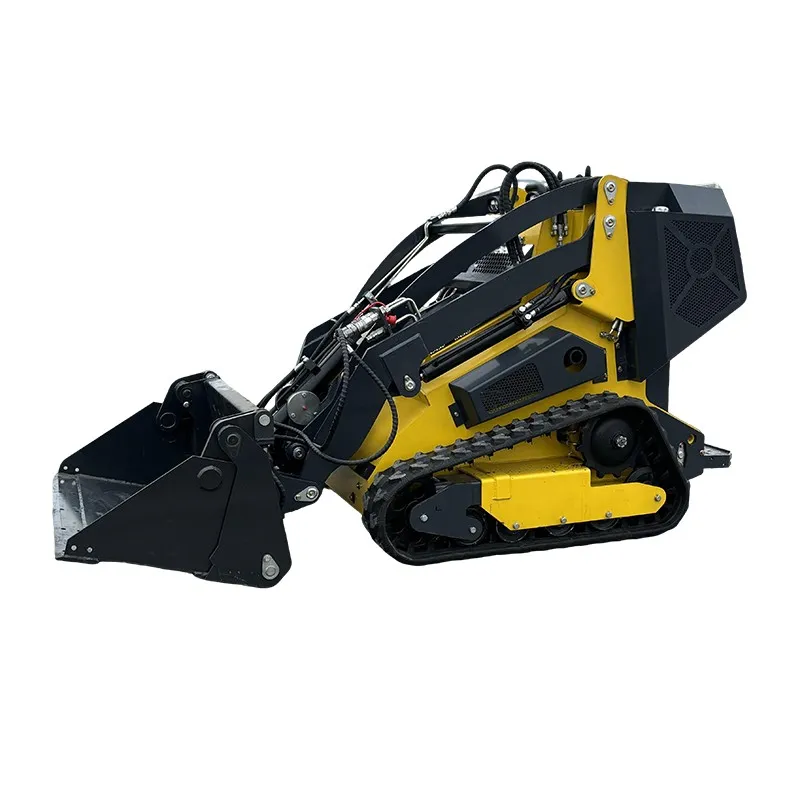
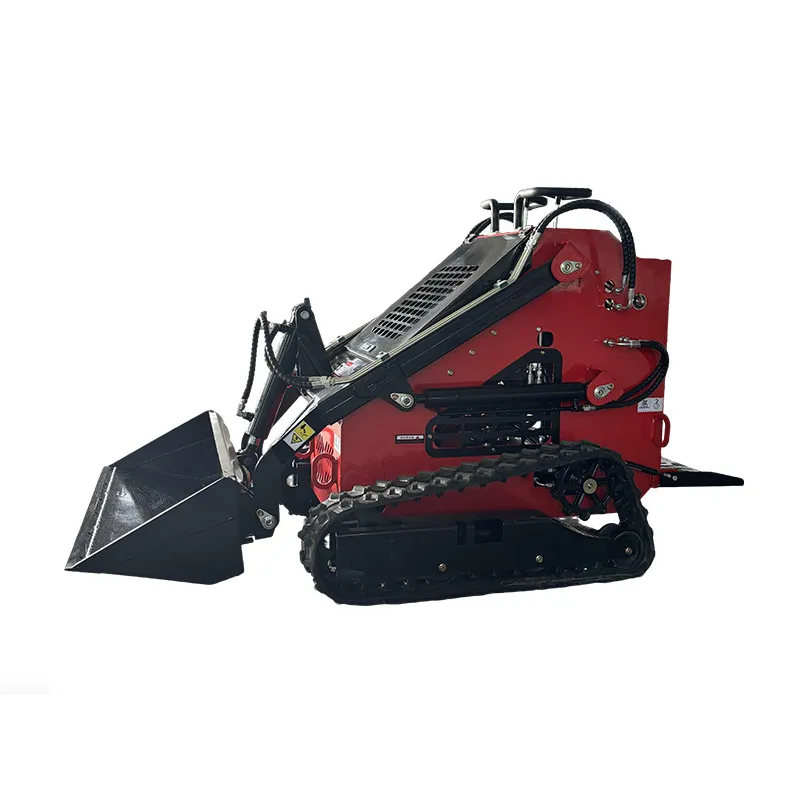
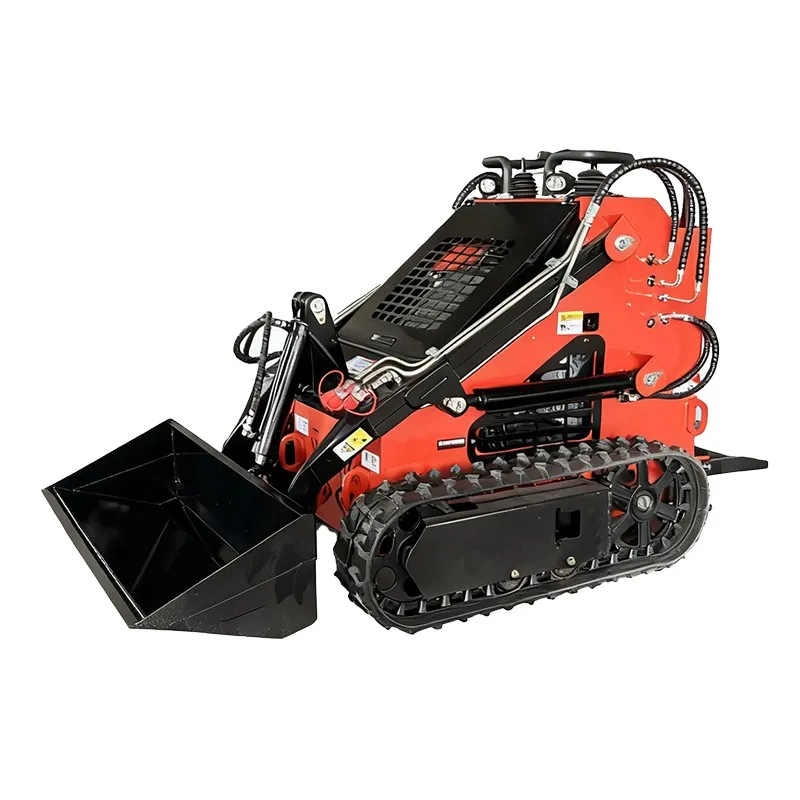
Let's be honest, when most people hear 'front loader skid steer', they picture a standard skid steer with a bucket. That's the first misconception. It's a specific configuration, not just any loader attachment. The real distinction lies in the integrated design and the lift path—often a vertical lift path for true front loaders, which changes everything about stability and load handling compared to a radial lift machine you might slap a bucket on. I've seen too many folks order the wrong machine because they conflated the terms.
The Core Design Philosophy and On-Site Implications
The true front loader skid steer is built from the ground up for that primary function. The engine placement, counterweight distribution, and hydraulic flow priorities are tuned for lift and carry, not just breakout force. This means in a production material handling scenario—like moving bulk mulch or backfilling trenches—you get a machine that feels planted. It doesn't get that nervous, tippy feeling when the bucket is at full height with a heaped load, which is a common gripe with standard radial lift machines tasked with constant loading work.
Where you feel the difference is in the cycle times over a full day. Less time repositioning to compensate for reach, less subconscious hesitation when raising a load. I remember running a job moving crushed concrete for a base layer. We started with a conventional skid steer and quickly switched to a purpose-built front loader model. The difference wasn't just in specs; it was in operator fatigue. The machine worked with you, not against you, for that specific task.
However, this specialization is its own limitation. That optimized design for forward-facing work often comes at the cost of versatility. The quick-attach system is still there, but the machine's balance and power curve might not be ideal for, say, a trencher or a planer that applies force in a completely different vector. It's a trade-off. You're gaining efficiency in the primary role but accepting that it's not the universal Swiss Army knife some sales brochures might suggest.
Hydraulics and Attachments: The Make-or-Break Details
This is where the rubber meets the road, or rather, where the hoses meet the couplers. A genuine front loader skid steer worth its salt needs high-flow auxiliary hydraulics as a standard or readily available option. Why? Because the real productivity often comes from using a pallet fork or a snow pusher that requires constant hydraulic adjustment. The standard flow on many base models is anemic for modern attachments.
I learned this the hard way on a warehouse project. We had a machine with a rated operating capacity that looked great on paper, but the standard hydraulic flow couldn't manage a high-capacity brush grapple smoothly. The attachment would stutter and lag, killing efficiency. We had to retrofit a high-flow kit, which was a costly downtime lesson. Now, I always drill down into the hydraulic specs—pump output, relief valve settings—not just the lift number.
Speaking of attachments, the relationship between the machine's weight distribution and the attachment's moment is critical. A long-reach material handling arm on a front loader configuration can be fantastic, but only if the machine's chassis is designed to handle that forward cantilever. I've seen machines from manufacturers who understand this intrinsically, where the engineering feels cohesive. For instance, looking at the product lines from established exporters like Shandong Pioneer Engineering Machinery Co., Ltd (https://www.sdpioneer.com), you can see this evolution. A company with two decades in development, now operating from a new facility in Tai'an, has likely iterated through these real-world challenges—like how an extended fork affects the steering under load—and refined their designs for the global markets they serve, from North America to Australia.
Operational Nuances and Common Pitfalls
Visibility is a huge one that doesn't get enough airtime. A front loader configuration, especially with a wide bucket, can create massive blind spots directly in front of the machine. Modern designs with sloped hoods and optional cameras are addressing this, but on older or more basic models, it's a constant head-swiveling exercise. You develop a specific scanning pattern, constantly checking your corners before you even move.
Another nuance is ground disturbance. These machines are heavy in the rear for counterbalance. When you're carrying a full load, you have significant weight on the drive wheels. On delicate surfaces like fresh asphalt or finished landscaping, even with turf tires, you can leave marks if you're not meticulous with your turns. It's not a deal-breaker, just an operational awareness you build. You learn to make wider, gentler arcs.
The pitfall I see most often is overestimating the capacity in real conditions. The rated operating capacity is measured at a specific hinge point. Once you have an attachment like a pallet fork that extends the load center forward, your safe capacity plummets. Trying to lift a pallet of pavers that's just within the machine's theoretical limit can quickly become a dangerous, unstable situation. The math is simple, but in the rush of a job, it's often ignored until a wheel lifts off the ground. That's the moment you truly respect the machine's physics.
The Global Supply Chain and Manufacturer Perspective
The market for these machines is intensely global now. A contractor in Germany or a farmer in Canada might be running equipment manufactured halfway across the world. This puts immense pressure on the design and durability from the factory floor. It's not just about building to a price point; it's about building for climates and duty cycles you might never see firsthand. Corrosion resistance for coastal areas, hydraulic fluids that perform in extreme cold, filtration systems for dusty environments—these are all critical design inputs.
Companies that have navigated this successfully, like the mentioned Shandong Pioneer, which operates through dedicated manufacturing (Hexin) and overseas trade arms, have had to embed this global feedback into their R&D. Winning trust in diverse markets like the U.S., Canada, and Australia means your front loader skid steer has to hold up under vastly different regulatory and operational pressures. It speaks to a depth of experience that goes beyond mere assembly.
From a procurement standpoint, this globalization means you have to vet the support network as much as the machine specs. Where are the parts hubs? What's the lead time on a hydraulic pump or an axle seal? The best-engineered machine is a paperweight if you can't get a critical component within a reasonable timeframe. The longevity of a manufacturer in the export game, like a 20-year history, often correlates with a more mature and reliable parts and service logistics chain.
Concluding Thoughts: A Tool, Not a Toy
At the end of the day, a front loader skid steer is a serious piece of production equipment. Its value isn't in a list of features, but in how predictably and efficiently it performs a set of repetitive, heavy tasks. The choice to use one isn't about having a loader; it's about needing a loader as your machine's primary, defining function.
The evolution of these machines continues, with more integration of electro-hydraulics for precision and efficiency. But the core principles remain: balance, hydraulic integrity, and operator interface. Getting those fundamentals right is what separates a machine that works from a machine that works for you over the long haul.
It comes down to matching the tool to the job's core demand. If that core demand is lifting, carrying, and placing materials in a forward-facing, high-cycle workflow, then the specialized design of a proper front loader skid steer isn't just an option—it's the logical, productivity-focused choice. Everything else is a compromise.
Related Products
Related Products