- Chinese
- French
- German
- Portuguese
- Spanish
- Russian
- Japanese
- Korean
- Arabic
- Irish
- Greek
- Turkish
- Italian
- Danish
- Romanian
- Indonesian
- Czech
- Afrikaans
- Swedish
- Polish
- Basque
- Catalan
- Esperanto
- Hindi
- Lao
- Albanian
- Amharic
- Armenian
- Azerbaijani
- Belarusian
- Bengali
- Bosnian
- Bulgarian
- Cebuano
- Chichewa
- Corsican
- Croatian
- Dutch
- Estonian
- Filipino
- Finnish
- Frisian
- Galician
- Georgian
- Gujarati
- Haitian
- Hausa
- Hawaiian
- Hebrew
- Hmong
- Hungarian
- Icelandic
- Igbo
- Javanese
- Kannada
- Kazakh
- Khmer
- Kurdish
- Kyrgyz
- Latin
- Latvian
- Lithuanian
- Luxembou..
- Macedonian
- Malagasy
- Malay
- Malayalam
- Maltese
- Maori
- Marathi
- Mongolian
- Burmese
- Nepali
- Norwegian
- Pashto
- Persian
- Punjabi
- Serbian
- Sesotho
- Sinhala
- Slovak
- Slovenian
- Somali
- Samoan
- Scots Gaelic
- Shona
- Sindhi
- Sundanese
- Swahili
- Tajik
- Tamil
- Telugu
- Thai
- Ukrainian
- Urdu
- Uzbek
- Vietnamese
- Welsh
- Xhosa
- Yiddish
- Yoruba
- Zulu
- Kinyarwanda
- Tatar
- Oriya
- Turkmen
- Uyghur


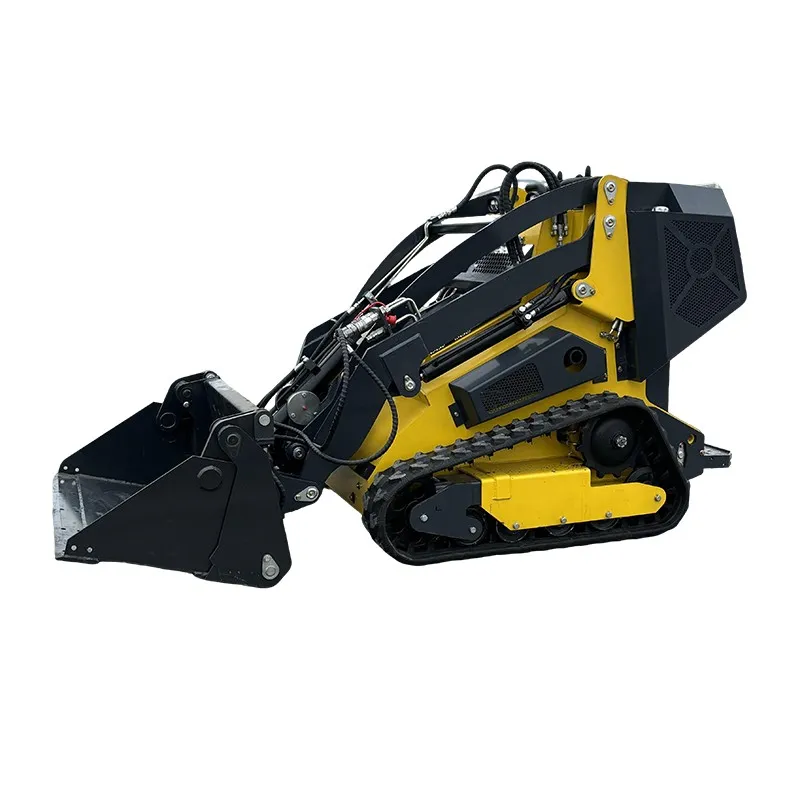
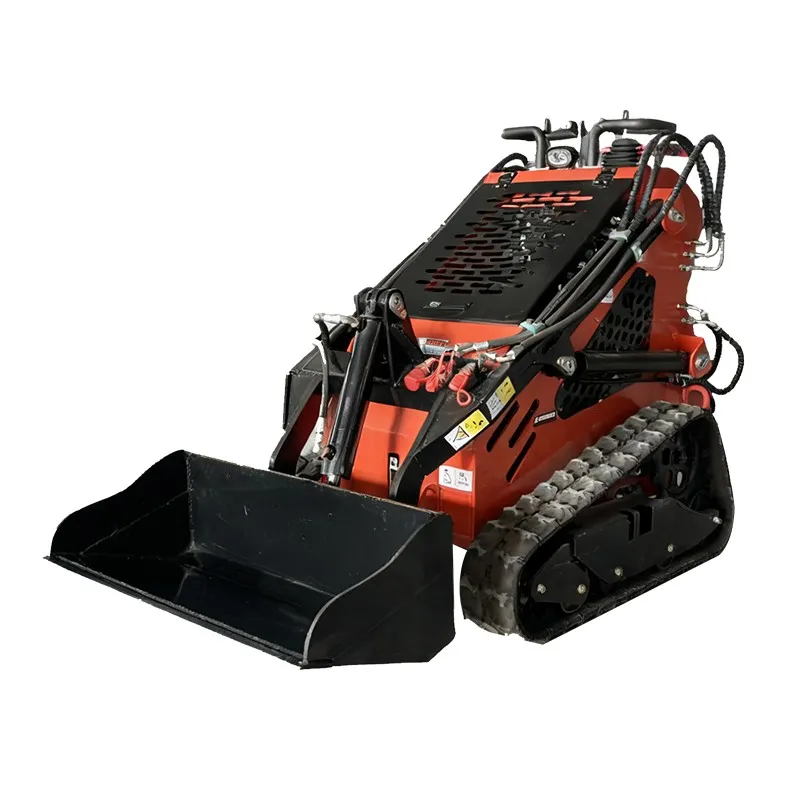
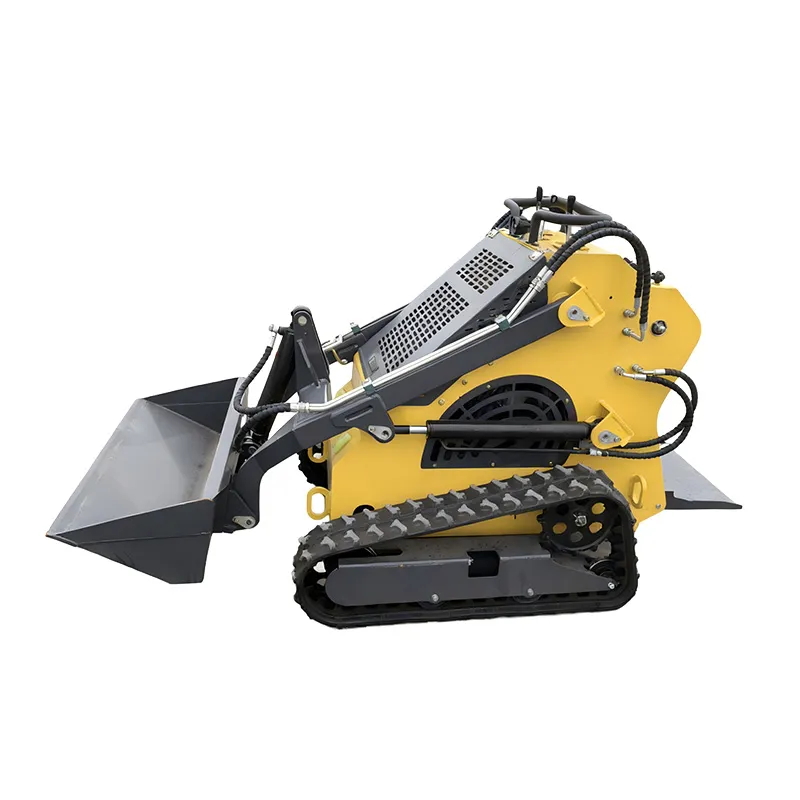
gamzen skid steer loader
You hear 'Gamzen skid steer loader' and a lot of folks immediately think it's just another cheap import, a knock-off trying to cash in on the Bobcat name. That's the first mistake. Having run a few of these machines on smaller, tight-budget demo sites, I've learned it's more nuanced. The branding itself is a bit of a puzzle—it's not a global giant like Caterpillar or Kubota. From what I've gathered through parts suppliers and a few conversations at trade shows, the Gamzen line is often associated with manufacturers out of Shandong, China, a region that's become a hub for this kind of compact machinery. It's crucial to separate the badge from the build. The real question isn't Who is Gamzen? but Who built this particular unit and what's under the hood?
Decoding the Name and Finding the Source
Tracking down the origin of a Gamzen machine feels like detective work. There's no single 'Gamzen Corporation' with a flagship factory. Instead, it's typically a model name used by various export-focused manufacturers. This is where companies like Shandong Pioneer Engineering Machinery Co., Ltd come into the picture. They've been in the game since 2004, operating out of Jining and now relocated to a newer facility in Ningyang. Their website, https://www.sdpioneer.com, shows a range of compact equipment, and while they might not brand everything as 'Gamzen', they represent the exact type of supplier that produces and exports these loaders to markets in the US, Canada, and Australia. When you're looking at a Gamzen, there's a good chance it rolled off the line of a firm with a similar profile to Pioneer—experienced in manufacturing for overseas trade, understanding the need for certain specs and price points.
The implication here is significant. You're not buying from an OEM with a century of history. You're buying from a industrial exporter. This isn't inherently bad, but it shifts the entire value proposition. The focus is on component sourcing and assembly to a competitive price. I've seen units where the hydraulic pumps are from a reputable Italian maker, but the hoses and fittings feel a grade lighter than what you'd find on a mainstream brand. It's a mix-and-match reality. Your dealer relationship becomes everything because that's your lifeline for parts and support, not some distant brand name.
I recall a specific Gamzen skid steer, a 75hp model, we used for loading mulch and light grading. The engine, a Deutz clone, ran surprisingly well—no complaints on power. The issue was in the ergonomics. The seat bar interlock was finicky, sometimes requiring a forceful jiggle to engage. The auxiliary hydraulic controls had a longer throw than I was used to, making precise attachment work slower. These aren't deal-breakers, but they're the tangible differences you only notice after 8 hours in the seat. They speak to a design philosophy centered on functional replication rather than operator refinement.
On-Site Performance and the Real Cost of Operation
Let's talk about dirt time. The common assumption is that these machines are only for light duty. That's not entirely true. For general farm work, landscaping, or as a support machine on a larger site, they can hold their own. The breakout force and lift capacity on paper often match or even exceed comparable models from established brands. I've seen a Gamzen loader confidently handle pallets of pavers that would make a similar-aged used Bobcat groan. The initial performance can be genuinely impressive for the price.
However, the 'real cost' reveals itself around the 1,500-hour mark, in my observation. This is where the quality of secondary components shows. We had one machine where the spindle seals started weeping around 1,200 hours. Not a catastrophic failure, but a downtime event. The seal kit was cheap and available, but the labor to press out the spindle and replace it ate into the cost savings. Another point is the electrical system. The wiring harnesses can be vulnerable to vibration. We had recurring issues with a faulty connection at the ignition switch, causing intermittent starting problems—a frustrating ghost to chase.
This is the critical calculation. The upfront savings on a Gamzen skid steer loader can be substantial. But you must budget for more proactive maintenance and have a plan for parts. You can't just call the nearest national service center. Your dealer, or a resourceful mechanic, needs to be able to cross-reference part numbers. Many components are generic and can be sourced from industrial suppliers, but identifying them requires effort. It's a machine for an owner-operator who doesn't mind getting their hands dirty with maintenance, not for a large fleet manager who needs uptime guarantees and a single phone call for service.
Attachments and the Compatibility Question
One of the biggest selling points for any skid steer is the attachment ecosystem. Here, the Gamzen presents both an advantage and a potential headache. Most units come with a universal quick-attach system that is dimensionally compatible with the mainstream pattern. In theory, you can run any standard bucket, auger, or grapple. In practice, I've found slight alignment issues. The latch mechanism sometimes needs adjustment to smoothly accept a well-used attachment from another brand. It's a millimeter-tolerance game.
The hydraulic flow and pressure are the other key factors. We ran a standard forestry brush grapple on a Gamzen without issue, as it didn't require high flow. However, when we tried a cold planer attachment that demanded high GPM, the machine's system, while rated for it, seemed to struggle with sustained power and overheated quicker than expected. The lesson was clear: for basic, low-flow attachments, compatibility is fine. For high-demand, continuous-use tools, you need to very carefully match the machine's actual hydraulic performance, not just its rated specs. Don't assume it will run anything you throw at it.
This is where a supplier's support matters. A company like the aforementioned Shandong Pioneer, which exports globally, tends to have better documentation on hydraulic specs and attachment compatibility for their models. They've had to answer these questions from international buyers. If you can trace your Gamzen to a specific exporter with that level of engagement, you're in a better position than buying a completely anonymous grey-market unit.
The Dealer Network and Parts Reality
This is the absolute make-or-break factor. Buying a Gamzen from a tool rental yard's fire sale is a world apart from buying one from an established equipment dealer who imports them directly and stocks parts. The ideal scenario is a dealer who brings in containers of machines and a corresponding container of common wear parts: filters, seals, hoses, and maybe even a spare spindle or hydraulic motor.
I've been in both situations. The former leads to scavenging parts from online forums or trying to match bearings by physical measurement. The latter feels almost like owning a mainstream brand. The dealer we worked with for one project had a relationship with Shandong Hexin (the manufacturing arm linked with Pioneer's trade operations) and could get specific parts air-freighted in under two weeks. That's a viable setup. It turns the machine from a disposable asset into a serviceable piece of equipment. Always, always vet the dealer's parts commitment before looking at the machine's price tag.
Without that, you're looking at extended downtime. I know of a contractor who bought two Gamzen loaders at a fantastic price. When one threw a track, getting the correct replacement idler wheel took over a month, as the initial supplier had gone quiet. The machine sat, losing money. The total cost of ownership skyrocketed. The machine itself was fine; the support ecosystem failed.
A Final, Pragmatic Verdict
So, would I recommend a Gamzen skid steer loader? It's not a yes-or-no answer. It's a conditional recommendation. If you are a small operator, price-sensitive, mechanically inclined, and have secured a deal with a responsive dealer who imports directly from a known factory—like those with the track record of a Shandong Pioneer—then it can be a smart financial move. The value is there. You get a capable machine for less capital outlay, accepting a higher degree of hands-on maintenance responsibility.
If you need maximum uptime, operate in remote areas, or run a fleet where standardization simplifies logistics, then the established brands, with their deep dealer networks and instant parts availability, are worth the premium. The Gamzen, in this context, represents a risk.
In the end, the 'Gamzen' name is just a label on a product of global manufacturing. The machine's quality and your success with it depend far more on the specific factory that built it and the commercial chain that brought it to you. Do your homework on the exporter, test the dealer's parts supply, and go in with your eyes open to the trade-offs. It's a tool, not a trophy. And like any tool, its worth is proven by the work it does and the cost of keeping it running.
Related Products
Related Products