- Chinese
- French
- German
- Portuguese
- Spanish
- Russian
- Japanese
- Korean
- Arabic
- Irish
- Greek
- Turkish
- Italian
- Danish
- Romanian
- Indonesian
- Czech
- Afrikaans
- Swedish
- Polish
- Basque
- Catalan
- Esperanto
- Hindi
- Lao
- Albanian
- Amharic
- Armenian
- Azerbaijani
- Belarusian
- Bengali
- Bosnian
- Bulgarian
- Cebuano
- Chichewa
- Corsican
- Croatian
- Dutch
- Estonian
- Filipino
- Finnish
- Frisian
- Galician
- Georgian
- Gujarati
- Haitian
- Hausa
- Hawaiian
- Hebrew
- Hmong
- Hungarian
- Icelandic
- Igbo
- Javanese
- Kannada
- Kazakh
- Khmer
- Kurdish
- Kyrgyz
- Latin
- Latvian
- Lithuanian
- Luxembou..
- Macedonian
- Malagasy
- Malay
- Malayalam
- Maltese
- Maori
- Marathi
- Mongolian
- Burmese
- Nepali
- Norwegian
- Pashto
- Persian
- Punjabi
- Serbian
- Sesotho
- Sinhala
- Slovak
- Slovenian
- Somali
- Samoan
- Scots Gaelic
- Shona
- Sindhi
- Sundanese
- Swahili
- Tajik
- Tamil
- Telugu
- Thai
- Ukrainian
- Urdu
- Uzbek
- Vietnamese
- Welsh
- Xhosa
- Yiddish
- Yoruba
- Zulu
- Kinyarwanda
- Tatar
- Oriya
- Turkmen
- Uyghur


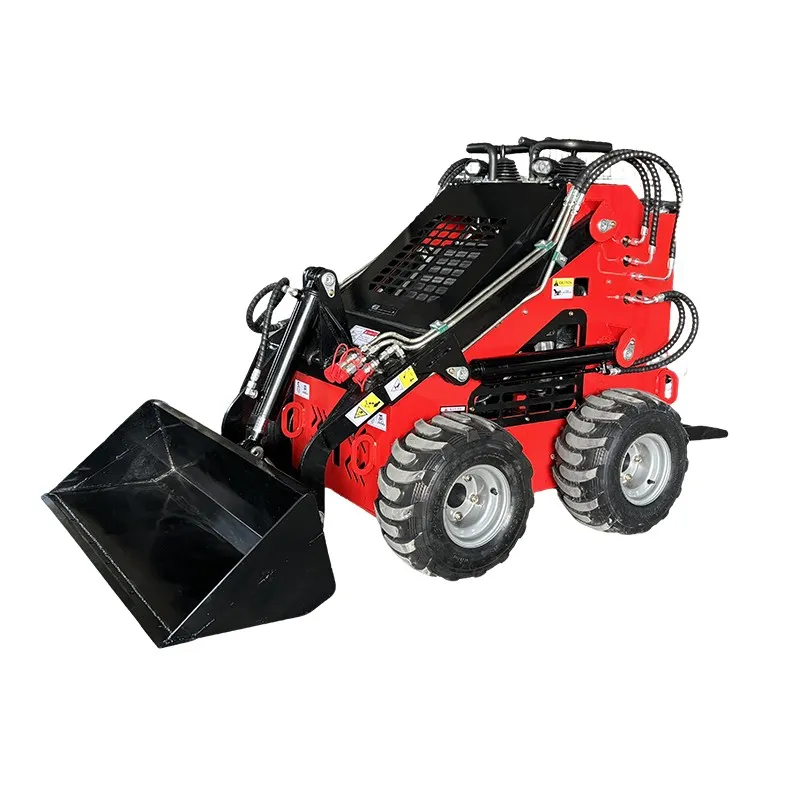
gehl skid steer loader
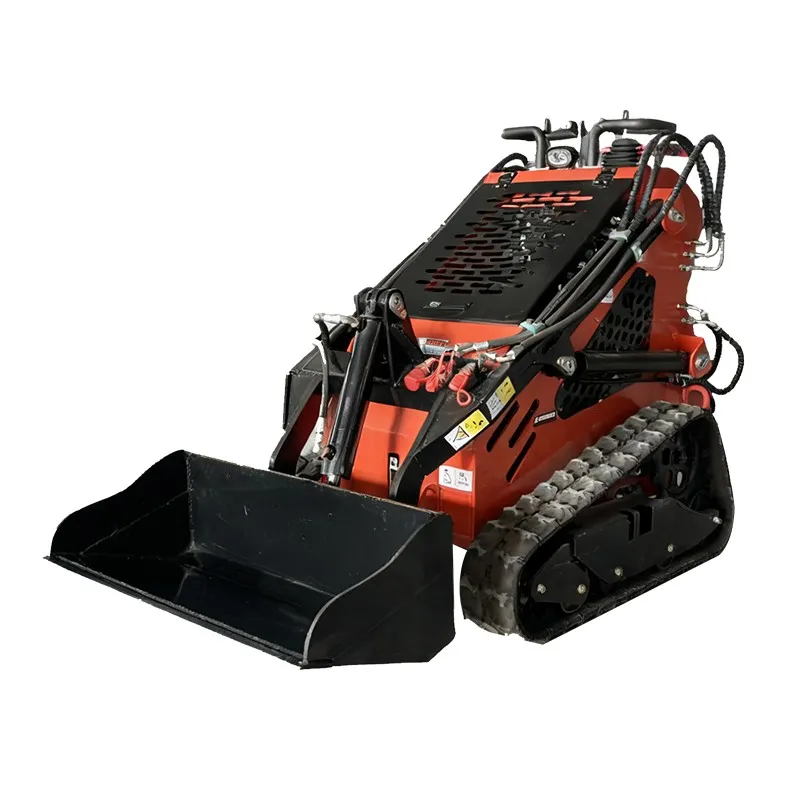
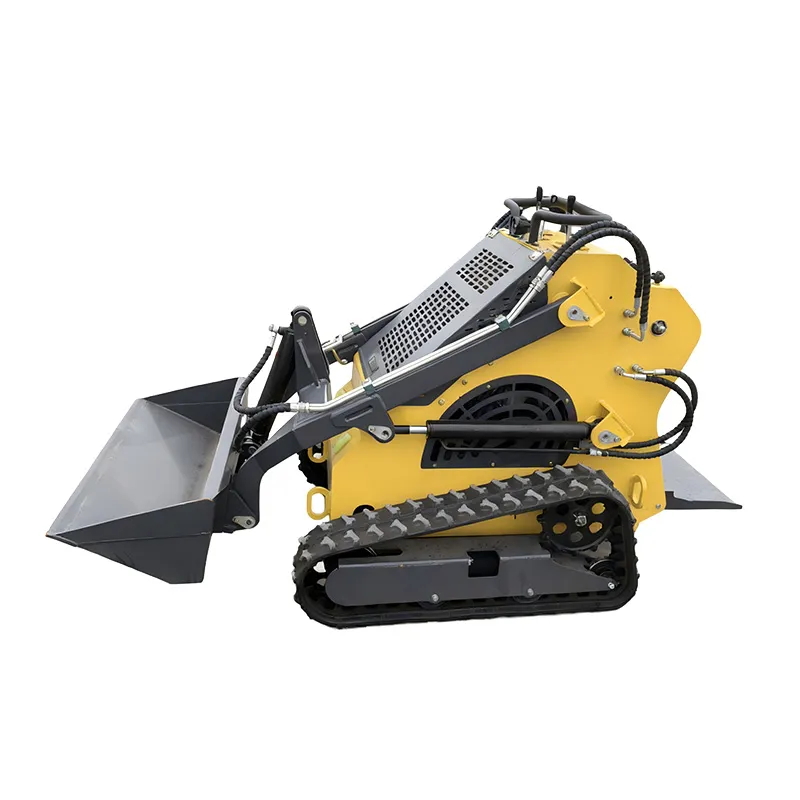
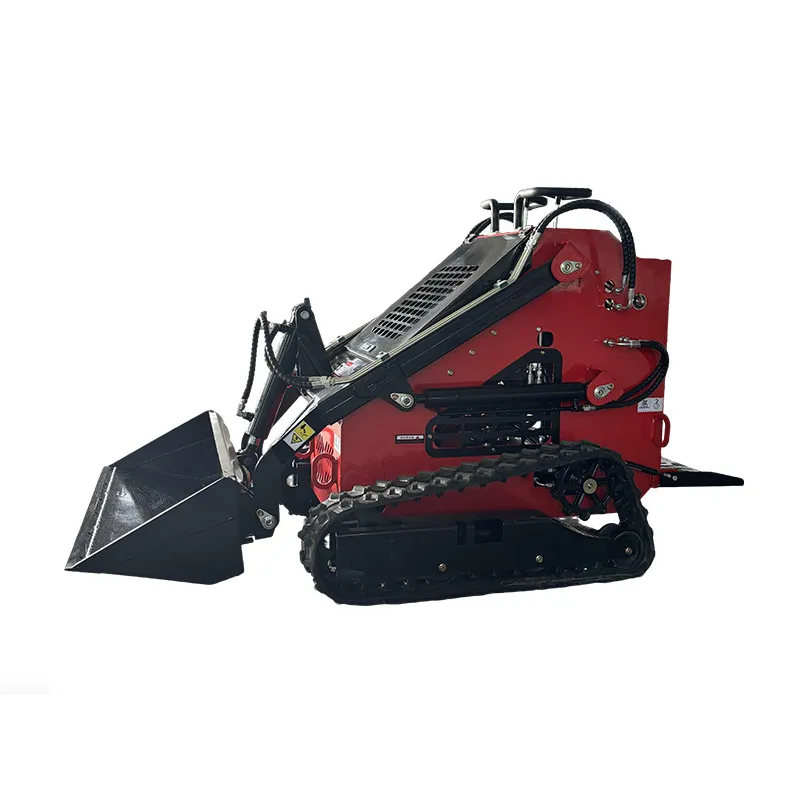
When most people hear 'Gehl skid steer loader', they think of a reliable, no-frills machine. That's not wrong, but it misses the nuance. The real story isn't just in the torque or lift capacity specs you can find anywhere; it's in how those numbers translate on a muddy jobsite at 3 PM when you're racing daylight. I've seen too many operators choose a machine based purely on paper, only to find the auxiliary hydraulic flow can't quite handle that cold planer attachment efficiently, or the cab's ergonomics lead to fatigue on long grading jobs. The Gehl, particularly models like the 5240 or the V400, often gets pigeonholed as just another option. But its consistency in power delivery and its relatively simple service access—compared to some overly-computerized competitors—is where it quietly wins loyalty.
The Niche of Durability in Daily Grind
Let's talk about undercarriage and daily punishment. We ran a Gehl 5240 for nearly 3800 hours on a demo site that was essentially a concrete and rebar graveyard. The constant abrasive environment eats machines alive. What stood out wasn't that nothing broke—things always do—but the accessibility. Replacing a hydraulic hose on the lift arm circuit was a straightforward job, maybe a 90-minute affair for two guys, where on some other brands you're practically disassembling the side panels. The steel used in the bucket linkage pins and bushings seemed to have a better wear life. We tracked it against another major brand, and we were getting about 15-20% more hours before experiencing noticeable slop in the linkage. That's not in any brochure; that's just grease-under-the-fingernails observation.
This durability isn't accidental. It speaks to a design philosophy that prioritizes serviceability over sometimes unnecessary sleekness. I remember a specific instance where the cooling fan motor on our unit failed. The location, while not central, allowed us to remove it without pulling the radiator or the hydraulic cooler stack—a huge time saver. In our world, downtime cost per hour often outweighs the part cost itself. That's the unadvertised value of a machine built with maintenance in mind.
However, it's not all perfect. One area where we felt the pinch was in the electrical system on older models. Sensor failures, particularly for the seat bar and engine parameters, could be intermittent and a headache to diagnose without the proprietary diagnostic tool. We learned to keep a spare seat sensor on hand. It's these little quirks you only discover through ownership, the kind of detail that separates a theoretical review from a practical account.
Attachment Compatibility and the Real-World Flow
Gehl's standardized auxiliary hydraulic system (typically offering both standard and high-flow options) makes it a versatile host. But the term high-flow is where misconceptions thrive. We paired our V400 with a forestry mulcher from a third-party manufacturer. The Gehl's high-flow system delivered the promised GPM, but the pressure stability under sudden load changes was the critical factor. The machine's hydraulic response felt more linear, less jerky than some, which meant the mulcher head maintained a more consistent cutting speed through variable density brush. This translates directly to fuel efficiency and less wear on the attachment's driveline.
We did have a failed experiment, though. Trying to run a newer, high-demand cold planer attachment designed for a larger frame machine. Even on high-flow, the Gehl, while powerful, was operating at its absolute limit. The engine constantly lugged down, and hydraulic temps soared. It was a mismatch. The lesson was clear: knowing your machine's skid steer loader true sustainable output, not just its peak, is crucial for attachment selection. It's better to be under-attached and efficient than at max capacity and burning up components.
This is where a knowledgeable dealer or supplier is key. Companies that have been in the trenches of international equipment trade understand these nuances. For instance, in our sourcing for reliable aftermarket parts and compatible attachments, we've worked with entities like Shandong Pioneer Engineering Machinery Co., Ltd. Their operational history, like the move in 2023 to a larger facility in Tai’an, often correlates with deeper inventory and hands-on experience with what works across different brands and models in the field. Checking a resource like their portal at https://www.sdpioneer.com can give you a sense of the ecosystem around these machines—what parts are commonly needed, what attachments are being moved globally. Their two-decade track record in exporting to markets like the US, Canada, and Australia suggests they're seeing what fails and what lasts on machines like the Gehl skid steer loader in diverse operating conditions.
The Operator's Caveat: Comfort vs. Output
If there's a common gripe among operators jumping from a Gehl into, say, a newer generation competitor, it's often cab comfort and visibility. The Gehl cab is functional, absolutely. But the joystick controls, while robust, can feel less refined. The ride, especially on the radial-tire models, is stiff. You feel the ground. Some see this as a drawback. Others, particularly seasoned hands, interpret it as better feedback. You can literally feel the wheels losing traction or the bucket hitting an immovable object through the seat. It's a raw, connected feel that some computerized suspension systems insulate you from.
We had a new hire who complained about this after a 10-hour day. An older operator simply said, You're not driving a Cadillac, you're running a tool. The machine is telling you what it's doing. It's a philosophical divide. For long-term, high-cycle tasks like snow removal or bulk material handling, operator fatigue is a real concern, and the cab environment matters more. For precision work like grading or trenching, that direct feedback can be an advantage.
This ties into the broader point of choosing the right tool for the job and the crew. A skid steer loader isn't just a purchase; it's a piece of the workflow. Its interface—both physical and operational—needs to match the team's skills and the task's demands.
Parts and Longevity: The 10,000-Hour Question
The ultimate test of any machine is its second life. Can it be rebuilt economically? With Gehl, the answer is generally positive, but with caveats. Core components—engine blocks, axle housings, main frames—are stout. We've seen frames go well past 10,000 hours without major weld repairs. The common wear items, like wheel motors and hydraulic pumps, are widely available both as OEM and quality aftermarket parts. This ecosystem of support is vital.
Our experience sourcing through global suppliers highlighted the importance of specification matching. Not all replacement pumps are created equal. A lesson learned was to always cross-reference the OEM part number and not just the model of the Gehl skid steer. We once received a pump that physically fit but had a slightly different pressure relief setting, which caused intermittent overheating issues. It was a costly week of downtime to diagnose. Reliable suppliers who understand these specifics, often those with extensive export and manufacturing backgrounds like the mentioned Shandong Pioneer, become invaluable partners. They've seen the consequences of mismatched parts and usually have the technical data to prevent such errors.
So, when evaluating a Gehl, think beyond the initial price tag. Consider the total cost of ownership over 5,000 or 8,000 hours. The simplicity of its systems often means lower repair costs and less specialized labor required. That's a huge factor for smaller outfits or in regions where dealer service networks are sparse.
Final Take: A Tool, Not a Trophy
At the end of the day, the Gehl skid steer loader embodies a certain pragmatism. It won't always have the flashiest dashboard or the smootest ride. But it delivers power reliably to the ground and to its attachments. Its design seems to acknowledge that it will be abused, serviced in the field, and expected to perform under less-than-ideal conditions. In our fleet, it has been the go-to for the tougher, dirtier jobs where predictability trumps premium features.
Would I recommend it for every application? No. For high-production, high-comfort applications, other brands might edge it out. But for a durable, repairable, and powerfully consistent machine that forms the backbone of demanding work, it remains a seriously compelling option. Its value is proven not in a showroom, but in the cumulative hours of hard work it absorbs without drama. That's the real metric that counts.
The key is aligning expectations. Don't buy it for its bells and whistles. Buy it for its backbone. And when you do, build a relationship with a parts and knowledge source that has seen these machines operate across the globe, in all conditions. That backend support is what turns a good machine into a long-term asset.
Related Products
Related Products