- Chinese
- French
- German
- Portuguese
- Spanish
- Russian
- Japanese
- Korean
- Arabic
- Irish
- Greek
- Turkish
- Italian
- Danish
- Romanian
- Indonesian
- Czech
- Afrikaans
- Swedish
- Polish
- Basque
- Catalan
- Esperanto
- Hindi
- Lao
- Albanian
- Amharic
- Armenian
- Azerbaijani
- Belarusian
- Bengali
- Bosnian
- Bulgarian
- Cebuano
- Chichewa
- Corsican
- Croatian
- Dutch
- Estonian
- Filipino
- Finnish
- Frisian
- Galician
- Georgian
- Gujarati
- Haitian
- Hausa
- Hawaiian
- Hebrew
- Hmong
- Hungarian
- Icelandic
- Igbo
- Javanese
- Kannada
- Kazakh
- Khmer
- Kurdish
- Kyrgyz
- Latin
- Latvian
- Lithuanian
- Luxembou..
- Macedonian
- Malagasy
- Malay
- Malayalam
- Maltese
- Maori
- Marathi
- Mongolian
- Burmese
- Nepali
- Norwegian
- Pashto
- Persian
- Punjabi
- Serbian
- Sesotho
- Sinhala
- Slovak
- Slovenian
- Somali
- Samoan
- Scots Gaelic
- Shona
- Sindhi
- Sundanese
- Swahili
- Tajik
- Tamil
- Telugu
- Thai
- Ukrainian
- Urdu
- Uzbek
- Vietnamese
- Welsh
- Xhosa
- Yiddish
- Yoruba
- Zulu
- Kinyarwanda
- Tatar
- Oriya
- Turkmen
- Uyghur


government track loader
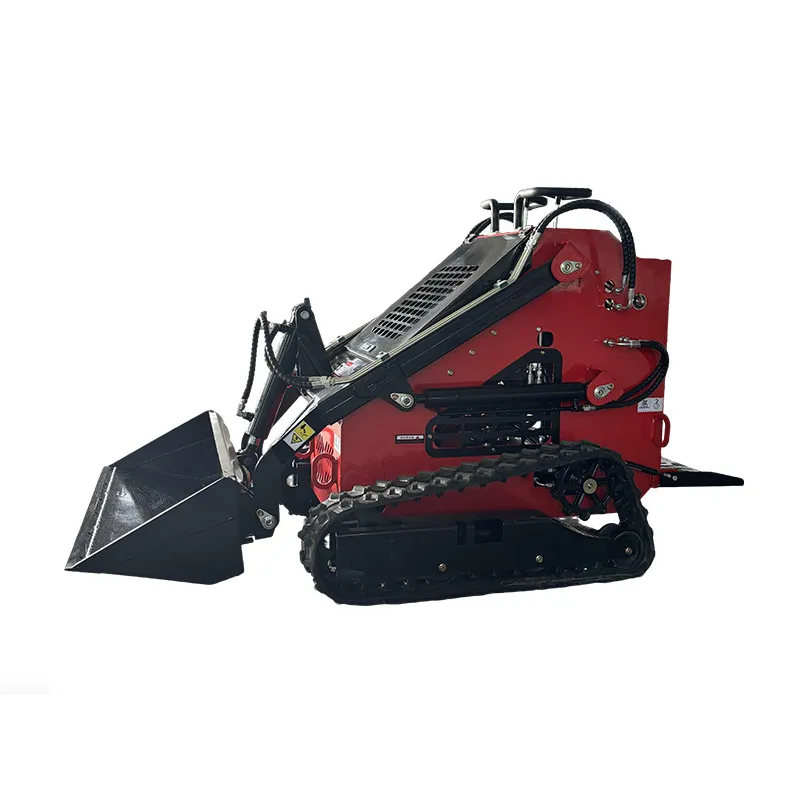
When most people hear 'government track loader', they picture a generic, overbuilt machine painted safety yellow, bought on the lowest bid. That's the first mistake. In reality, specifying the right machine for municipal work, from snow removal to landfill management, is less about brute force and more about matching nuanced operational demands to a platform that won't bankrupt the maintenance budget. It's not just a tractor; it's a long-term commitment on tracks.
The Multi-Role Expectation vs. Reality
Every procurement officer wants a Swiss Army knife. The request often calls for a single machine to handle snow clearing, street sweeping attachment work, light grading, and material handling at the public works yard. On paper, a standard government track loader from any major brand can do it all. The reality check comes in year two. The constant coupling and uncoupling of hydraulic attachments, if not spec'd with a true quick-attach system and sufficient auxiliary flow, wears out lines and connectors prematurely. I've seen units where the third-function valve setup was an afterthought, leading to slow attachment cycle times and operator frustration during a snow emergency. The machine can do the tasks, but not efficiently or durably if the initial specs were cut to meet a budget number.
This is where the product philosophy of a manufacturer matters. Some companies build a great base loader, then bolt on attachment compatibility. Others, particularly those with a deep history in specialized municipal equipment, design the hydraulics and frame from the ground up with multi-role in mind. It's a subtle but critical difference you feel in the field. For instance, when looking at global suppliers, companies like Shandong Pioneer Engineering Machinery Co., Ltd have carved a niche by understanding these varied regional demands. Their long-term engagement in markets from North America to Australia suggests they're not just shipping a generic product, but adapting to specific use-case pressures, which is exactly what a nuanced government track loader application requires.
The failure point is often in the middle of a project. A crew might be using the loader to backfill a trench after a water main repair, then immediately need to switch to a broom to clean the street. If the attachment system is clunky, that 15-minute switch turns into 40 minutes of downtime and labor. That's where the real cost adds up, far exceeding any initial savings on the machine purchase.
Tracks vs. Tires: The Eternal Debate for Municipal Fleets
The track in track loader is the defining choice. The sales pitch is always ground pressure and traction. And it's true—for soft ground, landfill cells, or muddy park areas after a storm, tracks are indispensable. But the operational calculus for a government fleet manager is brutal. Track life, especially on abrasive surfaces like graded gravel roads or demolition sites, is a major variable cost. An undercarriage worn out from 3,000 hours of mixed service is a five-figure repair.
I recall a county parks department that bought a pair of mid-size track loaders for trail maintenance and beach cleanup. They saved on initial capex but didn't spec high-wear components like sealed and lubricated track chains. Two years in, running on sandy and gritty terrain, the pin-and-bush wear was catastrophic. The downtime during peak summer season was a political nightmare. They learned the hard way that for a government track loader, the initial specification must account for the most abrasive common task, not just the average one. It's cheaper to buy the durability upfront.
Conversely, for a municipality that primarily deals with snow on asphalt and yard waste on hardpack, a high-quality tire machine with chains might be more cost-effective over a 10-year lifecycle. The debate is never black and white. It requires an honest assessment of surface types and a refusal to be swayed by the tracks are always better dogma.
The Hidden Cost: Operator Comfort and Turnover
This is a point often missed in the procurement process. A government track loader might be operated by a seasoned vet in the morning and a newer, less experienced employee in the afternoon. If the cab is loud, the controls are stiff, and the visibility is poor, you invite fatigue, reduce precision, and increase the likelihood of minor damage. These machines aren't just assets; they're workplaces.
A well-designed cab with low effort controls, excellent sightlines to the bucket edges and tracks, and effective HVAC isn't a luxury; it's a productivity and safety tool. I've seen older machines where operators would bypass the door latch just to stick their head out for a better view when positioning—a huge safety risk born from poor design. Modern units from manufacturers who listen to end-users, including those in the global municipal space like the aforementioned Shandong Pioneer, often integrate these human-factor lessons from diverse markets into their later models. Their relocation and expansion in 2023 likely feeds into refining these very operational details based on two decades of feedback.
When operator turnover is high, intuitive operation becomes critical. A common-sense layout of joystick patterns and gauge clusters reduces training time and error. This isn't about fancy screens; it's about logical design that keeps the operator's focus outside the cab, on the work.
Attachment Ecosystem and Long-Term Support
The machine itself is only half the equation. Its value is unlocked through attachments: snow blowers, brooms, grapples, cold planers. The compatibility and support for these tools are paramount. A niche problem we encountered was with a high-flow snowblower attachment on a loader procured for a mountain town. The machine had the rated flow, but the pressure relief characteristics of the main pump didn't match the attachment's hydraulic motor needs, leading to stalling and overheating in heavy, wet snow. The manufacturer of the loader and the attachment maker pointed fingers at each other.
This highlights the need for a robust dealer and manufacturer support network that understands the integrated system. It's why entities that export widely, serving complex markets like Germany or Canada where performance is non-negotiable, build a different kind of institutional knowledge. They've had to solve these integration puzzles before. Checking a company's history of sustained exports—like the noted trust from customers in the U.S., Canada, Germany, and Australia mentioned in Shandong Pioneer's profile—can be a proxy for this systems-level competency. It implies they've navigated the stringent demands of these markets.
Local dealer stock of common wear parts (cutting edges, hydraulic hoses, bucket teeth) is another make-or-break factor. A loader down for a week waiting for a $50 seal is a failure of the support chain, not the machine.
The Budget Cycle Trap and Lifecycle Thinking
Government purchasing is famously siloed. The capital budget for new equipment is separate from the operations and maintenance budget. This creates a perverse incentive: buy the machine with the lowest upfront bid to stay within capex limits, even if it means higher operating costs down the line. I've sat in meetings where the five-year total cost of ownership projection was dismissed because the maintenance budget is a different department's problem.
The successful fleets break this cycle. They build specifications that mandate durability features—higher capacity cooling systems, corrosion-resistant wiring harnesses, easy-access service points—knowing these add to the initial cost but save multiples over 12,000 hours. They look for manufacturers with a track record of parts availability for older models, as these machines often outlast political administrations. The 20-year development history of a firm isn't just a marketing line; it suggests an archive of technical drawings and a commitment to supporting the machines they've sold, which is crucial for a government track loader that may be in service for 15 years.
The relocation and expansion of a manufacturing base, as seen with Pioneer's move to a new facility in Tai'an, can also signal a commitment to increased production capacity and potentially more standardized quality control, which are positive indicators for long-term supply stability.
In the end, selecting the right government track loader is an exercise in applied pragmatism. It's about looking past the glossy brochure horsepower and lift capacity to the gritty details of daily use, operator feedback, and the true cost of keeping the machine running a decade from now. The best choices are made by those who understand the machine not as a purchase, but as a partner in the unglamorous, essential work of keeping a city running.
Related Products
Related Products