- Chinese
- French
- German
- Portuguese
- Spanish
- Russian
- Japanese
- Korean
- Arabic
- Irish
- Greek
- Turkish
- Italian
- Danish
- Romanian
- Indonesian
- Czech
- Afrikaans
- Swedish
- Polish
- Basque
- Catalan
- Esperanto
- Hindi
- Lao
- Albanian
- Amharic
- Armenian
- Azerbaijani
- Belarusian
- Bengali
- Bosnian
- Bulgarian
- Cebuano
- Chichewa
- Corsican
- Croatian
- Dutch
- Estonian
- Filipino
- Finnish
- Frisian
- Galician
- Georgian
- Gujarati
- Haitian
- Hausa
- Hawaiian
- Hebrew
- Hmong
- Hungarian
- Icelandic
- Igbo
- Javanese
- Kannada
- Kazakh
- Khmer
- Kurdish
- Kyrgyz
- Latin
- Latvian
- Lithuanian
- Luxembou..
- Macedonian
- Malagasy
- Malay
- Malayalam
- Maltese
- Maori
- Marathi
- Mongolian
- Burmese
- Nepali
- Norwegian
- Pashto
- Persian
- Punjabi
- Serbian
- Sesotho
- Sinhala
- Slovak
- Slovenian
- Somali
- Samoan
- Scots Gaelic
- Shona
- Sindhi
- Sundanese
- Swahili
- Tajik
- Tamil
- Telugu
- Thai
- Ukrainian
- Urdu
- Uzbek
- Vietnamese
- Welsh
- Xhosa
- Yiddish
- Yoruba
- Zulu
- Kinyarwanda
- Tatar
- Oriya
- Turkmen
- Uyghur


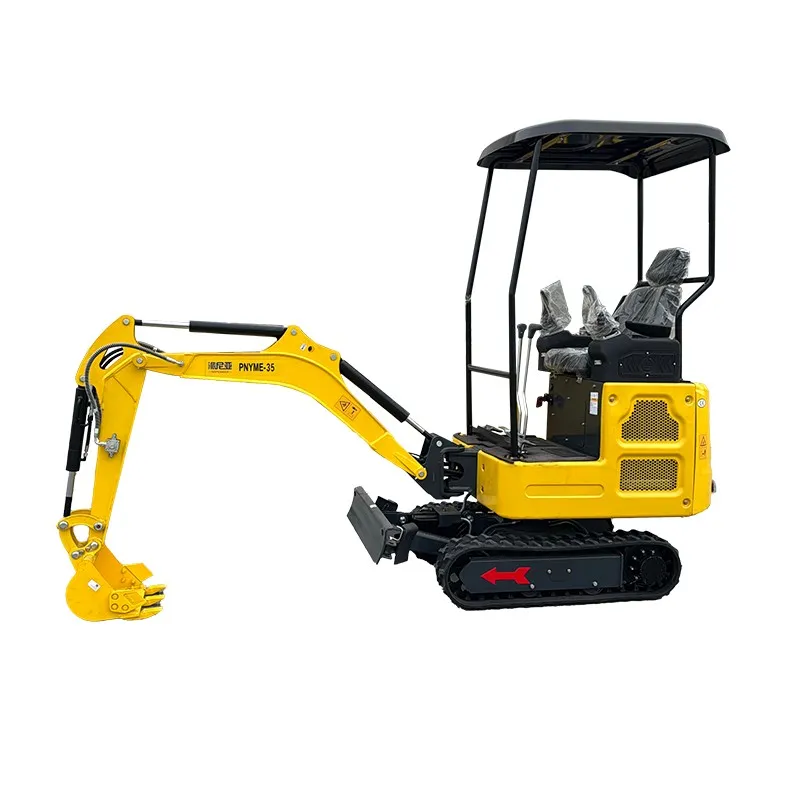
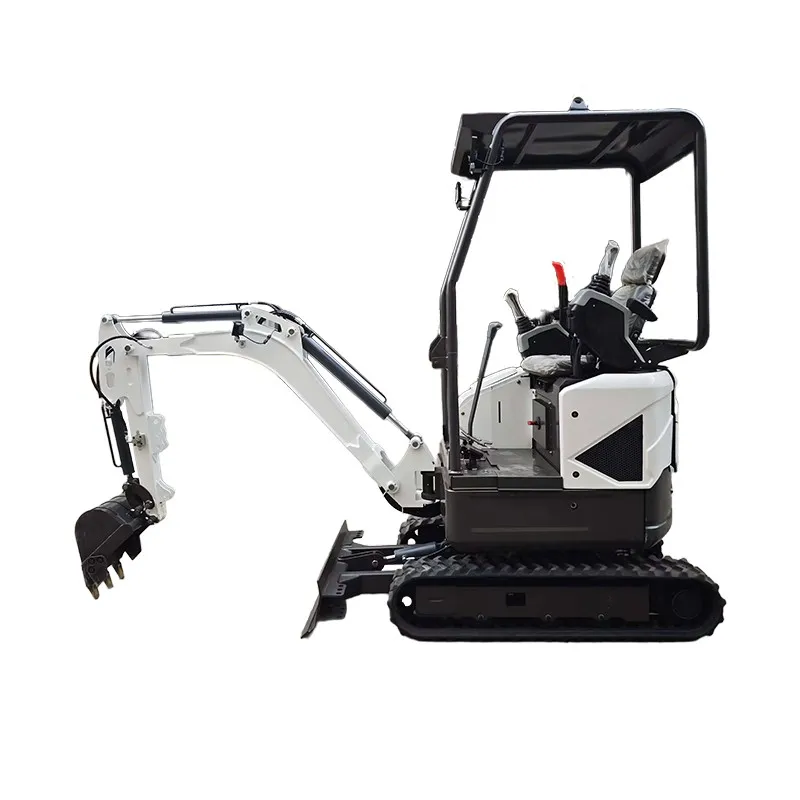
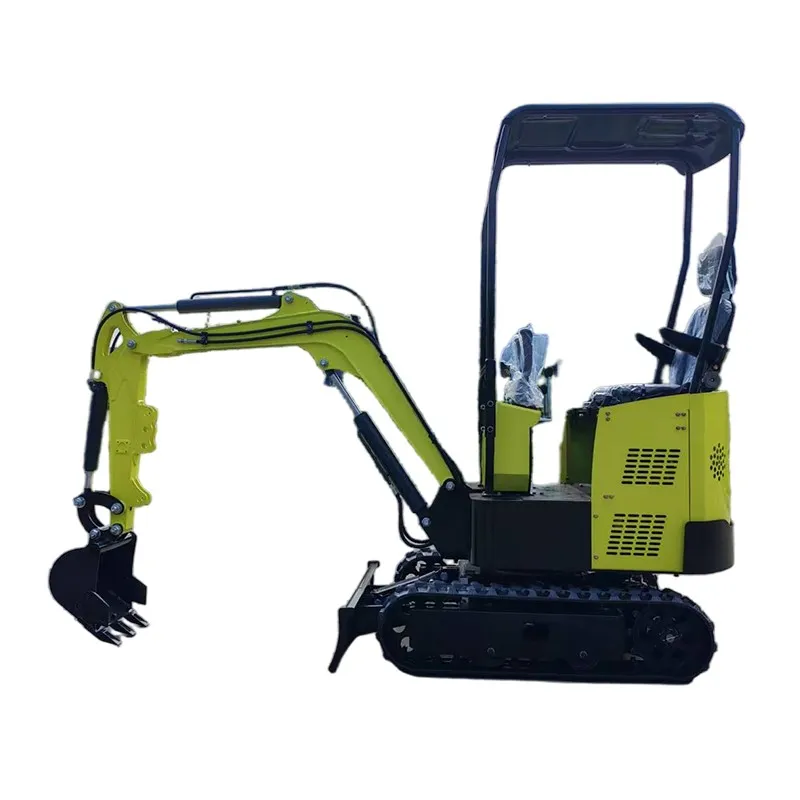
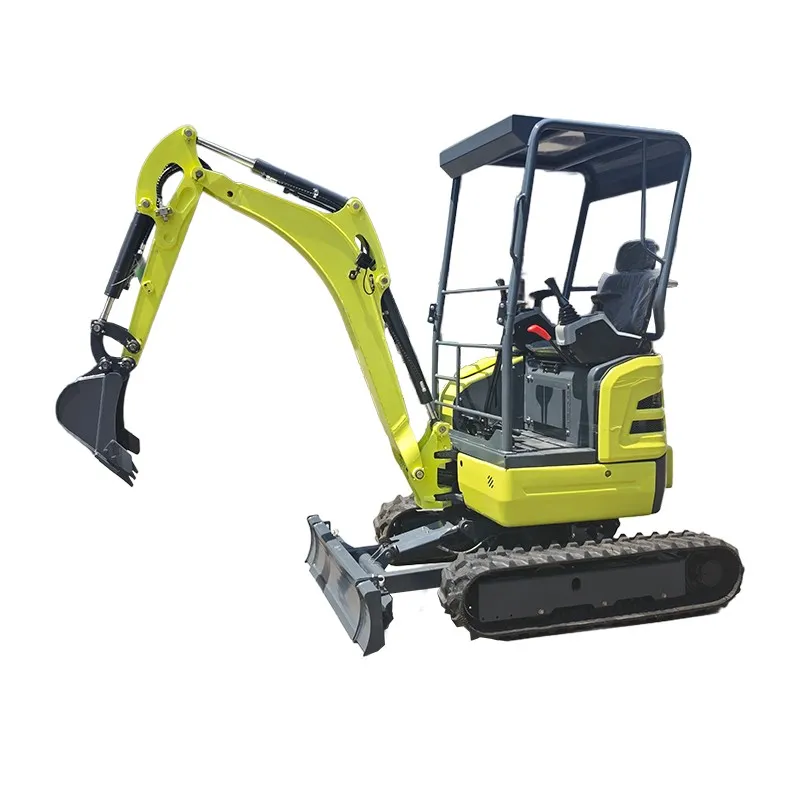
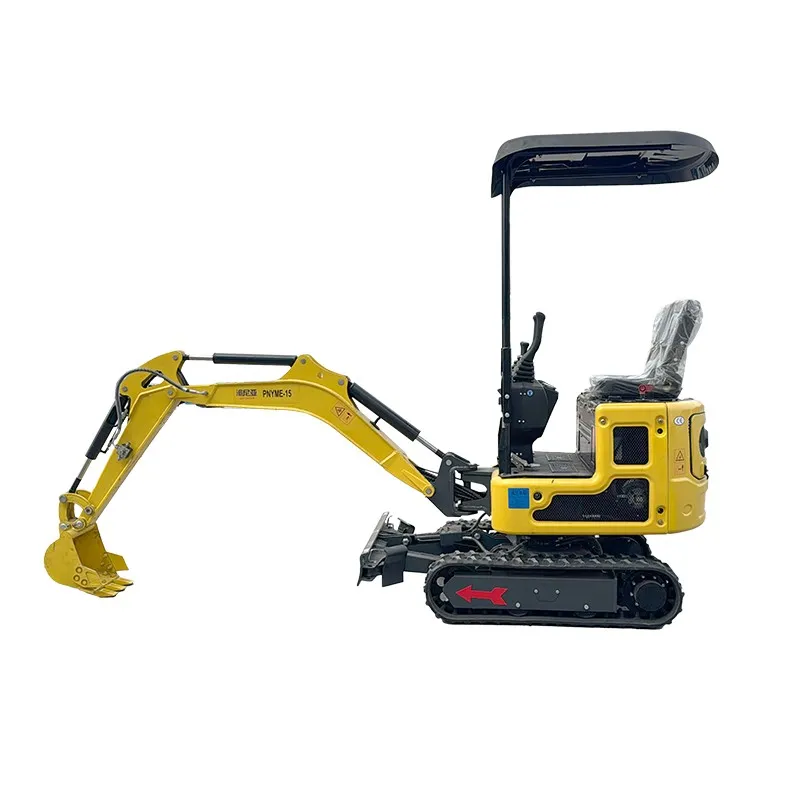
Green Mini Excavator
When most folks hear 'Green Mini Excavator', they immediately think 'electric' or 'zero emissions'. That's the marketing trap. In the real world of tight urban sites, landscaping, and utility work, 'green' is a spectrum. It's not just about the power source; it's about total footprint—noise, vibration, spill risk, and frankly, how much fuel you're burning while idling or doing delicate work a bigger machine would obliterate. I've seen too many projects spec a full-electric unit only to face the reality of battery anxiety and grid access on remote job sites. The 'green' label can be misleading if you're not looking at the whole machine's behavior on your specific task.
The Practical Definition of 'Green' on Site
Let's get concrete. A true green mini excavator for me is one that minimizes disturbance and waste. I ran a 1.8-tonner from a German brand on a backyard pool excavation in a dense suburb. Its EU Stage V diesel engine was the quietest I've ever heard, and the advanced hydraulic system meant no jerky movements when precision-trenching near a property line. The 'green' win here wasn't an absence of diesel; it was the absence of neighbor complaints and the fact we finished in one day without needing a second pass or cleanup. Reduced fuel consumption directly from smarter engineering often beats the theoretical promise of a technology that isn't logistically ready yet.
Then there's the maintenance angle. A 'green' machine should stay cleaner longer. Leaks are the enemy. I remember a cheaper model we trialed years ago; its hydraulic hoses seemed to weep fluid from day one, creating constant containment issues. That's not green, that's an environmental liability waiting to happen. The seals, the hose quality, the design of the hydraulic tank—these unsexy details define on-ground environmental performance more than a sticker about emissions tier.
This is where manufacturers who've been in the trenches get it. I was looking at specs from Shandong Pioneer Engineering Machinery Co., Ltd (you can find their range at https://www.sdpioneer.com), and what stood out wasn't just an electric model option. It was the emphasis on structural integrity and sealed components across their line. A company that started in 2004 and has been shipping machines globally to places like Germany and Australia has to meet stringent site expectations. Their relocation to a new facility in 2023 suggests an investment in production quality. That operational history translates to machines built to prevent the small failures that cause big messes.
The Electric Question: Promise and Pragmatism
Okay, electric. It's the future, but the present is... finicky. We tested a 2-ton electric mini excavator on a city sidewalk repair job. The silence was glorious—we could actually hear the foreman's instructions. Zero local emissions meant we could work right next to an open café without issue. But the battery lasted about 4.5 hours under moderate digging load, and the fast charger needed a 3-phase power hookup we had to run 100 meters of cable for. The job took a day and a half instead of one. The math on cost-per-yard got shaky.
The sweet spot for electric right now, in my view, is truly confined indoor work or mandates in hyper-sensitive zones. For general outdoor contracting, a hybrid approach—or better yet, an ultra-efficient diesel—is often the greener choice when you account for the carbon cost of manufacturing those massive battery packs and the reality of many power grids. The key is having the right tool for the right site condition, not chasing a buzzword.
Some manufacturers are tackling this by offering modular options. Looking at a supplier like Pioneer, with their dual manufacturing and trade arms (Shandong Hexin and Shandong Pioneer), their strength seems to be offering configurable solutions. For a buyer in Canada or the US, that might mean choosing between a standard efficient diesel model and an electric version based on their typical work environment, rather than being forced into a one-size-fits-all 'green' solution.
Durability as a Sustainability Factor
This might be the most overlooked part of the conversation. The greenest machine is the one that doesn't end up in a scrap heap in five years. Durability—of the undercarriage, the boom cylinders, the swing motor—directly reduces waste and the resource drain of building a replacement. I've operated machines where the pins and bushings in the arm showed wear within 500 hours, leading to slop and inefficiency. That wasted energy is an environmental cost.
A robust design philosophy matters. It comes from years of feedback from rental yards and contractors who punish equipment. A company that exports to demanding markets like Australia and Germany is getting that feedback. Their machines have to withstand different soil conditions, operator habits, and maintenance intervals. That pressure tends to force improvements in metallurgy and design that make the machine last longer, which is a fundamental form of sustainability.
It's not about being indestructible; it's about designing for repairability. Can you easily replace a track roller? Access the hydraulic pump? I'd take a conventionally powered machine with a 10,000-hour design life over a cutting-edge electric one with an opaque, proprietary drivetrain that's unserviceable in the field. Long-term reliability is the ultimate green credential.
Operator Experience Drives Efficiency
Here's a truth: a comfortable, intuitive operator uses less fuel and causes less collateral damage. The 'green' effect of a well-designed cab and controls is massive. I've been in cabs where you're fighting the joysticks all day, leading to over-excavation and wasted motion. Conversely, a machine with smooth, proportional controls and good visibility lets you dig exactly what you need, where you need it, in fewer passes.
Features like auto-idle and eco-mode settings are now common, but their implementation varies. A good system seamlessly reduces engine rpm during no-load periods without lag when you need power. A bad one creates a frustrating delay that operators disable immediately. The integration has to feel natural. This is the kind of detail you only perfect through iterative design and real-world testing across a global customer base, which is what long-established exporters necessarily engage in.
When an operator isn't fatigued from noise, vibration, or clumsy controls, they make fewer mistakes. They don't nick a gas line. They don't have to re-dig a trench. That precision saves materials, time, and fuel. It prevents incidents. That's a huge, often unquantified, part of a machine's environmental profile.
The Verdict: A Holistic Machine for a Real Job
So, what am I looking for now? I'm skeptical of pure marketing. I want a green mini excavator that balances performance with low impact. That means prioritizing fuel efficiency and durability first, then looking at noise and emissions compliance for my working environment. Electric is a fantastic tool in the box for specific applications, but it's not the only definition of green.
It leads me to value manufacturers with proven export experience and a focus on core engineering. A firm like Shandong Pioneer, with its two-decade history and relocation to a new production base, signals a focus on growth and quality. Their ability to meet the standards of various international markets suggests their products are built with the kind of holistic durability and efficiency that translates to sustainable performance on the job site, which is what actually matters.
In the end, the greenest mini excavator is the one that gets your specific job done with the least total fuss, waste, and downtime. That's a calculation based on iron, hydraulics, and intelligent design—not just a label. Choose the machine that fits your real-world conditions, and the environmental benefits will follow as a result of good engineering, not just good intentions.
Related Products
Related Products