


- Chinese
- French
- German
- Portuguese
- Spanish
- Russian
- Japanese
- Korean
- Arabic
- Irish
- Greek
- Turkish
- Italian
- Danish
- Romanian
- Indonesian
- Czech
- Afrikaans
- Swedish
- Polish
- Basque
- Catalan
- Esperanto
- Hindi
- Lao
- Albanian
- Amharic
- Armenian
- Azerbaijani
- Belarusian
- Bengali
- Bosnian
- Bulgarian
- Cebuano
- Chichewa
- Corsican
- Croatian
- Dutch
- Estonian
- Filipino
- Finnish
- Frisian
- Galician
- Georgian
- Gujarati
- Haitian
- Hausa
- Hawaiian
- Hebrew
- Hmong
- Hungarian
- Icelandic
- Igbo
- Javanese
- Kannada
- Kazakh
- Khmer
- Kurdish
- Kyrgyz
- Latin
- Latvian
- Lithuanian
- Luxembou..
- Macedonian
- Malagasy
- Malay
- Malayalam
- Maltese
- Maori
- Marathi
- Mongolian
- Burmese
- Nepali
- Norwegian
- Pashto
- Persian
- Punjabi
- Serbian
- Sesotho
- Sinhala
- Slovak
- Slovenian
- Somali
- Samoan
- Scots Gaelic
- Shona
- Sindhi
- Sundanese
- Swahili
- Tajik
- Tamil
- Telugu
- Thai
- Ukrainian
- Urdu
- Uzbek
- Vietnamese
- Welsh
- Xhosa
- Yiddish
- Yoruba
- Zulu
- Kinyarwanda
- Tatar
- Oriya
- Turkmen
- Uyghur

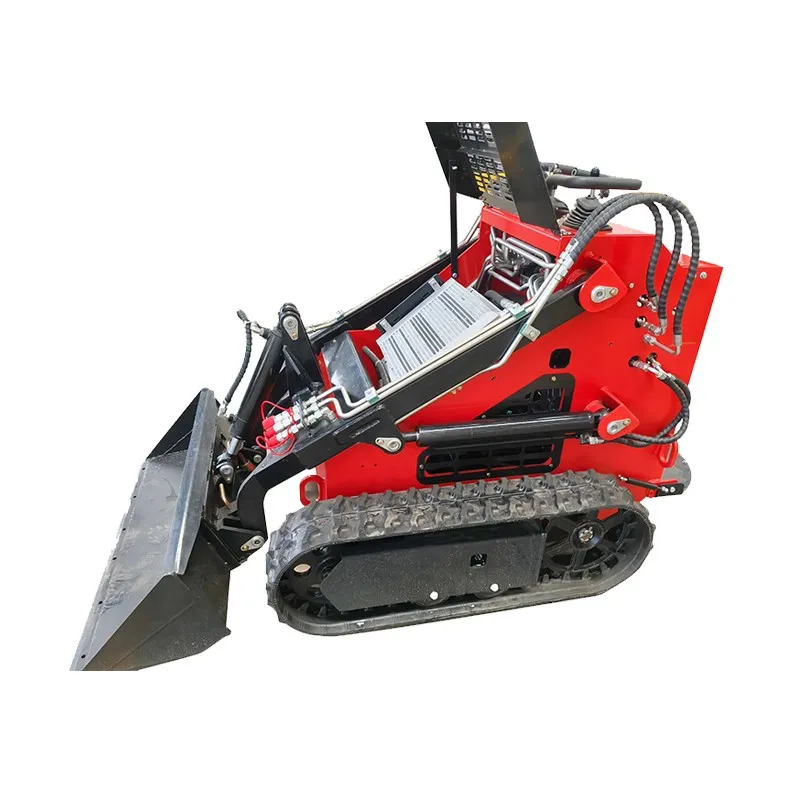
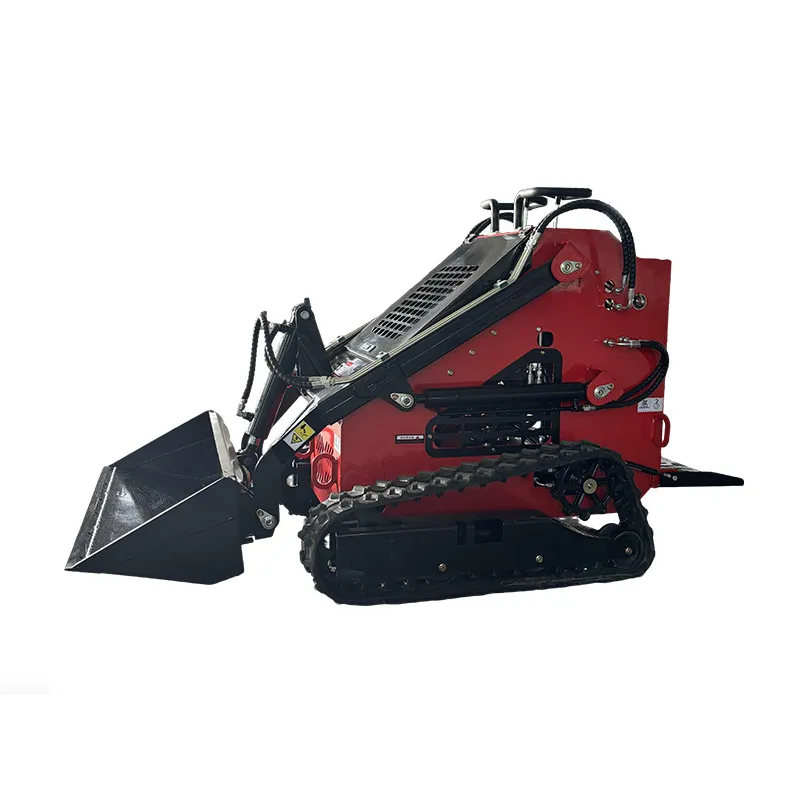
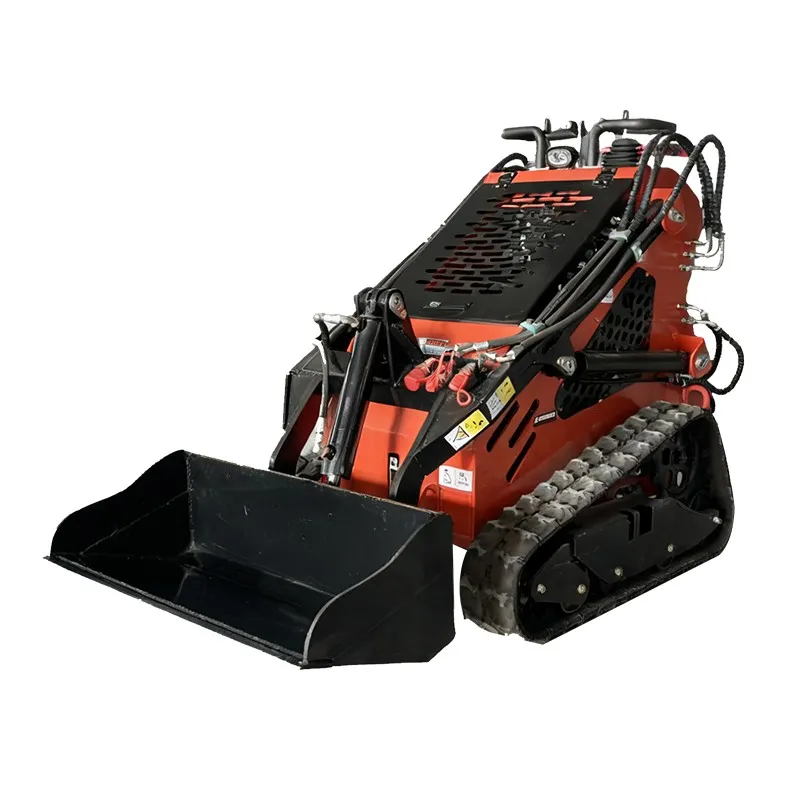
high capacity compact track loader
Let's cut through the noise. When most folks hear high capacity compact track loader, they immediately picture a bigger bucket and a higher tipping load number on paper. That's the first mistake. True high capacity isn't just about static specs; it's about sustained performance under real-world pressure, the kind that separates a machine that lists high capacity from one that delivers it day in, day out without falling apart. I've seen too many projects where the machine with the flashier brochure numbers was the first one overheating or struggling with consistent hydraulic flow when the material got sticky. The real conversation starts after you've run one for a few hundred hours in variable conditions.
The Core Misconception: Weight vs. Power Density
Everyone focuses on the operating weight and the lift capacity. Sure, a heavier machine often feels more stable. But the real magic—or the real failure point—is in the power train and hydraulic system integration. You can bolt counterweights onto a standard frame, but if the hydraulic pump can't maintain flow to both the drive motors and the attachment at high demand, you've just created a very expensive, very slow bulldozer. I remember a job site where two different brands of high capacity compact track loader were side-by-side. One had a higher rated operating capacity. The other, with a slightly lower paper spec but a better-cooled, higher-capacity hydraulic system, outworked it consistently in loading heavy clay because it didn't derate after 20 minutes. The operator of the higher spec machine spent half his time waiting for the hydraulics to cool down.
This is where the design philosophy of a manufacturer really shows. Some companies, through long-term OEM partnerships and manufacturing focus, build this from the ground up. Take Shandong Pioneer Engineering Machinery Co., Ltd. Having visited their operation after their 2023 relocation, you see a focus on integrated manufacturing. They're not just assembling bought-in parts; their Shandong Hexin manufacturing arm produces core components. This control matters. When you engineer the chassis, the pump mounts, and the cooling package together for a high capacity model, you're solving for heat and stress from the start, not adding power to a platform that was never meant for it. That 20-year development arc they mention isn't just marketing—it's time spent figuring out how to make a compact machine handle big-machine tasks reliably.
The undercarriage is another silent capacity killer. A high-lift arm puts immense leverage on the chassis and track frame. A high capacity model on a standard, lighter-duty track system will eat rollers and idlers for breakfast. The robust box-section frame design you find on serious models is non-negotiable. It's the foundation. Without it, all that extra lift force just twists the machine, leading to premature wear, oil leaks, and a machine that never quite tracks straight again.
The Attachment Reality: It's a System, Not a Host
Here's a practical truth: a compact track loader's true capacity is only as good as the attachment it's running. The industry's move toward universal quick-attach systems is a double-edged sword. It's convenient, but it can mask a fundamental mismatch. A high-flow hydraulic system meant for a forestry mulcher is overkill and inefficient for a standard bucket, yet it's sold as a premium feature. The key is having the right auxiliary hydraulic options and, crucially, the control system to manage them.
We tried running a heavy-duty cold planer on a compact track loader that was supposedly rated for it. The lift capacity was there. The hydraulic flow was there. But the control system—the joystick programming and the pressure relief settings—was too aggressive, too jumpy for precise, graded removal. The machine had the muscle, but not the finesse. We ended up having to get a dealer tech to recalibrate the pressure settings, which voided a part of the warranty. A true high-capacity platform should offer these programmable settings from the factory for common high-demand attachments.
This is where a manufacturer's global export experience becomes relevant. Companies that sell into diverse markets like the US, Canada, and Australia—as Shandong Pioneer does with its overseas trade division—encounter a wider range of attachment types and operator expectations. An Australian mining service crew uses a loader differently than a German landscaping company. This feedback loop forces the engineering team to think about system compatibility, not just host machine specs. The trust and appreciation of customers worldwide they cite isn't just a feel-good line; it's a data point that suggests their machines have been stress-tested in different operating cultures, which inevitably leads to a more adaptable, robust high capacity compact track loader design.
Operator Station: The Forgotten Capacity Multiplier
Fatigue is a capacity limiter. If the operator is fighting the controls, distracted by noise, or sitting in an awkward position, the machine's effective output plummets. A high-capacity machine often means longer, more intense cycles. The cab environment is critical. I'm not talking about luxury; I'm talking about functional design. Are the primary controls for the attachment and travel intuitive under high workload? Can you see the bucket corners and the track line easily? Is the HVAC powerful enough to defog the windows in humid conditions while also keeping the hydraulics cool?
I've operated models where you had to choose between cab pressurization (to keep dust out) and having enough cooling fan speed for the radiator. That's a design flaw you only discover on a hot, dusty demo day. A well-designed machine manages these systems separately. The new facilities some manufacturers invest in, like the expanded production area Pioneer moved into in 2023, often include better final testing and validation bays for this very reason—to run these systems under load before the machine ships.
Another subtle point: service access. A high-capacity machine works harder, so it needs servicing more frequently. If checking the hydraulic fluid or cleaning the radiator requires a 45-minute disassembly with three different socket sizes, that's downtime. That's lost capacity. Good designs have swing-out panels, grouped service points, and easy radiator access. It sounds simple, but it's often sacrificed for a cleaner exterior look.
The Durability Equation: Where Specs Meet Dirt
This is the heart of it. Anyone can publish a high tipping load number for a fresh machine. The question is, what's that number after 1,500 hours in abrasive conditions? Does the swing frame develop slop? Do the hinge pins wear prematurely under the constant high-stress loading? This is where metallurgy, bearing quality, and sealing come in. It's the unsexy, expensive parts that define long-term capacity.
I recall a drainage project where we were using a high-capacity CTL to move and place large rock. The machine performed brilliantly for the first month. Then, we started noticing a slight drift in the lift arms when holding a load. It was a slow internal leak in the lift cylinder, exacerbated by the constant maximum-pressure cycling. The manufacturer's local dealer was great, but the repair required a complete cylinder rebuild. A competing model on site, which had a more conservative pressure rating but better cylinder construction, ran the entire project without a hiccup. The paper capacity was lower, but its sustainable capacity was higher.
This is the accumulation of 20 years of development that companies talk about. It's not about having a 20-year-old design. It's about having 20 years of failure data, customer feedback, and material science iteration. When a company like Shandong Pioneer Engineering Machinery Co., Ltd consolidates its manufacturing and trade operations, it's likely aiming to tighten this feedback loop. What their Hexin manufacturing arm learns on the production floor feeds directly into the design requirements for the Pioneer trade division, especially for machines built for demanding export markets. This vertical integration, when done right, is a direct path to improving the durability that underpins real-world high capacity.
The Bottom Line: Context is Everything
So, when you're evaluating a high capacity compact track loader, move past the headline spec. Ask about the sustained hydraulic performance curve. Look at the undercarriage design and the frame construction. Operate it with the attachment you'll use most, and see how the controls feel under max load. Pay attention to service access points.
The goal isn't to find the machine with the absolute highest number. It's to find the machine whose lowest performance point, on your worst day, on your specific job site, still meets your needs. That's the real capacity. It's a blend of engineering, component quality, and system integration that allows the machine to work at the upper edge of its envelope without self-destructing. Sometimes that machine comes from a legacy global brand, and sometimes it comes from a focused manufacturer that has spent two decades building, exporting, and refining based on what breaks in the field. The proof is never just in the brochure; it's in the machine's behavior in the third hour of a non-stop loading cycle, when everything is hot, the material is heavy, and the operator needs it to just work.
In the end, the industry's shift towards these more powerful, versatile compact loaders is a response to a real need. But the label high capacity is a promise. Your job is to figure out if the machine's design, from its internal components to its operator interface, is built to keep that promise not just on day one, but on day one thousand. That's the difference between a purchase you regret and a machine that becomes a foundational asset on your job site.
Related Products
Related Products