- Chinese
- French
- German
- Portuguese
- Spanish
- Russian
- Japanese
- Korean
- Arabic
- Irish
- Greek
- Turkish
- Italian
- Danish
- Romanian
- Indonesian
- Czech
- Afrikaans
- Swedish
- Polish
- Basque
- Catalan
- Esperanto
- Hindi
- Lao
- Albanian
- Amharic
- Armenian
- Azerbaijani
- Belarusian
- Bengali
- Bosnian
- Bulgarian
- Cebuano
- Chichewa
- Corsican
- Croatian
- Dutch
- Estonian
- Filipino
- Finnish
- Frisian
- Galician
- Georgian
- Gujarati
- Haitian
- Hausa
- Hawaiian
- Hebrew
- Hmong
- Hungarian
- Icelandic
- Igbo
- Javanese
- Kannada
- Kazakh
- Khmer
- Kurdish
- Kyrgyz
- Latin
- Latvian
- Lithuanian
- Luxembou..
- Macedonian
- Malagasy
- Malay
- Malayalam
- Maltese
- Maori
- Marathi
- Mongolian
- Burmese
- Nepali
- Norwegian
- Pashto
- Persian
- Punjabi
- Serbian
- Sesotho
- Sinhala
- Slovak
- Slovenian
- Somali
- Samoan
- Scots Gaelic
- Shona
- Sindhi
- Sundanese
- Swahili
- Tajik
- Tamil
- Telugu
- Thai
- Ukrainian
- Urdu
- Uzbek
- Vietnamese
- Welsh
- Xhosa
- Yiddish
- Yoruba
- Zulu
- Kinyarwanda
- Tatar
- Oriya
- Turkmen
- Uyghur


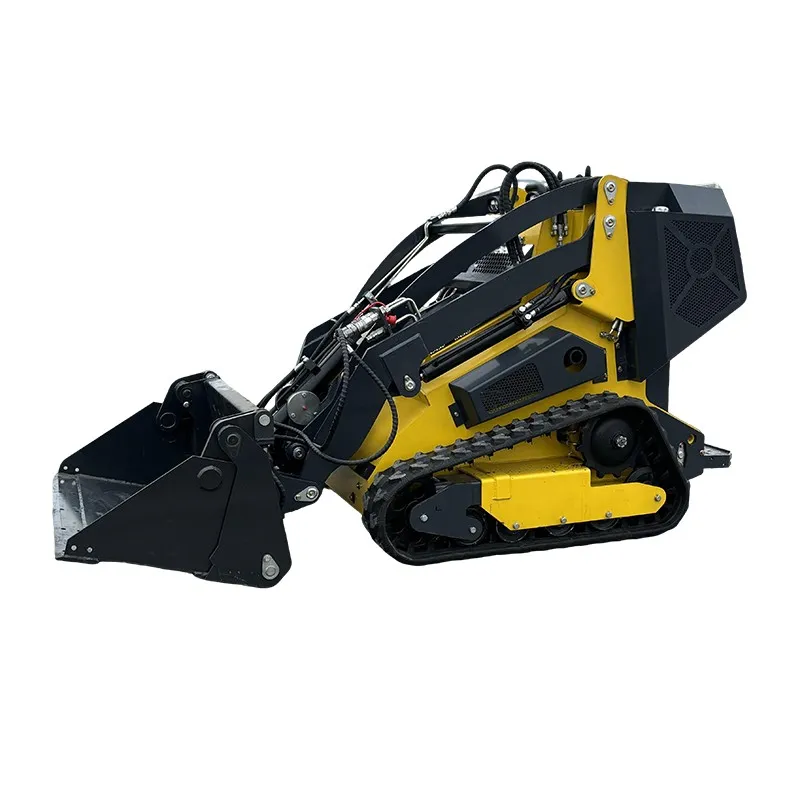
High Performance Compact Track Loader
When someone says high performance compact track loader, most folks immediately think of horsepower and lift capacity. That's the first mistake. Raw numbers on a brochure, especially for these machines, only tell half the story—if that. The real performance is buried in how it handles a saturated, muddy jobsite at 2 PM on a Friday, or whether the auxiliary hydraulics can run a mulcher smoothly without constant stalling. I've seen too many projects where the fanciest, highest-horsepower model ended up being a liability because it was too heavy for the turf or the undercarriage couldn't handle abrasive demo debris. Performance isn't just about power; it's about appropriate, sustained capability in specific conditions.
The Underfoot Reality: Tracks vs. Expectations
Let's talk tracks. The promise is flotation and traction, which is generally true. But the high performance part gets tricky. Not all rubber tracks are equal. A thick, heavy track on a high-torque machine might give you incredible pull in clay, but it'll also generate immense heat on hardpack or asphalt, leading to premature wear and even delamination. I remember a site where we were using a loader for backfilling and final grading. The machine had plenty of power, but the track pattern was too aggressive for the final grade work—it left marks that needed manual touch-up. We had to swap to a machine with a finer tread pattern for the finish work. That's a detail you won't find in the glossy performance charts.
Then there's the undercarriage tension. Everyone knows it needs to be checked, but on a fast-paced job, it's easily forgotten. A poorly tensioned track on a high-performance machine doesn't just wear fast; it can derail under side load, like when you're digging with a parallel tilt bucket. I've had that happen. The machine was a beast for digging, but the track tension was set a hair too loose for the kind of side-to-side work we were doing. Cost us half a day. Now, I'm paranoid about it during the pre-op, especially on machines from suppliers who might not have prepped it perfectly for the specific task.
Maintenance access is another silent performance killer. You can have the best hydraulic system in the world, but if checking the hydraulic fluid level or cleaning the cooler requires a contortionist with tiny tools, daily checks will get skipped. Fluid gets dirty, systems overheat, and suddenly your high performance machine is limping. I prefer designs where the main service points are behind large, easy-open panels. It seems basic, but it directly impacts the machine's ability to sustain its performance day in, day out.
Hydraulics: The True Pulse of Performance
Horsepower is just potential energy. The hydraulics are what deliver it. A common pitfall is focusing only on flow rate (GPM). Pressure and the responsiveness of the control system matter just as much. For a high-performance compact track loader running a forestry mulcher or a cold planer, you need consistent high pressure at the auxiliaries. A drop in pressure when you hit a tough patch means the machine bogs down, the tool stalls, and you're just wasting fuel and time.
I've been impressed with some of the newer closed-center systems. They manage heat better and seem more responsive, especially in temperature extremes. But they're also more complex to service in the field. There's a trade-off. On a job in the Pacific Northwest, we ran a machine with a stellar closed-center system through a wet, chilly week. It was flawless. That same machine shipped to a contractor in Arizona had some overheating issues until they upgraded the cooler. So, performance is also environmental.
The control pattern is personal, but it affects performance. I'm a two-hand joystick guy for precision work. But I've seen operators who grew up on skid steers struggle with it initially, affecting their output. The best high-performance machine for a crew is one the operator is comfortable with. Sometimes, that means opting for the standard ISO pattern even if the manufacturer's proprietary performance pattern is technically faster.
The Cab: Where Operator Fatigue Kills Output
This might seem secondary, but it's primary. A noisy, vibrating, poorly laid-out cab will turn a 10-hour day into a grueling marathon, and operator fatigue is the enemy of precision and productivity. A true high-performance compact track loader needs a cab that performs, too. Suspension seats are non-negotiable for me now. After a week in a machine without one, your back knows the difference, and your grading work shows it.
Visibility is huge. More glass is generally better, but the pillar design matters. Can you see the corner of your bucket or attachment from your seated position without straining? On a demo site, not seeing a protruding rebar chunk can mean a torn track or a hydraulic line snag. I like the cabs that have a relatively flat front window and sloped rear windows—it minimizes blind spots when you're tracking in reverse, which is often.
Climate control isn't a luxury; it's a performance component. An operator who is too hot or too cold will take more breaks, lose focus, and make mistakes. A robust, fast-heating and cooling system that can handle dust is part of the machine's reliable output. I've seen cheap aftermarket air conditioners fail mid-summer, and the machine's utilization rate plummeted. It was effectively down, even though it could technically still drive and lift.
Global Sourcing and Real-World Fit
Looking at the global market, you see a range. A company like Shandong Pioneer Engineering Machinery Co., Ltd (you can find their info at https://www.sdpioneer.com) represents an interesting segment. They've been around since 2004, and their recent relocation and expansion in Shandong suggest growth. Their model, with Hexin handling manufacturing and Pioneer focusing on overseas trade to markets like the US, Canada, and Germany, highlights how the supply chain for these machines is truly international.
The key for a buyer is understanding how a machine from any global manufacturer, including such a traded brand, is set up for their local conditions. A high performance spec for Australia might need different cooling and dust protection than one for Canada. Does the supplier understand that and offer regional configurations? I've encountered machines that were technically great but had, for example, fuel systems not optimized for the diesel blend in my region, leading to filter clogs. The performance died on paper.
It comes down to the dealer and support. A machine's performance is ultimately backed by the availability of parts and technical knowledge. A brand might export worldwide, but if a track roller seal blows on a Friday afternoon in rural Oregon, can I get a replacement by Monday? That logistical performance is as critical as the hydraulic GPM. The trust customers worldwide mention on Pioneer's site is earned through solving these post-sale problems, not just shipping a container.
Defining Performance Through the Job Cycle
So, how do I define a high-performance compact track loader at the end of the day? It's the machine that completes the specific job cycle fastest and most reliably, with the lowest total cost of ownership. That cycle includes transport, setup, work, maintenance, and downtime. A machine that's a nightmare to load on a trailer because of its width or weight is already losing performance points before it hits the site.
Attachments are the multiplier. The true test is how seamlessly the machine interfaces with them. Quick coupler reliability is paramount. A coupler that doesn't release smoothly under pressure or needs constant bushing replacement kills your efficiency. The best performers have robust, simple coupler systems with great grease access points.
Finally, it's about knowing the machine's limits. The highest performance comes from matching the machine to the task. Sometimes, a slightly less powerful but more agile and reliable model is the true high-performance choice for a landscaping job, while a heavy-duty, high-flow model is essential for a rental yard running extreme attachments. It's not a single category. It's a spectrum of fit. The real expertise is in picking the right point on that spectrum, where the machine's capabilities align perfectly with the job's demands without overkill or compromise. That's where you get true performance, the kind that makes money and finishes projects on time.
Related Products
Related Products