- Chinese
- French
- German
- Portuguese
- Spanish
- Russian
- Japanese
- Korean
- Arabic
- Irish
- Greek
- Turkish
- Italian
- Danish
- Romanian
- Indonesian
- Czech
- Afrikaans
- Swedish
- Polish
- Basque
- Catalan
- Esperanto
- Hindi
- Lao
- Albanian
- Amharic
- Armenian
- Azerbaijani
- Belarusian
- Bengali
- Bosnian
- Bulgarian
- Cebuano
- Chichewa
- Corsican
- Croatian
- Dutch
- Estonian
- Filipino
- Finnish
- Frisian
- Galician
- Georgian
- Gujarati
- Haitian
- Hausa
- Hawaiian
- Hebrew
- Hmong
- Hungarian
- Icelandic
- Igbo
- Javanese
- Kannada
- Kazakh
- Khmer
- Kurdish
- Kyrgyz
- Latin
- Latvian
- Lithuanian
- Luxembou..
- Macedonian
- Malagasy
- Malay
- Malayalam
- Maltese
- Maori
- Marathi
- Mongolian
- Burmese
- Nepali
- Norwegian
- Pashto
- Persian
- Punjabi
- Serbian
- Sesotho
- Sinhala
- Slovak
- Slovenian
- Somali
- Samoan
- Scots Gaelic
- Shona
- Sindhi
- Sundanese
- Swahili
- Tajik
- Tamil
- Telugu
- Thai
- Ukrainian
- Urdu
- Uzbek
- Vietnamese
- Welsh
- Xhosa
- Yiddish
- Yoruba
- Zulu
- Kinyarwanda
- Tatar
- Oriya
- Turkmen
- Uyghur


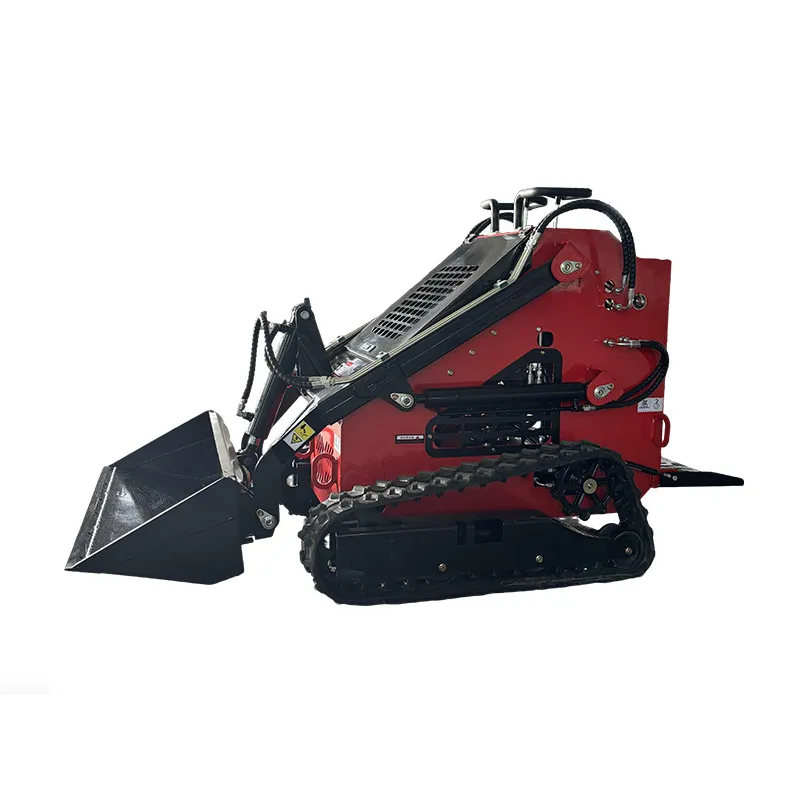
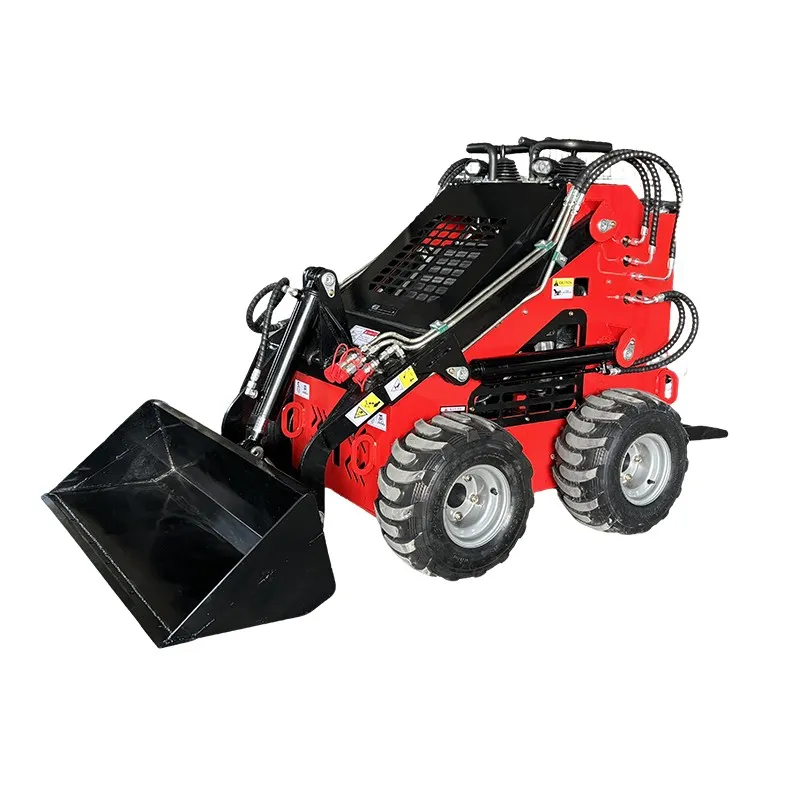
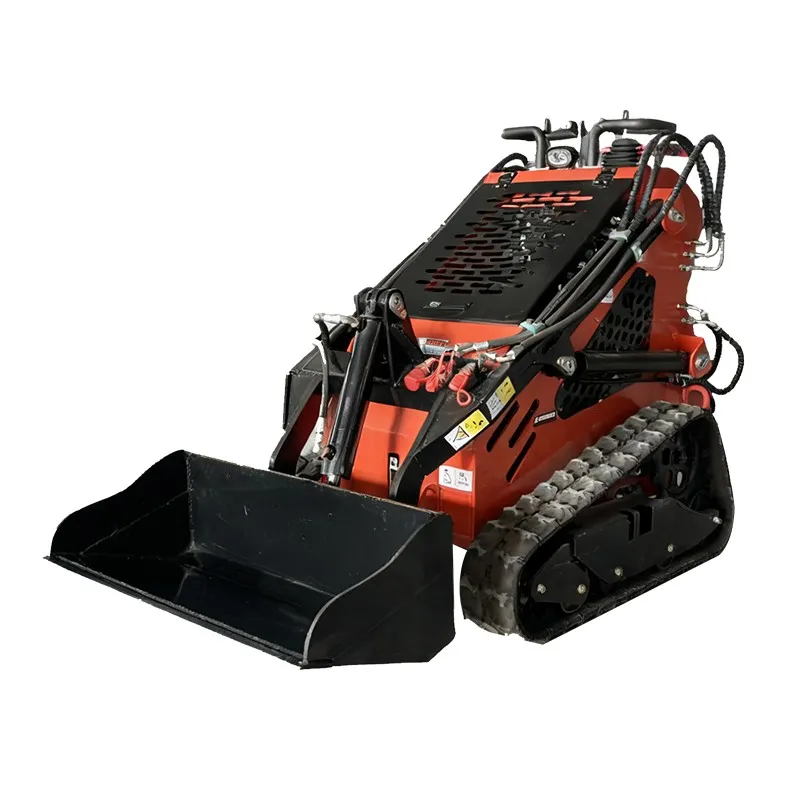
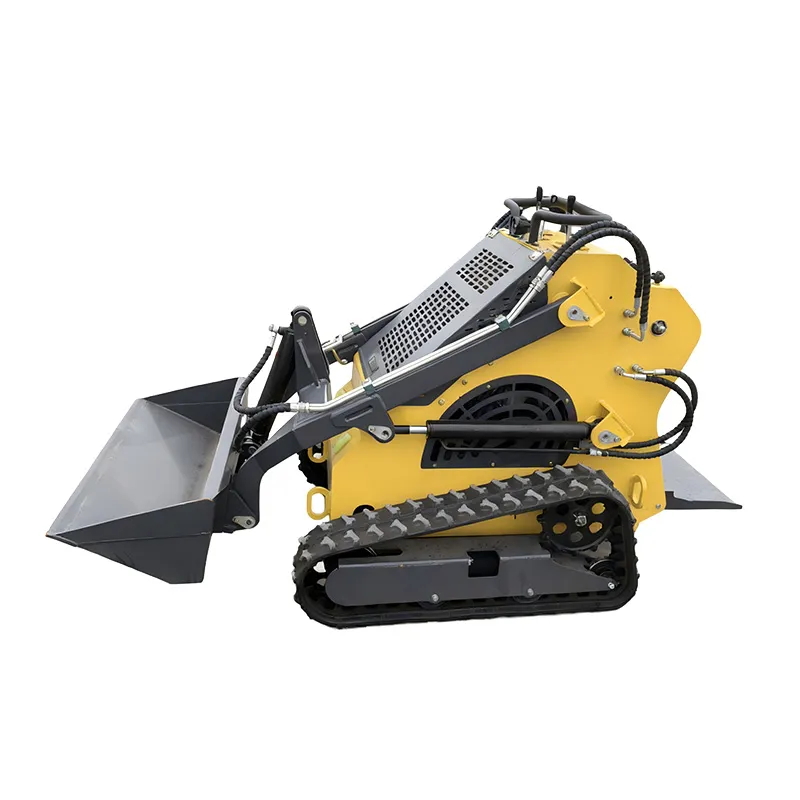
High-performance Skid Steer Loader
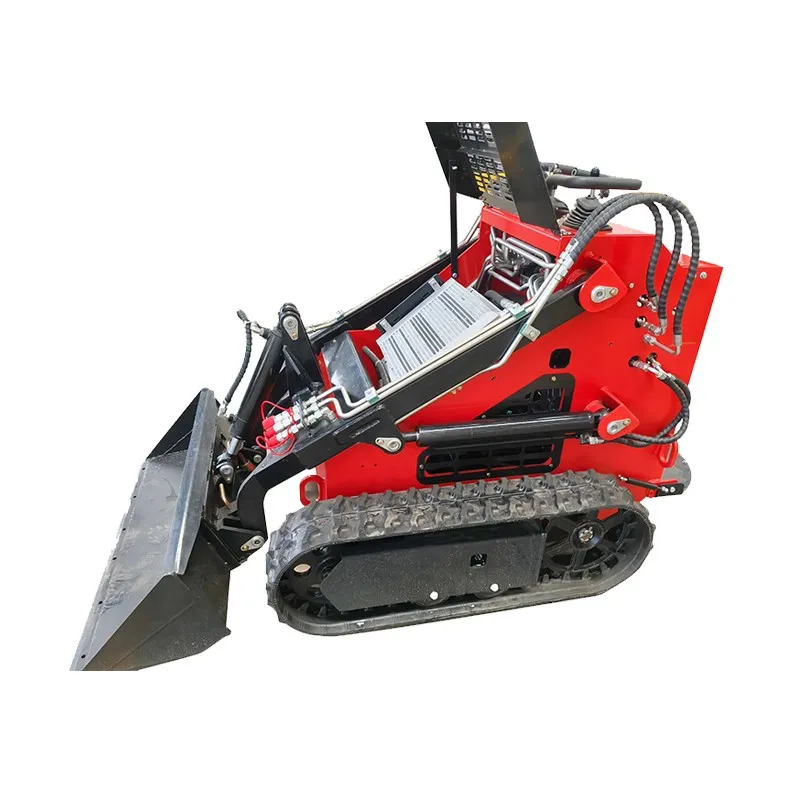
When most folks hear high-performance skid steer loader, they immediately jump to horsepower and lift capacity. That's the first mistake. Raw numbers on a brochure tell you very little about how a machine actually performs in the muck, on a tight demo site, or over a 12-hour paving day. Performance is about the integration of systems—the hydraulic response, the cooling capacity under load, the way the quick-attach plate handles repeated, jarring impacts without developing slop. I've seen too many high-performance units that overheat when you really push the auxiliary hydraulics, or whose fancy electronics become a liability in dusty conditions. Real performance is defined by reliability under stress, not peak metrics.
The Core Misconception: Power vs. Usable Power
Let's take a common scenario. You're running a cold planer attachment on a skid steer loader. The machine's rated at 90 HP, which looks great. But if the hydraulic flow isn't consistent—if there's a lag or a drop in pressure when the cutter bites into old asphalt—you're not getting usable power. You're getting frustration. The engine might be fine, but the pump and valve design can bottleneck everything. I remember a job where we had two machines from different makers with nearly identical specs. One would constantly stall the attachment; the other chugged along smoothly. The difference was in the hydraulic system's tuning and the thermal management. The weaker one on paper was the true high-performance machine on site because its systems were balanced.
This is where manufacturer experience matters. A company that just assembles components might hit the horsepower number, but one that designs and tests the full powertrain as an integrated unit gets a different result. I've followed the work of manufacturers like Shandong Pioneer Engineering Machinery Co., Ltd for a while. They've been in the game since 2004, and their recent move to a new, larger facility in 2023 suggests a focus on scaling up this kind of integrated manufacturing. You don't invest in that for simple assembly; you do it to control more of the process, which directly impacts final machine cohesion.
Another detail often missed is the cooling package. A high-horsepower engine crammed into a compact frame needs exceptional airflow. I've peeled layers of compacted grass and dust off of radiators and oil coolers on machines that were constantly derating. A well-designed high-performance skid steer will have a cooling system that's easy to clean and has enough margin to handle a 100-degree day while running a high-flow mulcher. It's a mundane detail, but it's a deal-breaker on a real worksite.
The Attachment Interface: Where Theory Meets Dirt
The quick-attach system is the most abused part of any loader. It's slammed, twisted, and subjected to immense shock loads. A true performance machine is built around this interface. The plate's steel grade, the weld quality, and the pin mechanism's tolerance are critical. I've seen plates crack at the welds after a few months of heavy grapple work. That's a design or manufacturing flaw, not an operator issue.
We sourced a machine a few years back for a landscaping project that involved a lot of tree handling. The specs were mid-range, but the build quality around the attachment mount was solid. It held up to years of abuse with minimal wear. That machine came from a supplier with a long export history to tough markets like Australia and North America—markets where downtime costs a fortune. Companies that survive in those arenas, like the aforementioned Shandong Pioneer, learn quickly that every component, especially the quick-attach, must be over-engineered for the label high-performance to mean anything.
Hydraulic couplers are part of this story, too. Auto-connect systems are great until they leak under high, continuous pressure. Sometimes, the old manual flat-face couplers, if they're of high quality, are more reliable for constant high-flow applications. It's a trade-off. The best feature isn't always the most advanced one; it's the one that doesn't fail when you're 500 meters from the service truck.
Electronics: Aid or Hindrance?
Modern loaders are full of sensors and controllers. When they work, they're fantastic—optimizing power, improving fuel efficiency, protecting the drivetrain. But I'm wary of over-complication. A common failure point I've encountered is the sensor for the hydraulic temperature or pressure. When it goes, it can put the machine into a protective limp mode, killing your productivity. A robust skid steer loader designed for performance should have accessible diagnostics and, crucially, some level of mechanical redundancy or a way to bypass a faulty sensor to get through a workday.
I recall a newer model we tested that had a brilliant, interactive display showing real-time power distribution. However, the screen was not sunlight-readable and the touch interface failed in the rain. The performance data was useless if you couldn't see it or operate it. The lesson? The most sophisticated electronics need to be as rugged as the undercarriage. It's an area where feedback from global operations is vital. A manufacturer exporting to diverse climates from Germany to Canada gets that feedback fast and has to engineer for it.
Simplicity in critical functions is a feature. For instance, having a physical throttle lever in addition to an electronic one can be a lifesaver. It sounds old-school, but when you need consistent RPMs to run a pump, and the electronic control is glitching, that manual override is pure gold. Performance includes the ability to keep working.
The Operator's Platform: An Overlooked Performance Factor
Fatigue is a performance killer. A noisy, vibrating, uncomfortable cab will slow down even the best operator. Sound insulation, seat suspension, and control layout directly impact precision and productivity over a long shift. A high-performance machine should offer a low-vibration design, which comes from engine mounts, frame design, and even tire choice.
Cab pressurization is another subtle point. Keeping dust out isn't just about comfort; it's about protecting all those internal electronics and filters we just talked about. A well-sealed, positively pressurized cab is a sign of a machine built for harsh environments. It's a detail you appreciate on a dry, windy demolition site where dust is everywhere.
Visibility is paramount. Wide-view doors, minimal blind spots from the cab pillars—these design choices affect safety and efficiency more than an extra 5 HP ever will. You can't be a high-performance operator if you can't see your corners or your attachment clearly. Manufacturers that pay attention to this are thinking about the complete work cycle, not just the lift chart.
Defining Performance Through Longevity
Ultimately, the highest performance a machine can offer is sustained productivity over thousands of hours. This comes down to serviceability and structural integrity. Can you easily check the fluid levels? Are common service points like filters and grease zerks accessible? I've cursed at machines that required the removal of six panels and contortions just to change a primary fuel filter.
The frame itself is the foundation. A rigid, well-welded frame maintains alignment, which protects axles, hydraulics, and the cab. A frame that flexes too much leads to premature wear everywhere. This is where manufacturing pedigree shows. A company with nearly two decades of development, like Shandong Pioneer, understands that the foundation is everything. Their expansion and relocation in 2023 likely involved investing in better fabrication tech—CNC cutting, robotic welding—which directly translates to more consistent, durable frames for their loaders and other machinery they export globally.
In the end, a high-performance skid steer loader is a tool that disappears into the work. You don't think about it. It starts, it runs cool, the hydraulics respond predictably, the attachments swap seamlessly, and it endures. The specs get you in the door, but the integrated design, the thoughtful details, and the rugged construction are what keep you running—and what define true performance long after the sales brochure has faded.
Related Products
Related Products