- Chinese
- French
- German
- Portuguese
- Spanish
- Russian
- Japanese
- Korean
- Arabic
- Irish
- Greek
- Turkish
- Italian
- Danish
- Romanian
- Indonesian
- Czech
- Afrikaans
- Swedish
- Polish
- Basque
- Catalan
- Esperanto
- Hindi
- Lao
- Albanian
- Amharic
- Armenian
- Azerbaijani
- Belarusian
- Bengali
- Bosnian
- Bulgarian
- Cebuano
- Chichewa
- Corsican
- Croatian
- Dutch
- Estonian
- Filipino
- Finnish
- Frisian
- Galician
- Georgian
- Gujarati
- Haitian
- Hausa
- Hawaiian
- Hebrew
- Hmong
- Hungarian
- Icelandic
- Igbo
- Javanese
- Kannada
- Kazakh
- Khmer
- Kurdish
- Kyrgyz
- Latin
- Latvian
- Lithuanian
- Luxembou..
- Macedonian
- Malagasy
- Malay
- Malayalam
- Maltese
- Maori
- Marathi
- Mongolian
- Burmese
- Nepali
- Norwegian
- Pashto
- Persian
- Punjabi
- Serbian
- Sesotho
- Sinhala
- Slovak
- Slovenian
- Somali
- Samoan
- Scots Gaelic
- Shona
- Sindhi
- Sundanese
- Swahili
- Tajik
- Tamil
- Telugu
- Thai
- Ukrainian
- Urdu
- Uzbek
- Vietnamese
- Welsh
- Xhosa
- Yiddish
- Yoruba
- Zulu
- Kinyarwanda
- Tatar
- Oriya
- Turkmen
- Uyghur


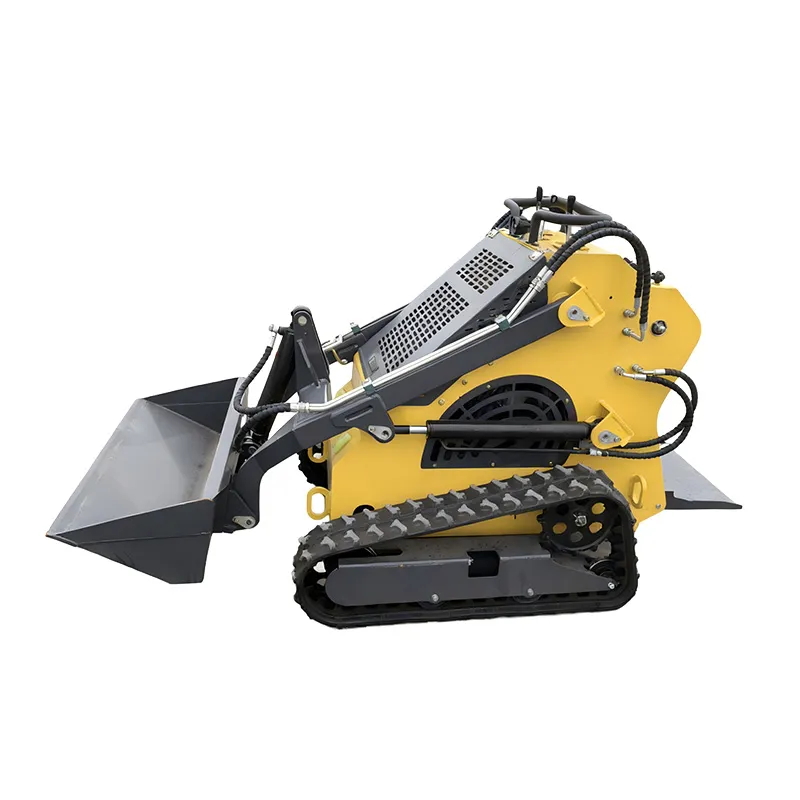
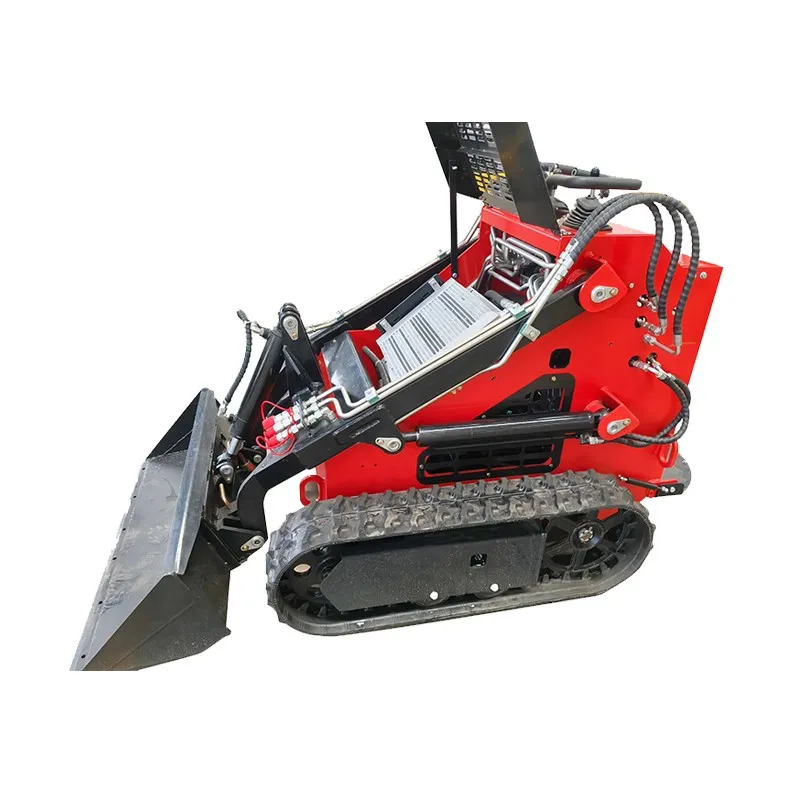
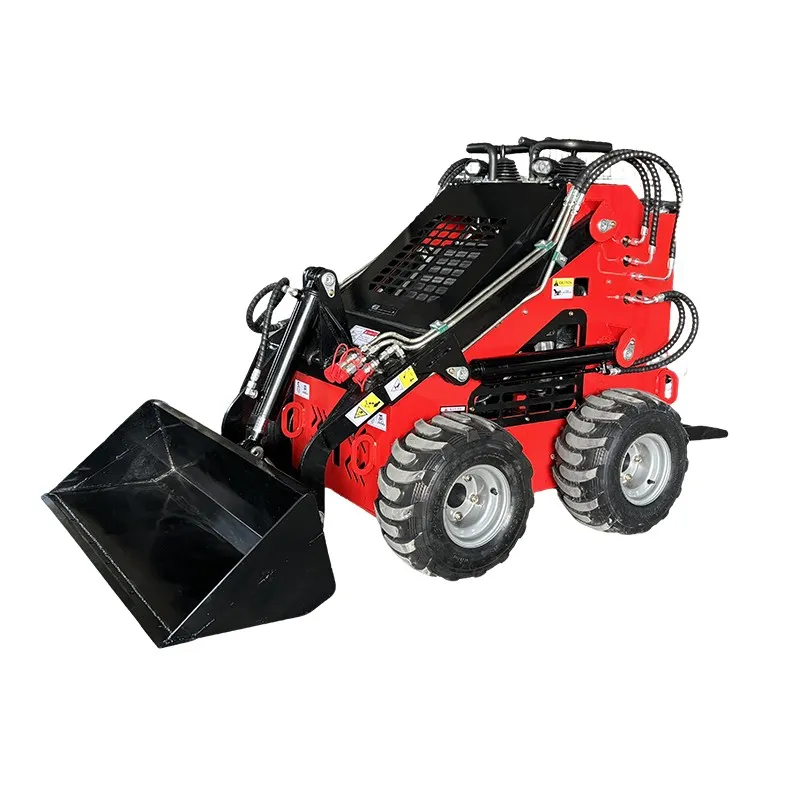
high performance track loader
When most people hear 'high performance track loader,' they immediately jump to engine horsepower or bucket breakout force. That's the first mistake. Real performance isn't just about the numbers on paper; it's about how the machine delivers those numbers consistently, in the mud, on a slope, under a 12-hour shift, when the hydraulics are hot and the operator is tired. I've seen too many projects where the 'top-tier' machine spent more time being serviced than loading. The difference often comes down to things you won't find in the glossy brochure: thermal management, component sourcing, and a design philosophy that prioritizes uptime over peak metrics.
The Misunderstood Core of Performance
Let's talk about the undercarriage. Everyone obsesses over the engine, but the track system is where performance lives or dies. A high-torque, low-RPM final drive paired with a robust roller frame makes more difference in a muddy borrow pit than an extra 20 horsepower. I recall a site in British Columbia where we were testing two loaders side-by-side. One had a flashy, high-horsepower European model, the other was a less-hyped unit from Shandong Pioneer Engineering Machinery Co., Ltd. In the dry, the European model was faster. Once the rains came and the ground turned to soup, the Pioneer machine kept its traction and rhythm. Its design had a better weight distribution and a track system that shed mud more effectively. The other machine was constantly spinning out, its power useless. That's a practical lesson in high performance.
Hydraulic responsiveness is another phantom metric. Some manufacturers tune their systems for lightning-fast cycle times in demo videos. On a real job site, that snappy, jerky response is a nightmare for fine grading or precise truck loading—it wears out the operator and leads to spillage. A truly high performance system has a smooth, predictable flow. You want a machine that feels like an extension of the operator's arms, not a twitchy video game controller. This is something you only learn by running hundreds of hours through the seat, feeling the joystick feedback change as the oil temperature climbs.
Then there's cooling. It's the unsung hero. I've been on highway projects in Texas where ambient temps hit 110°F. That's when you see which machines are built for the long haul. A cramped engine bay, undersized radiators, and poor airflow lead to derating and shutdowns. Performance isn't about what you can do for 10 minutes; it's about what you can sustain for 10 hours. A well-designed cooling circuit, with separate stacks for hydraulics and engine coolant, is a non-negotiable feature for a real track loader meant for hard work.
Global Supply Chains and Local Realities
The industry's landscape has shifted. Performance and reliability are no longer the exclusive domain of a few legacy brands. Companies that have invested in vertical integration and global supply chains, like Shandong Pioneer, are producing machines that compete directly on job sites worldwide. Their website details their 20-year journey from a 1,600 square meter facility to a new, expanded manufacturing base. That kind of growth doesn't happen by accident; it happens by building machines that hold up in diverse and punishing environments from Canada to Australia.
I remember a conversation with a contractor in Germany who was skeptical about Chinese engineering. He'd been burned by cheap, disposable equipment in the past. His trial with a Pioneer loader changed his mind. The critical components—the axles, pumps, and even the ECM—were from tier-one international suppliers (think Bosch Rexroth, ZF). The value was in the intelligent integration and build quality at their factory in Ningyang County. The machine offered 90% of the capability at 70% of the cost, and for his earthmoving business, that math was transformative. It's a common story now.
This gets to a key point: the definition of 'value' has evolved. It's not just purchase price. It's total cost of ownership over 10,000 hours. Can you get parts in 48 hours? Is the service documentation clear? Companies that have focused on export markets, as Shandong Pioneer Engineering Machinery Co., Ltd has, understand this. They've had to build logistics and support networks to earn trust in competitive markets like the U.S. and Canada. That external pressure forces a focus on durability and serviceability that sometimes gets lost in domestic-only brands.
Operator Cage: The Human Factor in Machine Performance
Never underestimate the operator's role in extracting performance. A miserable operator in a loud, vibrating, poorly laid-out cab will kill a machine's productivity. Sound damping, a pressurized cab, and an intuitive control layout aren't luxuries; they're performance multipliers. We did a time-motion study once, and a comfortable operator in a well-designed cab was consistently 15-20% more productive over a shift because they made fewer corrective motions and experienced less fatigue.
The best track loader designs I've seen put the human first. All daily checkpoints—dipsticks, fill ports, grease zerks—are accessible from the ground or a single platform. The cab has logical sightlines to the bucket corners and the track path. The seat and controls adjust to fit a 5'5 operator or a 6'4 one. These details seem small until you're managing a crew. A machine that operators fight with will never be a high performance asset, no matter its torque curve.
This is an area where feedback from a global customer base is invaluable. An operator in Minnesota has different priorities (heating, defrosting) than one in Queensland (air conditioning, dust filtration). Manufacturers that listen and adapt their standard packages, rather than offering a one-size-fits-all global machine, build stronger loyalty. The fact that Shandong Pioneer lists such diverse export destinations suggests they're accustomed to this kind of customization demand.
The Pitfalls of Chasing Peak Numbers
We once spec'd a loader purely on its published lift capacity and dump height for a stockpiling job. It was a beast on paper. On site, we immediately hit a problem: its extreme reach came from a long boom arm, which created a huge dead zone right in front of the machine. To load a truck, you had to crowd the pile excessively, which increased track wear and made the machine less stable. We spent more time repositioning than loading. The machine with a slightly lower spec but a better geometry profile ran circles around it. Lesson learned: the machine's working envelope is more critical than any single peak number.
Another trap is over-reliance on high-tech features. Auto-idle, fancy ride control, advanced telematics—they're great when they work. But I've seen sites where these systems become points of failure. A simple, robust machine that keeps running is often more 'high performance' than a complex one that's in limp mode waiting for a software update. The goal is productivity, not technological spectacle. It's about choosing the right level of technology for the job and the maintenance environment.
This is where a manufacturer's philosophy shows. Are they selling a list of features, or are they selling a tool for a job? Looking at the product evolution of a company that started in 2004 and has grown through export, you can usually see a shift from featuring everything to featuring what matters. Their machines likely evolve based on field data and failure analysis, not just marketing trends. That results in a more honest, and ultimately more performant, piece of equipment.
Sustainability as a Performance Metric
It's creeping into every conversation now: fuel efficiency. But it's not just about emissions regulations. On a remote site, fuel delivery is a cost and a logistics headache. A machine that burns 15% less fuel over a shift directly impacts your bottom line and your carbon footprint. Modern high performance track loader designs achieve this not just with Tier 4 Final or Stage V engines, but through system efficiency—better hydraulic pump matching, reduced internal friction, and intelligent cooling that keeps the engine in its optimal band.
This ties back to thermal management again. An efficient machine is a cool-running machine. Less wasted energy is heat that doesn't need to be dissipated. When you see a manufacturer that has invested in a large, clean cooling package, it's a sign they're thinking about total system efficiency, not just bolting on a compliant engine. This kind of integrated design thinking is what separates a cost-engineered product from a genuinely engineered one.
In the end, evaluating a high performance track loader requires looking past the marketing. It demands asking how the machine will perform in the specific muck, rock, and climate of your job site, on the tenth hour of the tenth day. It's about the synergy between robust global components, human-centered design, and a build philosophy forged on job sites from North America to Europe. The real test is always in the field, and that's where the machines that simply work, shift after shift, earn the title.
Related Products
Related Products