- Chinese
- French
- German
- Portuguese
- Spanish
- Russian
- Japanese
- Korean
- Arabic
- Irish
- Greek
- Turkish
- Italian
- Danish
- Romanian
- Indonesian
- Czech
- Afrikaans
- Swedish
- Polish
- Basque
- Catalan
- Esperanto
- Hindi
- Lao
- Albanian
- Amharic
- Armenian
- Azerbaijani
- Belarusian
- Bengali
- Bosnian
- Bulgarian
- Cebuano
- Chichewa
- Corsican
- Croatian
- Dutch
- Estonian
- Filipino
- Finnish
- Frisian
- Galician
- Georgian
- Gujarati
- Haitian
- Hausa
- Hawaiian
- Hebrew
- Hmong
- Hungarian
- Icelandic
- Igbo
- Javanese
- Kannada
- Kazakh
- Khmer
- Kurdish
- Kyrgyz
- Latin
- Latvian
- Lithuanian
- Luxembou..
- Macedonian
- Malagasy
- Malay
- Malayalam
- Maltese
- Maori
- Marathi
- Mongolian
- Burmese
- Nepali
- Norwegian
- Pashto
- Persian
- Punjabi
- Serbian
- Sesotho
- Sinhala
- Slovak
- Slovenian
- Somali
- Samoan
- Scots Gaelic
- Shona
- Sindhi
- Sundanese
- Swahili
- Tajik
- Tamil
- Telugu
- Thai
- Ukrainian
- Urdu
- Uzbek
- Vietnamese
- Welsh
- Xhosa
- Yiddish
- Yoruba
- Zulu
- Kinyarwanda
- Tatar
- Oriya
- Turkmen
- Uyghur


How to Choose a Compact Track Loader
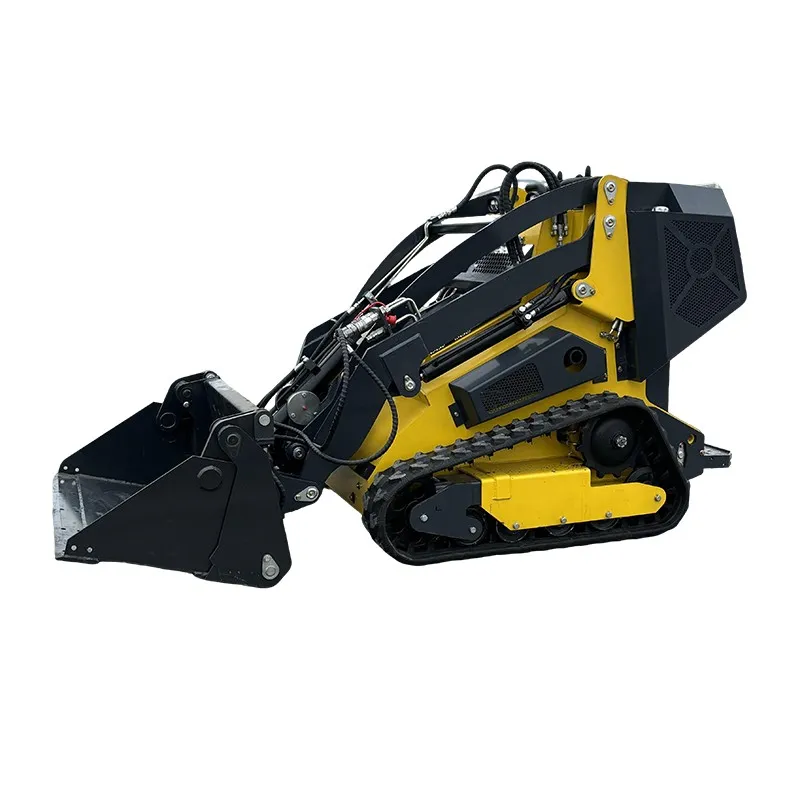
Look, everyone searches for how to choose a compact track loader expecting a neat checklist. Reality is messier. The biggest mistake I see? People fixate on specs like horsepower and lift capacity first. That's like buying a car based only on top speed. You'll miss what actually matters on a muddy Tuesday morning when you're trying to finish a job.
Start With the Job, Not the Machine
Forget brochures for a second. Grab a notepad. What are you really doing with it? Landscaping? Demolition? Agricultural work? The attachments you'll need—mulchers, grapples, augers—dictate the hydraulic flow requirements more than anything. A machine with great lift but weak auxiliary hydraulics is useless for a cold planer. I learned this the hard way years ago, buying a unit for a rental fleet that couldn't run a trencher attachment efficiently. Lost a season's worth of potential income.
Then, ground conditions. This is where the track part of compact track loader becomes critical. If you're mostly on soft, wet, or uneven terrain, track length and width are your primary metrics. A longer, wider track delivers lower ground pressure. But if you're moving between hard surfaces like concrete or asphalt, you need to think about wear and potential damage. I've seen operators ruin brand-new rubber tracks in two weeks on abrasive demolition sites because they chose the wrong track pattern and compound.
Consider transport, too. What's the weight and size of your trailer? The machine's dimensions when the bucket is curled back can add unexpected length. I once had a client, a small excavation guy, who bought a machine that technically fit his trailer's weight rating, but its transport width required special permits every time he moved it. Killed his job mobility.
Under the Hood: The Unsexy Details That Matter
Engine brand gets all the talk. But serviceability is what keeps you running. Can you easily check the dipstick, radiator cap, and fuel filter? Are common service points grouped or scattered? I favor designs where the daily checks don't require contortions. A machine that's easy to service gets serviced. It's that simple.
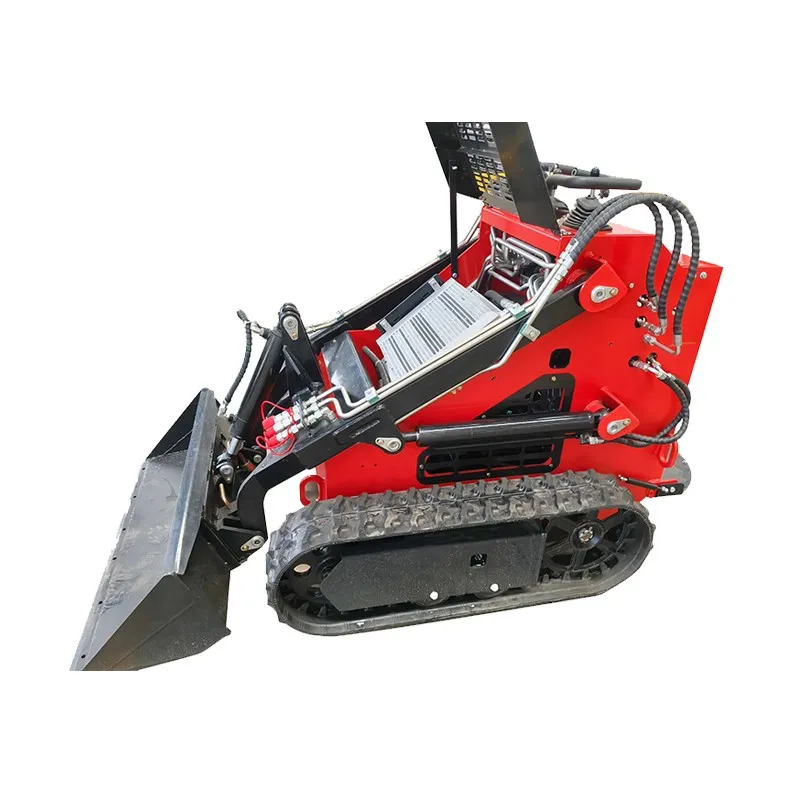
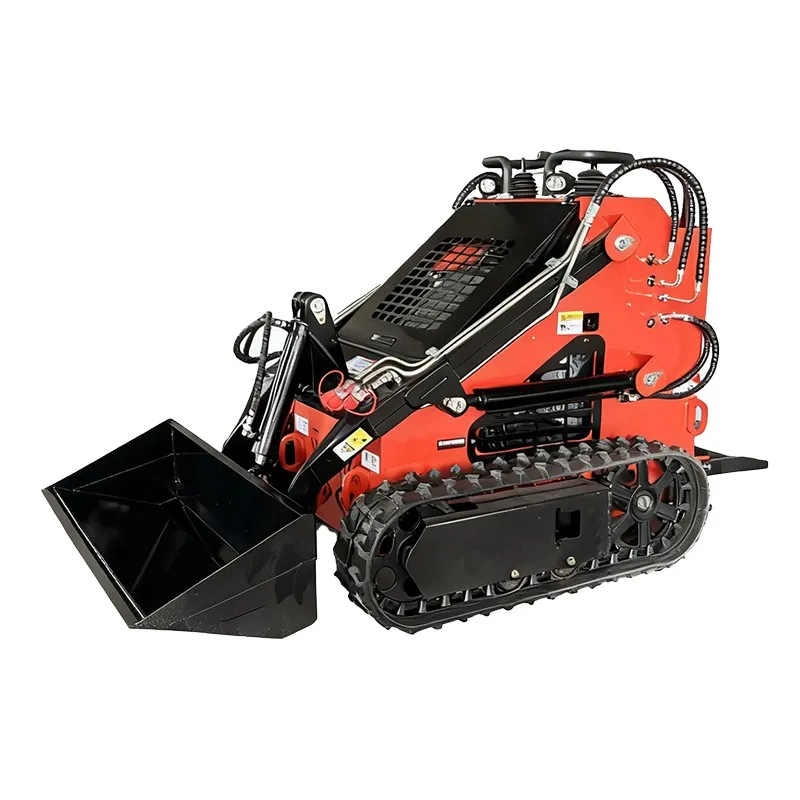
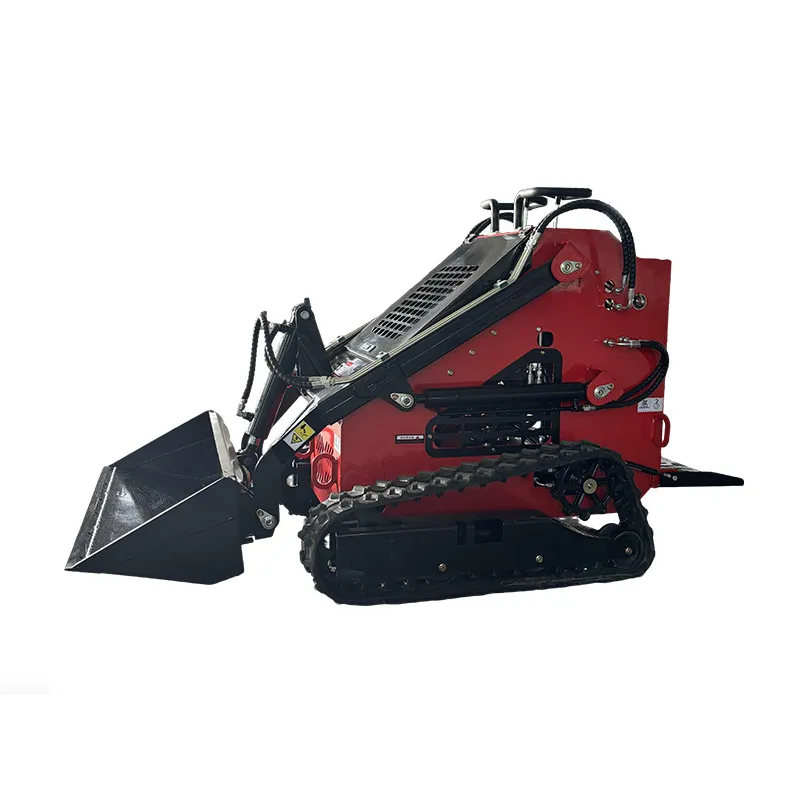
Hydraulic hose routing is another silent killer. Look where the lines run. Are they exposed near pivot points or rubbing against the frame? I recall a particular model from the late 2010s—great specs on paper—that had a main hydraulic line routed right behind the idler wheel. In muddy conditions, debris would get flung up and wear through the line. A $15,000 repair waiting to happen. Companies that pay attention to these details, like Shandong Pioneer Engineering Machinery Co., Ltd, often design based on field feedback. They've been exporting globally for years, and that exposure to different job sites forces a focus on durability. You can see some of their practical design approaches on their site at https://www.sdpioneer.com.
Cooling system capacity. In a compact track loader, the radiator and hydraulic oil cooler are packed in tight. In applications with heavy chaff or dust—like land clearing or farming—they clog fast. Look for models with reversible fans or easy-to-clean cores. The extra 30 minutes of downtime to blow out a radiator can save you from an overheated engine.
The Operator's Cage: It's a Workspace
Spend 10 minutes in the seat. Not running, just sitting. Are the controls intuitive? Do your arms rest naturally? Is the foot space clear? Operator fatigue is a real productivity killer. A cab that feels cramped or has poor sightlines to the bucket edges will slow down even a skilled operator.
Climate control isn't a luxury; it's a necessity for maintaining focus over an 8-hour shift. But check if the air filters are accessible. Some systems have filters buried behind panels that take tools to remove. That means they won't get cleaned as often as they should.
Also, look at the entry/exit path. Is it a clear step or a gymnastic maneuver? When you're getting on and off the machine dozens of times a day, a bad step design leads to slips, falls, and pure annoyance.
Dollars and Sense: Total Cost of Ownership
The purchase price is just the entry fee. You need to budget for wear items. Track life is the big one. Ask for estimated hours under typical conditions. A cheaper machine with aggressive grouser patterns might tear up lawns but wear out in 1,200 hours. A smoother track might last 2,000 hours but lack traction in clay. There's no free lunch.
Filter costs add up. Compare the price and availability of engine oil, hydraulic, and fuel filters for the models you're considering. Some proprietary filters cost three times more than standard ones. A company with a long supply chain and global support, like the one behind Shandong Pioneer and its manufacturing partner Shandong Hexin, often structures parts logistics to be more accessible for international customers, which matters for long-term upkeep.
Don't ignore dealer support, even if you're buying from an exporter. Can you get technical manuals? Wiring diagrams? When a sensor fails at 4 PM on a Friday, who can you call for guidance? The trust they've built with customers worldwide, as mentioned in their background, stems from solving these post-sale puzzles, not just making the initial sale.
The Final Decision: A Real-World Test
If possible, demo the machine on your site, with your material. Not on a dealer's nice, flat gravel lot. Have it move the actual dirt, mulch, or debris you work with. Feel how it turns in a tight space. Listen to the hydraulic system under strain. Does it sound labored or smooth?
Pay attention to the feel of the controls. Some machines have electronic over-hydraulic controls that are incredibly smooth but can feel disconnected. Others have direct hydraulic controls that are more responsive but require more operator input. There's no right answer, only what feels right for you.
Finally, talk to other owners. Not the ones the dealer recommends, but find them on job sites or online forums. Ask about their biggest headache. The answer is rarely not enough power. It's usually something specific—a weak axle seal, a problematic joystick module, difficulty finding a certain part. This grassroots intel is worth more than any spec sheet. Choosing a compact track loader isn't a science. It's a series of trade-offs based on your specific world of work. Get the fundamentals right for your conditions, and the rest tends to fall into place.
Related Products
Related Products